

Introduction
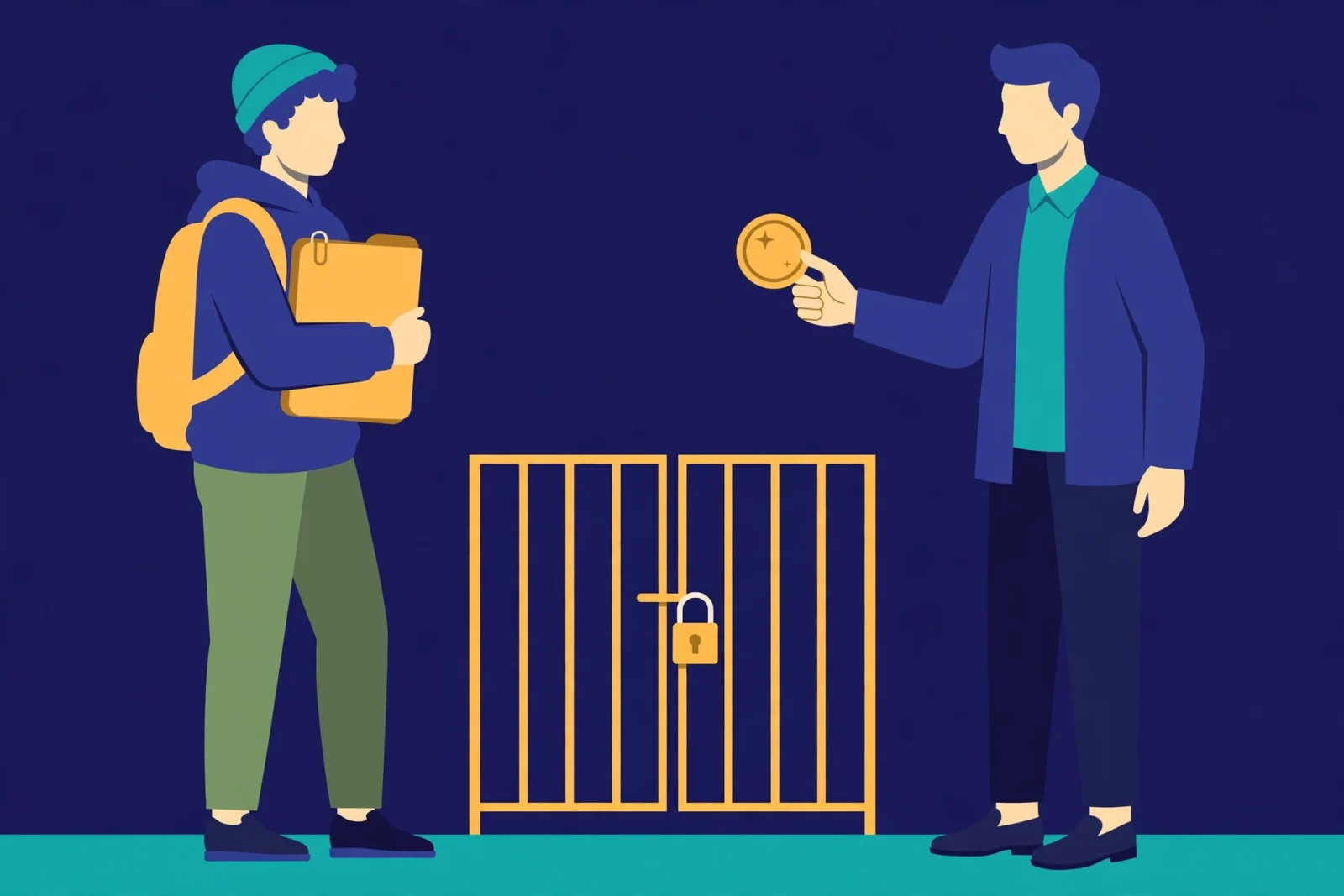
Yes, in most cases a freelancer can withhold final files until the client pays, as long as the contract ties final delivery to final payment. That is the short answer. The longer answer is that the contract decides everything here: if your agreement says the final files are delivered when the final payment clears, then holding them back is not a threat or a favour, it is simply following the deal. If your agreement says nothing about it, you can still usually hold the files, because the copyright in the work is yours until a signed writing transfers it. But your position is much weaker, and a client who knows that will push back.
This is the step most freelancers skip, and it is the step that would have saved me the most money. Early in my freelance career, a client disappeared on payment day and a full month of my work went unpaid. I told that story in full in my guide to collecting unpaid invoices, and the lesson from it shapes this guide: if the final work had been gated behind the final payment, there would have been nothing left to steal. A deposit protects the start of a project, which is why I wrote my guide on how much deposit to charge. Withholding the final files protects the end of it, and this guide covers that half.
This guide covers whether withholding final files is legal, why copyright law is on your side, the exact clause to write into your contract, how to show the client the work without handing it over, what to say when the client asks for the files early, the line you must not cross, what to do when there is no contract at all, and what happens if withholding does not work. I am not a lawyer and this is general information, not legal advice. Where a rule matters, I have checked it against the statute text or a law firm source, and the sources are listed at the end.
Why the Contract Decides
The first thing to understand is that there is no general law that says a freelancer must hand over work before being paid, and no general law that says a freelancer may always hold work back either. The contract decides, because the contract is what sets the order of the two promises: your promise to deliver the work, and the client’s promise to pay for it.
Lawyers describe this as conditional versus independent obligations, and the difference matters more than the words suggest. A conditional obligation is one that only becomes due when something else happens first. “Final files will be delivered on receipt of final payment” makes delivery conditional on payment. Until the payment arrives, delivery is not yet due, so holding the files back cannot be a breach. An independent obligation is one that stands on its own. “Contractor will deliver the final files by 1 December, and Client will pay within 14 days of delivery” makes delivery independent of payment. If you hold the files back under that wording, you are the one breaking the deal, and the client can point to the contract and say so.
A US law firm, Sprintlaw, states the rule plainly: a contractor can sometimes refuse to hand over source files, “but only if the contract, payment position or ownership rights support that refusal”. The firm adds that “under general contract principles, the wording matters. Some obligations are independent. Others are conditional on payment, approval or acceptance.” That is the whole game in one paragraph. Before you ever withhold anything, read your own contract and find out which kind of obligation you agreed to.
Three things to check in your contract before you hold files back:
- The payment trigger. Does the contract say the balance is due on delivery, on acceptance, or within a number of days after delivery? If payment is due on delivery, you have the strongest position. If payment is due 14 days after delivery, you are expected to deliver first and wait, and withholding needs a different basis, such as the copyright point in the next section.
- The delivery trigger. Does the contract say final files are delivered “on receipt of final payment” or “upon full payment”? Those words are the whole protection. If they are missing, add them to your next contract using the clause in the section below.
- The IP transfer clause. Does ownership move to the client when the work is created, when it is delivered, or when payment is received in full? If ownership moves only on full payment, you keep the strongest card in the deck, because the files are still legally yours. If ownership moved at creation, you have no copyright leverage left, and the contract wording alone has to carry the weight.
The practical lesson is simple and it is worth acting on today, before your next project starts: write the order of events into the contract. “Final payment first, final files second” is a sentence that saves more money than any demand letter ever will, and it costs nothing to add.
The Copyright Reason It Works
Behind the contract wording sits a stronger fact that most freelancers do not know they have: in US copyright law, you own the work you create from the moment you create it, and nobody else owns it until you transfer it to them in a signed writing. Payment alone does not transfer copyright. Delivery alone does not transfer it either. Only a signed written transfer does, and until that transfer exists, the work is yours.
The statute is section 204(a) of the Copyright Act, 17 U.S.C. section 204(a), and its wording leaves no room for argument:
“A transfer of copyright ownership, other than by operation of law, is not valid unless an instrument of conveyance, or a note or memorandum of the transfer, is in writing and signed by the owner of the rights conveyed or such owner’s duly authorized agent.”
Read that again, slowly, because it is the legal basis for everything in this guide. A transfer of copyright ownership is not valid unless it is in writing and signed by the owner. That means a client who has paid nothing, signed nothing, and received nothing does not own your work. A client who has paid in full but signed nothing still does not own the copyright, even though they may have a licence to use what you delivered. And a client who has received the files but never paid still does not own the copyright unless you signed it away.
There is one exception, and it is narrower than most clients think. A “work made for hire” belongs to the hiring party from creation, not to the person who made it. But section 101 of the Copyright Act limits that category tightly. A work prepared by an employee within the scope of employment qualifies. For an independent contractor, a work qualifies only if it is specially ordered or commissioned for use as a contribution to a collective work, as a part of a motion picture or other audiovisual work, as a translation, as a supplementary work, as a compilation, as an instructional text, as a test, as answer material for a test, or as an atlas, and only if the parties expressly agree in a written instrument signed by them that the work shall be considered a work made for hire. Both conditions must be met: the category must fit, and both sides must have signed an agreement saying so.
Most freelance creative work fails that test. A logo, a website design, a blog post, a set of illustrations, or a custom piece of code is usually none of those listed categories, and even when it is, there is often no signed agreement calling it a work made for hire. That means the freelancer is the copyright owner from creation, unless a signed assignment moves ownership. A law firm guidance page on this point, Terms.law, puts the leverage in a simple table: with an “assignment upon payment” provision, the contractor owns the IP until the client pays and “can withhold deliverables or threaten infringement claim”; with a “work for hire” provision, the client owns the IP from creation and the contractor has no IP leverage. The clause you sign decides which row of that table you are in.
One warning belongs here, because this point is easy to overstate. Copyright ownership gives you the right to refuse to hand over files you have not yet delivered, and it gives you a claim if the client uses your work without paying. It does not give you the right to reach into the client’s systems and take back files you already delivered, or to shut down a website that is already live. That is the line this guide draws in the section below, and crossing it can turn a strong position into a breach of your own.

The Clause to Write
Everything above is the reason the clause matters. This is the clause itself. Put it in your contract before the work starts, in the payment section, where the client will read it while signing. It is an example to adapt, not legal advice, and a lawyer in your state is worth an hour of their rate before you rely on it for a large project.
Final delivery and payment. Contractor will deliver a preview of the completed work for Client review. The final files, including all editable source files, will be delivered only after Contractor has received the final payment in full. Ownership of the work, including all copyright and intellectual property rights, remains with Contractor until the final payment is received in full, at which point ownership transfers to Client as set out in this agreement. If the final payment is more than 14 days overdue, Contractor may pause all work, including revisions, until payment is received, and all deadlines will move by the same number of days.
Notice what each sentence does. The first sentence gives the client something real: a preview to review, so they are not being asked to pay for unseen work. The second sentence sets the order: files after payment, not before. The third sentence keeps the copyright with you until payment lands, which is the legal mechanism the previous section explains. The fourth sentence covers the late payment case, so a client who is simply slow cannot claim you have abandoned the project while you wait.
Two details make the clause work in practice. First, define “final files” in the contract. List them: the editable design files, the source code, the raw images, the fonts, the export files, whatever applies to your work. If the contract never says what the final files are, the client can argue that the PDF you already sent was the final file, and your leverage disappears into a definitional argument. Second, define the acceptance period. Give the client a set number of days, for example 7 days, to review the preview and request revisions. After that period, the work is treated as accepted and the final payment is due. Without an acceptance period, a client can stall forever by never quite finishing the review, and you are left holding files for a payment that is never technically due.
If you already have a contract template, compare it with this clause tonight. Most freelancer templates I have seen either have no delivery-on-payment sentence at all, or they say the files will be delivered “on completion”, which leaves the order of payment and delivery completely open. One sentence fixes it.
Preview, Not Files: How to Show the Work Without Giving It Away
The most common objection to withholding files is a fair one: the client does not want to pay for work they have not seen. The answer is to show them the work, in full, in a form they cannot use. A preview lets the client check every detail and request every revision, while the usable files stay with you until the payment clears. Follow these five steps in order:
- Finish the work completely before you show it. Do not show a half-finished draft and call it a preview. The client should see the finished piece, so that their review is real and their approval means something. A preview of unfinished work invites a new round of changes that were never in the scope.
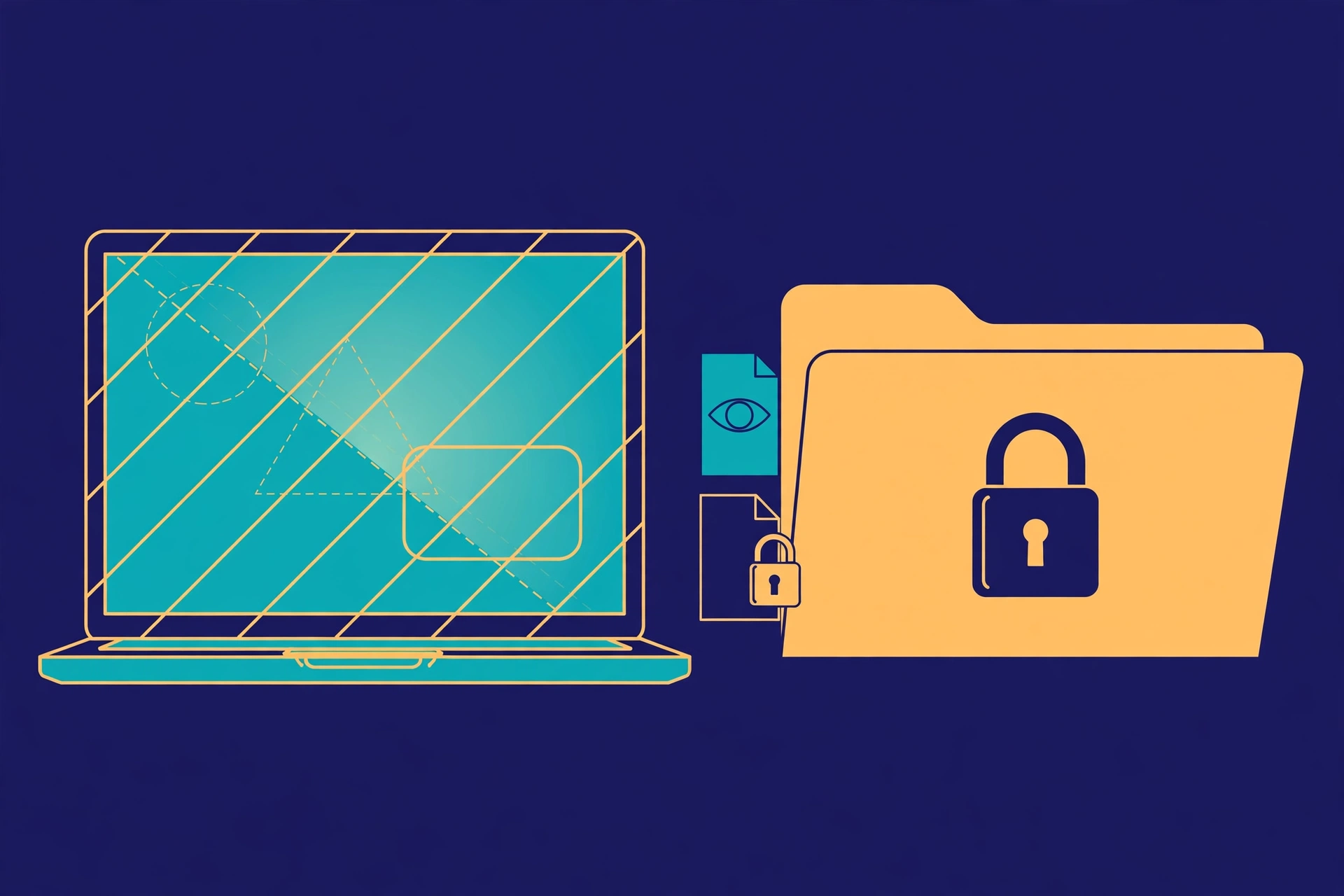
- Send a preview the client can look at but cannot use. For design work, send a watermarked image or a low-resolution export with a visible watermark across it. For a website, host it on a staging link on your own server, not on the client’s hosting, so you control access. For writing, send a PDF with a watermark or a read-only shared document. For video, send a version with a watermark and a lower resolution. The preview must be good enough to judge and bad enough to steal.
- Let the client review and request revisions within the acceptance period. Give the client the agreed review window, for example 7 days, to look at the preview and send their revision notes. Do the revisions they are entitled to under the contract, and send a fresh preview of the revised work. Keep every round of feedback in writing, so there is a record of what was asked for and what was delivered.
- Send the final invoice with a clear due date. Once the client has approved the preview, or the acceptance period has passed without objections, send the final invoice. State the amount, the due date, and that the final files will be delivered as soon as the payment is received. Do not send the files with the invoice. The invoice and the files are two separate deliveries, and they happen in that order.
- Release the final files as soon as the payment clears. When the payment arrives, send the final files promptly, in the format the contract lists, and confirm in writing that ownership has now transferred. Fast delivery after payment is what makes the whole arrangement feel fair to the client, and it is what keeps a good client coming back for the next project.
Two practical notes make this method work. First, keep the preview on your own systems. A staging link on your server can be switched off. A watermarked PDF sent by email cannot be taken back, but it cannot be used professionally either, and that is the point. Second, never send the editable source files as part of a preview. A client who receives the source files has received the work, whatever you call the email. The preview shows the result. The source files are the result, and they stay with you until you are paid.
What to Say When the Client Asks for the Files Early
Sooner or later a client will ask for the final files before paying, usually in friendly words: “Can you just send the files so we can look at them properly, and I will pay you right after?” The request sounds reasonable, and the pressure to say yes is real, especially with a client you like. The answer is a polite no, with a preview offered instead, because the moment the files leave your hands, your leverage leaves with them.
The friendly version works for a first request, and you can use it almost as written:
“Of course, I want you to be happy with the work before you pay for it. I have attached a full preview for your review, and you can request any revisions within the review period. As soon as the final payment clears, I will send the final files, including all editable source files, straight away. That is how the contract sets it up, so that we are both protected.”
Notice what that message does. It agrees with the client’s real need, which is to see the work. It gives them the preview immediately, so they are not left waiting. It reminds them of the contract without sounding like a threat, and it promises fast delivery after payment. It does not apologise, and it does not explain the whole legal theory. A client who hears a clear process accepts it. A client who hears an apology starts negotiating.
If the client pushes back a second time, use the firmer version:
“I understand, and I am happy to walk through the preview with you on a call so you can check every detail. The final files are released on receipt of the final payment, as set out in section [X] of our agreement, and I have to apply that term consistently to every client. Once the payment is in, I will send the files the same day.”
The firmer version does three things the friendly one does not. It names the contract section, which shows this is a term of the deal and not a personal decision. It says the term applies to every client, which takes the negotiation out of the relationship. And it repeats the promise of same-day delivery, so the client can see that paying now costs them nothing in time.
What you should never do is send the files “just this once” with a promise of payment to follow. I have heard that promise many times, and the story at the top of this guide is what it sounds like when it is broken. The client who pays promptly will not be offended by a clear process. The client who is offended by it is usually the one who was never going to pay promptly anyway, and you have just learned that before handing over the work, which is exactly when the information is useful.
The Line You Must Not Cross
Withholding files you have not yet handed over is one thing. Taking back work you already delivered, or shutting down something that is already live, is a different thing entirely, and it can turn a strong position into a breach of your own. The difference is whether the client already has the work, and whether other people are relying on it.
| Action | Risk level | Why |
|---|---|---|
| Hold final files you have not yet handed over | Low risk, when the contract ties delivery to payment | You are following the deal. The client has not received the work, so nothing has been taken away. |
| Take down a live website for non-payment | High risk, even if the client owes you money | The site may be earning the client money, serving their customers, or holding their data. A court can treat the takedown as a breach on your part, especially if the contract does not expressly allow it. |
| Lock the client out of their own domain, email, or data | Never do this | The domain, the email accounts, and the client’s own data belong to the client, not to you. Holding them hostage can cause losses far beyond the unpaid invoice, and it can expose you to a claim of your own. |
A UK guide for web designers, Good Chaser, draws this line in the clearest words I found: “Withholding work you haven’t handed over yet is usually fine; taking down a live site is risky.” The same guide warns that “disabling a live site, changing passwords to lock the client out, or redirecting the domain can cause the client real losses, and a court may treat it as a breach on your part, particularly if your contract doesn’t expressly allow it”, and it adds the blunt rule: “Never hold a client’s own domain, email or data hostage.” That guide is written for UK law, not US law, but the principle travels well, because the risk is the same in both places: the harm you cause by shutting something down can be larger than the debt you are trying to collect, and a judge will notice that.
The same caution applies to work you already delivered. A law firm source, UpCounsel, advises freelancers directly: “Do not demolish, remove, disable, or damage completed work simply because you have not been paid.” If the files are already in the client’s hands, your remedy is the contract, a demand letter, and the courts, not self-help. The work you still hold is your leverage. The work you already gave away is a debt to collect, and it has to be collected through the proper channels, which are covered in the section near the end of this guide.
One more boundary deserves a mention. Do not threaten a copyright infringement claim you do not intend to make, and do not send a takedown notice to a client’s host or platform as a pressure tactic when you know the client has a licence to use the work. A genuine infringement claim, where the client is using your work without paying and without a licence, is a real remedy. A bluff is a good way to lose credibility with the very people, a judge, a mediator, or the client’s lawyer, who will decide whether you get paid.
When There Is No Contract
Everything so far assumes a written contract, and the honest truth is that many freelancers start work without one. If that is your situation, your position is weaker, but it is not empty. Emails, proposals, messages, and even a written quote can show what the two sides agreed, and a court can treat those as the contract. The question is always what the messages actually say.
Go through your messages with the client and look for four things. First, a price the client agreed to. Second, a description of the work, even a short one. Third, any mention of payment timing, such as “50 percent upfront, 50 percent on delivery” or “payment on completion”. Fourth, any mention of files or delivery, such as “final files on final payment” or “I will send the source files once the invoice is paid”. If those four things are in writing, even spread across several messages, you have a deal you can point to, and you can withhold the final files on the same basis as a formal contract, with more risk and more argument.
If the messages say nothing about payment timing or delivery, you are in a harder place. You can still hold the files, because the copyright point from the earlier section still applies: without a signed transfer, you own the work. But the client can argue, with some force, that the deal was “do the work, get paid after delivery”, and that you are the one holding up your side. That argument is weaker than a contract term would be, and it costs time and goodwill to win.
The fix is for the next project, not this one. Use the clause in the section above, put it in a short written agreement, and get it signed before the work starts. Use a contract template as a starting point, and keep it short: a brief agreement that covers payment and delivery is better than a long one nobody reads.
The Lien Dead End
Freelancers who research this topic often come across the idea of a lien, and it sounds like the perfect remedy: file a claim against the client’s property until they pay. For freelance creative work, it is a dead end, and it is better to know that now than to waste weeks chasing it.
A mechanic’s lien is a remedy for people whose labour or materials permanently improve real property, which means land and buildings. The construction contractor who builds an extension, the subcontractor who installs the plumbing, and the supplier who delivers the bricks can, in many states, file a lien against the property. A designer who makes a logo, a developer who writes code, or a writer who produces articles does not improve real property, and the lien statutes do not cover that work.
Levelset, a site that tracks lien law, states the limit plainly: mechanics lien rights generally belong only to people whose work provides “a permanent improvement to real property”, and services or maintenance without a permanent effect on the property do not create lien rights, even when the owner still owes payment for them. UpCounsel agrees, noting that lien rights belong to “construction contractors, subcontractors, suppliers, and some design professionals” whose work improves real property. A digital deliverable is not a permanent improvement to real property, so no lien attaches to it.
That does not mean you have no remedy. It means your remedies are the ones this site covers across the payment cluster: the contract, the deposit you took at the start, the files you still hold, a formal demand letter, small claims court, and a collections agency. The lien is not one of them, and anyone who tells you to file one for a logo or a website is selling you a form, not a remedy.
If Withholding Does Not Work
Withholding the final files is leverage, not a guarantee. Sometimes the client simply does not care about the files, or has already decided not to pay, or has gone silent. When that happens, you move to the next steps in order, and each one is covered in detail in its own guide on this site.
Start with a written demand. Send a formal demand letter by email and by certified mail, stating the amount owed, the work delivered, the contract term that was breached, and a deadline, usually 14 days, for payment. Keep the tone professional and keep a copy of everything. Add a late payment fee for the delay where your contract allows it; my guide on late payment fees explains how.
If the demand letter gets no answer, small claims court is the next step for most freelance debts. The limits are generous in most states, the filing fee is small, and you do not need a lawyer. My guide to taking a client to small claims court covers the limits state by state, the filing steps, and what to bring to the hearing. The files you withheld are useful evidence there too: they show the work exists, it is finished, and it was never handed over because the payment never arrived.
For larger debts, or when the client is in another state, a collections agency is the last commercial step before a lawyer. Agencies take a percentage, usually a substantial one, so use them only when the amount justifies it. And through all of it, keep the wider system in mind. My guide to freelance payment protection laws explains how deposits, late fees, demand letters, and small claims fit together as one system, and the free gig tools page has an hourly rate calculator that helps you price the next project so that a single unpaid invoice can never hurt this much again.
Frequently Asked Questions
Can I withhold work for late payments?
Yes, if your contract states it. If your agreement ties final delivery to final payment, holding the final files is following the deal, not breaking it. State the term clearly in your contract and follow through consistently.
Can a freelancer withhold final files until paid?
Yes, in most cases. If your contract says the final files are delivered on receipt of final payment, you can hold them until the payment clears. Even without that wording, you usually still own the copyright until a signed writing transfers it, which gives you a second basis to hold the files.
Should I send final files before the client pays?
No. Send a preview instead: a watermarked image, a low-resolution export, a staging link on your own server, or a read-only document. The preview lets the client review the work in full while the usable files stay with you until the payment clears.
Can I take back delivered work if a client does not pay?
Generally no. Once the files are in the client’s hands, your remedy is the contract, a demand letter, small claims court, or collections. Do not delete, disable, or damage work you already delivered simply because you have not been paid.
Can I drop or take down a website if the client is not paying?
Taking down a live website is risky, even if the client owes you money. The site may be earning the client money or holding their data, and a court can treat the takedown as a breach on your part, especially if your contract does not expressly allow it. Hold files you have not handed over instead.
Can a contractor refuse to hand over source files?
Sometimes, but only if the contract, the payment position, or the ownership rights support the refusal. If the contract says the source files are delivered on final payment, or the copyright has not been transferred in a signed writing, the contractor has a basis to refuse. If the client already owns the work, there is no basis.
Are editable design files automatically included?
No. Editable source files are included only if the contract says so. Define “final files” in your agreement and list what it covers, such as the editable design files, the source code, and the raw images, so there is no argument about it later.
Who owns the work if the client has not paid?
In most cases, you do. Under 17 U.S.C. section 204(a), a transfer of copyright ownership is not valid unless it is in writing and signed by the owner. Payment alone does not transfer copyright, and neither does delivery. The exception is a genuine work made for hire, which is narrow and needs a signed agreement saying so.
Can I withhold final payment until I receive the files?
From the client side, it depends on the contract in the same way. If final payment is conditional on delivery or acceptance, the client may have a strong basis to hold it until the files arrive. If payment is due first, holding it back could put the client in breach. Both sides are governed by the same rule: the contract sets the order.
What can I send instead of the final files?
A watermarked preview, a low-resolution export, a staging link hosted on your own server, a read-only shared document, or a screen recording of the finished work. Any of these lets the client check the work in full without receiving files they can use professionally.
Sources
- 17 U.S.C. section 204(a), Execution of Transfers of Copyright Ownership (Cornell Law Institute, Legal Information Institute): https://www.law.cornell.edu/uscode/text/17/204
- 17 U.S.C. section 101, definition of “work made for hire” (Cornell Law Institute, Legal Information Institute): https://www.law.cornell.edu/uscode/text/17/101
- Sprintlaw US, “Contractor Won’t Hand Over Source Files? Next Steps”: https://www.sprintlaw.com/articles/contractor-source-files/
- Terms.law, “Responding To Freelancer Nonpayment Demand Letters”: https://terms.law/2025/12/04/responding-to-freelancer-nonpayment-demand-letters/
- FreelancerTools, “Late Payment Policy for Freelancers: Templates, Tips, and Enforceable Terms”: https://www.freelancertools.org/blog/late-payment-policy
- Good Chaser (UK guide), “Web Designer Client Not Paying? Handle the Handover and Invoice”:
- Levelset, “Can I File a Lien for Services Rendered?”: https://www.levelset.com/payment-help/question/can-i-file-a-lien-for-services-rendered-to-an-apartment-complex/
- UpCounsel, “Independent Contractor Not Paid for Work”: https://www.upcounsel.com/independent-contractor-not-paid-for-work
I am Muhammad Muzammil. I am not a lawyer, and this guide is general information, not legal advice. Contract and copyright rules vary by state and by the type of work, so check the law where you work or talk to a local attorney before relying on any clause for a large project.
