
You delivered the work. You sent the invoice. And now you are sitting here, refreshing your bank account, wondering why the money still has not arrived.
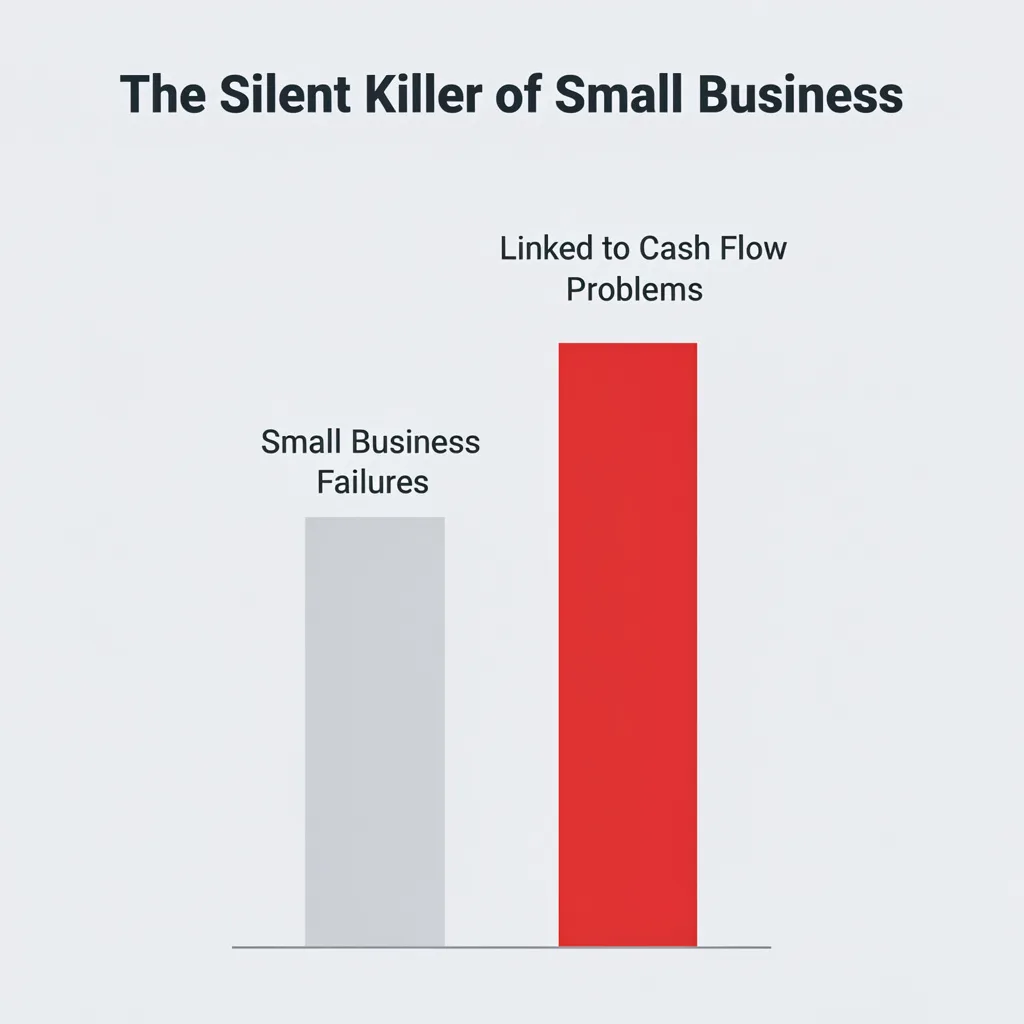
This is not a rare situation. SCORE, citing a U.S. Bank study, reports that nearly 82% of small business failures are linked to cash flow problems. The study is an older one, so treat it as a directional signal, not a current-year fact, and unpaid invoices are one of the biggest contributors. Freelancers and small business owners lose large amounts of money every year to clients who pay late, pay partially, or simply never pay at all.
The good news? You have more options than you think, and most of them do not require a lawyer.
How do I collect unpaid invoices? This guide walks you through every stage of the collection process, from the first polite reminder email to small claims court filings, demand letters, and collections agencies. You will get real email templates, a full demand letter you can copy and customize, and a clear decision framework for every scenario.
Whether your invoice is 7 days overdue or 7 months overdue, you will leave this page knowing exactly what to do next.
This guide is the step-by-step escalation version: a day-by-day timeline from the first reminder to demand letter, collections agency, court, or write-off, with cost-benefit math for each stage. If you want ready-to-copy email templates and scripts instead, see the companion guide: Invoice Collection Templates.
Why Unpaid Invoices Are Destroying Your Cash Flow (And What You Can Do Right Now)
Unpaid invoices are not just an inconvenience. They are a direct threat to your business’s survival: every dollar sitting in accounts receivable (AR) is a dollar you cannot use to pay your own bills or invest in your business.
The sooner you treat an overdue invoice as an active problem rather than an awkward situation, the faster you recover your money. Waiting and hoping is the single most expensive mistake business owners make.
Why Do Customers Not Pay Their Invoices and What Can You Do About It?
Before you fire off an angry email or threaten legal action, it pays to understand why the invoice went unpaid in the first place. The reason matters because it determines your strategy.
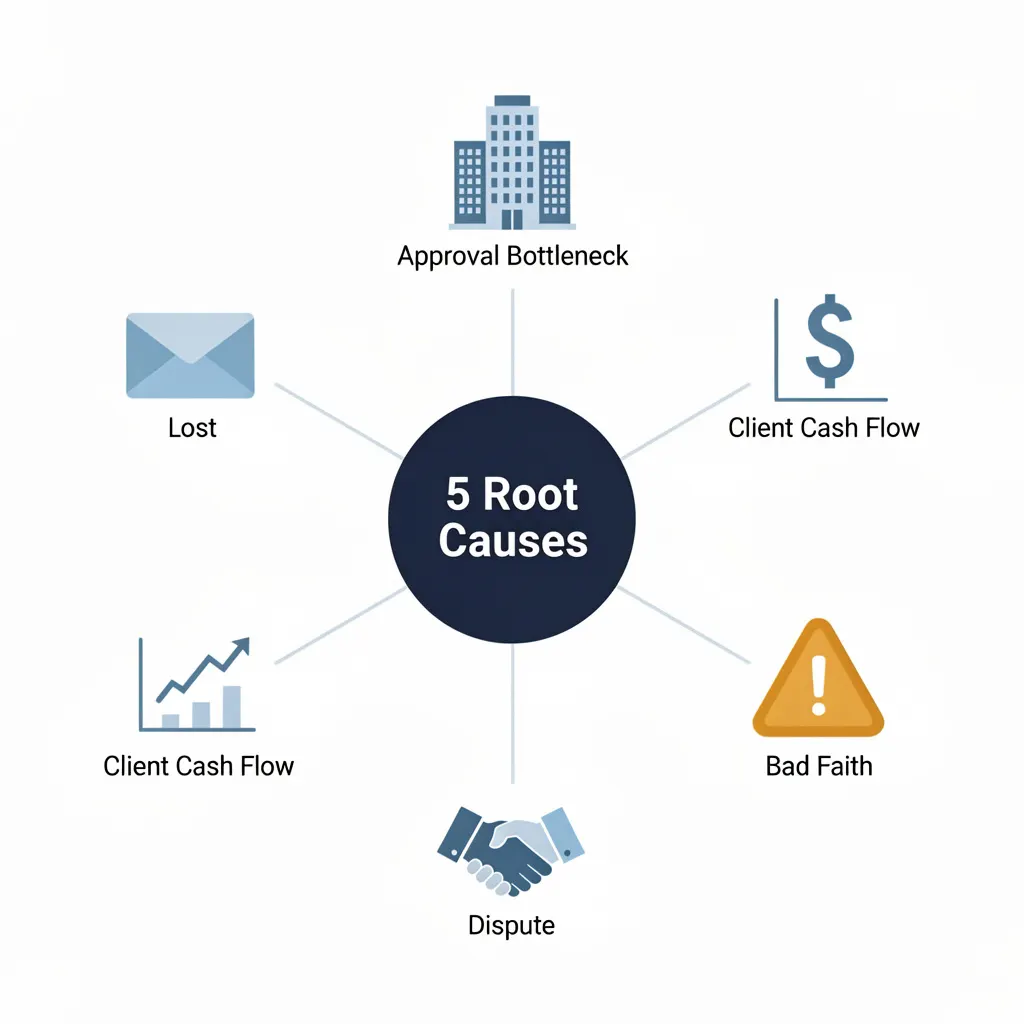
There are five root causes behind most unpaid invoices:
1. The invoice genuinely got lost or forgotten. Your invoice arrived on a Friday afternoon, got buried under 200 other emails, and nobody flagged it for payment. This type of non-payment responds immediately to a friendly reminder.
2. There is an internal approval bottleneck. Many companies, especially mid-sized businesses, require multiple sign-offs before releasing payment. Your invoice is sitting on someone’s desk waiting for a signature.
3. The client has a genuine cash flow problem. Your client may want to pay but literally cannot right now. This situation calls for a payment plan conversation rather than an adversarial approach.
4. There is a dispute about the work. Maybe the client expected something different from what you delivered. They are withholding payment as leverage in a breach of contract situation that needs to be addressed directly and in writing.
5. The client is acting in bad faith. Some people simply take the work and have no intention of paying. This scenario requires you to escalate quickly and without apology.
Before you send your next follow-up, look at the signals. Has the client been communicating at all? Did they approve the deliverables? Are they a large company with a slow AP department or a small operation that went dark? Your diagnosis should shape your tone and your timeline.
For a deeper look at how to protect yourself before a client dispute turns into a legal problem, read through the freelance contract essentials resources on GigLawGuide.
The Real Cost of a Single Unpaid Invoice on Your Business
Here is a number that should get your attention: Days Sales Outstanding (DSO) measures how long it takes you to collect payment after a sale. With Net 30 terms, a DSO drifting well past 30 days means cash is sitting in someone else’s bank account instead of yours.
Think about a single $5,000 unpaid invoice. If you are on accrual accounting, you have already recorded that as revenue and potentially paid taxes on it. Now that money is stuck in your AR aging report, under the 61 to 90 day column, collecting dust while your real expenses keep coming in.
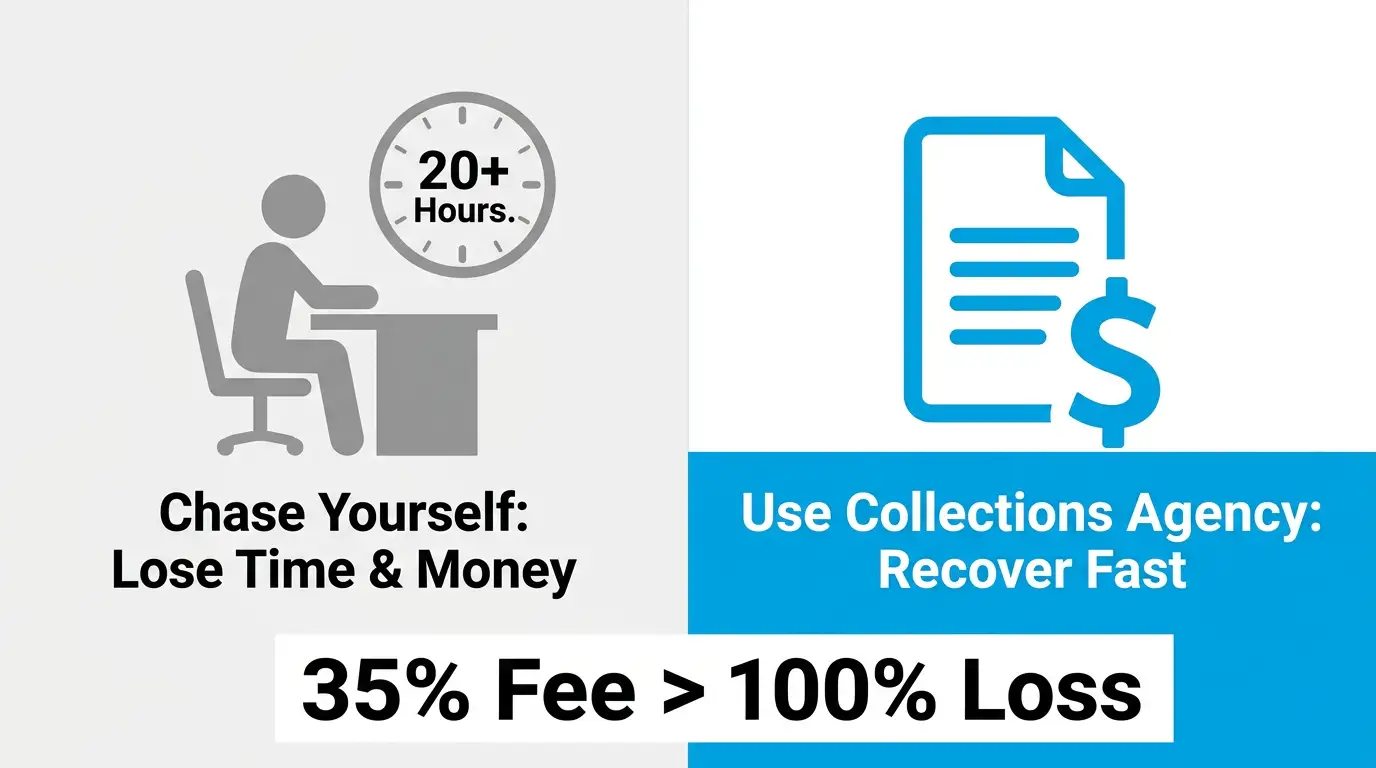
If you chase it for two months, spend four hours of your own time on follow-ups, and then send it to a collections agency that takes 35%, you recover $3,250 out of $5,000. That is before you factor in late fees you may or may not collect.
Knowing this math matters because it helps you make faster, smarter decisions about when to escalate, when to settle, and when to write it off and move on.
For guidance on structuring your invoicing terms so that unpaid balances trigger late fees automatically, check out this detailed guide on late payment fees for freelancer invoices.
Before You Chase Anyone Get Your Documentation in Order
Your ability to collect any unpaid invoice depends entirely on your documentation. You need a paper trail that tells a clear, date-stamped story of the work you did, the invoice you sent, and the attempts you made to collect.
How to Document an Unpaid Invoice for Legal Purposes
If this situation ever reaches a courtroom, a collections agency, or even just a serious demand letter exchange, you need to be able to prove three things: that a contract or agreement existed, that you delivered what you promised, and that the client failed to pay.
Here is your documentation checklist:
Signed contract or written agreement. This is your foundation: a signed contract spelling out scope, payment terms, late fee clauses, and consequences for non-payment gives you enormous legal leverage. If you do not have a solid contract template, the freelance contract essentials category has the resources you need.
The invoice itself. Keep the original invoice file. Make sure it shows the invoice number, service description, amount, due date, and your payment instructions.
Proof of delivery. Did you email the invoice? Save that sent email with its timestamp, and keep any delivery confirmation or thread where the client acknowledged receipt.
All communications. Export every email thread related to this project, screenshot text messages, and save any voicemail transcripts. Every touchpoint where the client acknowledged the work or the debt is valuable.
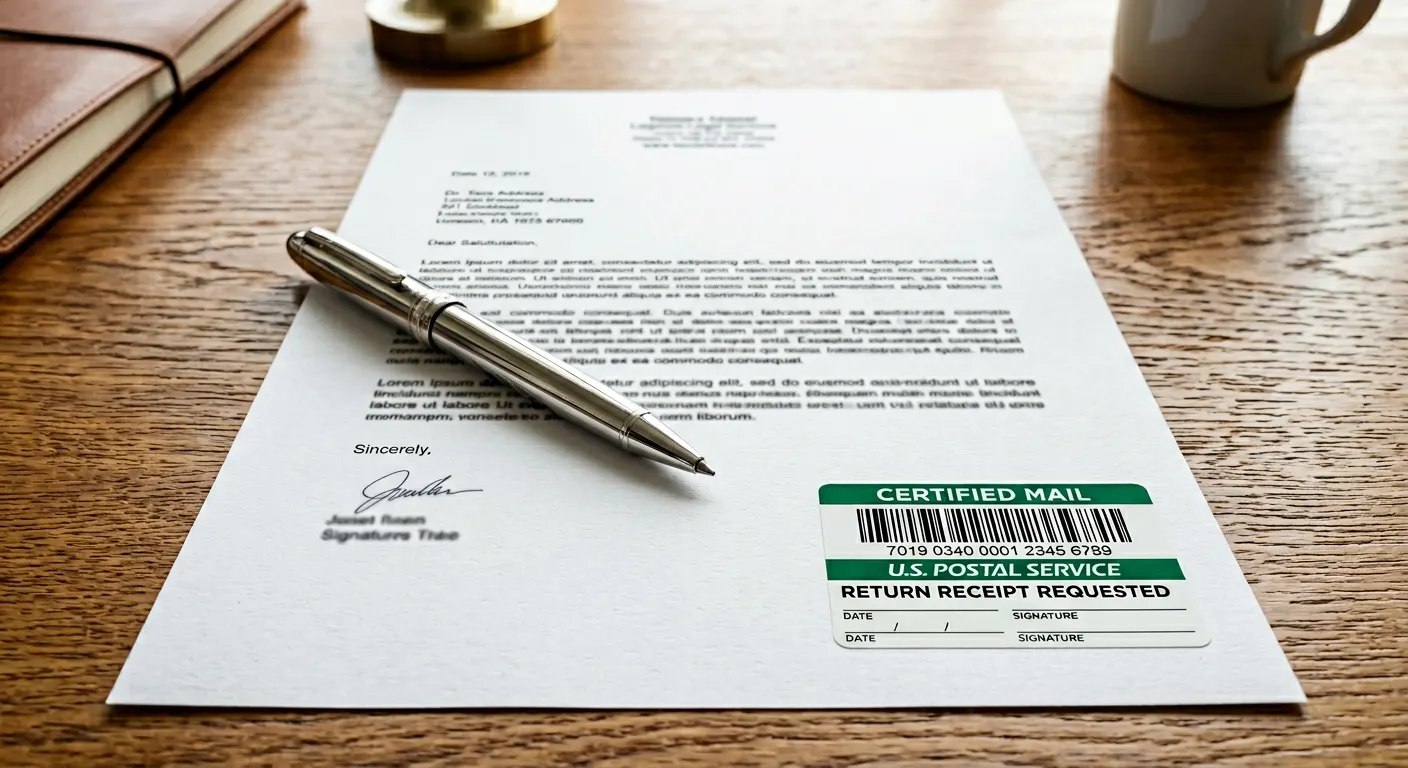
Certified mail receipts. Once you escalate to formal demand letters, send them via certified mail with return receipt requested. This gives you legally admissible proof that the debtor received your communication.
Payment history. If the client made a partial payment, document that too. A partial payment is a legal acknowledgment of the debt in most U.S. jurisdictions, which can actually reset the statute of limitations clock in your favor.
Tools like QuickBooks, FreshBooks, and HoneyBook all maintain timestamped invoice records and communication logs that you can export as a PDF for legal proceedings. Stripe Invoicing also keeps a full audit trail of when invoices were sent, viewed, and paid.
How to Track and Manage Unpaid Invoices Effectively
If you are managing more than three or four active clients at a time, tracking overdue invoices manually through a spreadsheet is a recipe for missed deadlines and forgotten follow-ups.
The professional standard is an AR aging report. This report sorts all your outstanding invoices into four time buckets:
- 0 to 30 days past due: Normal. Send a friendly reminder.
- 31 to 60 days past due: Concerning. Escalate tone. Apply late fees.
- 61 to 90 days past due: Serious. Send a formal demand letter.
- 90+ days past due: Critical. Consider collections agency or legal action.
Every major invoicing platform generates this report automatically. In QuickBooks, it is under Reports, then Accounts Receivable Aging. In FreshBooks, it appears in your Accounting dashboard. In Xero, it is called the Aged Receivables report.
Set a calendar reminder to review your AR aging report every Monday morning. Make it a non-negotiable part of your business routine. Most freelancers and small business owners only look at their overdue invoices when they are desperate. By then, the client is already 90 days gone and your recovery odds have dropped significantly.
You can find a curated list of the best invoicing tools for freelancers, with side-by-side comparisons, at the best invoicing software for freelancers guide.
How to Collect Overdue Invoices: The Tiered Follow-Up System That Works
To collect overdue invoices effectively, follow a structured escalation system rather than sending random reminders. Move from friendly to firm to formal in a consistent sequence, and apply late fees at each stage as specified in your contract.
What’s the Best Way to Collect Unpaid Invoices? (The Escalation Ladder)
The single biggest mistake people make when chasing unpaid invoices is staying polite for too long. You send a friendly reminder. Then another friendly reminder. Then a slightly less friendly reminder. Meanwhile, 90 days pass and your invoice is now statistically much harder to collect.
The escalation ladder solves this problem by giving you a pre determined system with clear triggers at each stage.
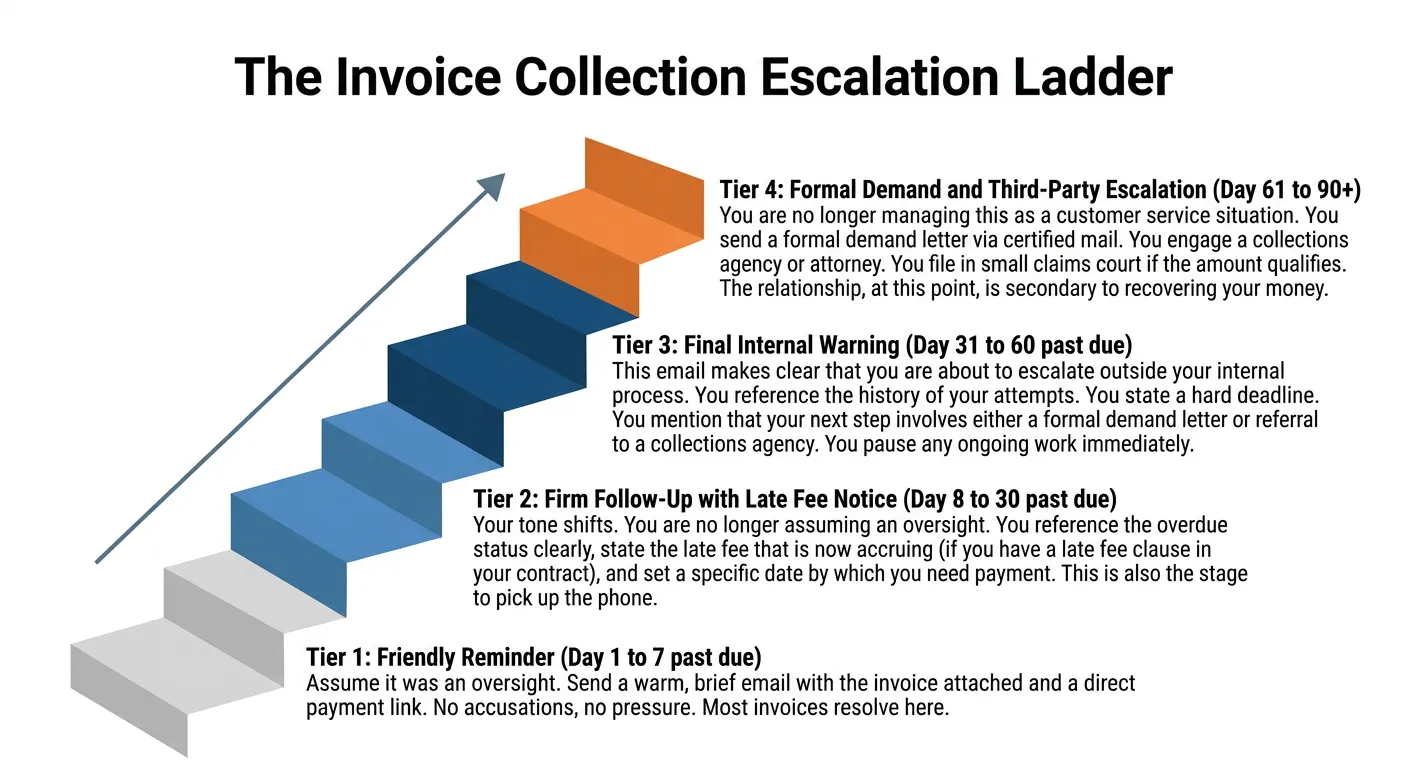
Tier 1: Friendly Reminder (Day 1 to 7 past due) Assume it was an oversight, and send a warm, brief email with the invoice attached and a direct payment link. No accusations, no pressure — most invoices resolve here.
Tier 2: Firm Follow-Up with Late Fee Notice (Day 8 to 30 past due) Your tone shifts: you reference the overdue status clearly, state the late fee now accruing (if your contract has a late fee clause), and set a specific payment date. This is also the stage to pick up the phone.
Tier 3: Final Internal Warning (Day 31 to 60 past due) This email makes clear that you are about to escalate outside your internal process, states a hard deadline, and mentions that your next step is a formal demand letter or referral to a collections agency. You pause any ongoing work immediately (check your contract’s suspension clause first).
Tier 4: Formal Demand and Third-Party Escalation (Day 61 to 90+) You send a formal demand letter via certified mail, engage a collections agency or attorney, and file in small claims court if the amount qualifies. The relationship, at this point, is secondary to recovering your money.
The reason most people fail is that they loop back to Tier 1 five times instead of advancing. A client who ignores two emails will not suddenly respond to a third email written in the same friendly tone. Advancement is the key.
How to Write a Professional Invoice Payment Reminder (With Templates)
A well-written payment reminder does three things: it reminds the client of the specific amount owed, it makes paying easy with a direct link or clear instructions, and it sets a tone that is appropriate for where you are in the escalation sequence.
Here are three ready-to-use templates:
Email Template 1: Day 1 Past Due (Friendly Tone)
Subject: Quick Note Invoice #[NUMBER] Was Due Today
Hi [Client Name],
Just a quick heads-up that Invoice #[NUMBER] for $[AMOUNT] was due today. I wanted to flag it in case it slipped through the cracks with everything on your plate.
You can pay directly via [payment link] or reply to this email if you have any questions about the invoice.
Thanks so much, and let me know if anything is unclear.
[Your Name]
Email Template 2: Day 15 Past Due (Firm Tone)
Subject: Invoice #[NUMBER] Is Now 15 Days Overdue Action Required
Hi [Client Name],
I am following up on Invoice #[NUMBER] for $[AMOUNT], which was due on [DUE DATE] and remains unpaid. I have reached out previously and have not yet received a response.
Per our agreement, a late payment fee of [X%] per month is now being applied to the outstanding balance. The current total due is $[UPDATED AMOUNT].
Please arrange payment by [SPECIFIC DATE] to avoid further late charges. You can pay via [payment link] or contact me directly to discuss next steps.
[Your Name]
Email Template 3: Day 30 Past Due (Final Internal Notice)
Subject: Final Notice Invoice #[NUMBER] | $[AMOUNT] Overdue
Hi [Client Name],
This is my final internal notice regarding Invoice #[NUMBER] for $[AMOUNT], originally due on [DUE DATE]. Despite multiple attempts to reach you on [dates], I have not received payment or a response.
If I do not receive payment or a confirmed payment plan by [DATE typically 7 business days from today], I will be escalating this matter to a formal demand process, which may include referral to a collections agency and potential legal action.
I would prefer to resolve this directly. Please contact me immediately.
[Your Name]
For additional guidance on how to approach a client who has been completely ignoring your outreach, this article on how to invoice a client who ignores you walks through the legal steps in detail.
How to Follow Up on Unpaid Invoices Without Being Annoying
A 7 to 14 day cadence is commonly used for a reason. Contact too frequently and you come across as desperate, which actually gives the client psychological leverage. Wait too long and you lose momentum and legal ground.
Here is how to rotate your channels without becoming a pest:
- Week 1: Email only. Brief, warm, direct.
- Week 2: Email plus one phone call. Leave a voicemail if no answer.
- Week 3: Email, phone call, and a LinkedIn message if appropriate. Keep the LinkedIn message short and professional. Never threaten on social media.
- Week 4: Email with a formal tone. Phone call. Consider a text message if you have that contact.
One phrase to eliminate from every follow-up email forever: “Sorry to bother you.” You are not bothering anyone. You are collecting money you earned. That phrase signals submission and clients notice it.
How to Politely Chase an Unpaid Invoice Without Damaging the Relationship
This is the tension every freelancer and small business owner feels: you want your money, but you also do not want to destroy a good client relationship over what might be a temporary delay.
The “assume positive intent” opener is your best friend in early-stage follow-ups. It sounds like this: “I am sure this has just been a busy week on your end” or “I know invoices can sometimes get caught in an approval queue.” This framing lets the client save face, which actually makes them more likely to respond positively.
Once you are past Day 15, though, your goal shifts. Preserving the relationship takes a back seat to recovering your payment. A client who will not pay you after 30 days of gentle reminders is not a relationship worth prioritizing.
The most effective pivot is a direct phone call. Email creates distance. A voice on the phone creates accountability. Call during business hours, be calm, be specific: “I am calling about Invoice #[NUMBER] for $[AMOUNT]. Can we figure out a payment date today?”
What to Do When a Customer Ignores Your Invoice Payment Reminder
Silence is a strategy. Some clients go quiet hoping you will give up or that your invoice will expire in some cosmic statute of limitations. Do not fall for it.
Two missed emails over two weeks is a pattern. At that point, you need to expand your contact strategy and start creating a documented record of your attempts.
Here is what to do when a client goes dark:
First, verify that your emails are actually landing in their inbox. Send a test email from a different address. Check that the email address you have is current.
Second, call the main office number, not just the personal contact. Sometimes the person you work with has left the company and your invoice is floating in a dead email inbox.
Third, reach out to a different contact at the organization. If you have ever cc’d anyone else on project communications, now is the time to escalate to them professionally.
Fourth, send a physical letter to their business address. Yes, an actual paper letter in an envelope. It is unexpected, harder to ignore than email, and creates a physical paper trail.
Non-payment over 30 days, combined with delivered work and a clear contract, is typically a breach of contract. At this point, you are no longer chasing a late payment. You are managing a legal dispute. For more on what to do when a client goes completely silent, the guide on collecting unpaid invoices as a freelancer covers the specific steps in detail.
How to Create an Effective Invoice Payment Reminder System
Manual follow-ups are fine when you have two or three clients. When you have ten or twenty, you need automation.
Here is how to build a reminder system that runs itself:
Using Stripe Invoicing: Set up automatic reminder emails at 3 days before due, on the due date, and 7 days after. Stripe sends these automatically without any action from you.
Using QuickBooks: Navigate to Account and Settings, then Sales, then Reminders. Enable automatic invoice reminders at customizable intervals.
Using HoneyBook: Create a payment schedule with automated nudges tied to each milestone. HoneyBook’s workflow automation can send follow-ups, mark invoices as overdue, and flag accounts for manual review.
Manual backup system: For clients on platforms that do not support automation, create a recurring task in your project management tool (Asana, Trello, or Notion) triggered the day after each invoice due date. The task should prompt you to check payment status and initiate follow-up.
The goal is zero invoices falling through the cracks. An invoice that goes unnoticed for 30 days because you forgot to follow up is just as damaging as a client who refuses to pay.
You can find a full breakdown of freelance project management tools, including those with built-in invoicing automation, at GigLawGuide’s freelance project management tools.
What to Do When a Client Doesn’t Pay Escalating Beyond Reminders
How to Professionally Escalate an Unpaid Invoice Situation
There is a clear moment when your collection effort stops being a follow-up and becomes a formal collection action. That moment arrives when your third or fourth outreach has gone unanswered, or when a client explicitly refuses to pay.
At this stage, the language in every communication must change. You stop using phrases like “please” and “when you get a chance” and start using phrases like “this account is now 45 days past due” and “payment is required by [SPECIFIC DATE] to avoid further action.”
If your contract includes a late fee clause (and it should), begin applying it now if you have not already. A typical late fee for freelancers and small businesses is 1.5% per month on the outstanding balance. Check your state’s maximum allowable rate — the clause must stay within it. On a $10,000 invoice, that is $150 per month. It is not just about the money. Applying the late fee signals that you are treating this as a formal contractual matter, not a personal favor waiting on a casual response.
If you are currently doing ongoing work for this client, stop immediately. Do not deliver the next milestone, the next article, the next design file, or the next report until the outstanding balance is resolved. This is one of the most effective forms of leverage available to freelancers, and most people wait far too long to use it.
For guidance on what happens to projects you have already completed and whether withholding deliverables is legal, the kill fee guide for freelancers explains your rights in detail.
How to Recover Money From a Client Who Won’t Pay
When a client actively refuses to pay, your options narrow but your legal options strengthen. Refusal to pay for delivered work is breach of contract. Whether it raises any separate criminal issue depends on your state’s law — do not assume it, and get advice before making that claim to a client.
Here is a practical escalation sequence for a client who flatly refuses:
Step 1: The “Last Chance” Phone Call
Call the decision-maker directly — the owner, the CFO, or the CEO, not the project manager or marketing coordinator. Keep it brief: “I am calling because Invoice #[NUMBER] for $[AMOUNT] has been unpaid since [DATE]. I need to resolve this today. Are you able to authorize payment or shall we discuss alternatives?”
Step 2: Offer a Payment Plan Some clients refuse not because they are dishonest, but because they genuinely cannot pay the full amount right now. Offer a structured payment plan — 50% now, 25% in 30 days, 25% in 60 days — and get the agreement in writing before you make any concessions.
Step 3: Involve a Senior Contact
If you have worked with anyone else at the organization, a referral or cc to that person can create internal pressure. Frame it as: “I wanted to bring this to your attention as well since we have worked together on [project].”
Step 4: Apply Reputation Pressure (Legally) You have the right to leave honest reviews on Google, Yelp, or industry-specific platforms, and to report the dispute to the Better Business Bureau. What you cannot do is make false statements or threaten to post a negative review unless you are paid, which crosses into extortion territory in some states.
For guidance on how to report a non-paying client to protect other freelancers, the freelancer blacklisting and client reputation guide covers the legal and ethical approach.
How to Get Paid When a Client Is Months Behind (61 to 90+ Days Overdue)
Recovery odds fall sharply after 90 days, and keep falling the longer an invoice ages.
This is why the 90-day mark is the standard trigger point for escalating to a formal demand letter, a collections agency, or a court filing.
At this stage, you also need to assess the strength of your case:
- Do you have a signed contract? Strong case.
- Do you have proof the client received and approved the work? Strong case.
- Do you have a documented history of collection attempts? Essential for legal proceedings.
- Is the client disputing the invoice? You may need mediation before court.
If you have all of the above, your legal position is solid and the escalation options in the following sections will work in your favor. The not getting paid as a freelancer legal steps category is the right place to start building your case.
How to Get a Client to Pay an Invoice Freelancer-Specific Power Moves
Should You Stop Work for Non-Payment? (The Leverage Decision)
Stopping work for non-payment is, without question, the most powerful leverage tool available to a freelancer or service-based business. Yet most people hesitate to use it because they are afraid of losing the client.
Here is the reality: a client who has not paid you is already damaging your business. The relationship is already broken. Continuing to deliver work to a non-paying client is not protecting the relationship, it is funding it with your own labor.
Check your contract’s suspension clause before pausing work: in many contracts, a payment breach lets you pause further work, but the exact right depends on what you agreed. Continuing to work while an invoice goes unpaid can weaken your position, so document the pause in writing.
The communication around a work stoppage should be direct but professional: “Per our agreement, payment on Invoice #[NUMBER] was due on [DATE]. As of today, that balance remains unpaid. I am pausing all work on [PROJECT NAME] until the outstanding balance is resolved. Please contact me as soon as possible to arrange payment and restart the project.”
There is also an intellectual property leverage angle that many freelancers overlook. In the United States, copyright in creative work generally starts with the creator unless a signed written agreement transfers it or the work qualifies as work made for hire. If your contract transfers rights only on payment, you may have leverage to withhold use of your work — but that depends entirely on your contract’s wording, so read it before acting on it.
For a full breakdown of how intellectual property rights work in freelance contracts and how to use them as leverage, the who owns freelancer work IP rights category covers this in depth.
How to Collect Unpaid Invoices Without a Lawyer
The good news for freelancers and small business owners is that you do not need a lawyer to handle most unpaid invoice situations. The self-help collection toolkit is more powerful than most people realize.
Here is what you can do entirely on your own:
Write and send a demand letter. A demand letter from you directly carries real legal weight: it formally notifies the debtor of the outstanding balance and gives them an opportunity to pay before you escalate. Some claims require a pre-suit notice — check your state’s rules before filing.
File in small claims court. Most states allow any individual or business to file a small claims case without legal representation. Filing fees typically range from $30 to $100, and the process involves completing a form, paying the fee, serving the defendant, and showing up with your documentation.
Contact a collections agency. You refer the account, they pursue it on contingency, and you only pay if they collect. No attorney required.
The situation where a lawyer becomes cost-effective: when your invoice exceeds $10,000 to $15,000, when the debtor is threatening a counterclaim, when the client is in another state or country, or when there is a genuine legal dispute about the contract terms.
If you need legal guidance specific to your situation, the GigLawGuide legal contact page connects you with resources for freelancers and small business owners.
How Do Freelancers Collect Unpaid Invoices? (Persona-Specific Tactics)
Freelancers face a unique set of challenges that corporate AR departments do not. You are the account manager, the project manager, the invoicing department, and the collections department all in one. And you are often emotionally invested in the client relationship in a way that a large business never would be.
A few tactics that work especially well for solo operators:
Milestone billing. Instead of billing everything at the end of a project, break your invoices into milestone-based payments — for example, 25% upfront, 25% at the midpoint, 50% on delivery. This structure means you never do more than 25% of the work without getting paid for it.
Upfront deposits. Require a deposit of 25% to 50% before any work begins. Clients who refuse to pay a deposit are often the same ones who refuse to pay the final invoice.
Platform protections. If you work through platforms like Upwork, their payment protection system holds client funds in escrow before work begins. HoneyBook and similar tools allow you to set up auto-billing so that credit cards or bank accounts are charged automatically on the invoice due date.
Kill fees. If a client cancels a project midway through, your contract should include a kill fee clause that compensates you for the work already completed. For a complete breakdown of how kill fees work and how to write them into your contracts, the kill fee guide for freelancers is essential reading.
For a comprehensive guide to collecting unpaid invoices written specifically for the freelance context, visit the collect unpaid invoices as a freelancer guide.
How to Collect an Unpaid Invoice From a Client in Another State or Country
Cross-jurisdiction debt collection is where things get genuinely complicated, and most guides you will find online skip this topic entirely.
Collecting from a client in another U.S. state:
You have two primary options: file in small claims court in your state (if the client has enough connection to your state to establish jurisdiction) or file in small claims court in the client’s state. The choice depends on the dollar amount, your state’s small claims limits, and whether you can serve the defendant properly.
Small claims monetary caps vary significantly by state. Here is a quick reference:
- California: $12,500 for individuals, $6,250 for businesses
- Texas: $20,000
- New York: $10,000 in New York City (lower — $5,000 or $3,000 — in other courts)
- Florida: $8,000
- Illinois: $10,000
If your invoice exceeds your state’s small claims limit, you move to civil court, which typically requires an attorney.
A third option for interstate disputes: hire a collections agency that operates nationally. Most major agencies collect across state lines and will pursue the debt under the applicable state laws.
Collecting from an international client:
This is significantly harder. U.S. consumer-debt rules like the Fair Debt Collection Practices Act (FDCPA) offer limited help across borders, and they do not cover business-to-business debts. Small claims court jurisdiction does not extend beyond U.S. borders. Your options are:
- A strongly worded demand letter (still effective in many cases because the threat of international reputational damage has weight)
- An international collections agency that specializes in cross-border recovery
- Invoice factoring, where you sell the unpaid invoice to a third party at a discount and receive immediate partial cash instead of waiting for a recovery that may never come
For contracts with international clients, the force majeure clause and freelance contract guide has relevant guidance on protecting yourself before international disputes arise.
Past Due Invoice Process: Sending a Formal Demand Letter
A formal demand letter is the single most important escalation tool in your collection arsenal. It signals to the debtor that you are treating this as a legal matter, creates documented proof of notice before you escalate.
How Do I Write a Demand Letter for an Unpaid Invoice?
A demand letter does not need to be written by a lawyer to carry real weight. What matters is that it contains specific, verifiable information, is sent in a way that proves delivery, and sets a clear deadline with clear consequences.
The seven elements every demand letter must contain:
- Your full name and business address
- The debtor’s full name and business address
- The invoice number(s) and original due date(s)
- The total amount owed, including any accrued late fees
- A clear payment deadline (10 to 14 business days is standard)
- Your preferred payment method and instructions
- A statement of consequences if payment is not received (collections referral, court filing, credit reporting)
Here is a full demand letter template you can copy and customize:
[YOUR NAME / BUSINESS NAME]
[Your Address]
[City, State, ZIP]
[Date]
[CLIENT NAME / BUSINESS NAME]
[Client Address]
[City, State, ZIP]
RE: Formal Demand for Payment Invoice #[NUMBER]
Dear [Client Name],
This letter constitutes a formal demand for payment of the outstanding balance of $[TOTAL AMOUNT DUE], including original invoice amount of $[ORIGINAL AMOUNT] and accrued late fees of $[LATE FEE AMOUNT], owed to [Your Business Name] for services rendered under our agreement dated [CONTRACT DATE].
Invoice #[NUMBER], covering [brief description of services], was due on [DUE DATE]. Despite multiple attempts to contact you on [LIST DATES OF CONTACT ATTEMPTS], this invoice remains unpaid.
Payment of $[TOTAL AMOUNT] is required by [DEADLINE DATE 10 to 14 business days from this letter’s date].
Acceptable payment methods: [list your payment options].
If payment is not received by the above deadline, I will pursue one or more of the following remedies without further notice:
- Referral to a licensed collections agency
- Filing a claim in [Your State] Small Claims Court
- Reporting this debt to applicable credit bureaus
Please contact me immediately at [phone/email] if you wish to discuss payment arrangements.
Sincerely,
[Your Name]
[Your Title]
[Your Business Name]
[Your Contact Information]
Should you have an attorney sign this letter?
If the debt is over $10,000 or you have reason to believe the client will contest it, having an attorney draft or co-sign the demand letter on their letterhead adds meaningful psychological and legal weight. Many attorneys will do this for a flat fee, which varies by attorney and complexity — ask for the fee in writing before instructing one.
Certified mail versus email:
Send the demand letter via both. Email creates a timestamped digital record. Certified mail with return receipt creates a legally admissible paper trail that proves the debtor received the letter. If the debtor later claims they never got your demand, you have the green card to prove otherwise.
How to Send a Final Payment Notice Before Legal Action
A final notice is slightly different from a demand letter in tone and specificity. By the time you send a final notice, you have already sent at least one demand letter. The final notice shortens the timeline and makes the consequences more specific.
The hard deadline in a final notice should be 5 to 7 business days, not 14. The language should be unambiguous: “Payment is due by [DATE]. If it is not received by that date, I will file a claim in [Court Name] on [DATE] and/or refer this account to [Collections Agency Name].”
Name the specific court. Name the specific agency if you already have one selected. Specificity signals that you have already done the groundwork, which dramatically increases the chance that the debtor pays.
For related information on how liquidated damages clauses in your contract can strengthen your legal position at this stage, the liquidated damages clause guide for freelancers is worth reviewing before you send any final notice.
What Should You Include in a Payment Demand Letter?
Quick reference checklist for anyone who needs the short version:
- Invoice number and exact amount owed (including late fees)
- Original due date
- History of your collection attempts (dates)
- A firm payment deadline (10 to 14 business days)
- Clear payment instructions
- Specific consequences for non-payment
- Your contact information
- Send via: certified mail (USPS) + email (for timestamped digital record)
For UK readers: The equivalent document is called a Letter Before Action (LBA), and under the pre-action protocol in England and Wales, sending one is the expected step before filing a County Court claim using Claim Form N1. The UK’s voluntary Prompt Payment Code encourages prompt payment, though it is not a dispute-resolution process.
Recover Unpaid Invoices Collections Agencies and Third-Party Options
Can You Send Someone to Collections for Unpaid Invoices?
Yes. Any individual or business can refer an unpaid invoice to a licensed collections agency. You do not need a court judgment, an attorney, or any special authorization to do so.
The referral process works like this: you contact a collections agency, provide them with your documentation (invoice, contract, communications history), and they take over the pursuit of the debt. They contact the debtor directly, negotiate on your behalf, and attempt to recover the full amount or an agreed-upon settlement.
The most important thing to understand: the moment you refer an account to collections, the relationship with that client is effectively over. This is not necessarily a bad thing if the client has been ignoring you for 90 days, but it is a decision you cannot reverse.
Collections agencies are governed by the Fair Debt Collection Practices Act (FDCPA) when collecting consumer debts. For business-to-business (B2B) debts, the FDCPA does not technically apply, but most reputable agencies follow similar conduct standards regardless.
What Happens When You Send an Invoice to Collections?
The step-by-step process unfolds like this:
Step 1: Account referral and verification. You submit your documentation to the agency. They verify the account details and assign it to a collector.
Step 2: Debtor contact. The agency contacts the debtor by phone and mail, notifying them that the account has been referred to collections and that for consumer debts, they have 30 days to dispute the debt after a validation notice under federal rules; business debts follow your contract and state rules.
Step 3: Negotiation. The collector works to secure payment, either in full or through a negotiated settlement. They may offer the debtor a payment plan if full recovery is unlikely.
Step 4: Recovery or escalation. If the debtor pays, the agency collects their contingency fee and sends you the remainder. If the debtor refuses, the agency may recommend filing suit, at which point they often work with a collections attorney to obtain a default judgment.
What a default judgment means: If you (or the collections agency) file in court and the debtor does not show up or respond, the court enters a default judgment in your favor. With a judgment in hand, you can pursue wage garnishment, a bank levy (freezing and drawing from the debtor’s bank account), or a property lien (attaching the debt to real estate or other assets).
A mechanic’s lien is a specific type of lien available to contractors, builders, and material suppliers. It gives you a security interest in the property you worked on until you are paid. If the property owner tries to sell or refinance, the lien must be satisfied first. This is an enormously powerful tool for construction and trade professionals.
When to Send an Invoice to Collections (The Decision Timeline)
A common trigger point is 90 days past due. But there are situations that justify escalating earlier:
- The client has gone completely silent for 30+ days despite multiple outreach attempts
- The balance is large enough that the financial risk of waiting outweighs the relationship cost
- The client has explicitly refused to pay or is disputing the invoice in bad faith
- You have discovered that the client is having serious financial difficulties and may be heading toward bankruptcy (in which case, moving quickly matters)
There are also situations where you should wait beyond 90 days:
- You are actively negotiating a payment plan and the client is communicating
- There is a genuine invoice dispute that you are trying to resolve
- A partial payment was recently received and it reset the collection clock
Is a Debt Collection Agency Worth the Cost?
Let us do the math plainly.
A collections agency typically charges a contingency fee of 25% to 40% of the recovered amount (up to 50% for older or smaller debts). The range depends on the age of the debt (older debt = higher fee), the amount (smaller amounts = higher percentage), and the agency. Get the fee in writing before referral.
On a $10,000 invoice at a 35% contingency fee, you recover $6,500 if the agency collects in full. If the client settles for 80% ($8,000), your take is $5,200.
Now compare that to the alternative: chasing the invoice yourself for another three months, investing your own time, and ultimately recovering nothing because the statute of limitations expired or the debtor went bankrupt.
The no-win, no-fee structure means you pay nothing if the agency collects nothing. That makes the financial risk essentially zero, except for the opportunity cost of time spent preparing your documentation for the referral.
Invoice factoring is a related but different option: instead of sending an agency to collect, you sell the invoice to a factoring company at a discount, typically 2% to 5% per month while an advance is outstanding. You get immediate cash, usually 70% to 90% of the invoice value, within 24 to 48 hours.
How Much Does It Cost to Collect an Unpaid Invoice?
| Collection Method | Upfront Cost | Success Fee | Time Investment |
|---|---|---|---|
| Self-collection (emails + calls) | $0 | $0 | High (your time) |
| Small claims court | $30 to $100 filing fee | $0 | Medium |
| Collections agency | $0 | 25% to 40% of recovery (up to 50% for older debts) | Low |
| Collections attorney | $0 to $300 demand letter | 25% to 40% if contingency | Low |
| Invoice factoring | $0 | 2% to 5% per month (discount) | Very Low |
| Full civil litigation | $500+ | Hourly attorney fees | Low (attorney handles) |
The hidden cost that nobody puts in this table is your own time and stress. A $2,000 invoice that takes you 15 hours to chase over three months costs $1,500 of your time at $100 per hour — before counting stress and lost billable work. At higher rates, the cost passes the invoice value entirely. At some point, the math tells you to refer it and move on.
Should I Hire a Lawyer or Collections Agency for Unpaid Invoices?
The decision depends primarily on the size of the debt and the strength of your case.
Under $5,000: Small claims court is almost always the fastest and most cost-effective option. File yourself, pay a filing fee of under $100, and show up with your documentation.
$5,000 to $15,000: A collections agency on contingency is usually the right call. No upfront cost, no attorney fees, and you can move on with your business while they pursue the debt.
$15,000 to $25,000: Consider a collections attorney who works on contingency. They have the legal authority to escalate more aggressively than a standard agency and can file suit directly if needed.
Over $25,000: Civil litigation with an attorney is generally justified at this level. Attorney fees vary widely by market and case — get a written estimate before proceeding.
If you need help evaluating your specific situation, the GigLawGuide legal contact page provides access to resources for freelancers and small business owners navigating payment disputes.
Legal Options for Collecting Unpaid Invoices Know Your Rights
Your legal rights with an unpaid invoice stem from breach of contract law. When a client agreed to your payment terms and failed to pay, they broke a binding agreement, giving you the right to seek damages through collections, mediation, arbitration, or court regardless of whether you have a lawyer.
What Are My Rights With an Unpaid Invoice?
Every client who signs a contract or places an order with agreed payment terms has entered into a legally binding obligation. When they fail to pay, they are in breach of that contract, and you have the following rights:
The right to charge late fees. If your contract includes a late fee clause (and it should), you can apply those fees from the moment payment is overdue. A typical rate is 1.5% per month, which is 18% annually.
The right to recover collection costs. Many contracts include a clause stating that the debtor is responsible for reasonable collection costs and attorney fees if the creditor has to pursue payment. If yours does, you can add those costs to your claim.
The right to withhold services. Check your contract’s suspension clause: in many contracts you may pause work when payment terms are breached, but you do not automatically have that right in every agreement.
The right to pursue legal action. You can file in small claims court, pursue mediation, or initiate civil litigation depending on the amount and your state’s rules.
The right to report the debt. Unpaid B2B debts can be reported to commercial credit bureaus like Dun and Bradstreet, usually through a bureau account or a collections agency, which can affect the debtor’s business credit.
One additional legal concept worth knowing for B2B transactions involving goods or equipment: a UCC-1 filing (Uniform Commercial Code). A UCC-1 is a financing statement filed with your state’s Secretary of State office that perfects — publicly records — a security interest created by a signed security agreement. It does not by itself create the interest. If you supplied goods and were not paid, a perfected filing can support a priority claim against those goods in the event of the debtor’s bankruptcy, depending on timing and other claims.
Can I Take a Client to Small Claims Court for an Unpaid Invoice?
Yes, and for amounts under $10,000 to $15,000, it is often your best option.
Small claims court is designed to be accessible to non-lawyers. The process is straightforward:
Step 1: Determine which court has jurisdiction. Generally, you file in the county where the defendant is located or where the contract was performed.
Step 2: Complete the court’s claim form (available online or at the courthouse). You will need the defendant’s legal name and address, the amount you are claiming, and a brief description of the basis for your claim.
Step 3: Pay the filing fee, typically $30 to $100 depending on the state and the claim amount.
Step 4: Serve the defendant. The court will explain the proper service method for your state; certified mail is acceptable in many states, while some require personal service through a sheriff or process server.
Step 5: Attend the hearing with your documentation: signed contract, invoice, proof of delivery, and a printed record of all your communication and collection attempts.
Step 6: If the judge rules in your favor and the defendant does not pay voluntarily, you can pursue enforcement through wage garnishment (a portion of the debtor’s paycheck goes to you), a bank levy (funds are taken directly from their bank account), or a property lien.
State-specific small claims limits for quick reference:
- California: $12,500 (individuals); $6,250 (businesses)
- Texas: $20,000
- New York: $10,000 in New York City (lower — $5,000 or $3,000 — in other courts)
- Florida: $8,000
- Illinois: $10,000
- Washington: $10,000
Is There a Deadline for Collecting Unpaid Invoices? (Statute of Limitations)
This is one of the most overlooked aspects of invoice collection, and ignoring it can cost you your entire claim.
The statute of limitations is the legal deadline after which you can no longer file a lawsuit to recover the debt. Once it expires, you generally can no longer file a lawsuit to recover the debt. Voluntary payment is still possible, and in some states a new written acknowledgment can change the position — check your state’s rules.
For written contracts (which includes any signed freelance agreement or formal purchase order), the statute of limitations ranges from 3 to 10 years depending on your state. For oral agreements, it is typically 2 to 5 years.
But here is the critical detail: the clock usually starts on the date the invoice was due, not the date you first noticed it was overdue. Some states start the clock from the date of the last payment or last written acknowledgment of the debt.
This is why a partial payment or a written “I’ll pay you next week” text message from the debtor is so valuable. In many states, it resets the statute of limitations clock, giving you additional time to pursue the full balance.
State-by-state variations are significant, so confirming the rules in your specific state before filing anything is essential.
How to Document an Unpaid Invoice for Legal Purposes (The Full Evidence Checklist)
When you are heading toward a court filing or a serious collections action, your evidence file needs to be complete and organized. Here is the full checklist:
- Signed contract or written agreement (digital signatures are generally acceptable in all 50 states under the E-SIGN Act and state UETA laws, with limited exceptions)
- Original invoice with all details
- Proof that the invoice was sent (sent email, certified mail receipt)
- Proof that the work was delivered and accepted (delivery emails, approval messages, signed completion forms)
- Complete communication log (every email, text, voicemail transcript, and call log)
- Record of all payment attempts and responses
- Documentation of any partial payments received
- Your AR aging report showing the account history
- Any late fee calculations with dates
Organize these documents chronologically and create a one-page summary that tells the story clearly: work was done, invoice was sent on [date], payment was due on [date], multiple collection attempts were made on [dates], no payment was received.
That summary is what you hand to a judge, a collections agency, or an attorney. It saves everyone time and makes your case look organized and credible.
Recovery Tactics When the Standard Playbook Isn’t Working
How to Set Up a Payment Plan for an Unpaid Invoice
Offering a payment plan is not a sign of weakness. For a client who wants to pay but genuinely cannot pay the full amount right now, it is the fastest path to getting at least some of your money.
Here is how to structure a payment plan that protects you:
Rule 1: Get it in writing before you make any concessions. A verbal agreement to pay in installments is nearly worthless. Draft a simple payment plan agreement that both parties sign.
Rule 2: Include a default clause. The agreement should state clearly that if any scheduled payment is missed, the full remaining balance becomes immediately due and payable, and you regain the right to pursue the full amount through legal channels.
Rule 3: Request the first payment immediately. A client who agrees to a payment plan but cannot make even a small first payment immediately is not a reliable plan partner. The first payment should happen within 24 to 48 hours of the agreement being signed.
Rule 4: Use shorter intervals. Weekly payments are better than monthly for large balances. The more frequent the payment, the harder it is for the client to forget or deprioritize.
A written payment plan that a client then breaches gives you an even cleaner legal case than an unpaid invoice alone, because it documents a second explicit agreement that was also violated.
One legal nuance worth knowing: in many U.S. states, a payment or written acknowledgment under a payment plan agreement can restart the statute of limitations — but not in every state, so check your state’s rules. This is good news if you are working with a slow-paying client and want to preserve your legal options.
For related guidance on payment terms and how to set them up correctly in your contracts from the start, the net 15 payment terms guide and the net 30 payment terms guide for freelancers are excellent references.
How to Negotiate Payment on a Large Unpaid Invoice
Large invoices, anything over $10,000, require a slightly different negotiation approach than smaller amounts.
The settlement discount approach: if you are 90+ days past due and facing a client who is either unwilling or unable to pay in full, consider offering a discounted settlement in exchange for immediate lump-sum payment. For example: “The current balance including late fees is $14,500. I am willing to accept $11,500 as payment in full if you can pay by [DATE].”
This approach has two benefits: it gets money in your account now, and it eliminates the ongoing cost (your time, stress, and potential legal fees) of a prolonged collection battle.
How to open the negotiation without showing desperation: frame it as a business decision, not a personal concession. “I would prefer to resolve this without involving third parties. As a one-time offer to settle this account, I am willing to accept…” This framing signals that you have options and are choosing to offer flexibility as a courtesy, not because you are desperate.
Always get the settlement agreement in writing before you accept any payment. The agreement should state explicitly that the payment constitutes full and final settlement of the invoice, releasing the debtor from any further claims. Do not accept payment without this document because you might cash the check and still have the client claim they owe you nothing more.
How to Handle Multiple Unpaid Invoices From the Same Client
When a single client owes you money on two or more invoices, the situation changes in a few important ways.
First, consolidate everything into a single demand. List all invoice numbers, dates, and amounts in one document. State the total owed in one clear figure. This creates a unified claim that is simpler to pursue legally.
Second, stop all work immediately and completely. One unpaid invoice might be an oversight. Two or three unpaid invoices from the same client is a pattern, and continuing to work for them only deepens your exposure.
Third, understand the escalation multiplier: multiple invoices from the same client create a stronger breach of contract claim and may support arguments for a pattern of bad faith conduct, which can be relevant in civil litigation.
Fourth, consider B2B credit reporting. Dun and Bradstreet and other commercial credit bureaus accept creditor reports of unpaid business debts. Reporting a non-paying business client to a commercial credit bureau can affect their ability to get credit with other suppliers, which creates meaningful pressure to settle.
For guidance on publicly flagging a client’s non-payment behavior within the freelance community, the freelancer blacklisting and client reputation guide covers what you can and cannot legally say.
Chasing Unpaid Invoices The Complete Payment Reminder Email Sequence
The Complete Payment Reminder Email Sequence (Day-by-Day)
This is the full escalating sequence from pre-due reminder to formal demand, with a template for each stage.
Day -3 (Pre-Due Courtesy Reminder)
Subject: Upcoming Payment Reminder Invoice #[NUMBER] Due [DATE]
Hi [Client Name],
Quick heads-up that Invoice #[NUMBER] for $[AMOUNT] is due in 3 days on [DATE]. Please let me know if you need anything from me before then.
[Payment Link]
Thanks,
[Your Name]
Day 1 (Just Overdue Friendly)
Subject: Invoice #[NUMBER] Payment Due Today
Hi [Client Name],
Just a note that Invoice #[NUMBER] for $[AMOUNT] was due today. I am sure it is just a timing thing. Please arrange payment at your earliest convenience.
[Payment Link]
[Your Name]
Day 7 (First Firm Reminder)
Subject: Invoice #[NUMBER] Is Now 7 Days Overdue
Hi [Client Name],
Following up on Invoice #[NUMBER] for $[AMOUNT], which was due on [DATE]. I have not yet received payment or a response to my previous message.
Please arrange payment today or contact me directly if there is an issue I can help resolve.
[Payment Link]
[Your Name]
Day 15 (Second Firm Reminder + Late Fee Notice)
Subject: Overdue Notice Invoice #[NUMBER] | Late Fee Now Applies
Hi [Client Name],
Invoice #[NUMBER] for $[ORIGINAL AMOUNT] is now 15 days past due. Per our agreement, a late payment fee of [X%] per month is now being applied. The current balance is $[UPDATED TOTAL].
Please remit payment of $[UPDATED TOTAL] by [DATE] to avoid further charges. If you are experiencing difficulty with payment, please contact me to discuss options.
[Payment Link]
[Your Name]
Day 30 (Final Internal Notice + Work Pause Warning)
Subject: Final Notice Invoice #[NUMBER] | Immediate Action Required
Hi [Client Name],
This is my final internal notice regarding Invoice #[NUMBER], now 30 days past due. The current balance including late fees is $[TOTAL AMOUNT].
I have attempted to reach you via email on [dates] and by phone on [dates] without response.
Effective today, I am pausing all work on [PROJECT NAME] until this balance is resolved. If I do not receive payment or a confirmed payment arrangement by [DATE 7 business days], I will escalate this matter to a formal demand process.
Please contact me immediately.
[Your Name]
Day 60 (Formal Demand Sent via Email + Certified Mail)
[Use the full demand letter template provided earlier in this guide.]
Tone progression summary: Each email must feel noticeably different from the previous one, so a client reading Day 30 versus Day 1 feels the escalation. It must never become unprofessional or personal.
Subject line tip: Include the invoice number and dollar amount in every subject line. People who manage multiple vendor relationships scan for specifics, so “Invoice #1047 $3,200 Overdue” gets opened while “Quick check-in” gets ignored.
Sample Email for an Unpaid or Overdue Invoice (Three Ready-to-Use Scripts)
Script 1: Short and Direct (Under 50 Words)
Subject: Overdue Invoice #[NUMBER] $[AMOUNT]
Hi [Name],
Invoice #[NUMBER] for $[AMOUNT] is [X] days past due. Please arrange payment via [payment link] today or reply to discuss options.
Thank you,
[Your Name]
Script 2: Medium Tone (Professional and Firm)
Subject: Invoice #[NUMBER] | [X] Days Past Due Please Advise
Hi [Name],
I wanted to follow up on Invoice #[NUMBER] for $[AMOUNT], which was due on [DATE] and remains outstanding. I have been unable to reach you by [phone/email] despite previous attempts.
Please reply to confirm when the payment will be made or call me directly at [phone number].
[Your Name]
Script 3: Formal Pre-Legal Tone
Subject: Final Reminder Invoice #[NUMBER] | Legal Escalation Pending
Dear [Name],
This message serves as formal written notice that Invoice #[NUMBER] for $[AMOUNT], due on [DATE], remains unpaid. All previous communications regarding this matter have gone unanswered.
If payment in full is not received by [DATE], I will proceed with formal legal collection measures without further notice.
[Your Name]
Documentation note: When sending escalating emails, BCC a dedicated email address (such as a second inbox or a legal file folder) on every message. This creates an automatically timestamped record of every communication without requiring you to manually archive anything.
What Happens If You Never Collect an Unpaid Invoice Bad Debt and Tax Write-Offs
What Happens If You Never Collect an Unpaid Invoice?
The financial consequences are direct and compounding. Lost revenue is the obvious one, but the downstream effects are more significant than most people acknowledge.
Cash flow strain: Every dollar sitting in uncollected AR is a dollar that is not available to pay your suppliers, your subcontractors, or your own operating expenses. Businesses with high DSO often have to borrow to cover operating costs that should have been funded by collected receivables.
Tax complications: If you are on accrual accounting, you recorded the revenue when you invoiced, not when you collected, so you may have already paid income tax on money you never received. Writing off the bad debt is the only way to claw that back.
The statute of limitations expiration: If you wait too long without taking legal action, the debtor generally gains a statute-of-limitations defense. You generally cannot sue for a debt that has passed its statute of limitations, even if everyone knows the debt is real — unless your state allows revival by acknowledgment or payment.
Operational impact: Chasing the same invoice for months creates a cognitive and emotional drain on solo operators that is genuinely costly. The distraction from paid work has a real dollar value.
The moment an invoice becomes “uncollectable” in practical terms is usually when one of three things happens: the statute of limitations expires, the debtor files for bankruptcy, or the cost of further collection attempts clearly exceeds the likely recovery amount.
How to Write Off an Unpaid Invoice for Tax Purposes
This is where your accounting method matters enormously.
Cash basis taxpayers: If you are on cash basis accounting (which many freelancers and small businesses use), you only record income when you actually receive it. Since you never received payment, there is no income to write off and no bad debt deduction is available.
Accrual basis taxpayers: If you are on accrual accounting, you recorded the invoice as income when it was issued. To deduct the loss, you need a bad debt deduction under IRS Publication 535, using the specific charge-off method for each debt in the year you determine it is worthless; you cannot take a general reserve for bad debts.
To write off an unpaid invoice in QuickBooks:
- Create a credit memo for the outstanding amount
- Apply a “Bad Debt” expense account to the credit memo
- Apply the credit memo to the open invoice to zero it out
FreshBooks and Xero have similar processes, accessible through the invoice settings or accounting module.
The IRS distinction: Business bad debts (from an invoice for services you provided in your business) are fully deductible against ordinary income. Non-business bad debts (for example, money you loaned to a friend) are treated as short-term capital losses, which carry much less tax benefit.
For a comprehensive guide to what you can and cannot deduct as a freelancer or self-employed business owner, the self-employment tax deductions guide covers bad debt write-offs alongside every other major deduction category.
What’s the Cost-Benefit of Collections vs. Writing Off Bad Debt?
Let us run the numbers on a $2,500 invoice versus a $15,000 invoice, because the math is very different at each level.
$2,500 invoice, 90 days past due:
- Collections agency at 40% contingency: you recover $1,500
- Small claims court (filing fee ~$75 + 3 hours of your time at $75/hour): effective cost is $300, you potentially recover $2,500 + late fees if you win
- Write-off (accrual basis): deduction saves you roughly $625 in taxes (at a 25% rate)
- Decision: Small claims court makes sense here if the case is clean and you have solid documentation
$15,000 invoice, 90 days past due:
- Collections agency at 30% contingency: you recover $10,500 if fully collected
- Collections attorney on contingency: similar fee structure but higher recovery enforcement capability
- Civil litigation with an attorney: attorney fees vary widely (get a written estimate) to potentially recover $15,000 + interest + attorney fees (if your contract includes a fee-shifting clause)
- Write-off: saves roughly $3,750 in taxes but you absorb the $11,250 loss
- Decision: Pursue aggressively. At $15,000, every recovery option is worth the cost.
The sunk-cost fallacy shows up constantly in invoice collection. People who have already spent 20 hours chasing a $500 invoice keep chasing it because they “cannot let them win.” Step back and do the math. Write off what is not worth pursuing and use that energy on paying clients.
How to Prevent Unpaid Invoices Before They Happen
How to Prevent Unpaid Invoices Before They Happen (The Proactive System)
The most effective invoice collection strategy is one that prevents the problem before it starts. Every measure you implement upfront reduces your exposure dramatically.
Require a deposit. Ask for 25% to 50% of the total project fee before any work begins. This filters out clients who are not serious about paying and ensures you are never doing 100% of the work for 0% of the payment.
Use milestone billing. Structure large projects with payment tied to deliverables rather than calendar dates — for example, 30% upfront, 30% at design approval, and 40% at launch. At no point are you completing significant work without having received payment for previous milestones.
Vet clients before signing. Ask for business references from other vendors, search for the company on the Better Business Bureau and Google Reviews, and check for court judgments using free public records searches. For larger contracts, request a credit report through a business credit bureau like Dun and Bradstreet.
Watch for red flags. Clients who take forever to approve deliverables but rush the project start date, who resist signing a contract, who want extensive revisions without clear approval processes, or who are vague about who actually signs checks these are warning signs worth heeding before you start work.
For more guidance on building a freelance business with strong financial foundations from the start, the start a freelance business category has detailed resources on client vetting, contract setup, and financial management.
If a client refuses to sign your contract at all, the client refuses to sign a freelance contract guide covers exactly what to do in that situation.
What to Include in Your Invoice to Reduce Non-Payment
A poorly constructed invoice is an invitation to dispute and delay. A well-built invoice removes every possible excuse for non-payment.
Every invoice should include:
- Your business name and contact information
- The client’s full legal name and billing address
- A unique invoice number (for tracking and reference)
- Invoice date and payment due date (state the specific date, not just “net 30”)
- Detailed line items describing exactly what services were delivered
- The total amount due, broken down clearly
- Late fee clause language (example: “Invoices unpaid after [DATE] will accrue a late fee of 1.5% per month on the outstanding balance”)
- Multiple payment method options: bank transfer, ACH, Stripe, PayPal, credit card
- A payment link (embedded or clearly written out)
One thing most freelancers omit but should always include: a line confirming acceptance of the work. Something like: “Payment of this invoice constitutes acknowledgment and acceptance of all services rendered.”
For a complete breakdown of payment terms and how to word them correctly to protect yourself legally, the net 30 payment terms guide for freelancers is an excellent resource to have open while you build your invoice template.
How to Improve Your Invoice Payment Collection Rate
Offering a 2% discount for payment within 10 days (written as “2/10 net 30”) can help your collection speed. For a client paying a $10,000 invoice, they save $200 for paying 20 days early. That is often enough to motivate their accounts payable department to prioritize your invoice.
Other proven tactics:
Use shorter default terms for new clients. Net 15 or even due-on-receipt is appropriate for a client you have never worked with before. Reserve net 30 or net 60 for established clients with a track record of timely payment.
Make paying as easy as possible. Every additional step in the payment process is an opportunity for delay. Include a one-click payment link in every invoice and accept as many payment methods as practically possible.
Automate recurring invoices. For retainer clients, set up automatic monthly billing that charges the client’s card or bank account without any manual action required. When clients do not have to actively decide to pay, they pay more consistently.
Use e-signatures for invoice acknowledgment. When a client digitally signs to acknowledge receipt of your invoice, two things happen: they feel more committed to the payment, and you have documented proof they received it. Platforms like DocuSign and HelloSign integrate with most invoicing tools.
For guidance on setting up digital signature workflows that hold up legally, the digital signature certificate guide covers the process from setup to enforcement.
Trending FAQs Everything Else You Need to Know About Collecting Unpaid Invoices
How Long Should You Wait Before Following Up on an Unpaid Invoice?
Do not wait. Send a pre-due reminder 3 days before the due date, a friendly follow-up on the due date itself, and a firm reminder 7 days after. Waiting 30 days to send your first reminder is one of the most common and most expensive mistakes freelancers make.
Can You Charge Interest on Unpaid Invoices?
Yes, but only if your contract or invoice includes a late fee clause that the client agreed to. The most common rate is 1.5% per month (18% annually). Without a written late fee clause, you generally cannot add interest after the fact. Always include this clause in your contracts from day one.
What’s a Reasonable Timeline for Payment on an Invoice?
The US standard for most B2B transactions is net 30, meaning payment is due 30 days from the invoice date. For smaller projects or new clients, net 15 or due-on-receipt is increasingly common and fully acceptable. Net 60 should only apply when the client’s size and payment process genuinely require it.
Can You Legally Take Action on an Unpaid Invoice?
Yes. An unpaid invoice for delivered services is a breach of contract, giving you legal standing to pursue the debt through small claims court, civil court, mediation, arbitration, or via a collections agency. Your legal options are covered in detail in the Legal Options section of this guide.
What Information Do You Need to Send an Invoice to Collections?
You will need: the debtor’s full legal name and address, the invoice number and amount, the original due date, a copy of the contract or written agreement, and documentation of your previous collection attempts. The more thorough your documentation, the higher your recovery odds.
Can You Refuse Service to a Client With Unpaid Invoices?
In most contracts, you are not obliged to keep working for a client who has not paid for previous work — but check your contract’s suspension clause first. Continuing to work while an invoice goes unpaid can weaken your legal position. Stop work, document the work stoppage in writing, and communicate it clearly.
What’s the Average Collection Rate for Unpaid Invoices?
Recovery odds fall sharply as an invoice ages: accounts collected quickly have the best chance, and the chance drops significantly after 90 days and again after 6 and 12 months. Speed matters enormously in invoice collection.
When Should You Hire a Professional Debt Collector?
The standard trigger points are: the invoice is 90+ days past due, the client has stopped responding entirely, or your internal collection attempts have been exhausted. For invoices under $5,000, small claims court is often faster. For larger amounts, a collections agency or attorney makes financial sense.
How to Get Faster Payment on Invoices?
Five tactics that work immediately: require a deposit before starting work, shorten your payment terms to net 15 for new clients, include a one-click payment link on every invoice, offer a 2% early payment discount, and set up automated payment reminders through your invoicing platform. Combining even two or three of these can reduce your average collection time.
Sources
Sources used for the figures and rules in this guide: SCORE, citing a U.S. Bank study, on small business failures and cash flow management; California Courts small claims limits; IRS Publication 535 on business bad debts; the Fair Debt Collection Practices Act (consumer debts only); and the E-SIGN Act on electronic signatures. State small claims limits and statutes of limitations vary by state — check your state’s rules before filing.
Final Thoughts Stop Waiting, Start Collecting
Every day you wait to follow up on an unpaid invoice is a day that recovery becomes statistically harder. The collection process is not complicated, but it does require consistency and a willingness to escalate when a client fails to respond.
Here is your quick-reference decision framework based on how long the invoice has been overdue:
- 1 to 7 days past due: Send a friendly email reminder with a payment link. Assume oversight.
- 8 to 30 days past due: Send firm follow-up emails and make a phone call. Apply late fees per your contract.
- 31 to 60 days past due: Send a final internal notice. Pause all ongoing work (check your contract’s suspension clause first). Consider a face-to-face or video call conversation.
- 61 to 90 days past due: Send a formal demand letter via certified mail and email simultaneously. Set a hard payment deadline of 10 to 14 days.
- 90+ days past due: File in small claims court (under $10,000), refer to a collections agency, or consult a collections attorney. Assess whether a write-off is more financially sensible than continued pursuit.
The resources you need to take action today are right here on GigLawGuide. For a comprehensive overview of your legal rights when clients refuse to pay, visit the not getting paid as a freelancer legal steps category. For a deeper dive into the freelancer-specific collection process, the collect unpaid invoices as a freelancer guide covers every angle. And if you need legal guidance on your specific situation, the GigLawGuide legal contact page is your next step.
You did the work. You deserve to get paid. Now go collect.


