

A foreign employer identification number is a standard nine-digit EIN issued by the IRS to a foreign person, foreign company, or foreign-owned US entity that has a US tax obligation and does not necessarily hold a Social Security Number. Whether you can apply without an SSN, and which route you use, depends on your US legal residence or principal place of business and on the responsible party’s tax identification number, as explained below.
What Is a Foreign Employer Identification Number?
A foreign employer identification number is the same nine digit Employer Identification Number that the IRS issues to domestic US businesses, applied specifically to foreign individuals, foreign companies, and foreign owned US entities that have a US tax reporting obligation.
One warning before anything else, because it causes real confusion. The phrase “foreign employer identification number” is used in two different ways, and people regularly go looking for one when they need the other.
The first meaning refers to an EIN that a foreign entity obtains from the IRS for its own US tax purposes. A Canadian holding company that owns a Delaware LLC needs a US EIN. A German GmbH with US employees needs a US EIN. A Singapore based investor who forms a Wyoming LLC needs a US EIN. In every one of those cases, the foreign entity is applying to the IRS and receiving an American nine digit tax identification number, formatted as XX-XXXXXXX. That number is what most people mean when they search for “foreign employer identification number.”
The second meaning refers to a foreign country’s own tax identification number assigned to a business by a non-US government. When a US financial institution asks you to provide a “foreign tax identification number” or “FTIN” on a withholding form, they are asking for the number your home country assigned your business, not a US number. This comes up constantly on W-8BEN-E forms, and it trips up a lot of people.
I am going to cover both meanings thoroughly in this guide because both matter and both appear in real situations you will face when operating internationally.
The Employer Identification Number itself is a federal tax ID number issued by the Internal Revenue Service. It functions as a business’s tax identity in the US system the same way a Social Security Number functions as an individual’s tax identity. You use it to open US bank accounts, hire US employees, file US tax returns, apply for business licenses, and establish credit in the US financial system.
An entity with a US federal tax filing or reporting requirement generally needs an EIN, regardless of where the entity was formed or where its owners live. A foreign company with US-sourced income may need one. A foreign person who is the sole owner of a US LLC may need one for that LLC, and a foreign trust with US assets may need one, depending on its filing obligations.
You do not necessarily need a Social Security Number to get an EIN. Whether you can apply, and which route you must use, turns on two things: whether you have a US legal residence or principal place of business, and whether the responsible party holds a US taxpayer identification number. Both are explained below.
Who Qualifies as a Foreign Person for an EIN?
A foreign person for EIN purposes is any individual, company, trust, or estate that is not a US citizen, US permanent resident, or domestic entity under US tax law.
The IRS uses specific language here. The term non-resident alien (NRA) describes a foreign individual who is not a US citizen and does not meet the substantial presence test or the green card test for US tax residency. That distinction between resident alien and non-resident alien matters enormously because it determines how your US income gets taxed.
But for EIN eligibility specifically, the question is simpler. Can you legally form or own a US entity, or do you have a direct US tax obligation? If yes, you can get an EIN.
EIN Responsible Party for Non-US Citizens
The responsible party is the single most important concept in any EIN application. This is the person the IRS holds accountable for the entity’s tax obligations. They must be a real human being. Since January 2014, the IRS no longer accepts another entity as the responsible party for most EIN applications.
Here is exactly where non-US citizens run into trouble.
On IRS Form SS-4, Line 7b asks for the responsible party’s Social Security Number, ITIN, or EIN. If a non-US citizen does not have one of those, the IRS instructs them to write the word “Foreign” in that field only if the responsible party does not have and is ineligible to obtain an SSN or ITIN. An entry is required. That is the official IRS instruction, documented in the Form SS-4 instructions themselves.
The EIN responsible party who is a non-US citizen must still provide identifying information. Their name, their title within the entity, and their foreign country of residence are all captured on the form.
So to be direct about who qualifies: foreign nationals, non-resident aliens, foreign corporations, foreign LLCs formed in other countries, foreign trusts, foreign estates, and foreign partnerships with US nexus can all obtain a US EIN. The residency and citizenship of the owner does not bar you from getting the number.
What matters is that there is a legitimate reason for the EIN to exist, meaning a real US tax obligation or a legally formed US entity that will have one.
Can a Non-US Resident Get an EIN?
Yes. A non-US resident can absolutely get a US Employer Identification Number. The IRS provides specific application methods for international applicants who cannot use the standard online system.
Yes, and the IRS has issued EINs to foreign nationals for decades, because foreign investment in the US makes it necessary. Residency changes the process, not the answer. A US resident with a Social Security Number applies online and gets the number instantly. A non-resident uses the phone, fax, or mail routes set out in the application section below, because the online system is closed to applicants without a US legal residence or principal place of business.
US residents with a Social Security Number can apply for an EIN entirely online at IRS.gov and receive their number instantly. The online system is fast, free, and available around the clock.
Online EIN applications are available only to applicants in the United States or US territories who have a US legal residence, principal place of business, or principal office or agency, and whose principal officer or other responsible person has a valid taxpayer identification number. That is a location-plus-TIN test, not a citizenship test alone: an applicant abroad who holds an ITIN still cannot use the online system if they have no US legal residence or principal place, and the telephone route is for applicants with no US legal residence or principal place.
I am going to give you the complete breakdown of each method in the application section of this guide.
The IRS has been issuing EINs to foreign nationals for decades. The system exists specifically because foreign investment in the US is enormous and economically significant. The IRS is not trying to make this impossible. The agency simply requires that you use a specific channel based on your situation.
One thing I want to flag here because it genuinely confuses people who reach out to me after going in circles online.
There are two separate questions that get mixed together constantly.
Question one: Can a non-US resident form a US LLC or corporation? Answer: Yes, in most US states, foreign nationals can form US entities. Delaware, Wyoming, and New Mexico are the most commonly used states for this purpose.
Question two: Can that non-US resident then get an EIN for that US entity? Answer: Yes. Once the entity is legally formed and registered with the appropriate state, the EIN application can be filed.
Those two steps happen in sequence. You form the entity first. Then you apply for the EIN.
ITIN vs EIN for Foreigners: What Is the Difference?
An ITIN is a personal tax identification number for foreign individuals with US tax obligations who cannot get an SSN, while an EIN is a business tax identification number for any entity with US tax filing requirements.
This is one of the highest confusion points I see, especially on forums like Reddit’s r/llc and in TurboTax community threads where people are genuinely trying to understand which number they need and in what order.
Let me break this down as plainly as I can.
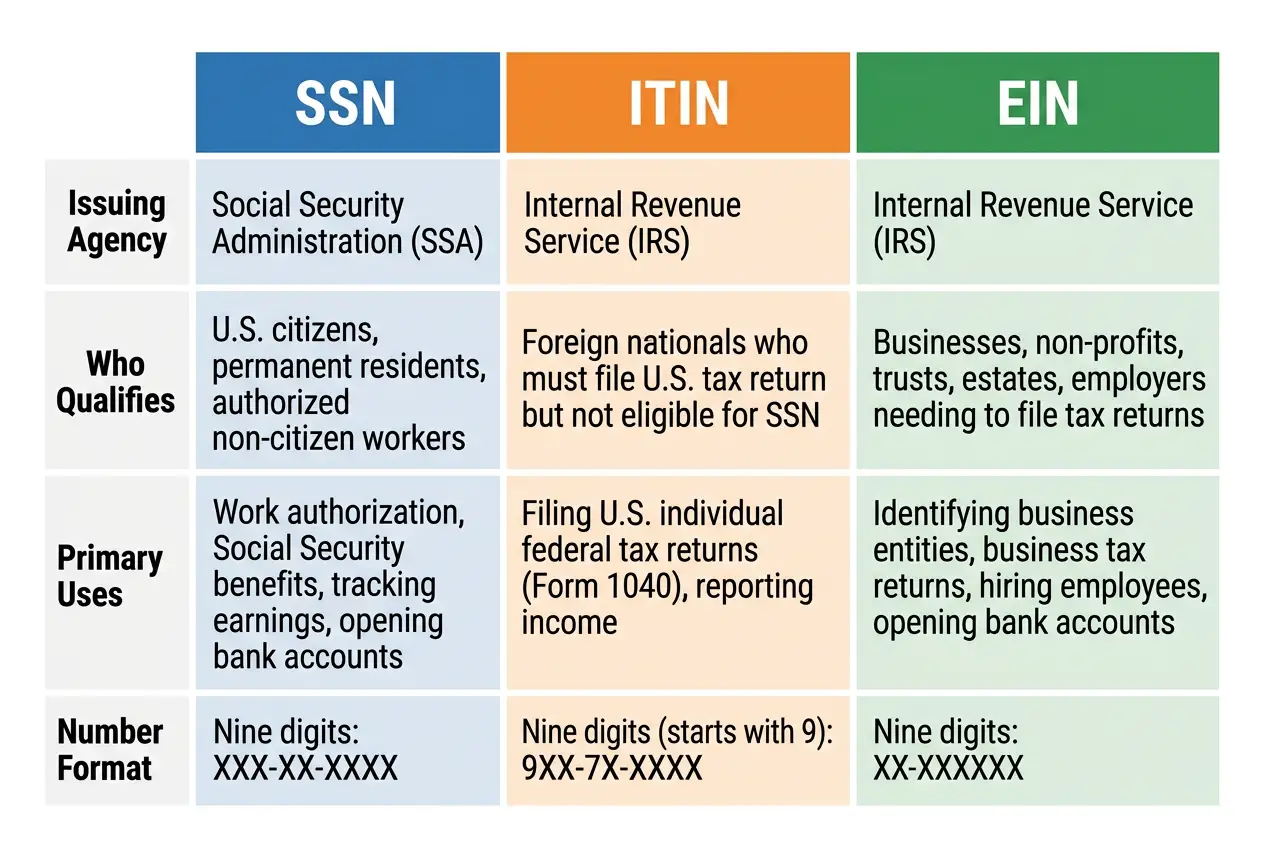
SSN (Social Security Number): Issued by the Social Security Administration. For US citizens and work-authorized residents only. Used for personal income tax filing and employment records.
ITIN (Individual Taxpayer Identification Number): Issued by the IRS via Form W-7. For foreign individuals who have a US tax obligation but cannot get an SSN. Used on personal tax returns (Form 1040-NR), W-8BEN forms, and certain other individual tax documents. An ITIN does not authorize work in the US and does not replace an SSN for employment purposes.
EIN (Employer Identification Number): Issued by the IRS via Form SS-4. For businesses, LLCs, corporations, trusts, partnerships, and other entities. Used for business tax filings, payroll, bank accounts, and business credit.
So the question “which one do I need as a foreigner” depends entirely on what you are trying to do.
If you are a foreign individual filing a US personal tax return because you earned US sourced income, you need an ITIN.
If you are a foreign individual or company that owns or operates a US business entity, you need an EIN for that entity.
And here is the critical piece that answers the question I get most often: do you need an ITIN before applying for an EIN?
Not necessarily. You can apply for an EIN for a US entity without having an ITIN. As I explained above, the Form SS-4 allows foreign responsible parties to write “Foreign” in the field that asks for an SSN or ITIN. The IRS processes it without requiring you to have either.
But there are situations where having an ITIN first is genuinely useful. If you plan to open a US business bank account as the sole proprietor (not through an LLC or corporation), some banks will accept an ITIN plus EIN combination for account opening. If you are going to file a US personal tax return alongside your business return, you will need an ITIN for the personal return.
The EIN vs ITIN difference for foreigners ultimately comes down to the level at which you are operating. Personal tax identity needs an ITIN. Business entity tax identity needs an EIN. Many foreign business owners eventually need both, but for different purposes.
Does a Foreign Company Need an EIN to Operate in the USA?
Short answer: the moment a foreign company hires US employees, opens a US bank account, withholds US taxes, or has a US tax return to file, it needs an EIN. A company that only sells to US customers from abroad, with no US employees, office, bank account, or registration, may not need one yet; its obligations are usually handled through withholding by US payers or treaty provisions. The situations that trigger the requirement are these.
Hiring US employees. Any employer, domestic or foreign, that pays wages to US employees must have an EIN for payroll tax purposes. There are no exceptions.
Opening a US bank account in the company’s name. Most US banks require an EIN for business account opening. Some banks accepting foreign-owned entity accounts will also require additional documentation, but requirements vary by bank.
Filing a US tax return. Foreign corporations with effectively connected income in the US file Form 1120-F. That form requires an EIN. Foreign-owned US LLCs file Form 5472 as part of their Form 1120 filing. That requires an EIN.
Withholding taxes from US sourced payments. If a foreign company is acting as a withholding agent, making payments of US sourced income to others, the company must have an EIN to remit the withheld amounts to the IRS.
Operating a US subsidiary or branch. Any formal US business presence, a subsidiary corporation, a branch office, or a registered US entity owned by a foreign parent, needs its own EIN.
The short version: if you are a foreign company doing real business in the United States in any formal capacity, you need a US EIN. The application is free. The process is manageable. And avoiding it creates serious compliance problems that are far more expensive to fix later than they would have been to prevent upfront.
How to Apply for an EIN Without a Social Security Number
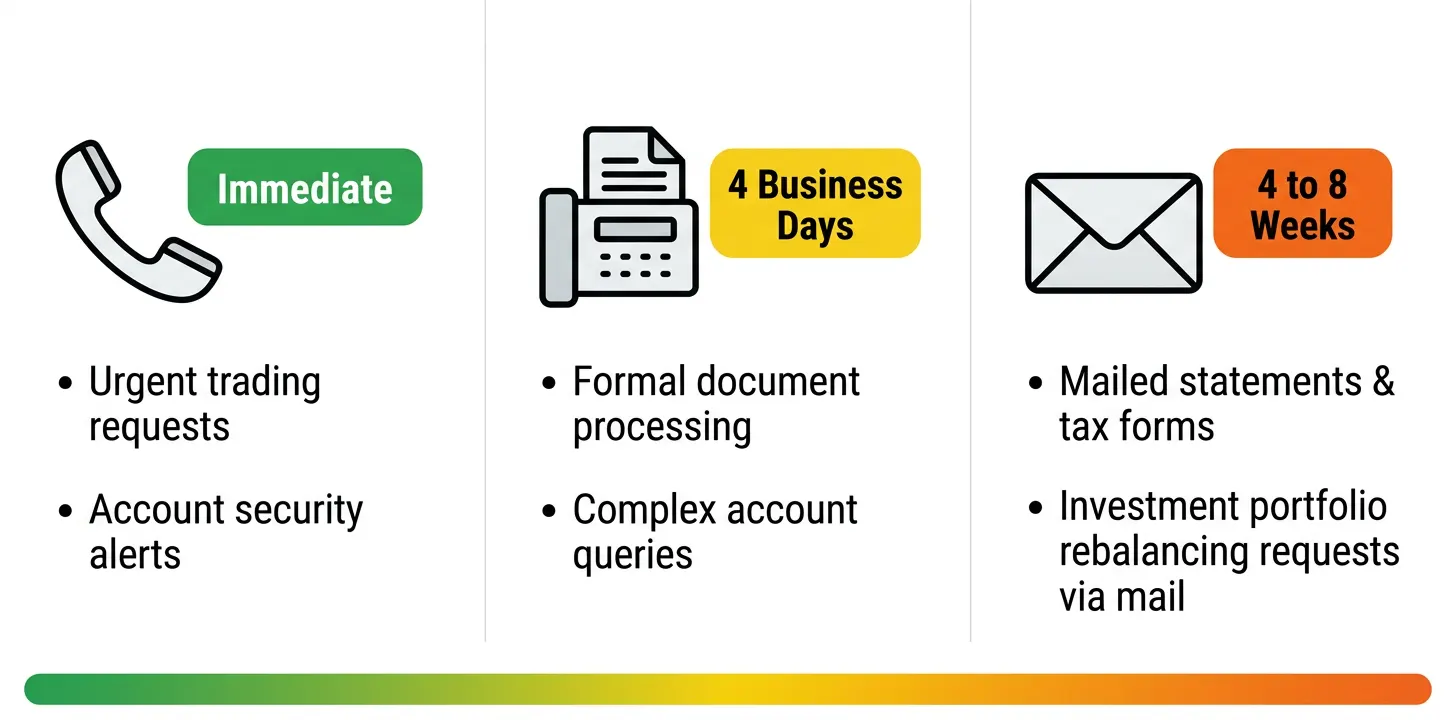
You can apply for a US EIN without a Social Security Number by using one of three IRS approved methods: phone application via the IRS international line, fax submission of Form SS-4, or mail submission of Form SS-4.
This is the core practical question that everyone with a foreign identifier needs answered. So I am going to walk through each method with complete detail, including the exact numbers, addresses, and form fields that matter.
Method 1: Apply by Phone (IRS International Line)
This is the fastest option. Full stop.
Call the IRS international EIN line at +1-267-941-1099. This line is open Monday through Friday, 6:00 AM to 11:00 PM Eastern Time. It is a dedicated line for international EIN applicants.
Before you call, have the following ready:
- The legal name of the entity applying for the EIN
- The type of entity (LLC, corporation, partnership, trust, etc.)
- The state where the entity was formed (for US entities) or the country of formation (for foreign entities)
- The reason for applying for an EIN (new business, banking purposes, hired an employee, etc.)
- The responsible party’s full legal name, title, and foreign identification details
- The entity’s principal business address (foreign address is fine)
- The nature of the business or primary business activity
- Whether the entity has or expects to have US employees, and if so, how many
The IRS representative will ask you a series of questions based on Form SS-4 content. They will complete the form on their end based on your verbal answers. At the end of the call, if everything checks out, they will give you your EIN number verbally over the phone.
You will also receive a written confirmation. But you have the number immediately.
Wait times on this line can be significant. Some callers report waiting 30 to 45 minutes or longer during peak periods; this is anecdotal, not an IRS figure, and wait times vary.
Also: you do not need to be the responsible party yourself to call, but the person making the call must be authorized to receive the EIN and answer questions about Form SS-4. If you authorize a third-party designee, complete the third-party designee section of Form SS-4.
Method 2: Apply by Fax
To fax your SS-4 to the IRS as an international applicant, use fax number +1-304-707-9471. This is the IRS fax number specifically designated for international EIN applications.
If you include a return fax number on your SS-4 form, the IRS will fax your EIN confirmation back to you in approximately 4 business days.
If you do not include a return fax number, the IRS will mail the confirmation, which takes longer. Always include your return fax number when faxing from abroad.
The fax method is more reliable than a phone call for people who struggle with time zone differences for the IRS phone line hours. Prepare your Form SS-4 completely, fax it to the international number, and wait for the return fax.
Faxing from outside the US: You will need a fax service that can send to US numbers internationally. Many online fax services can do this; check that the service can send to a US number and can receive a return fax if you want the EIN faxed back.
Method 3: Apply by Mail
Mail your completed Form SS-4 to:
Internal Revenue Service
Attn: EIN International Operation
Cincinnati, OH 45999
USA
Mail applications take the longest. The IRS estimates approximately 4 to 5 weeks for processing of mailed applications. During periods of high volume, particularly in Q1, this timeline can stretch to 6 to 8 weeks.
I only recommend the mail method when fax is not available and the phone method is not feasible due to time zone constraints or language barriers. If you can fax or call, do one of those instead.
IRS Form SS-4 Instructions for Foreign Applicants
IRS Form SS-4, Application for Employer Identification Number, is the document you submit to request an EIN. Foreign applicants follow the same form but with specific instructions for certain fields.
You can download Form SS-4 directly from IRS.gov at no cost. The form is two pages. The instructions document that accompanies it is longer and worth reading, but I want to highlight the specific fields that trip up foreign applicants.
SS-4 lines a foreign applicant completes, keyed to the real form
| Line | What it asks | What a foreign applicant enters |
|---|---|---|
| 1 | Legal name of entity (or individual) for whom the EIN is requested | Exact legal name as registered (U.S. LLC: state-registered name; foreign company: exact home-country legal name). Must match registration documents. |
| 2 | Trade name of business (if different from line 1) | Only if a trade name is used; otherwise does not apply. |
| 3 | Executor, administrator, trustee, “care of” name | Trusts/estates or a designated person only; otherwise does not apply (general instruction: enter N/A on lines that don’t apply). |
| 4a–4b | Mailing address; city, state, ZIP | Actual mailing address. A foreign address is acceptable: city, province/state, postal code, full country name (do not abbreviate the country). |
| 5a–5b | Street address (if different; no P.O. box); city, state, ZIP | Principal-place street address if different from mailing address; otherwise does not apply. |
| 6 | County and state where principal business is located | The entity’s primary physical location. A foreign entity with no U.S. physical presence follows the general instruction (N/A on lines that don’t apply), do not invent a U.S. county. |
| 7a | Name of responsible party | Full legal name (first, middle initial, last if applicable) of the individual who ultimately owns or controls the entity. |
| 7b | SSN, ITIN, or EIN of responsible party | Enter the responsible party’s SSN or ITIN if held. Enter “foreign” or “N/A” ONLY if the responsible party does not have AND is ineligible to obtain an SSN or ITIN. An entry is required, never leave 7b blank. Government-entity applicants only may enter an EIN for the responsible party. The responsible party must be a natural person, not an entity (government-entity exception aside). |
| 8a | Is this application for an LLC (or foreign equivalent)? | Yes/No. |
| 8b | If 8a is Yes, number of LLC members | Member count. |
| 8c | If 8a is Yes, was the LLC organized in the United States? | Yes/No (U.S. state vs foreign country of organization). |
| 9a | Type of entity (check only one box; if 8a is Yes, follow the instructions for the correct box) | Match the box to the entity’s actual form AND tax classification: single-member LLC classified as a disregarded entity → “Other” + write “disregarded entity” (“foreign disregarded entity” for a foreign disregarded entity); multi-member LLC accepting partnership treatment → “Partnership”; LLC electing corporate treatment (Form 8832 / Form 2553) → “Corporation” + return form number (1120 / 1120-S). There is no “Foreign entity” box. |
| 9b | If a corporation, state or foreign country of incorporation | U.S. state, or the foreign country for a foreign corporation. |
| 10 | Reason for applying (check only one box; a selection is required; do not enter N/A) | One box only, e.g. Started new business (specify type), Hired employees, Banking purpose (specify purpose), Compliance with IRS withholding regulations, or Other (specify). |
| 11 | Date business started or acquired | Month, day, year. |
| 12 | Closing month of accounting year | Last month of the accounting/tax year. |
| 13 | Highest number of employees expected in the next 12 months | Number; enter -0- if none. |
| 14 | Form 944 election | Check only if employment-tax liability is expected to be $1,000 or less in a full calendar year and annual Form 944 filing is wanted; otherwise Form 941 quarterly applies. Skip if no employees expected. |
| 15 | First date wages or annuities were paid | Date wages/annuities began (for foreign applicants: date wages began to be paid in the U.S.). If the business does not plan to have employees, enter “N/A”. Withholding-agent variant: date income will first be paid to a nonresident alien. |
| 16 | Principal activity (check the ONE box that best describes it) | One category box from the form (e.g. Construction, Real estate, Manufacturing, Finance & insurance, Retail, Other (specify)). |
| 17 | Principal line detail (merchandise sold, construction work done, products produced, services provided) | Specific detail matching the line 16 box (e.g. line 16 Construction → “General contractor for residential buildings”). An entry is required, be specific; a vague label alone is not adequate detail. |
| 18 | Has the applicant entity on line 1 ever applied for and received an EIN? | Yes/No; if Yes, write the previous EIN. |
Phone 267-941-1099 for applicants with no U.S. legal residence or principal place (Monday–Friday 6 a.m.–11 p.m. Eastern; caller must be authorized). Fax 304-707-9471 if faxing from outside the U.S., 855-215-1627 if within the U.S. (for applicants with no U.S. legal residence or principal place). Fax numbers may change without notice, verify on IRS.gov at filing time. Use only one application method per entity.
Official IRS sources: IRS instructions for Form SS-4 and official Form SS-4 (PDF).
Line 1: Legal name of entity. Enter the exact legal name. For a US LLC, this is the name as registered with the state. For a foreign company, this is the exact legal name in your home country, even if it includes non-English characters.
Line 2: Trade name. Enter only if different from Line 1. Many foreign entities skip this.
Line 3: Executor, trustee, care of name. Used for trusts and estates. Enter N/A if not applicable.
Line 4a and 4b: Mailing address. A foreign address is completely acceptable here. Enter the entity’s actual mailing address.
Line 5a and 5b: Street address of principal place of business. If the principal place of business is outside the US, enter that address. If the entity has a US street address different from its mailing address, enter it here.
Line 6: County and state where principal business is located. Enter the county and state where the principal business is located. For foreign entities with no US physical presence, write “N/A.”
Line 7a: Name of responsible party. Enter the full legal name of the responsible individual.
Line 7b: SSN, ITIN, or EIN of responsible party. This is the critical field. If the responsible party is a foreign individual who does not have and is ineligible to obtain an SSN or ITIN, write “Foreign” in this field. An entry is required. Do not leave it blank.
Lines 8a-8c: LLC information. Line 8a asks whether the entity is an LLC. If yes, Line 8b asks for the number of LLC members, and Line 8c asks for the state or country where the LLC was formed. Entity type itself is Line 9a, below.
Line 8b: If LLC, number of members. Enter the number of LLC members.
Line 8c: If LLC, state or country of formation. If a US LLC, enter the state. If a foreign LLC, indicate the country.
Line 9a: Type of entity. Check the box that best describes the type of entity applying for the EIN. This is not a tax-classification election; for a single-member LLC that will be classified as a disregarded entity, check the “Other” box as the SS-4 instructions direct for that case.
Line 10: Reason for applying. Check only one box. Most foreign national business owners check “Started new business” or “Banking purpose,” depending on why the EIN is needed.
Line 11: Date business started or acquired. Enter the date the business started, or the date you acquired an existing business.
Line 12: Closing month of accounting year. Most entities use December (calendar year). Enter the last month of your accounting or tax year.
Line 13: Highest number of employees expected in the next 12 months. Line 14: Do you want to file Form 944? Line 15: First date wages or annuities were paid. If the business does not plan to have employees, enter “N/A” on Line 15, not a blank.
Line 16: Principal activity. Check the one box on Line 16 that best describes the principal activity of the applicant’s business, from the categories on the form, such as Retail, Manufacturing, or Other.
Line 17: Detail. Use Line 17 to describe the applicant’s principal line of business in more detail, for example “Retail e-commerce” or “software consulting,” with the specific products or services.
Line 18: Check whether you have applied for an EIN before. Most foreign applicants check “No.”
Signature line: The responsible party or an authorized representative signs here. For a faxed or mailed application, a physical signature is required.
Illustrative SS-4 walkthrough (fictional example)
Take a fictional example only: Example Consulting LLC, a single-member Delaware LLC owned by a fictional non-U.S. resident, Jane Example. Line 1: Example Consulting LLC. Line 2: leave blank unless a trade name is used. Lines 4a-4b: the LLC’s mailing address. Lines 5a-5b: the street address of the principal place of business, if different. Line 6: the county and state of the principal place of business, or N/A for a foreign entity with no U.S. physical presence. Line 7a: Jane Example, the responsible party, who must be a natural person. Line 7b: Foreign, because in this example she does not have and is ineligible to obtain an SSN or ITIN; an entry is required, so this line is never left blank.
Lines 8a-8c: Yes, it is an LLC; one member; Delaware as the state of formation. Line 9a: the entity type box for a limited liability company, noting that a single-member LLC classified as a disregarded entity checks Other as the SS-4 instructions direct. Line 10: one reason box only, such as Started new business or Banking purpose, depending on the need. Line 11: the date the business started. Line 12: December, the closing month of the accounting year. Line 13: the highest number of employees expected in the next 12 months. Line 14: whether to file Form 944. Line 15: the first date wages were paid, or N/A if the business does not plan to have employees.
Line 16: check the one activity box that best fits, such as Other for consulting services. Line 17: the detail, for example, software consulting for small e-commerce brands. Line 18: whether an EIN was applied for before, No in this example. The responsible party or an authorized representative signs, and a third-party designee section is completed only if someone else is authorized to receive the EIN and answer questions.
This example is illustrative only and uses fictional names; it is not a completed form and does not supply a real EIN. The route still depends on location and TIN: online only with a U.S. legal residence or principal place and a valid TIN for the principal officer, telephone only with no U.S. legal residence or principal place, and fax or mail in other cases.
EIN Application Process for Non-Citizens Explained
Non-citizens apply for an EIN using the same Form SS-4 that any US business uses. Which route is available depends on location and TIN, as set out above: online only with a US legal residence or principal place and a valid TIN for the principal officer, telephone only for applicants with no US legal residence or principal place, and fax or mail for other cases.
I want to address something specific here that I see cause confusion on forums repeatedly.
Some non-citizens believe they need to hire an attorney or paid EIN service to get a number because the process seems too complicated to handle alone. That is not true for the majority of straightforward situations.
A single member LLC formed by a foreign national, with one responsible party who does not have and is ineligible to obtain an SSN or ITIN, can often complete the process with one phone call, and the EIN is given during the call. The call itself is often completed in under an hour, but this is an estimate and wait times vary.
Where professional help becomes genuinely valuable is in situations involving:
A foreign trust with US beneficiaries, which triggers complex reporting obligations beyond the EIN application itself. An EIN for a foreign trust is just the beginning of a longer compliance structure.
A foreign corporation with US operations, where the EIN is part of a larger US tax nexus setup including Form 5472 obligations, branch profit tax considerations, and potential treaty elections.
A multi-member LLC with foreign owners spread across multiple countries, where ownership structure, operating agreements, and withholding obligations all interact in ways that require professional judgment.
For the straightforward foreign owned single member LLC situation that represents the majority of inquiries I see, you can handle this yourself. Use the IRS phone line. Have your Form SS-4 information prepared. Call, answer the questions, get your EIN.
One thing that genuinely matters: make sure your US LLC is actually legally formed and registered with the state before you call. The IRS will ask for confirmation that the entity exists. If you call before your LLC formation documents are filed and accepted by the state, the IRS may decline to issue the EIN or issue it under incorrect entity information.
Step by Step: Applying for an EIN as a Foreign National
Here is the complete step by step process for a foreign national to obtain a US Employer Identification Number using the phone method, which is the fastest available option.
I am going to walk through this exactly as it happens in practice, not as an abstract checklist.
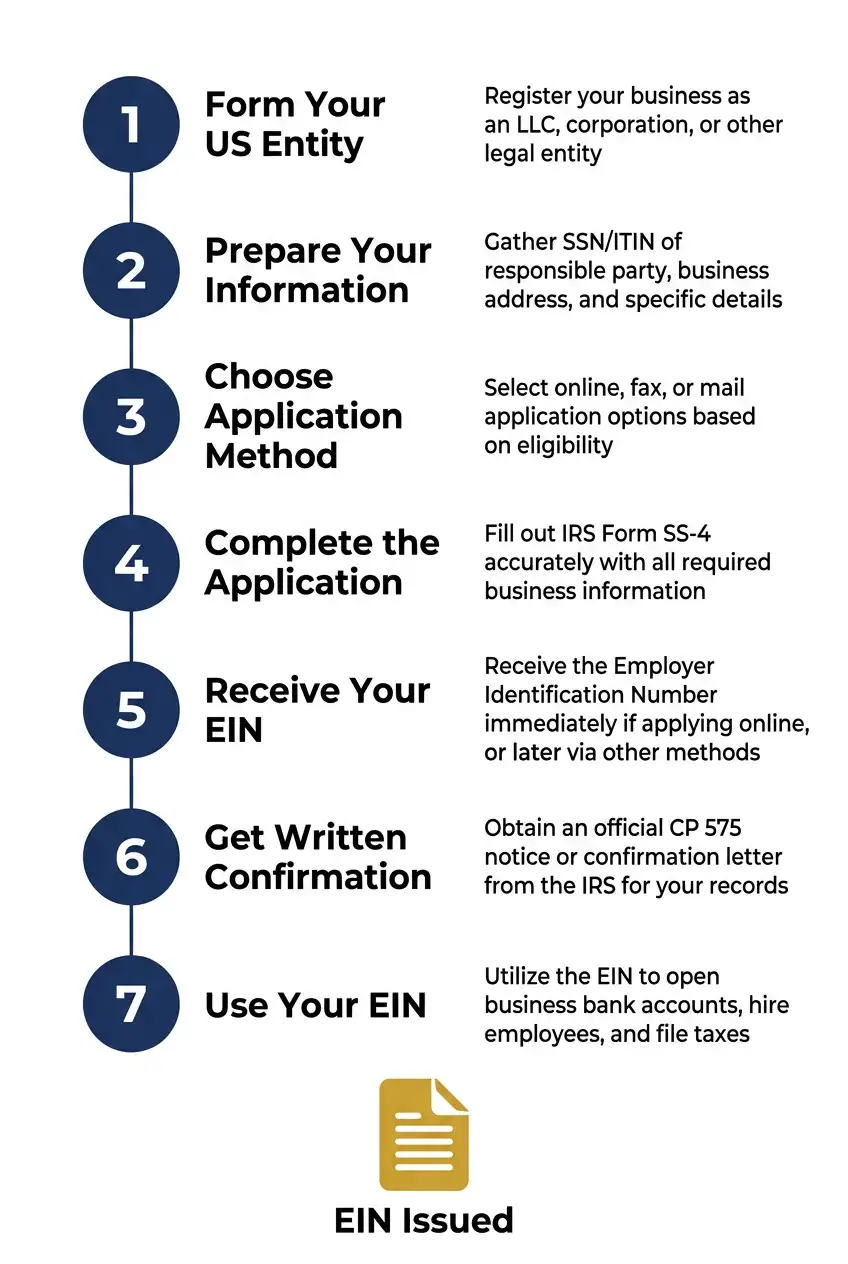
Step 1: Form your US entity first.
Go to the Secretary of State website for your chosen state (Delaware, Wyoming, and New Mexico are commonly used states for this purpose). You will need a registered agent in that state.
Once your Articles of Organization or Articles of Incorporation are accepted and you have received your state formation documents, you are ready for the EIN application.
Step 2: Prepare all your information.
Write down the following before calling or faxing:
The exact legal name of your entity. The state of formation. The date of formation. The purpose of the business. The name, address, and title of the responsible party. Whether the entity will have US employees and if so, when the first payroll date will be. The principal business activity. The fiscal year end month.
Step 3: Choose your application method.
If time zone and language are not barriers, call +1-267-941-1099 during IRS international line hours. If you cannot call during those hours, complete Form SS-4 and fax to +1-304-707-9471 with a return fax number included.
Step 4: Complete the application.
By phone: Answer the representative’s questions. They work through the Form SS-4 fields with you. When they reach Line 7b, tell them the responsible party is a foreign national with no SSN or ITIN. They will note “Foreign” in that field and continue.
By fax: Write “Foreign” clearly in Line 7b if the responsible party does not have and is ineligible to obtain an SSN or ITIN. Complete all other fields accurately. Sign the form. Fax it to +1-304-707-9471 if you are outside the US.
Step 5: Receive your EIN.
By phone: You receive it verbally at the end of the call. Write it down. The representative will also spell it out. Confirm it before hanging up.
By fax: The IRS faxes back a CP 575 or EIN confirmation generally within 4 business days to the return fax number you provided, if you included one.
Step 6: Get the written confirmation.
The IRS will mail a formal CP 575 notice to the address on your Form SS-4. This letter is your official EIN confirmation document. Keep it permanently. Some banks, state agencies, and partners will ask to see the original CP 575 when you set up accounts or enter into certain agreements.
Step 7: Use your EIN immediately.
Once you have the number, you can use it for bank account applications, vendor onboarding, contract documentation, and tax filings. The EIN is active from the moment it is issued.
How Foreign Companies Obtain a US EIN from the IRS
A foreign company obtains a US EIN by submitting Form SS-4 via phone or fax to the IRS, designating a responsible party, and writing “Foreign” in the SSN field if the responsible party has no US taxpayer identification number.
For foreign corporations specifically, there are a few additional considerations beyond what a simple foreign owned US LLC faces.
A foreign corporation that is registered and operates entirely outside the US but earns US sourced income files Form 1120-F with the IRS. That filing requires an EIN. The responsible party for the EIN application is typically an officer of the corporation, such as the CEO or director, who is authorized to act on the company’s behalf.
For a foreign corporation with US employees, the EIN application should note on Line 15 the date wages were first paid.
The EIN for a foreign corporation also matters for banking purposes. Many US correspondent banks that handle international wire transfers will require the foreign company to provide an EIN when setting up payment relationships with US financial institutions. This is increasingly true in the post-FATCA compliance environment.
Form 5472 is a form I want to flag specifically for foreign owned US corporations. If a US corporation has 25% or more of its stock owned by a foreign person, and if reportable transactions occurred between the corporation and its related foreign parties, Form 5472 must be filed. Missing a required Form 5472 filing can have serious consequences; check the current Form 5472 instructions for the filing requirements that apply to the entity. The EIN is required for this filing.
Getting an EIN for Your International Business in the US
Foreign nationals starting or expanding an international business in the US need an EIN to open bank accounts, hire employees, sign contracts, and comply with IRS reporting requirements.
I want to talk about foreign owned LLC EIN situations specifically because this is by far the most common scenario I see among people building international businesses with US operations.
The single member LLC owned entirely by one foreign national is a disregarded entity for US federal tax purposes by default. That means the IRS treats it as a pass-through. The income and expenses of the LLC flow directly to the owner’s personal tax return.
But here is what makes this more complex for foreign owners.
A single member LLC with a foreign owner is treated as a disregarded entity, yes, but it still has its own EIN. For a US disregarded entity wholly owned by a foreign person, Form 5472 may be required, as described in the SS-4 instructions for disregarded entities.
For entities in that class, this filing is not optional. It catches many foreign LLC owners by surprise because a disregarded entity is often assumed to have no separate filing.
Missing a required Form 5472 filing can have serious consequences; check the current Form 5472 instructions for the filing requirements that apply to your entity.
This is a filing to take seriously, not to assume away because the LLC is disregarded for other purposes.
Get the EIN. If your entity is in the Form 5472 class described above, file Form 5472. Keep records of all transactions between you personally and your LLC.
For foreign owned LLCs choosing to be taxed as an S Corporation: S corporation status may not be available to non-resident aliens. Check the current IRS rules for S corporation shareholders and Form 2553 before making an election, and get professional advice for your situation.
For the EIN for foreign trust scenarios: A foreign trust with US beneficiaries or US grantor involvement has its own EIN and its own set of reporting requirements. Those requirements may include Form 3520 or Form 3520-A depending on the trust’s circumstances; get professional advice before relying on a single form number.
Common Mistakes That Get Foreign EIN Applications Rejected
The most common reasons foreign EIN applications are rejected or delayed include errors in the responsible party field, applying before the US entity is formed, and selecting the wrong entity type on Form SS-4.
Let me go through the specific mistakes I see repeatedly and how to avoid each one.
5 SS-4 mistakes that delay foreign EIN applications
- Line 7b left blank. An entry is required. Enter the responsible party’s SSN or ITIN if held; enter “foreign” or “N/A” only if the responsible party does not have and is ineligible to obtain an SSN or ITIN. A blank 7b can delay processing or trigger an IRS request for more information.
- An entity named as responsible party. Unless the applicant is a government entity, the responsible party must be a natural person, the individual who ultimately owns or controls the entity, not a company.
- Wrong line 9a box. Match the box to the entity’s actual form and tax classification (see table rows 8a–9a); a mismatch against state formation records causes problems at filing time.
- Applying before the entity is legally formed. Form the entity first (or, for a foreign company seeking an EIN for withholding, confirm the line 10 reason matches the actual need); the application needs an existing applicant entity and a valid reason.
- Wrong fax number. Fax to 304-707-9471 only if faxing from outside the U.S.; use 855-215-1627 if within the U.S. (for applicants with no U.S. legal residence or principal place). Numbers may change without notice, verify on IRS.gov at filing time. Include a return fax number for the fax-back (generally within 4 business days); without one, confirmation is mailed and takes longer.
Educational summary of IRS Form SS-4 (Rev. December 2025) and its instructions. Not an official government form. Verify current instructions at irs.gov before filing.
Incorrect Responsible Party Information
Writing nothing in Line 7b instead of the word “Foreign.” The IRS needs an entry in that field. Enter “Foreign” only if the responsible party does not have and is ineligible to obtain an SSN or ITIN.
Listing a company or another entity as the responsible party. Unless the applicant is a government entity, the IRS requires a real human being, a natural person, as the responsible party.
Wrong Entity Type Selection
Checking “sole proprietor” when you actually formed an LLC. These are different things. A sole proprietor has no legal entity. An LLC is a legal entity. Checking the wrong box creates a mismatch between your state formation records and your IRS records, which causes problems later when you file tax returns.
Checking “corporation” for a foreign company that has not registered in any US state. A foreign company that has not formed a US subsidiary is not a US corporation. If you need an EIN for the foreign company itself (for withholding purposes, for example), select “other” and describe the entity type.
Applying Before Your US Entity Is Formed
This is perhaps the most common mistake I see among people who are excited to move fast with their US business setup. The IRS issues EINs for entities that exist. If you apply before your state formation documents are approved, you risk the EIN being issued under incorrect information, or the IRS denying the application entirely.
Wait for your Articles of Organization or Articles of Incorporation to be accepted and stamped by the state before filing the SS-4. Read next: choosing a registered agent for your U.S. LLC.
Missing or Wrong Business Description
Being too vague on Line 16 and Line 17. Check the Line 16 activity box that best fits, then use Line 17 for detail. “Business services” alone is not adequate detail. “Digital marketing consulting for small e-commerce brands” is the kind of specific detail Line 17 calls for.
Wrong Fax Number
This sounds simple, but it is genuinely a problem. The IRS has different fax numbers for domestic and international EIN applicants. The domestic fax number is 855-641-6935. The international fax number is +1-304-707-9471. Using the wrong number means your application goes to the wrong processing center and either gets lost or returned with a significant delay.
How Long Does It Take to Get a Foreign EIN?
Getting a foreign EIN takes anywhere from immediate (by phone) to 4 to 5 weeks (by mail), depending on the application method you use.
Phone Application Timeline
Immediate. You call the IRS international line, complete the verbal application, and receive your EIN number before you hang up. The written CP 575 confirmation letter follows by mail within 4 to 6 weeks, but the number itself is yours on the day of the call.
This is the single clearest reason to use the phone method when at all possible.
Fax Application Processing Times
Generally within 4 business days if you include a return fax number. The IRS faxes back an EIN confirmation to your provided fax number.
During peak periods (January through April), this may take longer. A 7 to 10 business day peak figure is an estimate, not an IRS figure. Plan accordingly.
Mail Processing Times
4 to 5 weeks under normal conditions; a longer peak-period wait of 6 to 8 weeks is an estimate, not an IRS figure. The IRS mails the CP 575 notice to the address on the SS-4. There is no way to speed up a mailed application.
If you have a deadline, whether for a bank account opening or a contract requirement, mail is not your friend. Use the phone or fax method.
EIN verification for a foreign entity after the number is issued can be done in a few ways. The CP 575 letter is your primary verification document. You can also call the IRS Business and Specialty Tax Line at +1-800-829-4933 (US callers) to verify an EIN. Third parties like banks may conduct their own verification through IRS e-services if they have authorization.
What to Do After You Receive Your Foreign EIN
After receiving your foreign EIN, your next steps are to store the CP 575 letter securely, open a US business bank account, set up any required tax accounts, and understand your ongoing filing obligations.
The CP 575 Confirmation Letter
The CP 575 notice is your official EIN confirmation document. It is issued by the IRS and contains your entity name, your EIN, and the date it was assigned. Some banks and state agencies will ask to see the original CP 575 or a copy of it during account opening or licensing processes.
If you lose your CP 575, you can request a 147C letter from the IRS, which serves the same confirmation purpose. Call the IRS Business and Specialty Tax line to request one.
Opening a US Bank Account with Your EIN
This is often the primary reason foreign entities need an EIN open a separate bank account in the first place. Most US banks require an EIN for business account opening. The process varies by bank, but generally requires:
Documents banks commonly ask for include: your EIN (via CP 575 or verbal confirmation from the IRS call); your state formation documents (Articles of Organization or Articles of Incorporation); your operating agreement (for LLCs); and the responsible party’s passport or government-issued ID. If a bank asks for a US address, check that bank’s own requirements, as they vary by bank.
Processes for foreign-owned US entities vary by bank. Check each bank’s own requirements for foreign-owned entities before applying, rather than assuming one bank’s process applies to another. Read next: how direct bank transfers work for freelancers.
Setting Up EFTPS for Tax Payments
If your entity will have any US tax payment obligations, payroll taxes, estimated corporate taxes, or other federal payments, you will use EFTPS (Electronic Federal Tax Payment System). You can enroll at eftps.gov using your EIN; follow the enrollment steps on that site.
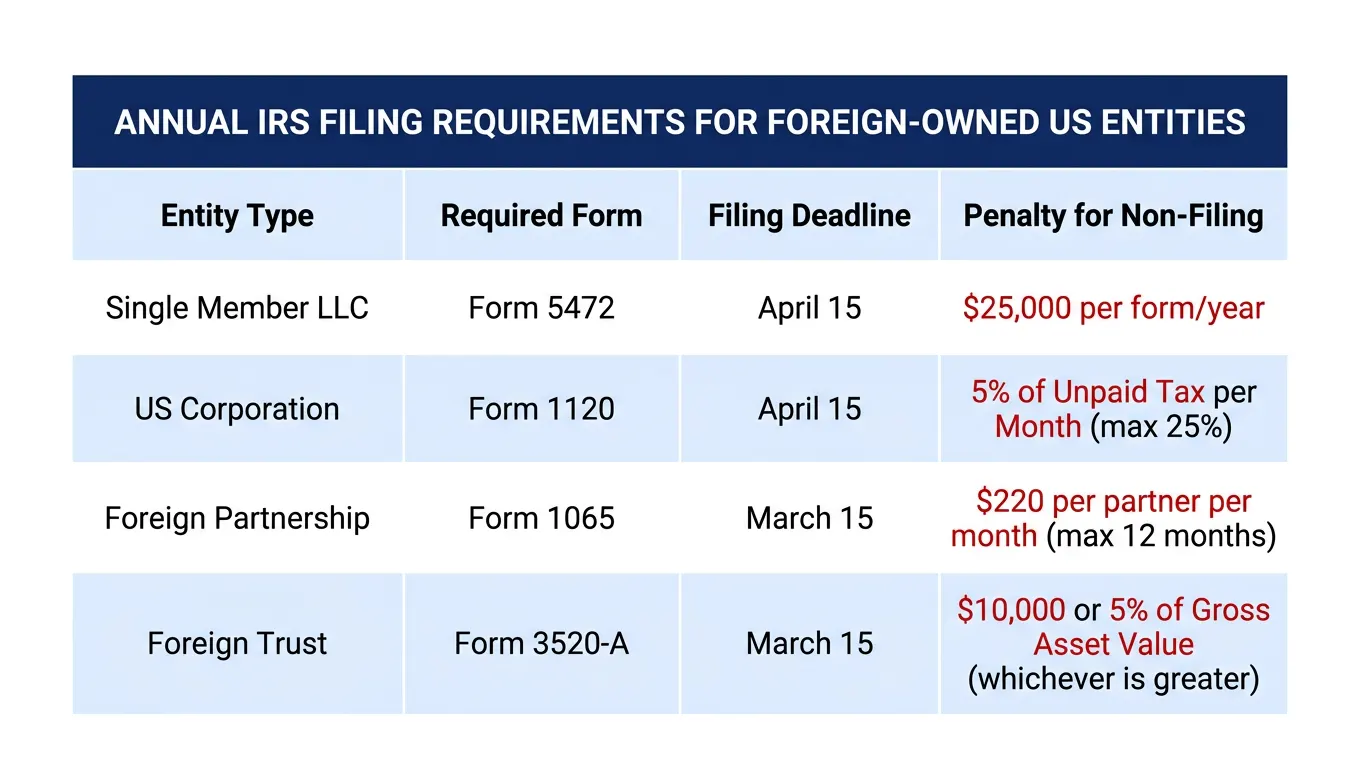
Understanding Your Annual Filing Obligations
This is the piece most people underestimate when they first get their EIN and feel like they are done with the bureaucracy.
A foreign-owned single-member LLC in the Form 5472 class described above files a pro forma Form 1120 with Form 5472 attached, annually.
A foreign-owned US corporation files Form 1120. A foreign corporation with effectively connected income files Form 1120-F, which requires an EIN.
A foreign partnership with US partners may be required to file Form 1065, depending on its circumstances.
A foreign trust with US beneficiaries may have annual reporting, which may include Form 3520-A depending on the trust’s circumstances; get professional advice for your situation.
Get clear on which category your entity falls into before year end of your first year of operation. The deadlines, the forms, and the penalty structures are all different. Read next: freelance taxes for beginners, explained from the start.
Post-EIN checklist (illustrative)
Store the CP 575 confirmation letter securely and note the EIN; keep your formation documents with it.
Check each bank’s own requirements for foreign-owned entities before applying for a business account; requirements vary by bank.
Enroll in EFTPS at eftps.gov only if the entity has U.S. tax payment obligations, and follow the enrollment steps on that site.
Confirm which annual filing class applies to the entity before year end of its first year: Form 5472 only if the entity is in the foreign-owned disregarded-entity class described above; Form 1120, Form 1120-F, Form 1065, or Form 3520-A only as they may apply depending on the entity’s circumstances.
Report any change of responsible party or address on Form 8822-B, and verify the EIN by calling 800-829-4933 if needed.
Check FinCEN BOI only if the entity is a foreign-formed entity registered to do business in a U.S. state; U.S. companies are exempt. Read next: getting paid through digital wallets as a freelancer.
FinCEN BOI Reporting: U.S. Companies Are Now Exempt
Under FinCEN’s final beneficial ownership information (BOI) rule, U.S. companies are exempt from BOI reporting requirements. That includes a foreign-owned LLC formed in Delaware, Wyoming, or another U.S. state: even though its owner is foreign, the company itself is a U.S. company and is exempt.
This is separate from anything the IRS manages. BOI reporting is a FinCEN system, not an IRS system, and an EIN does not determine BOI status.
Under the final rule, a “reporting company” means only a foreign-formed entity registered to do business in a U.S. state. For such a foreign reporting company, BOI is reported for non-U.S. beneficial owners; U.S. person beneficial owners and U.S. person company applicants do not need to be reported.
Who must file: only a foreign-formed entity registered to do business in a U.S. state. A U.S.-formed LLC or corporation, including one wholly owned by a foreign person, is exempt.
When to file: the old deadlines for U.S. companies no longer apply to them, because U.S. companies are exempt under the final rule. A foreign reporting company should check the current filing requirements and deadlines at fincen.gov/boi before relying on any older summary.
Important: FinCEN’s alert on this rule was updated August 11, 2026, and the final rule took effect August 14, 2026. Rules in older guides, including any exemption list or deadlines written for U.S. companies, are out of date.
Penalties: this guide does not state a daily penalty figure for BOI reporting. If you are a foreign reporting company, check the current requirements at fincen.gov/boi rather than relying on a figure from an older summary.
Your EIN is not sufficient for BOI filing, and BOI filing is not done through the IRS. The FinCEN BOI E-Filing System is at boiefiling.fincen.gov, reached from fincen.gov/boi. U.S. persons do not need to provide BOI to reporting companies, and U.S. persons with a FinCEN ID are not required to update or correct information they previously submitted.
FAQs
Can a foreign person apply for an EIN number?
Yes. A foreign person can apply for a US Employer Identification Number by calling the IRS international line at +1-267-941-1099, faxing a completed Form SS-4 to +1-304-707-9471, or mailing Form SS-4 to the IRS international operations address in Cincinnati, Ohio. A Social Security Number is not necessarily required; in Line 7b, enter “Foreign” only if the responsible party does not have and is ineligible to obtain an SSN or ITIN.
How do I get a federal tax ID number without a Social Security Number?
You apply using IRS Form SS-4 via phone, fax, or mail. In Line 7b, which asks for your SSN or ITIN, write the word “Foreign” only if the responsible party does not have and is ineligible to obtain an SSN or ITIN; an entry is required. The IRS processes these applications routinely and issues the EIN without requiring a Social Security Number from foreign applicants in that situation.
What is the difference between EIN and ITIN for foreigners?
An EIN is a business tax identification number for entities (LLCs, corporations, trusts, partnerships). An ITIN is a personal tax identification number for individuals who have US tax obligations but cannot get an SSN. Foreign business owners often need both, but for different purposes.
Can a non-US citizen be the responsible party on an EIN?
Yes. A non-US citizen can be designated as the responsible party on an EIN application. The responsible party must be a natural person. When the Form SS-4 asks for the responsible party’s SSN or ITIN, a foreign national writes “Foreign” in that field only if the responsible party does not have and is ineligible to obtain an SSN or ITIN. The IRS accepts this and processes the application normally.
How long does it take to get an EIN as a foreign national?
By phone (IRS international line): immediate. By fax with return fax number provided: generally within 4 business days. By mail: 4 to 5 weeks under normal conditions; a longer peak-period wait of 6 to 8 weeks is an estimate, not an IRS figure.
How to apply for EIN without SSN or ITIN?
Download Form SS-4 from IRS.gov. Complete all fields. In Line 7b, write “Foreign” where it asks for an SSN, ITIN, or EIN, only if the responsible party does not have and is ineligible to obtain an SSN or ITIN; an entry is required. Submit by faxing to +1-304-707-9471 (international applicants) or by calling +1-267-941-1099 to complete the application verbally.
Where do I fax my SS-4 form for foreign applicants?
International applicants fax Form SS-4 to +1-304-707-9471. Applicants in the U.S. with no U.S. legal residence fax to 855-215-1627. Include a return fax number on the form so the IRS can fax your EIN confirmation back to you generally within 4 business days.
Can a foreign owner open a US LLC and get an EIN?
Yes. A foreign national can form a US LLC in most US states (Delaware, Wyoming, and New Mexico are the most commonly chosen) and then apply for an EIN for that LLC using Form SS-4 via the IRS international line or fax. The online EIN application is available only to applicants in the United States or U.S. territories with a U.S. legal residence, principal place of business, or principal office or agency and a valid TIN for the principal officer, but the phone and fax methods accomplish the same result.
Do I need an ITIN before applying for an EIN as a foreigner?
No. You do not need an ITIN before applying for an EIN. The two numbers serve different purposes. An EIN application for a business entity can be completed by writing “Foreign” in the SSN field on Form SS-4 if the responsible party does not have and is ineligible to obtain an SSN or ITIN. You can apply for an ITIN separately if you also need to file a personal US tax return.
What is IRS Form SS-4 and how do foreign applicants use it?
Form SS-4 is the IRS application form for an Employer Identification Number. Foreign applicants complete the same form as domestic applicants but write “Foreign” in Line 7b only if the responsible party does not have and is ineligible to obtain an SSN or ITIN, and an entry is required. Which route is available depends on location and TIN: online only with a U.S. legal residence or principal place and a valid TIN for the principal officer; telephone only with no U.S. legal residence or principal place; fax or mail in other cases.
What happens after I receive my foreign EIN?
After receiving your EIN, store the CP 575 confirmation letter permanently. Use the EIN to open a US business bank account, set up EFTPS for tax payments if needed, and register with any required state tax agencies. Also determine your annual IRS filing obligations, including whether Form 5472 applies to your entity if it is a foreign-owned disregarded entity.
Is there an EIN lookup tool for foreign entities?
The IRS does not provide a public EIN lookup database for privacy reasons. If you have lost your EIN, the fastest way to retrieve it is to call the IRS Business and Specialty Tax Line and request a 147C letter. Alternatively, if you previously filed any IRS correspondence or tax documents, the EIN will appear on those documents.
What is the IRS phone number for international EIN applications?
The IRS dedicated international EIN line is +1-267-941-1099. It operates Monday through Friday, 6:00 AM to 11:00 PM Eastern Time. This line is for applicants with no U.S. legal residence, principal place of business, or principal office or agency, who cannot use the standard online EIN application.
Does a foreign company need an EIN to hire US employees?
Yes. Any entity, domestic or foreign, that pays wages to US based employees must have a US Employer Identification Number for payroll tax purposes. The EIN is required before the first payroll date. There is no exemption for foreign companies that happen to hire US workers.
What is the difference between a foreign employer identification number and a foreign tax ID number (FTIN)?
A foreign employer identification number generally refers to the US EIN obtained by a foreign entity from the IRS. A foreign tax identification number (FTIN) is the tax ID number assigned by a foreign government to a business or individual in that country. These are different numbers from different governments. US financial institutions requesting an FTIN on withholding forms (like the W-8BEN-E) are asking for your home country’s tax number, not a US EIN.
A Final Word on Getting This Right From the Start
The application itself is the easy part. The phone call is often completed in under an hour, although wait times vary. Fax takes about 4 business days. The form holds no traps once you know to write “Foreign” in Line 7b when the responsible party has no SSN or ITIN and is ineligible to get one.
What catches people out is everything the EIN connects to afterwards: annual filing obligations, Form 5472 for foreign-owned disregarded entities, FinCEN BOI reporting, banking, state tax registration, and payroll. Get the number right, use it consistently, and if your situation involves a foreign trust, owners in several countries, US employees, or significant US-sourced income, bring in a CPA or legal professional who specialises in international tax before you file anything.
For the authoritative version of everything in this guide, see the IRS International Taxpayers page at https://www.irs.gov/individuals/international-taxpayers
This article is for informational purposes only and does not constitute legal or tax advice. Consult a qualified tax professional for guidance specific to your situation.
