


Introduction
Scope creep is what happens when a project slowly grows past what you agreed and priced, one small request at a time, until you are doing far more work for the same money. It is stopped by four clauses in your contract, not by arguing about it mid-project: a clear scope of work, a revisions clause with a number in it, a change order process, and an acceptance clause. Two rounds of revisions is the common default for most freelance work, and anything beyond the agreed scope is a paid change order, not a free revision. This guide gives you the wording for all four clauses, the test that separates a revision from new work, and the exact process to follow when a client asks for more.
Most freelancers have lived this story. You quote a price for a website, a set of articles, or a logo. The client agrees. Then comes the first extra: one more page, a different layout, a new section, a second round of feedback from someone you have never met. Each request sounds small on its own. Nobody wants to be the freelancer who says no to a small favour. But the small requests add up, and by the end of the project you have done half as much work again for the same fee, and the deadline has moved twice. The problem is rarely a bad client. The problem is a contract that never said where the work ends.
I learned this the hard way on a project where everything was agreed verbally, with no contract and no written brief, and the client later redefined the work at the end. I tell that story in full in my freelance writing contract template post. The lesson is the point of this guide: if the scope is not written down, the client gets to decide what it was, and you get to do the extra work. If you have not signed a contract yet, start with my guide on whether verbal or email agreements are enforceable, which explains why a spoken deal can be valid and still leave you with nothing to point to. When a client will not sign anything at all, my guide on what to do when a client refuses to sign a freelance contract covers the risk. This guide is for the moment after the contract exists: how to keep the project inside it.
I am not a lawyer and this is general information, not legal advice. Where a legal rule matters, I have checked it against the statute text or a legal publisher, and the sources are listed at the end.
What Is Scope Creep in Freelancing?
Scope creep is the gradual expansion of a project beyond the original agreement, without a matching increase in time, budget, or written approval. It usually happens through a series of small extra requests, each too minor to charge for on its own, that together add up to significantly more work than you quoted. The result is doing more for the same money.
Notice the word gradual. Scope creep is almost never one big demand. It is a slow drift. A client asks for one more page. Then a different colour scheme. Then a contact form that was never mentioned. Then a second person starts sending feedback. Then the deadline moves because the new work takes time, but the price stays where it was. No single request feels worth a fight. That is exactly why it works so well against freelancers who have no written boundary to point to.
Scope creep is different from a legitimate revision. A revision adjusts something already included in the agreed deliverables: changing a button colour, tightening a paragraph, fixing a layout that does not match the approved mockup. Scope creep introduces something new: a feature, a page, a direction, or a deliverable that was never part of the original list. The test is simple, and it is worth memorising: was this item listed in the original scope, or does it need new research, new design, new code, or significant extra time? If it needs something new, it is not a revision. It is new work, and new work gets a new price.
Scope creep is also different from a change the client has every right to make. A client can ask for anything. The question is not whether the client is allowed to ask. The question is whether the asking changes the price and the deadline. A contract that handles scope creep well never says no to the client. It says yes, and here is what it costs.
Five Signs Scope Creep Has Started
Scope creep is easiest to stop in its first week, when it is still one small request. It is hardest to stop in its last week, when the extra work is already done and unpaid. These five signs tell you it has started. If you recognise two or more of them on a live project, stop and send a change order before you do another hour of work.
1. New features appear inside a revision round. A revision round is for fixing what was built. If new features, pages, or sections appear in the feedback, that is not a revision. That is a new request wearing a revision’s clothes. The moment feedback adds something that was never in the scope, the revision round has become a scope change.
2. “Just one more” becomes a pattern. One extra is a favour. Three extras in a row is a pattern, and a pattern means the client has learned that asking costs nothing. Small requests are the most dangerous kind of scope creep precisely because each one feels too small to raise. Count them. If you have said yes three times without a change order, the boundary has already moved.
3. New people start sending feedback. You agreed the project with one person. Now a partner, a manager, or an agency is sending comments, and their comments contradict the first person’s. Every new stakeholder is a new source of scope, because each one has their own idea of what the project should be. If your contract names one approver, feedback from anyone else is out of scope until the named approver folds it into a consolidated round.
4. The request has no line in the scope document. This is the cleanest test there is. Open the scope of work. Can you point to a line that covers the request? If you cannot, the request is out of scope. If you have no scope document at all, every request is out of scope by default, because there is nothing to point to. That is why the first clause in this guide matters more than the other three.
5. The timeline slips while the price stays still. The project is a week late, but the fee has not changed. That means the extra work is being paid for by your time. A project that grows in size and stays the same price is a project where scope creep has already won. The price and the scope must move together. If one moves and the other does not, you are working for free.
Why Scope Creep Is a Contract Problem, Not a Client Problem
Scope creep is rarely a client trying to cheat you. Most of the time it is a project where nobody wrote down where the work ends, so the boundary keeps drifting. The client asks for more because nothing told them they could not. The freelancer says yes because nothing told them they could charge. Both sides are behaving normally. The document failed, not the people.
That is good news, because a document can be fixed in an afternoon. The fix is four clauses, and each one closes a different hole. The scope clause defines what the client bought. The revisions clause caps how many times they can change it. The change order clause prices everything else. The acceptance clause decides when the work is done. Together they turn every scope request into a short, calm conversation: is this in the scope, and if not, here is what it costs.
Most freelance projects that go wrong do so because of three sentences that were never written down: who pays when, how many revisions are included, and who owns the files before the final invoice is paid. The first and the third belong to other guides: my deposit guide covers how much to charge upfront, and my guide on taking a client to small claims court covers where unpaid scope disputes end up. This guide covers the second sentence, and the three clauses that give it force.
Clause 1: The Scope of Work
The scope of work, often called the SOW or statement of work, is the single most important clause for preventing scope creep. It is a boundary document, not a sales document. It states exactly what will be delivered, what will not be delivered, what triggers a change, and who decides. A good scope can be read in sixty seconds, and a client who reads it should know exactly what they are buying.
A scope of work needs four parts. Leave one out and the creep finds the gap.
Itemised deliverables. List exactly what you will deliver, in countable terms: the number of pages, the number of articles, the length of the video, the file formats, the platforms, the deadlines. Write deliverables, not goals. “A new website” is a goal, and a goal can mean anything. “A five-page responsive marketing website (Home, About, Services, Blog index, Contact), built on WordPress, including one contact form, basic on-page SEO setup, and integration with the client’s existing email provider” is a deliverable list, and it leaves very little room for argument. Quantify everything that can be counted: number of unique page designs, number of breakpoints, number of languages, number of forms, number of third-party integrations.
Explicit exclusions. Listing what you will do is only half the job. Listing what you will not do removes the assumption gap. An exclusions list is the part most freelancers skip, and it is the part that saves the most arguments. Write it plainly: “Not included unless agreed in writing as a change order: copywriting, translation, additional languages, logo or brand identity creation, photography, hosting, and licences for stock images or fonts.” Every item on that list is a request you will not have to argue about later, because the answer is already in the contract.
Client responsibilities. Name what the client must provide, and by when: content, images, logins, approvals, feedback. This prevents delays being blamed on you. If the client is late with content, the deadline moves by the same amount, and the contract should say so in one sentence.
Definitions. Define the words that get abused later: page, template, revision, deliverable. A client who thinks a twelve-section landing page is “one page” is not lying. They just never agreed to your definition. Write it down: “Page means one unique page layout. Repeated use of an existing layout with different text and images counts as a template instance, not a new page. Revision means one consolidated round of written feedback delivered by the client in a single document or email.”
Here is copy-ready wording you can adapt. It is a starting point, not a finished contract, and you should have a lawyer in your jurisdiction review your template once before you reuse it for years.
Scope of Work. The Freelancer will deliver the items listed in Exhibit A (Scope of Work). Anything not listed in Exhibit A is outside the scope of this agreement and requires a separate written change order, agreed by both parties in writing before the additional work begins. The Client will provide the content, images, and access listed in Exhibit A by the dates stated there. If the Client is late providing them, the delivery dates move by the same number of days.

Clause 2: The Revisions Clause
The revisions clause is the clause that stops “just one more small tweak” from becoming fourteen unpaid rounds. It has five parts, and all five matter. A cap without a definition is easy to dodge. A definition without a named approver is easy to flood. A rate without a scope exclusion is easy to reframe. Write all five.
The round cap. State a specific number of revision rounds included in the fee. Two rounds is the common default for most creative work, according to the freelancer guides I read for this post, and it is the number I recommend as a starting point. One round is common for short-form deliverables such as social posts or ad variants. Three rounds can be reasonable for stakeholder-heavy projects or large deliverable sets. More than three is rarely wise, because it signals that the scope was never settled. Never write “reasonable revisions” or “revisions until the client is satisfied”. Those phrases have no cap and will be read by the client as unlimited. Two is a number. Reasonable is a negotiation that happens at the worst possible moment.
The round definition. A round is one consolidated batch of feedback from the approver, delivered in writing, in a single document or email, within a stated number of days after delivery. Multiple conflicting emails across a week are not a round. They are a process failure. Drip feedback, where comments arrive one by one over days, must count as a single round, or the cap means nothing. Write the definition into the clause, not into a conversation.
The named approver. Name the single person whose feedback counts. Feedback from anyone else, a new stakeholder, a partner agency, a junior team member, is out of scope until the named approver folds it into a consolidated round. This one line stops the most common form of scope creep on team projects: the client who forwards your draft to five colleagues and sends you five contradictory lists.
The overflow rate. State the price for revision rounds beyond the cap, usually hourly, sometimes per round. Include it even if you expect never to use it. The visibility alone deters scope creep, because the client can see the cost before they ask. “Additional revision rounds will be billed at $[RATE] per hour, agreed in writing before the additional work begins.”
The scope exclusion. State in one line that revisions do not include changes to voice, tone, direction, audience, deliverable format, or strategy. This is the line that separates a revision from a re-scope. Without it, every direction change will be framed as “just a revision”. With it, a client who wants a different direction knows they are asking for new work, and new work gets quoted.
Here is copy-ready wording for the full clause:
Revisions. Two (2) rounds of revisions are included in the base fee. A revision round consists of consolidated written feedback from [Named Approver or Role], delivered within seven (7) calendar days of delivery of the draft. Feedback received outside this window, or from other stakeholders, will be accommodated in the next round. Revisions are limited to edits within the approved direction. Changes to voice, tone, audience, deliverable format, scope, or strategic direction are re-scopes, not revisions, and will be quoted separately. Additional rounds beyond the two included are billed at $[X] per hour, agreed in writing before the additional work begins.
Revision or Re-Scope? The Test
When a request arrives, run it through this list. If it matches the left side, it is a revision and it is included. If it matches the right side, it is a re-scope and it gets a change order.
- Revision: changing a colour, a word, or a layout detail in work that was already delivered. Re-scope: adding a new page, feature, section, or deliverable that was never listed.
- Revision: fixing something that does not match the approved mockup or brief. Re-scope: changing the brief itself, for example a new audience, a new tone of voice, or a new strategy.
- Revision: tightening copy or correcting an error in existing content. Re-scope: writing new content, such as additional articles, social copy, or a second language version.
- Revision: feedback from the named approver, in one consolidated list, within the review window. Re-scope: feedback from a new stakeholder, or a new round of feedback after the included rounds are used up.
- Revision: adjusting a file format or size for the same deliverable. Re-scope: delivering the same work in a new format, such as turning a blog post into a video script or a logo into packaging.
- Revision: a small correction that takes minutes and does not change the deliverable. Re-scope: work that needs new research, new design, new code, or significant extra time.
Keep this list next to your contract. When a request arrives, you do not need to argue. You need to point. “This one is item four on the re-scope side, so I will send a change order.” That is a calm conversation, not a confrontation.
Clause 3: The Change Order
A change order is a short, written agreement to add work that falls outside the original scope, quoted and approved before it starts. It is the third option that most freelancers never give themselves. Without it, every out-of-scope request becomes either yes, which means absorbing it for free, or no, which feels difficult and risks the relationship. A change order turns the request into a normal business step: yes, and here is what it costs.
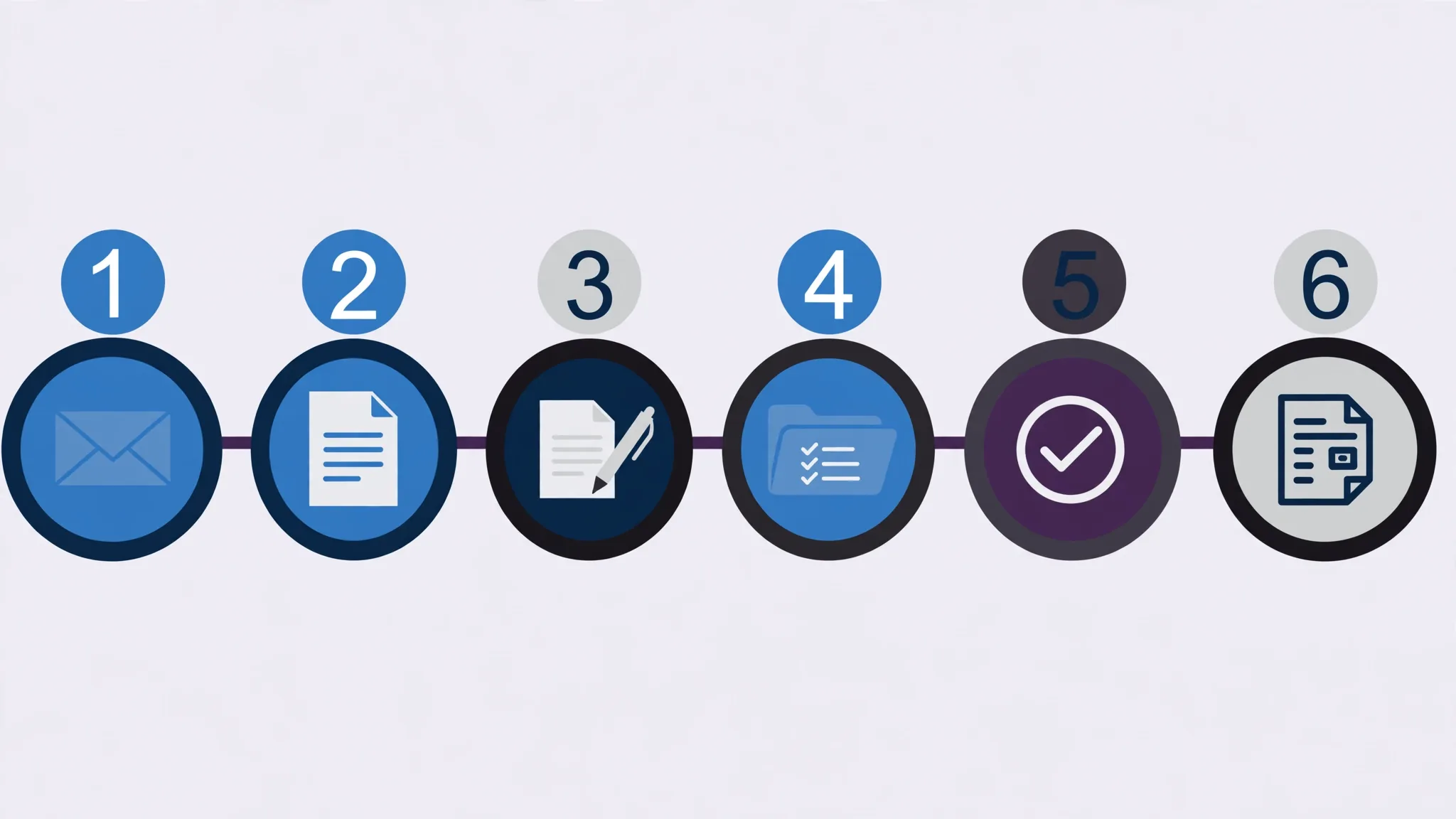
The process has six steps, and it should take less than a day from request to approval.
- The client submits the request in writing. An email, a message, or a formal change request. A verbal “sure, go ahead” is not enough. If the request arrives by phone, follow it up with an email that records it.
- You assess the impact on timeline and budget. Work out the extra hours, the extra cost, and the new delivery date before you reply with a number. Never quote a price for extra work off the top of your head.
- You send a change order document. One page is enough. It states the additional work, the additional cost, and the revised timeline, and it references the original agreement by name and date.
- The client approves the change order in writing. A reply saying “Approved” is enough, and an email approval counts as a writing under the federal ESIGN Act, which my Cycle 6 guide explains in full. Do not start the extra work before this step.
- You do the additional work. Only after written approval. Starting early is how a change order becomes a favour, and a favour becomes a precedent.
- You invoice the change order separately. Either as its own invoice or as a clearly labelled line item on the project invoice, so the client can see exactly what the extra work cost. A change order that is never invoiced is a discount you gave by accident.
One practical point: a change order usually needs its own deposit. If your project charges a deposit upfront, which my deposit guide explains, apply the same logic to the extra work. A change order without a deposit is a promise to pay later for work you have already done, which is the same risk the original deposit was meant to remove.
Here is a copy-ready change-order email:
Subject: Change order: [short description of the extra work]
Hi [client name],
Happy to add this. It falls outside the scope we agreed in [agreement name and date], so I have put together a quick change order.
Additional work: [describe it in one or two lines]
Additional fee: [amount and currency]
Revised delivery date: [date]
Deposit for this change order: [amount, if any]Please reply “Approved” and I will get started. The rest of the project stays on the original terms.
Thanks,
[Your name]
Clause 4: Acceptance
The acceptance clause decides when the work is done, and it is the clause that stops a project from never ending. Without it, a client can sit on a deliverable for three weeks, come back with a new round of feedback, and claim the project is still open. With it, the project has an end date that both sides agreed to in advance.
The clause has three parts. First, the standard: deliverables will be deemed accepted if they conform to the scope in Exhibit A. That sentence ties acceptance to the scope document, so the question is never “does the client like it” but “does it match what was agreed”. Second, the review window: the client has a stated number of days, usually five to seven business days, to review each deliverable and send consolidated feedback. Third, the consequence of silence: if the client does not respond within the window, the deliverable is deemed accepted, the milestone is invoiced, and the project moves on. That last part needs to be in the contract in plain words, because silence is not acceptance unless the contract says so.
Here is copy-ready wording:
Acceptance. Deliverables will be deemed accepted if they conform to Exhibit A (Scope of Work). The Client will review each deliverable and send consolidated written feedback within five (5) business days of delivery. If the Client does not respond within that period, the deliverable will be deemed accepted, the milestone will be invoiced, and the project will proceed to the next stage.
Be careful with one thing: a deemed-acceptance clause only works if you actually deliver on time and actually send the review request. If you deliver late and never chase the client, a court will not be impressed by your claim that silence meant acceptance. Send the delivery email, name the review deadline in it, and keep a copy.
The Legal Backbone: Why a Written Change Matters
The four clauses above are practical tools, but they sit on a legal foundation that is worth understanding in plain language. A contract is an agreement the law will enforce, and a change to a contract is itself a new agreement. That means a change needs the same things a contract needs: both sides must agree to it. One party cannot change a contract alone.
How a change must be made depends on what the contract says and on the law that governs it. The legal publisher Nolo explains it plainly: when you and the other party want to deviate from the terms of a signed contract, amend the contract instead of relying on verbal or written approval, and a written amendment is often required either by the contract terms or by law. Your contract will likely have an entire agreement clause, which says the signed document replaces all earlier oral agreements and that modifications are enforceable only if they are in writing and signed by both parties. Nolo also warns that this clause is not always enforced by courts: judges have recognised oral amendments where a party relied on the oral change. That does not make the clause useless. It makes it a protection you should never rely on a court to rescue you from ignoring. Always get the change in writing and signed.
For contracts covering the sale of goods, the Uniform Commercial Code has a specific rule. Section 2-209 of the UCC says, in subsection (1), “An agreement modifying a contract within this Article needs no consideration to be binding.” Subsection (2) adds that a signed agreement which excludes modification except by a signed writing cannot be otherwise modified, and subsection (3) says the statute of frauds requirements must be satisfied if the contract as modified falls within them. This is the goods rule. Most freelance service contracts are governed by the common law, not by the UCC, and under the common law a modification traditionally needs new consideration, meaning something of value exchanged for the change. The practical point for a freelancer is the same under either system: put the change in writing, get both sides to agree to it, and follow whatever change procedure your own contract sets out.
There is one more legal thread worth knowing. An email approval of a change order counts as a writing. The federal ESIGN Act says a contract or other record may not be denied legal effect solely because it is in electronic form, and the state Uniform Electronic Transactions Act works the same way in almost every state. My guide on verbal and email agreements explains both laws in full. The short version is that a change order agreed by email is a real amendment, and a verbal “sure, go ahead” on a phone call is not the same thing, even if the client means well.
Two related rules from that same guide are worth repeating here in one line each. A deal that involves the sale of goods for $500 or more must be in writing under UCC section 2-201, and a transfer of copyright ownership needs a signed writing under 17 U.S.C. section 204(a). If a scope change adds $800 of printed materials or hands over copyright, the change order is not just good practice. It is the document the law requires.
How to Handle a Scope Request in the Moment
Clauses are easy to write and hard to use in the moment, because the moment is a real person asking you for something, and saying no feels like losing the client. The freelancers who handle scope creep best do not say no. They say yes with a price tag. The script below is the one to memorise, and it works because it is positive, specific, and fast.
“Great idea, I would be happy to add that. It falls outside the current scope, so let me put together a quick change order with the additional cost and timeline. I will have it to you by tomorrow.” That is the whole script. It says yes to the work, it names the boundary, and it promises a number quickly. The client hears a freelancer who is helpful and organised, not a freelancer who is difficult. Most clients accept the change order without argument, because the request was never about the money. It was about whether asking was free.
There are two exceptions worth knowing. The first is the small extra you choose to do for free. Sometimes the right answer is yes, no charge, because the extra is small, it makes the deliverable better, and it builds goodwill with a client you want to keep. A good rule is that if the extra takes under an hour, improves the work, and the client is one you want to keep, just do it. But name it. Send a quick note: “I have wrapped up the extra section you mentioned, no charge for this one. I have logged it so we both know what is included versus the original scope.” Naming the free extra is what stops it becoming a precedent. A favour you name is a favour. A favour you absorb silently is a new baseline.
The second exception is the client who ignores the process entirely. If a client repeatedly ignores the scope process, treats change orders as suggestions, and expects unlimited revisions, the problem is not scope creep. It is a bad client. No contract clause can fix a client who does not respect boundaries. Finish the current milestone, get paid, and politely decline the next engagement. A freelancer who keeps a bad client loses the time they could have spent finding a good one.
One more habit helps in the moment: track the extras as they happen. Keep a simple running list in the project folder: the date, the request, whether it was in scope, and what it cost you in time. I keep mine alongside the free invoice and rate tools on my Free Gig Tools page, so the scope list, the change orders, and the invoices all live in one place. When the client asks for the fourth extra, you do not need to argue from memory. You need to show the list. “These are the three extras we have already added. This one is the fourth, and here is the change order.” A list turns a disagreement about feelings into a conversation about facts.
What Never to Agree Verbally
Some changes are too important to agree on a phone call, even with a good client, because they change the money, the ownership, or the end of the project. Put these five in writing, every time, as a change order or an amendment, and do not start the work until the writing exists.
Price changes. Any change to the fee, the payment schedule, or the deposit. A price agreed verbally is a price the client can later say was never agreed.
Scope changes. Any addition or removal of deliverables. This is the subject of this guide, and it is the change that most often gets agreed verbally and regretted later.
IP transfer. Any change to who owns the work, or when ownership passes. A transfer of copyright ownership needs a signed writing, and a verbal promise to hand over copyright does not transfer it.
Payment dates. Any change to when money is due, including extensions. A payment date agreed verbally is easy to forget and hard to prove, and it is the change that most often ends in a late payment dispute. My guide on collecting unpaid invoices covers what happens when the payment date passes and the money does not arrive.
Kill fee. Any change to what happens if the project is cancelled. If the client cancels mid-project, the kill fee is the money that protects the work you have already done, and it must be in writing before the cancellation, not negotiated after it.
If a client pushes back on putting a change in writing, that is itself useful information. A client who is happy to agree in writing is a client who intends to honour the agreement. A client who refuses to put it in writing is a client who wants the option of denying it later.

Frequently Asked Questions
What is scope creep in freelancing?
Scope creep is the gradual expansion of a project beyond the original agreement, without a matching increase in time, budget, or written approval. It usually happens through small extra requests that add up to significantly more work than you quoted, for the same money.
How many revisions should a freelancer include?
Two rounds of revisions is the common default for most creative freelance work. One round is common for short-form deliverables, and three rounds can be reasonable for stakeholder-heavy projects. The important part is stating the number in your contract and defining what a round is: one consolidated set of feedback from the named approver, delivered in writing within a stated number of days.
What is a scope creep clause?
A scope creep clause is a contract term that defines what counts as a scope change, sets out the change order process, states the billing rate for out-of-scope work, and says that no out-of-scope work will begin without written approval. In practice it is usually four clauses working together: scope, revisions, change order, and acceptance.
What is a change order in freelancing?
A change order is a short, written agreement to add work that falls outside the original scope. It states the additional work, the additional cost, and the revised timeline, and it is approved in writing by the client before the extra work begins. It is then invoiced separately or as a clearly labelled line item.
How do I stop scope creep without losing the client?
Define the scope specifically in your contract, cap revisions in writing, and add a change clause that says out-of-scope work is quoted separately. When a request arrives, say yes with a price tag: “I would be happy to add that. It falls outside the current scope, so let me send a quick change order with the cost and timeline.” The client hears helpfulness, not refusal.
What is the difference between a revision and scope creep?
A revision adjusts something already included in the agreed deliverables, such as changing a colour or tightening copy. Scope creep introduces something new that was never part of the original scope, such as a new page, a new feature, or a new direction, and usually requires extra time or cost. The test is whether the item was listed in the original scope.
Should I charge extra for revisions?
Charge extra for revision rounds beyond the number included in your fee, at the hourly or per-round rate stated in your contract. Revisions inside the included rounds are part of the price. Rounds beyond the cap, and any request that is really a re-scope, are billed separately, and the rate should be agreed in writing before the work begins.
What should a scope of work include?
A scope of work should name itemised deliverables with quantities, formats, and deadlines, an explicit list of exclusions, the number of revision rounds and what counts as a round, the change order process, the client’s responsibilities and delivery dates, acceptance criteria, and definitions of the key terms such as page, template, revision, and deliverable.
Can a client change the scope after signing a contract?
Yes, a client can ask for a change at any time, but one party cannot change a contract alone. A change needs both sides to agree, and where the contract requires it, the change must be in writing and signed. The safe route is a written change order or amendment that states the new work, the new price, and the new timeline, approved in writing before the work begins.
What do I do if a client keeps asking for more work?
Track every extra request in a running list, name each one as in scope or out of scope, and send a change order for anything outside the scope. If the client keeps ignoring the process and expects unlimited revisions, finish the current milestone, get paid, and politely decline the next engagement. No clause can fix a client who does not respect boundaries.
Sources
- Uniform Commercial Code section 2-209, Modification, Rescission and Waiver, Cornell Law Institute, Legal Information Institute: https://www.law.cornell.edu/ucc/2/2-209
- Nolo, “Amending an Existing Contract”: https://www.nolo.com/legal-encyclopedia/amending-existing-contract-33348.html
- Nolo, “What Are the UCC Rules for Contracts for the Sale of Goods?”: https://www.nolo.com/legal-encyclopedia/the-ucc-contracts-the-sale-goods.html
- Uniform Commercial Code section 2-201, Statute of Frauds, Cornell Law Institute: https://www.law.cornell.edu/ucc/2/2-201
- 17 U.S.C. section 204(a), transfer of copyright ownership, Cornell Law Institute: https://www.law.cornell.edu/uscode/text/17/204
- Electronic Signatures in Global and National Commerce Act, 15 U.S.C. section 7001, Cornell Law Institute: https://www.law.cornell.edu/uscode/text/15/7001
- DevInvoice, “Scope Creep in Freelancing: Prevention Guide”: https://devinvoice.io/scope-creep-freelancing/
- ClauseCatch, “Scope Creep Clauses: Real Examples and How to Fix Them”: https://www.clausecatch.ai/blog/scope-creep-contract-clause
- AllSettled, “Revisions Clause: What a Revision Clause Should Include”: https://www.allsettled.app/contracts/revisions-clause
- CSS Mates, “How to Write a Web Design Contract: 12 Clauses That Protect Freelancers From Scope Creep”: https://www.cssmates.com/how-to-write-a-web-design-contract-12-clauses-that-protect-freelancers-from-scope-creep/
- FreelanceHubX, “How to Stop Scope Creep as a Freelancer”: https://www.freelancehubx.com/blog/how-to-stop-scope-creep
- FileCurrent, “Scope Creep in Freelancing: How to Spot It and Shut It Down”: https://www.filecurrent.com/blog/scope-creep-freelance
- Tralance, “How Freelancers Stop Scope Creep, Unpaid Work, and Difficult Clients for Good”: https://www.tralance.pro/blog/how-freelancers-prevent-scope-creep-and-difficult-clients
- HyperWrite, “Free Freelance Contract Template”: https://www.hyperwriteai.com/articles/freelance-contract-template
I am not a lawyer, and this post is general information, not legal advice. If a project is worth a meaningful amount of money, or a dispute has already started, talk to a licensed attorney in your state before you act.
