

SEO freelancer work is one of the most in demand and genuinely rewarding independent careers you can build right now, and I know this because I built mine from scratch, made every expensive mistake in the book, and eventually figured out what actually works.
The first check I ever received for SEO work was embarrassingly small. I spent 14 hours on a technical site audit and got paid $200 for it. That works out to about $14 an hour for highly skilled, specialized work. Not exactly the dream scenario anyone paints when they talk about going freelance.
But that small check changed something fundamental in how I thought about my knowledge. It proved that real businesses would hand over real money for what I understood about search engines. And once you have that first proof, the entire mental frame shifts. You stop thinking of SEO as something you learned to do inside a company and start thinking of it as something people will pay you directly, repeatedly, and increasingly well to do for them.
That shift in thinking is where the actual SEO freelance career begins. Not when you update your LinkedIn headline. Not when you build your website. Not when you write your first proposal. It happens the moment you genuinely believe that what you know has independent market value.
I have been doing this for long enough now to have accumulated some real lessons. I have priced jobs at a fraction of what they were worth and spent weeks doing work that barely covered my tool costs. I have taken clients I absolutely should have turned down because I needed the income and did not yet have the confidence to say no. I have also figured out exactly what clients actually want, how to deliver it in a way that keeps them for years, and how to build a freelance SEO practice that generates consistent, predictable, professional-level income.
This guide is everything I wish someone had handed me before I started. Not the surface level “learn SEO, build a portfolio, find clients” framework that appears in every beginner article online. The actual operational stuff. The details nobody explains clearly. The pricing decisions that feel terrifying the first time. The client conversations that determine whether this becomes a real business or stays a side project that never quite takes off.
If you understand SEO and you want to work for yourself, or if you are a business owner trying to understand exactly what a freelance SEO consultant does and whether hiring one makes sense for your situation, you are in the right place. This guide covers both audiences in full.
One thing this guide covers that most SEO career articles completely ignore is the legal and contractual side of running a freelance SEO practice. Skills and strategy will get you clients. But what protects you when a client disputes your results, delays payment, or tries to claim ownership of the content strategy you built for them is your contract, your payment terms, and your understanding of what rights you actually have as an independent contractor.
I learned this at real cost. And I am going to make sure you do not have to.
Throughout this guide, wherever a legal protection point is relevant pricing, client onboarding, scope of work, non-disclosure agreements I will flag it directly so you know exactly what to put in place before that situation arises.
What an SEO Freelancer Actually Does Every Single Day
An SEO freelancer is an independent search engine optimization specialist who provides organic search services to businesses on a project or retainer basis rather than as a salaried employee. That is the clean definition. Here is the real one.
Day to day, a working freelance SEO consultant moves between client work that spans strategy, technical diagnosis, content planning, link acquisition, performance analysis, and client communication. No two days are exactly alike, which is one of the genuine privileges of the work.
On any given Tuesday, a working freelance SEO specialist might be running a Screaming Frog crawl on a new client’s e-commerce site to diagnose crawl budget problems in the morning, reviewing a batch of content briefs for a SaaS client in the afternoon, writing a monthly performance report for a local services client in the early evening, and sending a follow-up proposal to a prospect who reached out through LinkedIn over the weekend.
This variety is one of the aspects that keeps the work engaging year after year. You are not doing the same task in the same way every day. You are solving different problems for different businesses, each with their own competitive landscape, their own technical debt, and their own definition of what success looks like.
But here is the honest version that most guides skip entirely.
This is a service business, not passive income. Your revenue is directly tied to the work you do and the relationships you maintain. The independence is real and genuinely valuable, but so is the responsibility that comes with running your own practice rather than collecting a paycheck.
SEO is also the slowest of the major digital marketing services to produce measurable results, and this creates a specific, persistent tension with clients. A paid advertising specialist can show a client measurable conversions within 48 hours of launch. A social media manager can show follower growth and engagement within a week. As a freelance SEO specialist, you are asking clients to invest real money every month and trust a process that often takes three to six months before the data tells a meaningful, defensible story.
Managing that gap between ongoing service delivery and visible, attributable results is one of the most underrated and most important skills in the entire profession. The technical ability gets you hired. The communication and expectation management keeps you hired.
And the SEO industry itself changes in ways that most other skill-based service businesses simply do not. A strategy that worked well 18 months ago might now be ineffective, neutral, or actively harmful to rankings. Algorithm updates reshape what works. Staying current with those changes is not optional. It is part of the job description, and unlike most employed roles, nobody schedules that learning time for you. You carve it out yourself, consistently, even when client work is demanding.
I am not leading with this to discourage anyone. I am saying it clearly because the freelancers who struggle are almost universally the ones who started with unrealistic expectations and got blindsided by these realities six months in. The freelancers who build something real and lasting are the ones who understood the actual nature of this work before they committed to it.
Now that the honest version is on the table, let me walk you through exactly how to build a successful freelance SEO practice from the ground up.
Step 1: Build Real SEO Skills Before You Approach a Single Client
This sounds like the most obvious advice in the world, but it is where more aspiring SEO freelancers go wrong than at any other stage of the process.
The specific problem with the SEO freelance space that does not apply to most other skill-based services is this: it is genuinely easy to fake surface-level competence in the short term. You can study enough terminology to sound credible in a sales call. You can talk about domain authority, backlink profiles, keyword cannibalization, and crawl budget allocation with enough fluency that a small business owner who has never engaged with SEO before will genuinely believe you are deeply expert. You can take their money, produce some activity, and by the time they understand that nothing meaningful improved, you have moved on to the next prospect.
Some people actually operate this way. It is a genuinely terrible way to build any kind of lasting career, and it is an irresponsible thing to do to clients who trusted you with their marketing budget. But it exists in the SEO services space in noticeable numbers, and it poisons the market for the rest of us by training clients to be skeptical of everyone.
The solution is simple even if it is not easy: actually develop the skills before you charge for them.
The genuinely encouraging thing is that real, professional-level SEO competency is absolutely learnable. It is not an art that only a chosen few possess. It is a technical and strategic discipline that responds to deliberate, focused practice in predictable ways. It takes time, and the gap between understanding theory and being able to apply it effectively in the real world with a paying client depending on you is real. But it is a gap you can close with intention.
What Knowing SEO Actually Means When Clients Are Paying You
Theoretical knowledge, understanding how search engines crawl, index, and rank content, is the foundation. But businesses are not paying for theory. They are paying for outcomes: more qualified organic traffic, better keyword rankings, more leads and conversions from their existing web presence.
To consistently produce those outcomes, you need genuine, practical proficiency across five core competency areas.
Technical SEO is the infrastructure layer of everything else. You need to be able to look at a website and systematically diagnose the structural issues that are preventing it from ranking at its potential. This means genuine fluency with crawlability and indexability, page speed optimization, Core Web Vitals metrics, mobile usability standards, internal linking architecture and how it distributes page authority through a site, duplicate content problems and how they arise, canonical tag implementation, and hreflang configuration for sites targeting multiple countries or languages.
You do not need to be a developer. But you need to be conversational enough in technical concepts that you can identify problems clearly, explain their impact in business terms to non-technical stakeholders, and communicate solutions to developers with enough specificity that the right fix gets implemented.
On-page SEO covers the optimization of content and page elements. Keyword research and placement, title tag and meta description writing, header structure, image optimization, schema markup, semantic content development, and content gap analysis all live here. Most aspiring freelancers feel reasonably comfortable in this area before they start. Comfortable is not the same as proficient, and proficient is not the same as excellent.
Off-page SEO is consistently the area where beginners most significantly underestimate the complexity. Link building strategy requires understanding how to identify genuinely valuable link targets, how to conduct outreach that produces responses, how to evaluate a backlink profile for quality and risk, how to distribute anchor text naturally, and how to build links through digital PR and content promotion rather than just cold outreach.
Keyword research is probably the highest leverage skill in applied SEO and the one most beginners treat as simpler than it actually is. Real keyword research is not just finding terms with decent search volume. It requires understanding search intent at a nuanced level, evaluating keyword difficulty with accuracy, mapping keywords to specific pages in ways that align with how users think about information, and identifying opportunities that competitors have either overlooked or not yet developed content for.
Analytics and reporting rounds out the essential competency set. Reading Google Analytics 4 with enough fluency to tell a coherent, data-supported story about what is happening on a website and why. Understanding Google Search Console at a deep level, not just impressions and clicks, but the index coverage report, the page experience report, the search queries report, the links report, and how to cross-reference these data sources to make informed optimization decisions.
If you are not yet fully proficient in all five of these areas, that is completely fine. That is your development roadmap. What matters is being honest with yourself about where you actually are versus where you need to be before you take professional money for professional-level services.
The SEO Tools a Working Freelancer Actually Uses
Every “SEO tools you need” list I have ever seen includes between 20 and 40 platforms. Most of them are noise. Here is what the actual core stack looks like for a working freelance SEO specialist:
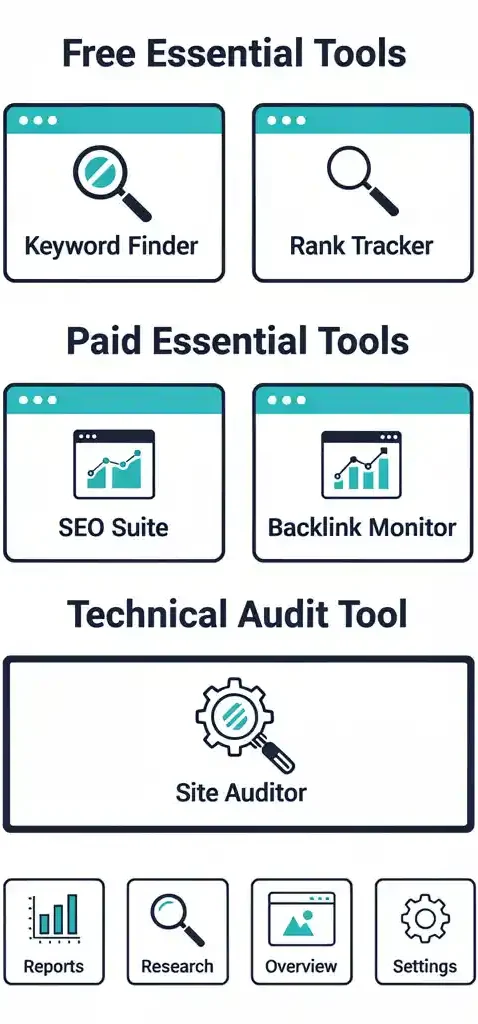
Google Search Console is free and genuinely non-negotiable. If you cannot read and interpret a GSC dashboard fluently, you are not ready to bill for SEO services. This is where the most valuable, real data about any website’s organic search performance lives. Index coverage, search queries, page experience signals, link data, Core Web Vitals performance by page, manual action penalties. Learn it thoroughly.
Google Analytics 4 is also free and also non-negotiable. GA4 has a meaningfully steeper learning curve than the previous Universal Analytics platform, and many beginners avoid engaging with it deeply because of that friction. Push through the learning curve. Understanding how to set up events and conversions properly, how to attribute organic traffic accurately, how to build custom reports, and how to read the data in ways that connect SEO activity to actual business outcomes is a genuine differentiator.
Ahrefs or Semrush you need proficiency in one of these. Ahrefs starts at approximately $99 per month at current pricing, and Semrush at approximately $119 per month. Both offer trial periods. Semrush has a limited free tier that gives you enough functionality to do meaningful practice work. Both tools provide keyword research capabilities, competitor analysis, backlink data, site auditing, and rank tracking. When your first client income arrives, one of these becomes your first mandatory tool investment because the depth of insight they provide is not replicated elsewhere.
Screaming Frog SEO Spider is the most practically useful technical SEO audit tool available. The free version crawls up to 500 URLs, which covers a very substantial percentage of small to mid-sized business websites in their entirety. Learning Screaming Frog thoroughly, including its custom extraction features, its integration with Google Analytics and Search Console, and its rendering mode for JavaScript sites, pays consistent dividends.
Google’s free supporting tools complete the core stack without adding cost. Google Trends for search trend analysis and topical seasonality, Google PageSpeed Insights for performance diagnosis and Core Web Vitals data, the Google Rich Results Test for schema markup validation, and the Google Search Central documentation for understanding Google’s own stated guidelines.
Everything beyond this core stack, Moz, Majestic, Surfer SEO, Clearscope, SE Ranking, MarketMuse, is legitimate enhancement. But enhancement is only useful on top of a solid foundation. Learn the core tools first and learn them well before adding anything else.
How to Actually Develop Real SEO Proficiency
Reading articles and watching tutorial videos is a starting point, not a destination. The SEO knowledge that translates into genuine client value comes from doing, from applying concepts to real websites and observing what actually happens.
Build and optimize your own website. This is the single highest value action you can take during the skill development phase. Start a blog about something you genuinely care about. Optimize it properly from the beginning. Build links to it through whatever legitimate means you have available. Watch the Search Console data change over months. Make decisions based on what you see. Experiment deliberately. Fail cheaply. The feedback loop of working on a real website you own and control teaches you more than any course because you can test freely without consequences beyond your own rankings.
Audit websites you have some relationship to. Friends, family members, local businesses you patronize regularly, former colleagues, nonprofit organizations you are involved with. Most of them have websites with meaningful SEO problems. Offer to do thorough, professional audits at no cost. Deliver written reports that are genuinely useful. This simultaneously builds your technical skills, develops your written communication of SEO concepts, and creates portfolio evidence and real relationships that often convert to paid work.
Read quality industry sources with genuine regularity. The Ahrefs blog, Moz blog, Search Engine Journal, Search Engine Land, and Google’s own Search Central blog are where real, verified SEO knowledge lives. Read them consistently, not just when you have a specific question. The practitioners who write for these platforms are doing actual work with actual clients and publishing what they are learning from that work.
Complete one structured, comprehensive course. Not five courses across five platforms. One good one that gives you a systematic framework for thinking about SEO holistically. The Ahrefs Academy free SEO course for beginners is excellent and gives you a solid, practitioner-oriented foundation. Google’s free SEO courses on Skillshop are worth completing both for the certifications, which carry real credibility with some client types, and because they give you Google’s own explicit perspective on what constitutes quality SEO practice.
Step 2: Choose Your SEO Niche Before You Build Anything Else
This is the step most new SEO freelancers skip entirely or treat as something to figure out later. It is the single strategic decision that has the most direct impact on how quickly you build a profitable, sustainable practice.
A generic freelance SEO consultant is a commodity. The internet is full of them and most of them charge low rates because that is the only competitive lever they have available. Competing in that space as someone without years of platform reviews and established credibility is genuinely difficult and financially unrewarding.
A freelance SEO specialist who works exclusively with independent restaurants on local search and Google Business Profile optimization is a different, specific, and demonstrably more valuable thing. The client pool is smaller, but the clients are meaningfully better. The rates are higher. The referral network within a specific industry is tighter and more active. And the competition from generalist freelancers essentially disappears because generalists are not positioned for that specific market.
How to Actually Find Your Right Niche
Your SEO niche should sit at the intersection of three distinct factors: the type of SEO work you are genuinely strongest at, the industry or business type where you have background knowledge or experience, and the category of clients that actually has consistent budget for ongoing SEO services.
Think carefully about your professional history before SEO freelancing. If you spent four years working in-house at a SaaS company before learning SEO independently, you have a built-in credibility and contextual understanding advantage with other SaaS companies that a freelancer without any SaaS background simply cannot replicate. If you worked in healthcare for a decade before transitioning, you understand clinical terminology, regulatory sensitivities, and how healthcare organizations evaluate vendors and marketing partners in a way that makes you genuinely more useful to healthcare clients.
Your professional history is not something to move past or start over from. It is the foundation you layer SEO expertise onto. That combination of domain knowledge and SEO skill is far more valuable and rare than SEO skill alone.
Some of the most financially rewarding and consistently underserved freelance SEO niches available right now include the following:
Local SEO for home services businesses Plumbers, electricians, HVAC companies, roofers, general contractors, and other trade businesses spend significant amounts on local lead generation. Most of them have genuinely poor SEO despite meaningful marketing budgets. A freelance SEO specialist who understands both local search mechanics and the operational reality of trade businesses can charge premium rates, maintain very long client relationships, and stay fully booked through referrals alone within 18 to 24 months.
Technical SEO for e-commerce brands Large product catalogs, faceted navigation systems, dynamic URL parameters, crawl budget allocation, and category page optimization are legitimately complex technical problems that require specialized expertise. E-commerce brands frequently have revenue that is directly and measurably tied to organic search visibility, which means they understand the ROI of good SEO in concrete financial terms and will pay accordingly.
Content-led SEO for SaaS companies Content led growth strategies, product-led SEO, programmatic page creation, and topical authority building are areas where well-funded SaaS companies invest heavily and consistently. If you have any software industry, technology, or startup background, this is one of the most financially attractive freelance SEO niches available.
SEO for law firms and legal services Highly competitive keyword landscapes, very high conversion values per organic visitor, and clients with real marketing budgets. The YMYL content requirements in this space also mean that demonstrating genuine topical authority and E-E-A-T compliance in content is critically important, which creates meaningful work and recurring retainer opportunities for skilled practitioners.
SEO for B2B companies Long sales cycles create clients who genuinely appreciate a consultant who understands the business context of organic search strategy rather than just the technical mechanics. The patience required for B2B SEO aligns naturally with clients who already understand that complex transactions take time.
You do not need to commit to one niche indefinitely. But commit to one niche to start with. Let it define your messaging, your portfolio development priorities, and your initial client outreach targets. You can expand and diversify after you have built a real track record.
Step 3: Build a Portfolio That Shows Actual Results
The portfolio problem for an SEO freelancer is genuinely different from the portfolio challenge in most other freelance disciplines. A graphic designer can show you their work visually in ten seconds. A copywriter can have you reading their best piece in two minutes. SEO results are data, and raw data without context and narrative is almost meaningless to most business owners who are evaluating whether to hire you.
Your portfolio has to tell a story with a clear arc: here was the situation when I started, here is specifically what I did, and here is what the data shows happened as a result.
How to Build Portfolio Evidence Without Any Paying Clients
The most important portfolio asset available to you is already accessible if you are building your own website as part of your skill development: your own organic traffic growth, documented with real Search Console screenshots over time. You cannot be accused of exaggerating results for a client because the data lives on a site you own and control entirely.
If your own website is not yet generating data meaningful enough to present, here are four proven routes to real portfolio evidence without paid client relationships.
Partner with a local business for free or heavily discounted work. This is the classic approach and it works reliably when executed correctly. The key is choosing the right business. A brand new restaurant with no Google Business Profile and zero online reviews is a poor choice because there is too much foundational work to do before any SEO improvement becomes attributable. A three-year-old electrical contractor with a decent website, an established service area, and essentially no SEO work done on the site is close to ideal. There is real baseline data to capture, real problems to solve, and real improvement to document.
Deliver a thorough free technical audit to businesses in your target niche. A genuine professional audit, not a five-point bullet point overview, but a detailed 20 to 30 page document that systematically covers crawlability, indexability, on-page issues, content gaps, backlink profile quality, and local presence, demonstrates expertise even without before-and-after traffic results. Many freelancers trace their first paid contract to a free audit they delivered, because the quality of the audit itself was the most convincing proof of knowledge the client could have received.
Document your own optimization experiments with full transparency. If you are testing a specific internal linking approach, a particular on-page optimization method, or a content clustering strategy on your personal website, write up the experiment formally. Define what you were testing and why. Document what you did, step by step. Show the data at the start and the data at the end. Published case studies of personal experiments like this are highly credible portfolio pieces that also demonstrate the analytical thinking and methodical approach that clients genuinely value in an ongoing SEO consultant.
Volunteer your freelance SEO services for a nonprofit or community organization. Local charities, community groups, civic organizations, and nonprofits almost universally need website help and almost universally lack the budget to pay for it. The work produces real deliverables you can include in a portfolio, generates genuine testimonials from credible organizations, and provides the kind of hands-on implementation experience that is simply not available through practice sites alone.
The Structure of a Portfolio Case Study That Actually Wins Clients
When presenting portfolio work to a prospective client, use this exact structure consistently:
Project overview: What the business does, the competitive context of their market, and what their online presence looked like when you began.
The initial situation in numbers: Where they were ranking for their most important keywords, what their monthly organic traffic looked like, what the primary technical and content problems were that were holding them back. Use specific numbers wherever you have them.
Exactly what you did: Not “I implemented on-page SEO and built some links.” Be specific to the point of naming which pages you optimized and why those pages were the priority, how many content pieces you produced or restructured, what technical changes you made and what problems they addressed, and how many links you built, through what methods, and to which pages.
Results shown with actual evidence: Real screenshots from Search Console or Google Analytics with the date range visible. This is significantly more credible than any chart or table you recreate from memory. The specificity of real data is what separates convincing case studies from vague claims.
The timeframe: How long the work took to produce the results shown. Realistic timelines make your results more believable, not less. A client who sees that meaningful results came in four to six months trusts the data more than a claim that dramatic improvements happened in three weeks.
One strong, properly structured case study built on real data is worth more than twenty vague testimonials that say “great to work with and very professional.”
Step 4: Set Up Your Freelance SEO Business the Right Way From the Start
Many new freelancers treat the business infrastructure as something to sort out later, after they have clients. This creates entirely avoidable problems: invoicing confusion, missing contracts when disputes arise, financial records that are impossible to untangle at tax time, and a professional presentation that undermines the credibility of otherwise excellent technical work.
Set it up properly before you need it and it never becomes a problem.
Your Professional Online Presence
You need a real, properly optimized website. Not a complex one with extensive custom development, but a genuine professional presence that establishes your credibility, communicates your specific services and the client type you serve best, and makes it straightforward for an interested prospect to contact you.
The specific irony of an SEO freelancer presenting a poorly optimized personal website is not lost on any potential client who evaluates it. Your own site is your most continuously visible proof of competence. It is working to either build or undermine your credibility with every visitor before you ever speak to them. Optimize it properly. Do real keyword research for your service pages. Implement on-page SEO correctly. Make it load fast and perform well on mobile. These things matter beyond any direct ranking impact because they signal to everyone who lands on your site that you actually apply what you claim to know.
Your LinkedIn profile deserves investment equal to your website. In the B2B services market where freelance SEO consultants operate, LinkedIn is where a meaningful percentage of your best client relationships will originate or where prospects will go to vet you after hearing about you from another source. Your headline should state precisely what you do and exactly who you do it for. Your About section should communicate your SEO background concisely and focus on the types of results you help clients achieve. Your Featured section should link directly to your case studies, your best published content, or your portfolio page.
Business Structure and Financial Setup
In the US, beginning as a sole proprietor is the simplest path: no formal registration is required in most states, and you report freelance income directly on your personal tax return. Forming an LLC becomes worth the administrative overhead once you are generating meaningful income, primarily for the liability protection and the signal of seriousness it sends to larger enterprise clients.
In the UK, the same logic applies at the same sequence. Sole trader status to start. Limited company incorporation when earnings make the tax efficiency advantages meaningful.
Regardless of your structure, the one non-negotiable from day one: separate your freelance business finances from your personal finances entirely. Open a dedicated business bank account before you receive your first payment. Track every payment received and every business related expense from the beginning. This makes tax filing manageable, makes your business finances legible for your own planning, and looks professional to the clients who notice.
The Business Operations Tools You Actually Need
Invoicing software: Wave is completely free and fully capable for solo freelancers. FreshBooks and Xero are paid but offer more polished client-facing features. At minimum, you need to be able to send professional invoices with clearly stated payment terms, due dates, and late payment policies before you begin your first engagement.
Written contracts for every client relationship: Not verbal agreements. Not email threads that are vague about scope. A properly written service agreement that both parties sign, specifying exactly what you are delivering, over what timeline, for what payment amount on what schedule, what constitutes out of scope work, what happens if either party wants to end the engagement before its natural completion, and who owns the intellectual property produced. Free, professionally reviewed contract templates are available through platforms like HoneyBook, HelloSign, and legal template libraries specific to your country.
Project management tool: Notion works well for freelancers who want to integrate project tracking with documentation and note-taking. Trello is simpler and faster to set up. Asana scales better if you eventually manage multiple simultaneous client engagements with complex workstreams. The specific tool matters less than the consistency with which you use it.
Time tracking: Even if you are billing entirely on project and retainer rates rather than hourly, tracking your actual time investment against each client and project gives you the data to price future work accurately. Toggl Track is free, simple, and effective for this purpose.
Step 5: Set Your Freelance SEO Rates Like a Professional
Pricing is where most new freelance SEO consultants leave genuinely significant amounts of money on the table. It is also where the mistakes with the longest recovery time tend to happen.
Let me be direct about something that gets treated too gently in most guides. The rates you regularly see new freelancers posting on Upwork or Fiverr $15 per hour, $50 for a keyword research deliverable, $99 for a comprehensive site audit are not professional market rates. They are rates born of insecurity and desperation, and they actively damage the professional market for everyone while making it nearly impossible to build a financially sustainable practice.
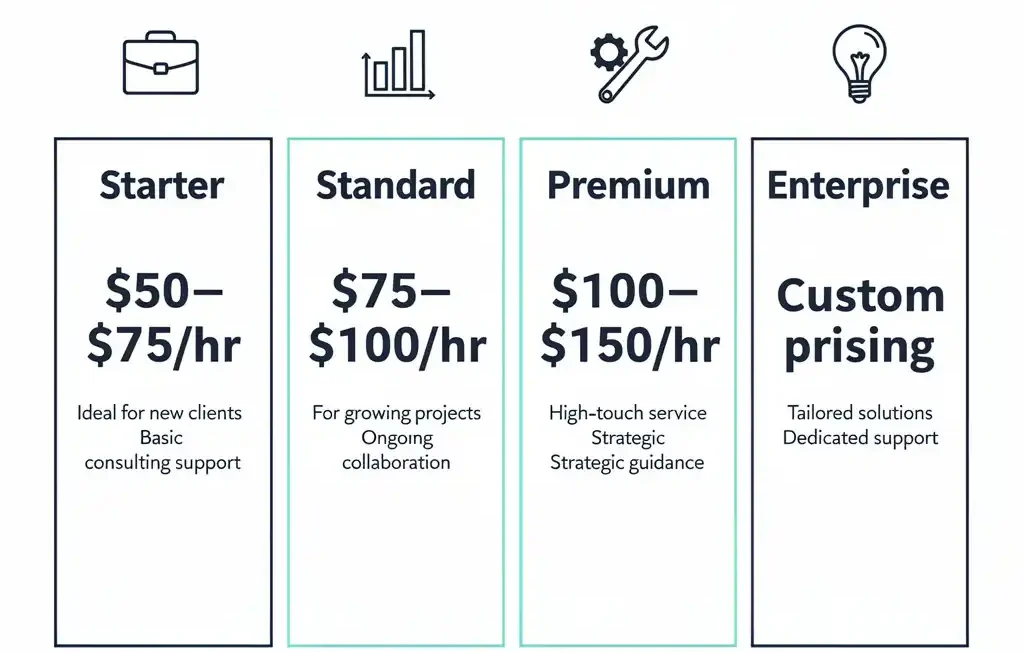
What the Real SEO Freelancer Rate Market Actually Looks Like
Hourly consulting rates for working freelance SEO specialists in the US typically range from $75 to $200 per hour depending on depth of experience, degree of specialization, and documented track record of results. New freelancers with genuine skills and at least some portfolio evidence should be charging at minimum $65 to $85 per hour. Any rate below $50 per hour for real SEO consulting work is underpricing in the current market, regardless of experience level.
Monthly retainer rates represent the most common and most financially important billing structure for ongoing freelance SEO services. Entry level retainers for small local businesses typically range from $800 to $1,500 per month. Mid-market retainers for established businesses with real organic search needs and real competition run $2,000 to $5,000 per month. Specialist work in high value niches or for larger organizations can go considerably higher.
Project based pricing for clearly scoped deliverables should reflect the actual value and complexity of the work rather than an arbitrary time estimate. A thorough technical audit for a website with 500 to 1,000 pages should be priced between $1,500 and $3,500 depending on the depth of analysis required and the quality of the written deliverable. A comprehensive keyword research package for a content-focused site might range from $500 to $1,500 depending on scope.
If these numbers feel high relative to your current expectations, that reflects the pricing environment that cheap platform rates have created, not the actual market value of competent SEO work. A small e-commerce brand that moves from ranking on page three to ranking on page one for five commercial keywords might see $15,000 to $60,000 in additional annual revenue as a direct result. From that perspective, $2,000 per month for ongoing SEO services is not expensive. It is among the highest ROI marketing investments that business can make.
The Retainer Model and Why It Fundamentally Changes Your Financial Position
I want to give this model the attention it deserves because it is the structural foundation of a financially stable freelance SEO practice.
A one-time project gives you money once. A retainer gives you money every single month for as long as the relationship continues. The math is obvious, but the implications ripple through everything about how you plan and make decisions.
Three clients on $2,000 per month retainers means $6,000 of predictable, recurring monthly income before you accept a single additional project. You can make decisions, investments, and commitments from that financial foundation in a completely different way than when you are scrambling to fill the revenue gap left by a recently completed project.
The key to making retainer-based work actually work is defining scope with absolute specificity. Vague language like “ongoing SEO services” creates the conditions for scope creep, client dissatisfaction, and billing disputes. A properly defined monthly SEO retainer agreement specifies the exact deliverables included each month four optimized and published content pieces, monthly technical health check with written findings, monthly performance report covering Search Console and GA4 data with strategic recommendations, link building outreach targeting 12 prospects per month along with communication expectations, meeting schedule, response time commitments, and an explicit statement of what falls outside the monthly scope and would be quoted separately.
This level of specificity protects you from scope expansion and gives clients the clarity they need to feel genuinely confident in the engagement.
When to Use Each Pricing Structure
Charge hourly rates for: Initial consulting calls, advisory work where the scope cannot be defined in advance, reviewing work produced by someone else’s team, or any engagement where you are providing judgment and recommendations rather than executing defined deliverables.
Charge project rates for: Deliverables with clearly defined scope a technical site audit, a full keyword research report, a content gap analysis, a site migration strategy document, a local SEO setup package.
Charge monthly retainers for: Ongoing implementation and optimization work continuous content production and optimization, active link building campaigns, monthly technical maintenance and monitoring, and regular reporting.
Most successful freelance SEO practices use all three structures in combination depending on the nature of each client engagement. Begin primarily with project-based work to build your track record and initial reviews, then move clients toward retainer structures once you have demonstrated consistent value.
Step 6: Find and Land Your First Real SEO Freelancer Clients
This is the section that every guide oversimplifies with advice like “build a portfolio and start pitching.” Here is the actual operational reality of building a client base when you are starting from nothing.
The honest answer is that no single channel is uniquely sufficient. Different approaches work at different stages of practice development, and the combination of approaches matters more than any individual tactic.
What a Freelance SEO Practice Actually Earns: Real Numbers
Your Existing Network Is Almost Always the First Real Source
Tell your professional network clearly, specifically, and confidently what you now do as an SEO freelancer. Not in a way that reads as desperate or as asking for a favor. In a way that communicates “this is the specific work I do, this is who I help, and this is the kind of result I help them achieve.”
This means updating your LinkedIn profile immediately to reflect your freelance positioning. It means emailing former colleagues who work at or know decision makers at companies that have organic search as a meaningful part of their growth strategy. It means posting about your SEO work on LinkedIn consistently, sharing practical insights, explaining concepts that confuse business owners, and documenting client results with appropriate permission.
Your network will not always hire you directly. But they will refer you when they hear someone in their own network talking about needing SEO help. Referrals are the highest converting client acquisition channel in B2B professional services, they cost you nothing beyond the quality of your work and relationships, and they tend to produce exactly the kind of client, one who already has some degree of trust established through the referral, that becomes a long-term partner.
Direct Outreach Done Right
Identify businesses in your target niche that have observable, diagnosable SEO problems and reach out to them with specific, relevant, evidence-based observations.
The wrong approach to direct outreach: “Hi, my name is [name] and I am an SEO freelancer. I help businesses like yours rank higher on Google. Please let me know if you are interested in learning more.”
This provides no reason to respond. It signals nothing about your knowledge. It is one of thousands of identical messages business owners receive and delete.
The right approach: Spend 20 minutes actually analyzing their website before you write anything. Run a quick Screaming Frog crawl or Semrush site overview. Identify two or three specific, significant, fixable issues that are clearly limiting their organic search performance. Then write a message that opens by referencing one of those specific issues and offers to share a brief summary document of what you found.
This approach demonstrates your competence in the act of reaching out, before the recipient has agreed to anything or seen any credentials. It gives them a concrete, substantive reason to respond. It filters naturally for clients who are genuinely interested in actually improving their SEO. And it positions you from the very first interaction as someone who brings value rather than someone asking for an opportunity.
Freelance Platforms: The Right Role and the Right Limit
Upwork and Fiverr are where many SEO freelancers land their first paying clients outside their personal network, and both platforms serve a legitimate purpose at the early stage of building a practice.
The challenge with treating platforms as a long-term primary strategy for freelance SEO services is the combination of the fee structure and the pricing dynamic they create. Upwork charges 20 percent of earnings until you reach $500 with a given client, then 10 percent, then 5 percent. Fiverr charges 20 percent of every transaction regardless of history. When you are already pricing carefully as a newer freelancer, losing a further 20 percent to the platform is a significant economic constraint.
More importantly, the best long-term clients the ones who value expertise, pay professional rates, communicate respectfully, and become multi-year retainer relationships generally do not discover freelance SEO consultants on Fiverr. They find them through referrals within their industry, through LinkedIn, or through encountering useful content the freelancer published online.
Use freelance platforms strategically to get your first five to ten reviews and your first few pieces of external client evidence. Then systematically transition your client acquisition focus to channels where you own the relationship from its origin.
Content Marketing as Client Acquisition: The Strategy That Compounds Indefinitely
Here is the approach that most guides either do not mention or treat as a nice-to-have addition rather than a core strategic pillar.
As an SEO freelancer, your expertise in organic search is itself a content asset. Writing about SEO, explaining technical concepts, documenting the results of your work with appropriate permission, breaking down what algorithm updates mean for different types of businesses, publishing practical guides on specific technical topics all of this positions you as an expert in the exact discipline that your potential clients are searching for.
A well-structured, properly optimized blog post on your website about how to diagnose and fix duplicate content problems on a Shopify store will attract exactly the type of e-commerce business owner who has that problem and is actively looking for help solving it. A LinkedIn article about why local SEO strategies consistently fail for plumbing companies will be shared within plumbing industry groups and franchise owner networks. A practical guide on how to prepare a website for a CMS migration without losing organic rankings will attract marketing managers who are about to undertake exactly that project.
Your content does client acquisition work around the clock in a way that cold outreach campaigns fundamentally cannot.
This strategy takes six to twelve months before the compounding effect becomes statistically visible. But for an SEO freelancer specifically, the barrier to entry is lower than for almost any other service professional because you already understand how to create content that ranks and how to optimize it for the queries your ideal clients are actually typing into search engines.
Step 7: SEO Freelancer vs SEO Agency The Honest Comparison
This comparison comes up in nearly every initial client conversation, and the genuinely honest answer is that the right choice depends entirely on the specific needs, budget, and situation of the individual business.
When Hiring a Freelance SEO Specialist Makes More Sense
The scope is specific and well-defined. A technical SEO audit of a specific site. A local SEO setup for a new business location. A keyword strategy for a new product category launch. A content gap analysis for a competitive content program. Focused, clearly defined scopes are where individual freelance SEO consultants consistently produce excellent results because the entire engagement centers on one specific area of expertise without the coordination overhead of agency teams.
Budget is a real and meaningful constraint. A quality freelance SEO specialist typically delivers comparable work to an equivalently skilled agency team at 30 to 50 percent lower cost. The overhead that agencies carry office space, account management layers, project coordination, business development costs does not exist in a freelance engagement. That cost difference goes directly into the quality and depth of the work instead.
Direct access to the practitioner matters. One of the most consistently voiced frustrations in Reddit threads and LinkedIn discussions about SEO agencies is the disconnect between the experienced strategist who wins the account and the junior team member who actually executes the work. With a freelance SEO consultant, the person you evaluate during the sales process is the person doing the work every month. That alignment is genuinely valuable and genuinely rare in the agency model.
When an SEO Agency Makes More Sense
When the scope genuinely requires multiple simultaneous workstreams that exceed one person’s realistic capacity. A full website redesign and CMS migration combined with a national content campaign combined with a technical overhaul combined with an active digital PR program is legitimately beyond what one person can manage simultaneously.
When the engagement genuinely requires a coordinated combination of services, SEO plus paid search plus conversion rate optimization plus development resources under a single unified strategy.
Step 8: Managing Client Relationships as a Skilled Freelance SEO Consultant
Technical skill gets you hired for the first project. Relationship management is what determines whether that project becomes a two-year retainer or a single engagement that ends without renewal.
Set Realistic Timeline Expectations Before Work Begins
Before starting any SEO engagement, communicate explicitly and specifically what the client can reasonably expect and over what timeframe. Something like: “Based on your current site authority and the competitive landscape of your target keywords, most clients in similar positions start seeing meaningful ranking movement within three to four months of consistent work. Traffic gains that are statistically significant typically appear between months four and six.”
This expectation-setting conversation protects you from the client who will otherwise become frustrated and attribute slow early progress to poor work quality. It builds trust because honest, realistic communication signals professional confidence rather than salesperson energy.
Translate Technical Results Into Business Language
Most clients do not genuinely care about domain authority as a metric. They care about calls, form submissions, and revenue. Most clients cannot clearly explain what a crawl error is or why it matters. They care about whether their website works and whether people can find it.
Monthly SEO reporting for clients should translate technical metrics into business impact language wherever possible. Instead of reporting “average keyword ranking position improved from position 22 to position 14,” communicate “the keywords that drive lead inquiries to your business have moved from page 3 to page 2 on average, and three of your highest-value search terms are now on page 1 for the first time. We expect to see measurable increases in lead volume over the next four to six weeks as click-through rates respond.”
This framing is not spin or oversimplification. It is accurate communication in the language that clients use to evaluate whether their investment is producing value.
Address Scope Creep Before It Becomes a Pattern
One of the most consistent financial leaks in a freelance SEO practice is unaddressed scope creep. A client asks for one extra blog post this month because they have a promotional campaign. A client asks for a quick social media content review alongside their regular SEO deliverables. A client starts forwarding general marketing questions that fall outside the SEO engagement entirely.
None of these feels particularly significant in isolation. Together, over three or four months, they represent many hours of uncompensated work that you delivered partly to avoid the awkwardness of raising the issue.
When a request falls outside the defined scope of your engagement, acknowledge it immediately, explain clearly but without drama that it falls outside the current agreement, and provide a straightforward quote for the additional work. This is professional. It is what any skilled independent consultant does in any discipline. Clients who respect you will respect the boundary. Clients who push back against reasonable scope management are showing you something important about whether this is a relationship worth continuing.
Step 9: Build Skills That Keep Compounding Over Time
The SEO freelancers who are still thriving and growing five and ten years from now are the ones who invest in continuous, deliberate skill development not just staying current with the industry, but building expertise deep enough in specific areas that they become genuinely rare resources.
Develop a Specialty Within Your Specialty
The freelance SEO specialists who consistently break through to the highest income levels in this field $10,000, $15,000, $20,000 per month have almost universally developed a depth of expertise in a specific technical or strategic domain that most generalists cannot match and most clients cannot find elsewhere.
Core Web Vitals optimization and page experience engineering commands premium rates because it sits at the intersection of SEO and frontend development and requires fluency in both. Most generalist SEO practitioners understand Core Web Vitals at a conceptual level but cannot actually fix the technical issues that cause poor scores. Genuine depth here is rare and well compensated.
International SEO and hreflang implementation at a complex level multinational e-commerce sites, large corporate sites serving markets in multiple languages, sites with regional content variations is a genuinely technical specialty with limited supply of real experts and consistent demand from organizations with real complexity.
Programmatic SEO using structured data and templates to create large volumes of highly targeted, unique-value pages efficiently is where many fast-growing technology companies and marketplace businesses are investing significantly and finding skilled practitioners difficult to source.
Pick a direction where your interest and aptitude point and go deeper than most people are willing to go. The financial and professional rewards of genuine depth consistently exceed those of broad competency.
Develop Adjacent Skills That Multiply Your Value
The best working freelance SEO consultants I know are not excellent at SEO in isolation. They have developed enough knowledge in adjacent disciplines to be genuinely strategic partners for their clients rather than narrow technical executors.
Data analysis and visualization: The ability to set up GA4 conversion tracking correctly, build meaningful custom dashboards in Looker Studio, and perform useful analysis in Google Sheets or Excel elevates the quality and client-perceived value of your reporting significantly. Many SEO practitioners are uncomfortable with data work beyond reading standard platform reports. Building genuine comfort with data analysis differentiates you in a meaningful and client-visible way.
Content strategy: The overlap between organic search strategy and content strategy is enormous, and freelance SEO consultants who can speak fluently to both command meaningfully higher rates and consistently attract better clients. Understanding the strategic difference between a content calendar and a topical authority content program, being able to brief writers with enough specificity to produce genuinely rankable content, and knowing how to architect a content program around search intent patterns rather than just keyword lists are skills that extend your value far beyond technical SEO.
Conversion rate optimization: Organic traffic growth is only financially meaningful if the traffic converts. An SEO freelancer who understands CRO fundamentals what makes a landing page perform, how to structure calls to action, how to identify friction points in user journeys from organic traffic can have direct, compelling conversations about business results with clients in a way that pure SEO practitioners cannot.
Stay Current Without Getting Lost in the Volume of Noise
The SEO industry produces an enormous volume of content and a substantial fraction of it is low quality, recycled, or primarily designed to generate traffic rather than genuinely inform practitioners.
Learning to filter signal from noise is a genuine skill worth developing. The sources I consistently trust and read for real, verified information: The Ahrefs Academy free SEO course for beginners is excellent and gives you a solid, practitioner-oriented foundation. and the @searchliaison account on Twitter/X for direct algorithm and quality guidance, the Ahrefs blog for data-driven research and practitioner-focused analysis, Search Engine Land for industry news and algorithm update coverage, and the working SEO community on Twitter/X where actual practitioners share real test results and real observations from real sites.
Apply genuine skepticism to everything else until you see supporting evidence.
The Legal Foundations Every Freelance SEO Practitioner Needs Before Taking a Client
I want to stop here for a moment because this is the section that will actually protect everything you have built.
Most freelance SEO guides spend twenty paragraphs on keyword research tools and two sentences on contracts if they mention contracts at all. That imbalance has cost real freelancers real money, including people I know personally who did excellent SEO work, delivered measurable results, and still ended up in payment disputes they could not resolve because nothing was in writing.
Here is the truth about running a freelance SEO practice: your technical skills get you hired. Your legal setup determines whether this becomes a sustainable business or an exhausting cycle of chasing payments and arguing about scope.
Your SEO Service Agreement
Every client engagement needs a written service agreement before any work begins. Not after the kickoff call. Not once the project is underway. Before.
Your agreement needs to answer five questions clearly: What are you delivering, exactly? Over what timeframe? For what payment amount? On what schedule? And what happens if either party wants to end the engagement before it is complete?
SEO is particularly complicated in this regard because results take time and clients often struggle to understand why. A contract that defines deliverables in terms of activities technical audits completed, content briefs delivered, backlink outreach campaigns executed rather than rankings achieved protects you from the impossible promise of guaranteed positions that no ethical SEO professional should ever make.
If you are not sure what a solid freelance service contract should include, this guide to freelance contracts covers every clause that matters and what each one is actually protecting you from.
Scope of Work vs Statement of Work The SEO Version
One of the most expensive mistakes in freelance SEO is scope creep the client who started by asking for a technical audit, then asked for “just a few content recommendations,” then wanted monthly reporting, then asked you to manage their Google Ads “since you are already in the account.”
Every one of those additions is work you are doing for free if it was not in your original agreement.
The professional solution is a clearly defined scope of work document attached to your service agreement. It specifies exactly what is included in your engagement and critically what is not. Anything outside that scope is a new conversation with a new quote.
Understanding the difference between a scope of work and a statement of work matters here. This breakdown of statement of work vs scope of work explains the distinction in plain language and tells you which one to use for which type of SEO engagement.
Non-Disclosure Agreements in SEO Work
Most freelance SEO practitioners encounter NDAs from two directions. Either a client sends you an NDA before granting access to their analytics data, competitor research, or internal business information. Or you want your clients to sign an NDA to protect the proprietary systems and processes you have developed over years of work.
In both cases, you need to read what you are signing or what you are asking someone else to sign with real attention.
Client-issued NDAs in the SEO industry sometimes include clauses that go far beyond protecting their business data. Some attempt to prevent you from working with competitors for extended periods. Some claim ownership of any tools, templates, or reporting frameworks you use during the engagement. And some include provisions that would effectively allow the client to use your entire strategic methodology without ever paying you.
This guide to contractor NDAs covers the specific clauses that freelance SEO professionals need to watch for and how to negotiate them before signing.
Getting Paid Payment Terms for SEO Retainers
SEO work is almost always ongoing, which means you are likely working on retainer arrangements rather than one-time project fees. Retainers are excellent for income stability, but they introduce a specific payment risk: a client who stops paying midway through a month of work you have already delivered.
Set your payment terms before the engagement begins. Define whether payment is due at the start of the month, at the end, or split. Define your late payment policy. Define what happens to deliverables and account access if payment is not received.
For retainer-based freelance work, I recommend a deposit structure at minimum, the first month paid in advance before any work begins. It is a reasonable professional standard and it immediately tells you something important about a client’s seriousness and financial stability.
This guide to freelancer payment terms walks through exactly how to structure retainer agreements and what Net 15, Net 30, and milestone-based payment structures actually mean for your cash flow.
The legal foundation of your freelance SEO practice is not bureaucracy. It is the infrastructure that makes everything else sustainable. Get it right early, and you will spend your time doing the work you are good at. Get it wrong, and you will spend a surprising amount of time chasing money and arguing about what was agreed.
The Real Mistakes That Cost Me Real Time and Real Money
I want to be specific about actual errors rather than theoretical ones, because specific errors are the ones that can actually help you avoid repeating them.
Taking Client Engagements I Knew Were Wrong From the Start
Early in my SEO freelancer practice I accepted a client who wanted page one rankings within 90 days for a domain that had received a manual penalty, in a highly competitive legal services niche, with a total budget that was approximately a third of what the work actually required.
Before I agreed to that engagement, I knew three things clearly: the timeline was structurally unrealistic given the penalty recovery timeline alone, the budget was insufficient for the scope of work required to move the needle in that competitive landscape, and the previous penalty history would complicate and slow every part of the process. I took it anyway because I needed the revenue at that stage and had not yet developed the confidence to walk away from money.
The engagement ended poorly despite genuinely competent work on my end. The client was dissatisfied because the results did not meet the timeline expectations, even though those expectations had been unrealistic from the outset. I spent approximately 60 hours on a project that paid me $900, and the experience damaged my confidence for months.
Learn to recognize the structural red flags that indicate a client is set up to be dissatisfied regardless of your work quality: impossible timeline expectations, budgets that do not fit the actual scope, histories of negative experiences with multiple previous SEO providers without clear self-awareness about the client’s role in those outcomes, and unwillingness to accept professional guidance about realistic timelines.
Saying no to a structurally bad client creates availability for a good one. That principle took me an embarrassingly long time to genuinely internalize.
Underpricing Consistently and Then Resenting the Work
The first eight months of my freelance SEO practice were spent at rates that were meaningfully too low. Not because I genuinely believed I was worth less, but because I was afraid that clients would say no if I charged fair market rates.
The clients who wanted cheap freelance SEO services said no at fair rates and yes at cheap ones. The clients who valued results and expertise paid professional rates without friction or negotiation. By underpricing consistently, I was filtering for exactly the wrong type of client while filtering out the right type.
Raise your rates before you feel certain you are ready to. The fear of the response is almost always significantly larger than the actual consequence.
Failing to Document Results From the Very First Day
For the first year of my practice, I was genuinely bad at maintaining clean, systematic records of the results I was producing. I would notice meaningful ranking improvements, see traffic increases in Search Console, and feel good about the work but I was not taking systematic baseline screenshots, running regular data exports, or building the kind of organized documentation that becomes a compelling case study later.
When I eventually wanted to write portfolio case studies from that early period, I had almost nothing usable. I had to attempt reconstruction from partial data, and the resulting case studies were far weaker than they should have been given the actual results produced.
Document everything from the very first day of every engagement. Baseline screenshots of ranking positions, organic traffic, and technical health scores. Monthly Search Console exports. Notes on what you implemented and when, with specific enough detail to reconstruct a timeline. This takes approximately 30 minutes per client per month and is an invaluable investment.
Neglecting My Own Online Presence While Servicing Clients
There is a specific irony that many working SEO freelancers fall into: they are so occupied with doing SEO for paying clients that their own website goes months without meaningful updates, their own keyword rankings quietly slip, and their own professional online presence gradually atrophies.
Your website and your LinkedIn presence are your permanent, continuously operating sales assets. They are generating or failing to generate client inquiries around the clock regardless of what you are doing. Treating them as secondary to client work in the long run is a decision that creates a slow, persistent pipeline problem that becomes acute during the first major client turnover.
Block two hours every week as non-negotiable time for your own marketing: a new blog post, meaningful engagement on LinkedIn, a portfolio update, a link building effort for one of your own service pages. Treat your own practice with the same seriousness you bring to your best client’s SEO program.
What a Freelance SEO Practice Actually Earns: Real Numbers
Let me give you honest numbers rather than aspirational projections, because the range of income claims associated with SEO freelancer careers online is enormous and frequently misleading.
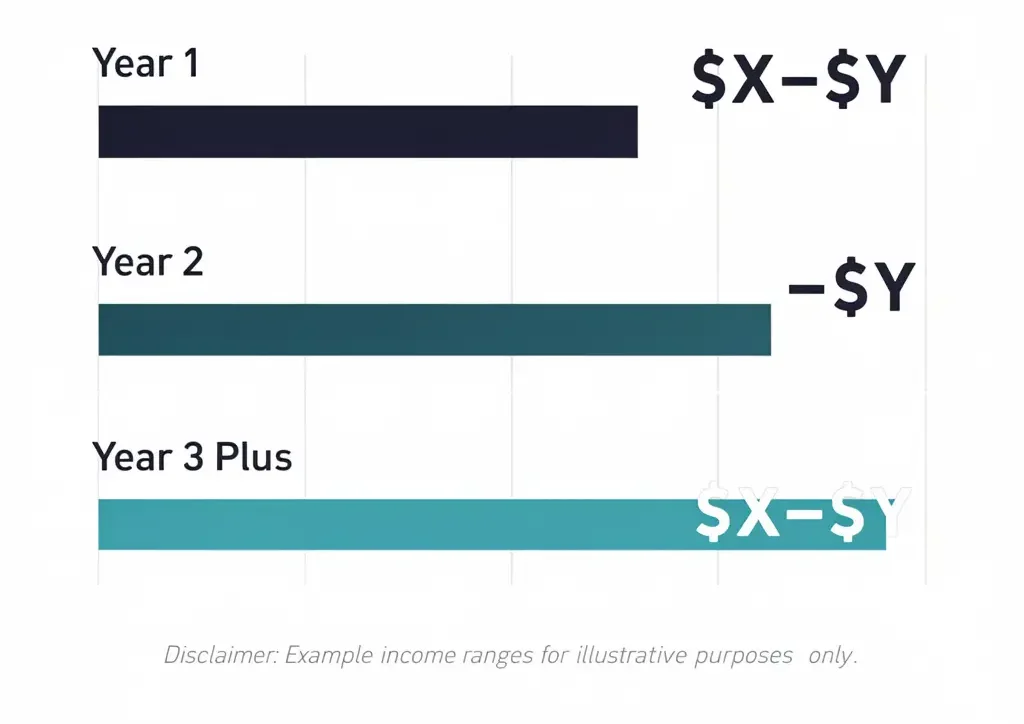
Year one, realistic range: $2,000 to $5,000 per month gross. Most freelancers who start with genuine skills, apply consistent effort, and treat client acquisition as a real ongoing priority will land somewhere in this range once they have built their first three to five client relationships. This represents meaningful supplemental income for many people and entirely viable full-time income for others depending on location and cost of living.
Year two, realistic range: $5,000 to $10,000 per month gross. Freelancers who have built a credible track record, refined their service offering around demonstrated strengths, and transitioned primarily to retainer-based work reach this range with consistency. This is real, professional-level income in virtually any geographic market.
Year three and beyond: $10,000 to $25,000 per month or more for freelance SEO consultants who have developed genuine depth in a valuable niche, built strong referral networks within that niche, and established a visible reputation that generates inbound inquiry without active prospecting. These numbers are real I know working practitioners earning them but they represent the top end of individual freelancer achievement and require years of compounding skill development, relationship building, and reputation building.
These are gross income figures. Self-employment taxes, tool subscriptions, software costs, and general business expenses reduce net income meaningfully. Factor this into financial planning from the beginning, not as an afterthought at tax time.
People Also Ask: Everything About SEO Freelancer Work Answered
How do I become a freelance SEO specialist with no experience?
Start by building genuine skills through your own website, free practice audits, and consistent consumption of quality industry sources. Complete the Ahrefs free SEO course or an equivalent structured program. Build two to three portfolio pieces through free or heavily discounted work for local businesses or nonprofits. Then create focused profiles on Upwork and Fiverr with a specific service offering and begin applying for entry level jobs where clients have indicated openness to newer freelancers. Price competitively at first, overdeliver on every early engagement, and collect written testimonials and reviews after every successful project.
What does an SEO freelancer charge per hour in 2025?
Experienced working freelance SEO consultants in the US typically charge between $75 and $200 per hour depending on their experience level, degree of specialization, and documented results track record. New freelancers with genuine, demonstrable skills and at least some portfolio evidence should charge a minimum of $65 to $85 per hour. Any rate below $50 per hour for actual SEO consulting work undervalues the service and the professional, regardless of experience level.
Is it worth hiring a freelance SEO specialist instead of an agency?
For most small to mid-sized businesses, the answer is yes, with the right freelancer. A skilled freelance SEO consultant typically delivers equivalent results to a comparably experienced agency team at 30 to 50 percent lower cost. The overhead that agencies carry does not exist in freelance engagements. You also deal directly with the practitioner doing the work rather than with an account management layer. The exception is when the scope genuinely requires simultaneous workstreams beyond one person’s realistic capacity.
How long does it take for freelance SEO work to show results?
Most businesses working with a skilled freelance SEO specialist on consistent, well-executed work start seeing meaningful ranking improvement within three to four months. Traffic gains that are statistically significant and clearly attributable to the SEO work typically appear between months four and six. Any provider promising significant, measurable results in under 30 days should be viewed with serious skepticism regardless of how they frame the promise.
What is the difference between an SEO freelancer and an SEO consultant?
The terms are frequently used interchangeably but carry different professional weight. As noted by experienced practitioners in LinkedIn discussions on SEO compensation, a true SEO consultant has typically built their expertise through in-house roles at established companies or through work at recognized agencies, developing the kind of strategic thinking and complex problem-solving capability that comes from working within large, sophisticated organizations. An SEO freelancer label covers a wider range of experience levels. The practical difference matters most when evaluating rates and the complexity of strategic work involved.
What red flags should I look for when hiring an SEO freelancer?
Anyone who guarantees specific ranking positions. Inability to explain specifically what work they will do in concrete terms. No documented case studies with real before-and-after data. No apparent knowledge of your business goals and how SEO connects to them. And a personal or professional online presence that is not meaningfully optimized, which is a particularly revealing signal for someone selling organic search services.
Can a freelancer genuinely outperform an SEO agency?
Yes, frequently and for the right type of work. Technical audits, local SEO programs, ongoing content optimization, and specialized projects in a defined niche are all areas where a skilled individual freelance SEO consultant regularly produces superior results to agency teams, particularly in cases where agencies are using junior staff on the actual execution of the work.
How do I evaluate whether an SEO freelancer’s work is producing results?
Look at organic traffic trends in Google Analytics, keyword ranking movement for your target terms in Search Console, organic conversion trends if tracking is properly configured, and the quality and relevance of newly acquired backlinks. A professional SEO freelancer should provide monthly reports that translate these metrics into clear business language rather than raw technical data. If you are regularly left confused about what the data means or what progress has been made, that is itself meaningful information about the quality of the engagement.
Trending FAQs About the SEO Freelancer Career Path
What is the absolute fastest way to land my first SEO client?
The fastest reliable route is your existing professional network combined with targeted direct outreach. Tell people in your network clearly what you do. Simultaneously, identify three to five businesses in your target niche with visible SEO problems and reach out with specific, researched observations about their situation. This combination produces faster first results than any platform-based approach because it starts from some level of existing trust.
What do I need to start working as an SEO freelancer today?
At the technical level: Google Search Console access, Google Analytics 4 familiarity, Screaming Frog free tier, and the Semrush free tier. At the business level: a professional email address, a LinkedIn profile updated to reflect your SEO positioning, a basic website or portfolio page, and an invoicing setup. The tool stack and professional infrastructure cost very little to establish. The skills are the real investment.
How do I handle a slow start with no clients and no leads?
Focus simultaneously on two activities: creating free or deeply discounted portfolio work for local businesses while personally learning at maximum speed, and publishing practical, useful SEO content on LinkedIn and on your own blog consistently. The portfolio work gives you credibility evidence quickly. The content builds a compounding lead generation asset over time. Most freelancers who struggle in the first three months are doing neither of these consistently.
Can I run a successful freelance SEO practice entirely remotely?
Yes. SEO work is inherently remote by nature. Client communication happens through email, video calls, and project management platforms. Access to client websites and analytics is entirely digital. You do not need a physical office, a specific geographic location, or in-person client meetings for any part of a professional freelance SEO practice.
What is the best niche for someone starting as an SEO freelancer right now?
Local SEO for home services businesses remains one of the most accessible, consistently profitable, and sustainably busy niches for new freelance SEO consultants. These businesses have real lead generation budgets, genuinely poor existing SEO in most cases, clear and measurable results from good work, and dense referral networks within their industries. It is an excellent starting niche that builds transferable skills applicable to more sophisticated engagements later.
How do I build a stable monthly income as an SEO freelancer?
Transition from project-based work to retainer-based work as quickly as your client track record allows. Every satisfied project client is a potential retainer client. At the end of a successful project, propose an ongoing arrangement explicitly. Define the monthly scope precisely. Price it at a rate that reflects the ongoing value you will deliver. Three to five well-structured monthly retainer relationships create income stability that makes every other aspect of running your practice easier and more sustainable.
Your Complete 7-Day Action Plan to Start Building Now
Reading without taking action produces nothing. Here is exactly what to do in the next seven days to begin building your freelance SEO practice with real momentum.
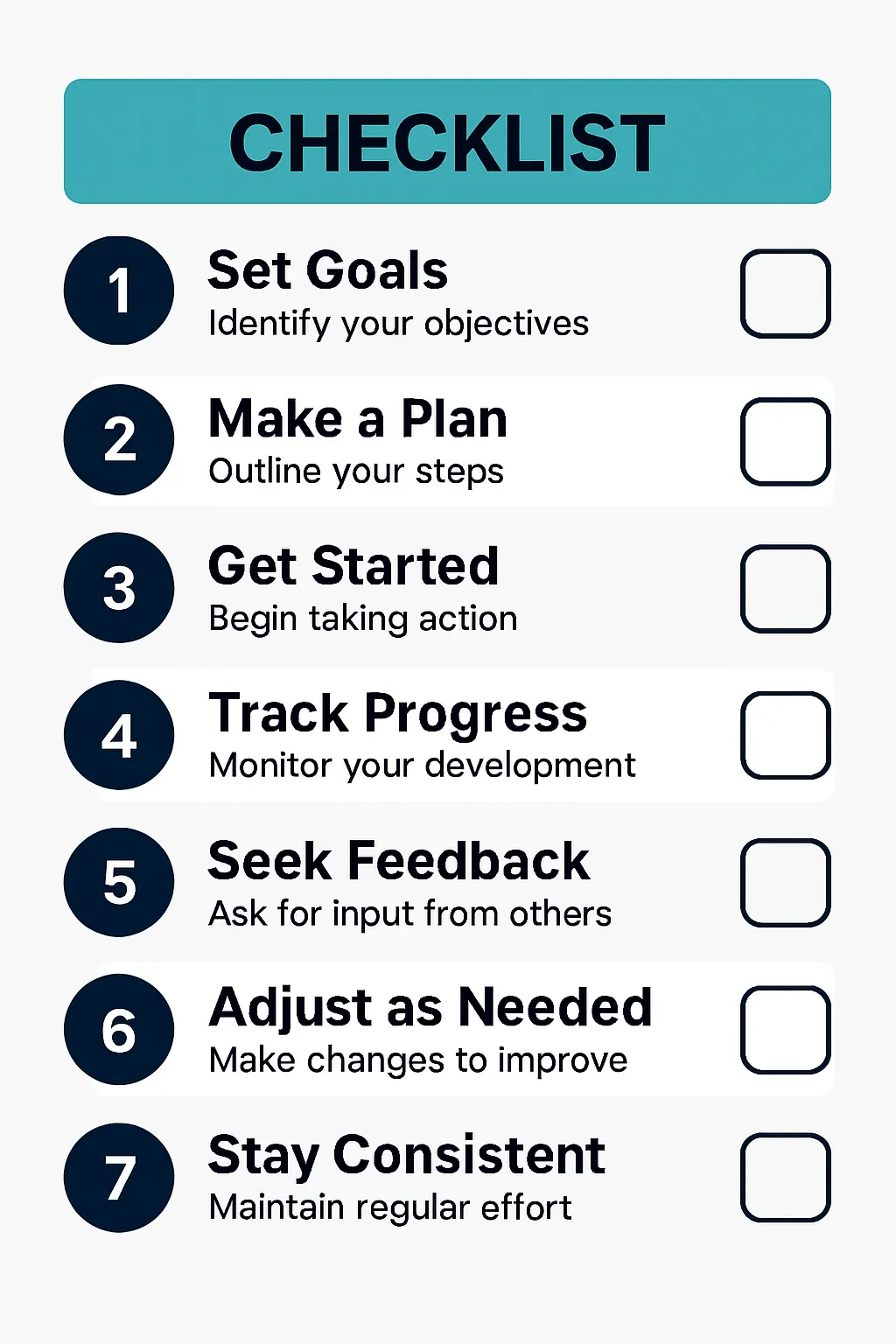
Day 1: Conduct an honest, specific skills assessment against the five core SEO competency areas outlined in Step 1. Write down your genuine strengths and actual gaps without softening the gaps. Starting with clear-eyed clarity about where you actually are is the foundation of everything else.
Day 2: Choose your starting niche. Not permanently, but specifically and provisionally. Write one concise paragraph describing your ideal client their industry, their size, their primary SEO challenge, and why your background positions you to serve them particularly well.
Day 3: Audit your current professional online presence. Update your LinkedIn headline and About section to reflect your SEO freelancer positioning with the niche specificity you defined on Day 2. Begin planning your professional website even if you cannot build it this week.
Day 4: Identify three businesses in your target niche with observable SEO problems. Use Semrush’s free tier or a quick Screaming Frog crawl to run a basic site overview on each. Note the two most significant, most fixable issues you observe for each business.
Day 5: Draft a direct outreach message for the business whose issues you understand best. Make it specific to what you actually found on their site. Make it about them and their situation, not about you and your credentials. Let it sit overnight before you send it.
Day 6: Review your draft message with fresh eyes. Does it lead with their specific situation? Does it demonstrate actual knowledge of their specific problems? Does it offer something genuinely useful before asking for anything? Edit accordingly and send it.
Day 7: Publish one piece of educational content on LinkedIn about an SEO concept you have worked with recently. Make it genuinely useful, not promotional. This is the first piece of the content pipeline that will eventually generate client inquiries without active prospecting on your part.
Then execute the same plan the week after that. And the week after that. The SEO freelancer practice that generates consistent, professional-level income is not built through any single brilliant move. It is built through the accumulation of correct, consistent actions taken persistently in a clear direction over time.