Three years into freelancing, I had a client who owed me $2,400. Not a small number. That was close to two months of work for me at the time. I sent the invoice. Waited. Sent a follow-up. Sent another. Then silence. Three full weeks of nothing.
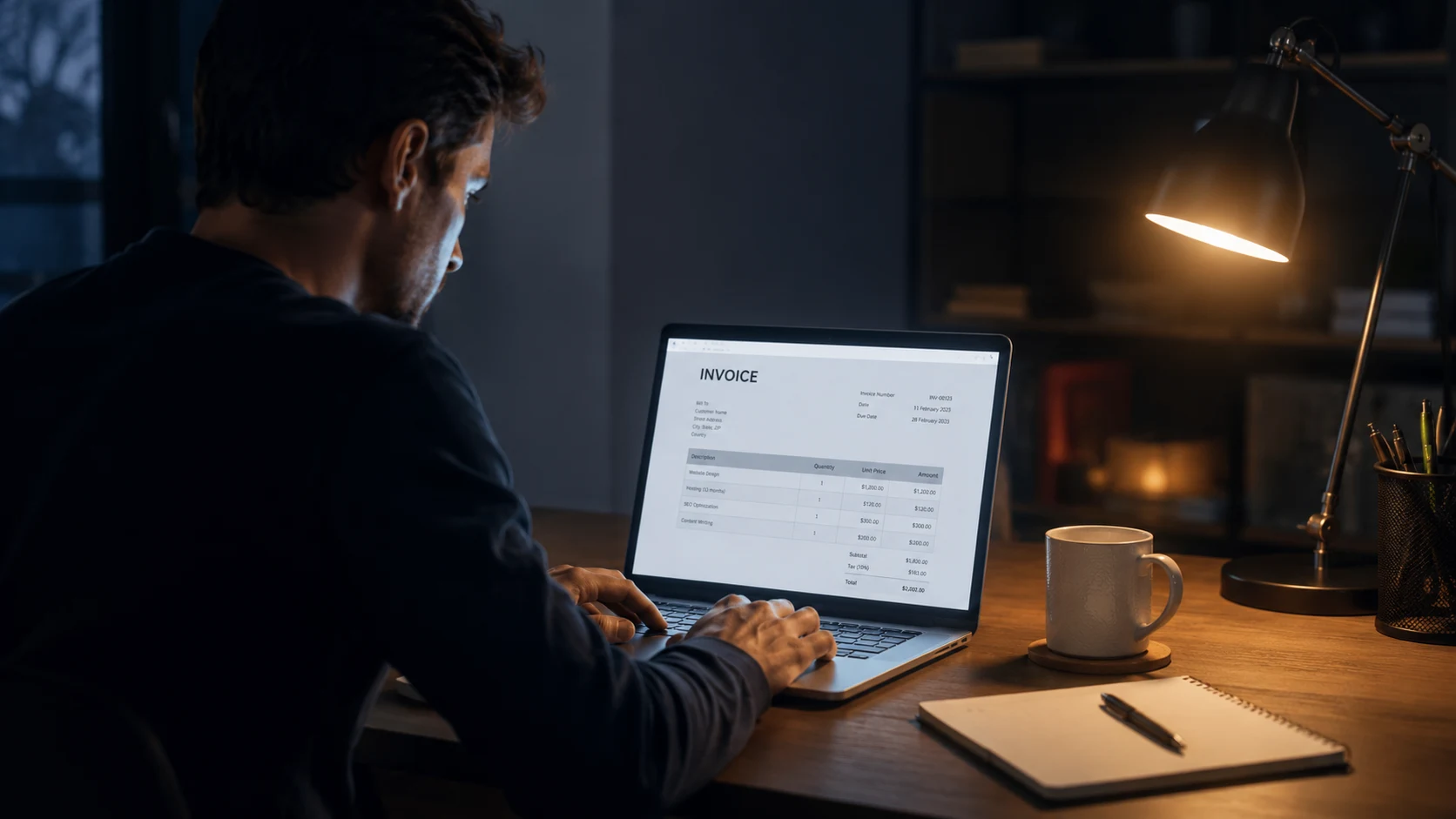
I remember sitting at my desk at 11 pm, the invoice open on my screen, genuinely unsure what to do next. Send an angry email? Call them out publicly? Write it off and move on? None of those felt right. And the honest truth is I had no idea what the correct steps actually were. Nobody had shown me the process. So I fumbled around for weeks, made a few mistakes, and eventually got paid in full.
What you’re about to read is the system I wish I’d had on day one. If a client is ignoring your invoice right now, these are the exact steps I follow, laid out in order, without the drama. You will get through this without burning bridges you might still need.
Let’s dive into the steps: How to Invoice Client Who Ignores You.
Quick Note
This works for freelance designers, developers, writers, consultants, photographers, and really any independent professional. The steps are the same regardless of your field or the size of the invoice.
Why Clients Go Silent on Invoices (It’s Usually Not What You Think)
Before you assume the worst, take one breath. In eight years of doing this work, I can tell you that most clients who ignore invoices are not sitting there rubbing their hands together trying to steal your money. What’s actually happening is usually one of these five things.
- Your invoice landed in their spam folder or got buried under 400 other emails in a large company inbox
- The person you worked with has no authority over payments because an accounts payable department handles all of that separately
- They’re having a rough cash flow month and avoiding the conversation out of embarrassment, not malice
- They genuinely forgot, because your invoice is not the centre of their universe the way it is yours
- There’s something about the work they’re unhappy with and they don’t know how to raise it without the conversation getting awkward
Understanding this one thing changes everything about how you communicate. You stop framing it as “this person is stealing from me” and start framing it as “there’s a breakdown in communication I need to fix.” That shift matters because panicked, aggressive follow-ups almost always make things worse. They create defensiveness. They delay payment further. And they burn the relationship even when the client was planning to pay all along.
That said, patience has a limit. If weeks keep passing and nothing moves, you escalate. Here’s exactly how.
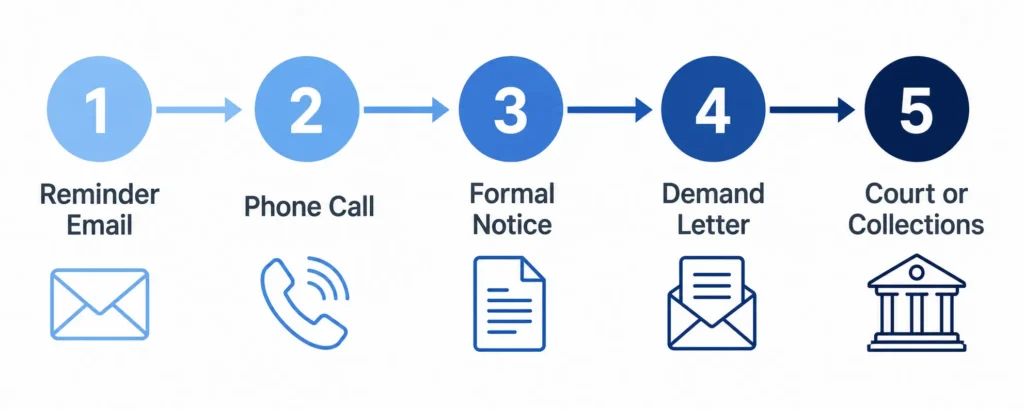
Send a Short, Calm Payment Reminder Email
Wait three to five days after the due date before sending your first reminder. Not the moment it’s overdue. Give them a small window. People get busy. Inboxes get messy. Three to five days is reasonable without being a pushover.
When I first started freelancing, my reminder emails were long apologetic ramblings full of phrases like “sorry for the bother” and “whenever you get a chance, no rush.” That’s too soft. The client reads that as optional. Be warm, be brief, be direct. Here’s the exact template I use now:
📧First Reminder Email — Copy and Adapt
Subject: Invoice #1042 — Quick Follow-Up on Payment
Hi [Client Name],
Hope your week is going well. I’m following up on Invoice #1042 for $[amount], which was due on [date].
Attaching it again here in case it slipped through. If anything looks off or needs updating, just let me know and I’ll sort it out right away.
Otherwise, here’s the payment link: [PayPal / Stripe / Bank details]
Thanks for taking care of this.
[Your Name]
Notice what this email does. It assumes good intent. It removes friction by attaching the invoice again and dropping in the payment link directly. There’s no accusation, no passive aggression, no drama. In my experience this one email resolves somewhere around 60 percent of overdue invoice situations on its own. Most clients just needed a nudge.
Pro Tip
Tools like Bonsai, FreshBooks, and Wave can handle invoice reminders automatically on a schedule you set. The software sends the follow-up so you don’t have to. Clients also respond differently to an automated system email versus a personal one from you, and that psychological distance can actually speed things up.
Pick Up the Phone
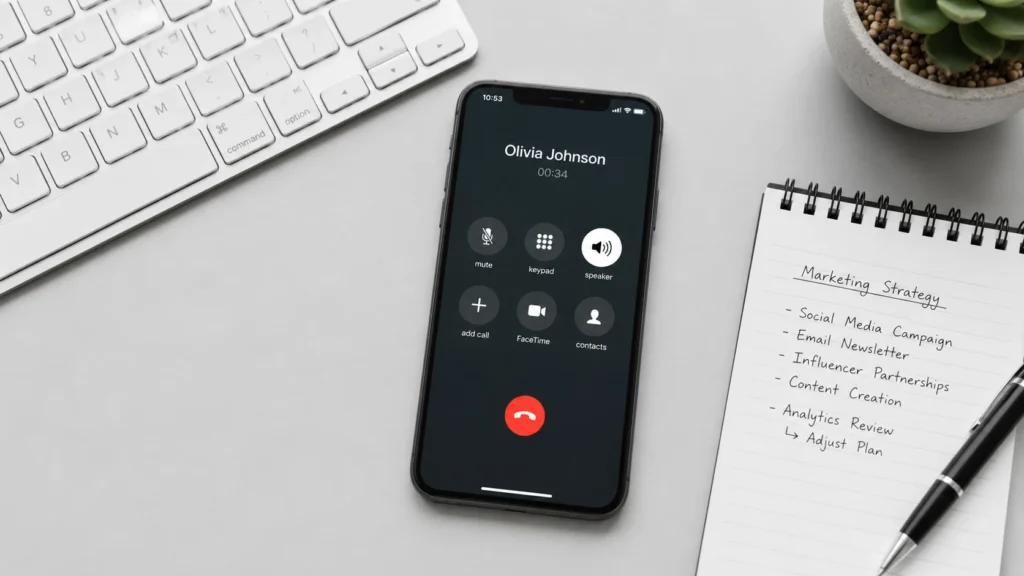
If a full week passes after your reminder email with no response, it’s time to call. I know most freelancers hate this. We live in email and Slack and async communication. But here’s the reality: it is dramatically harder to ignore a phone call than an email.
When I finally called the client who owed me $2,400, the whole call lasted four minutes. He apologized. Said the invoice had been sitting in his spam folder the entire time. Paid two days later. Four minutes ended three weeks of anxiety. That call should have happened in week one.
Keep the script loose. Something like: “Hey [Name], it’s [you] — I sent a couple of emails about Invoice #1042 and just wanted to make sure everything landed okay. Have a quick minute to sort it out?”
Start casual. You are solving a logistics problem together. You are not confronting a suspect. That tone matters.
“The moment I stopped treating invoice follow-ups like confrontations and started treating them like logistics calls, my collection rate went up significantly. Most late payments are friction, not theft. Remove the friction.”
From my notes, year five of freelancing
Send a Formal Overdue Invoice Notice
If the phone call didn’t happen or didn’t resolve things, this is where you shift gears. You stop doing friendly reminders and you start building a paper trail. This isn’t about burning the bridge. It’s about protecting yourself legally if this keeps going.
If you ever need to take this to small claims court or bring in a collections agency, you’ll need documentation showing you made reasonable efforts to collect. A formal written overdue notice is part of that record. Send it by email. Keep a copy. Note the date.
📄Formal Overdue Notice — Copy and Adapt
Subject: OVERDUE — Invoice #1042 Requires Immediate Attention
Dear [Client Name],
This is a formal notice that Invoice #1042 for $[amount], originally due on [original due date], remains unpaid as of today, [today’s date] — [X] days overdue.
I reached out by email on [date] and by phone on [date] without receiving a response.
Please arrange full payment within 7 business days of this notice using the details below.
Per our agreement, a late payment fee of [X]% per month applies to outstanding balances. I am willing to waive this charge if payment is received within the window above.
If there are questions or concerns about the invoice, please contact me directly at [your email or phone].
[Your Name]
[Your Business Name]
[Date]
Important
Only reference a late payment fee if it’s written into your original contract or agreed payment terms. You cannot invent fees after the fact and expect them to hold up legally or ethically. But if a late fee clause is in your contract, invoke it now. It signals you are serious and have documentation to back you up.
When the Invoice Passes 30 Days With No Movement
This is where most freelancers either give up or blow up. Neither works. If you’re past 30 days overdue and have sent two or three reminders with no response, the friendly phase is over. Now you move into what I call the legal phase, and it’s calmer than it sounds.
Send a Demand Letter Before Taking Legal Action
A demand letter is a formal written request for payment that signals you’re prepared to take legal action. You don’t need a lawyer to write one. I’ve written mine myself. What matters is that it’s factual, clear, and dated.
Your demand letter should cover: the exact amount owed, the original invoice number and date, the services you provided and when, every date you contacted them, and a final payment deadline, usually 14 days. That’s it. Keep it clean. No emotional language. No threats beyond the legal remedies you’re actually prepared to use.
Send it by email and physical mail with tracking or a delivery confirmation. The physical letter carries psychological weight that an email simply doesn’t. It says: “I am serious enough about this to put it in print, address it to your office, and mail it with tracking.” That changes how people respond.
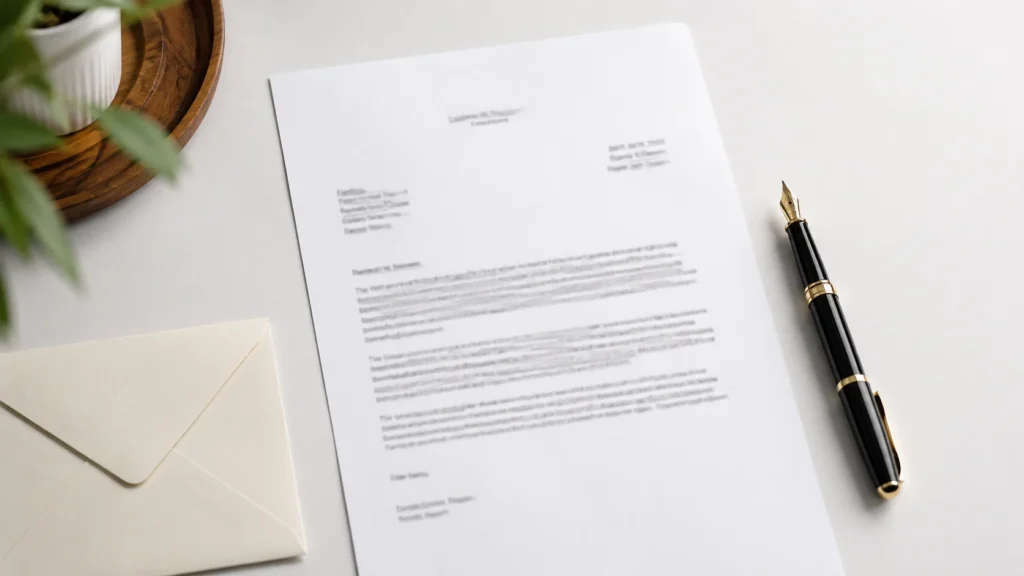
📬Demand Letter Template — Copy and Adapt
[Date]
[Your Full Name]
[Your Address]
[City, State, ZIP]
[Client Full Name]
[Client Company]
[Client Address]
RE: Demand for Payment — Invoice #1042
Dear [Client Name],
This letter is formal notice that you owe [Your Business Name] $[amount] for services rendered between [start date] and [end date], documented in Invoice #1042, enclosed.
Payment was due on [due date] and has not been received despite multiple written and verbal attempts to contact you.
I hereby demand full payment of $[amount] within fourteen (14) days of this letter’s date.
If payment is not received by [14-day deadline], I will pursue all available legal remedies including filing a claim in Small Claims Court and/or engaging a collections agency, which may affect your credit.
This is my final notice before formal action.
Sincerely,
[Your Signature]
[Your Printed Name]
[Phone]
[Email]
A lot of clients pay right here. The demand letter makes things concrete in a way that emails never do. Many clients genuinely don’t believe a freelancer will take legal action until they see something that looks this formal in their hands. Even if you wrote it yourself, the printed and mailed letter changes the dynamic. I’ve seen this work with clients who ignored four previous emails without blinking.
File in Small Claims Court or Engage a Collections Agency
If the 14-day deadline passes with no payment and no communication, you have two real paths forward depending on the amount owed and how much time you want to spend.
Small Claims Court is exactly what it was designed for. Filing fees are typically between $30 and $100. You don’t need a lawyer. The process is simpler than most people expect. In most U.S. states you can claim anywhere from $5,000 to $10,000. Bring every email, the original contract, every invoice, the demand letter, and your delivery confirmation. Courts take documentation seriously.
Collections agencies make more sense for larger amounts or when you want to hand the problem off entirely. They typically take 20 to 40 percent of what they recover, but they handle every step of the process. If you’ve already spent weeks chasing this payment, sometimes that cut is worth your sanity.
Do Not Do This
Do not publicly name or shame the client on social media before you’ve exhausted every legal avenue. Even when you’re completely in the right, going public can expose you to defamation claims and will almost certainly destroy any remaining chance of recovering the money. Keep everything documented, professional, and private until the legal process is finished.
The Full Escalation Timeline at a Glance
| Step | When to Use It | Tone | Goal |
|---|---|---|---|
| 1. Reminder Email | 3 to 5 days after due date | Warm, direct | Jog their memory |
| 2. Phone Call | 7 to 10 days after due date | Conversational, calm | Break the silence |
| 3. Formal Notice | 14 to 21 days after due date | Professional, firm | Build a paper trail |
| 4. Demand Letter | 30 or more days after due date | Legal and serious | Final warning before action |
| 5. Court or Collections | After demand letter deadline | Formal, documented | Actual recovery |
Mistakes I Made So You Don’t Have To
Eight years in, I’ve made most of the wrong moves at least once. These are the ones I see freelancers repeat constantly.
- Waiting too long to follow up. I used to wait three to four weeks because I didn’t want to seem pushy. Three to five days after the due date is completely standard. Waiting longer just gives the client permission to keep forgetting.
- Having no contract with payment terms. My first two years I took on work with verbal agreements and vague email threads. No due dates, no late fees, no terms in writing. Following up on a debt you can’t document is painfully awkward. Always get it in writing before work starts.
- Delivering the full project before getting a deposit. For any project over $500, I now require 25 to 50 percent upfront. The client who ignores your final invoice almost never ghosted the deposit. Partial payment upfront changes everything about the dynamic.
- Softening my language until it became meaningless. My early follow-up emails said things like “whenever you get a chance” and “no rush at all.” Clients literally read that as optional. “Please process payment by Friday” is not aggressive. It’s professional. Direct language gets paid faster than apologetic language, full stop.
- Not using invoicing software with automatic reminders. Switching to FreshBooks automated most of my follow-up process. The software sends reminders on a schedule. I don’t have to remember. The client doesn’t get to pretend they never heard from me. And honestly, the automated reminder email feels less personal than one from me directly, which sometimes makes it easier for clients to just pay without the awkwardness.
Tools That Make This Whole Process Easier
You don’t have to run this process manually. Here are the tools I actually use or have tested over the years.
Bonsai
Built specifically for freelancers. Covers contracts, invoices, automated payment reminders, and has a contract template library. The automated late payment reminder feature alone has saved me hours every month.
FreshBooks
More accounting-heavy, but the invoicing and scheduled reminders are solid. Good choice if you’re also tracking expenses and billing multiple clients every month.
Wave
Completely free and genuinely capable. Handles automated reminders, payment links, and basic accounting. If you’re just starting and don’t want to spend money on tools yet, start here.
Stripe / PayPal
Both let you send invoices directly with a one-click payment link. I’ve seen payment timelines drop from 30 days to 3 days just by including a payment link in the invoice. Lower friction means faster payment. Always.
Protect Yourself Before the Next Project
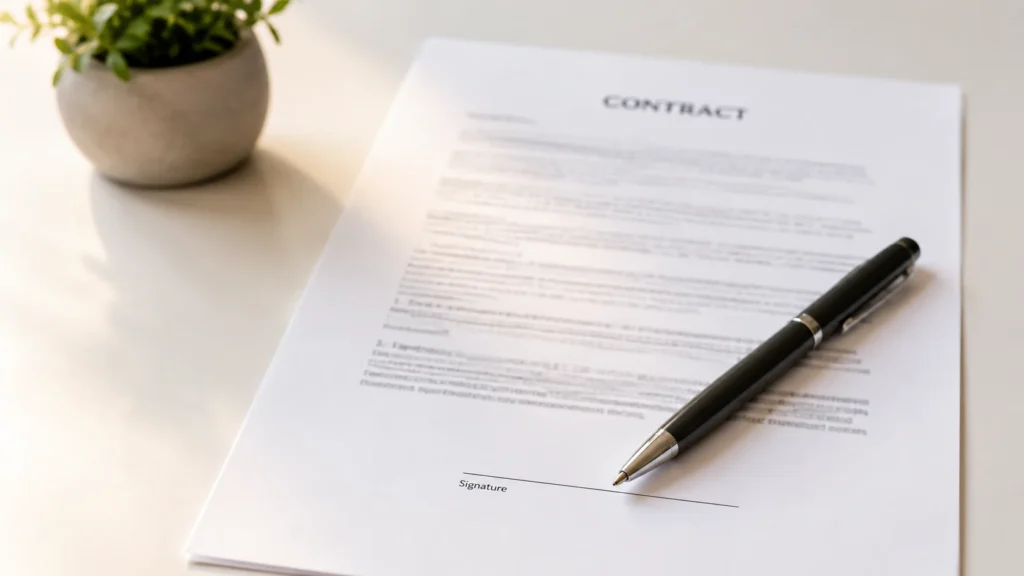
A signed contract with explicit payment terms is not optional if you want to get paid reliably. Set Net 14 or Net 30 terms. Add a late fee clause. Define what happens if payment is not received. Templates at bonsai.com and docracy.com are good starting points.
Require a deposit before work begins. Pause any ongoing work if a milestone payment is missed. These are not extreme measures. They are standard professional practice. Clients who respect your work will accept them without blinking.
People Also Ask About Invoicing Clients Who Ignore You
How long should I wait before following up on an unpaid invoice?
Three to five days after the due date is the right window for your first follow-up. Waiting longer signals that you’re not tracking it closely, which gives clients permission to keep delaying. After the first reminder, follow up again at seven to ten days with a phone call if there’s still no response.
Can I take a client to small claims court for an unpaid invoice?
Yes. Small claims court is specifically designed for disputes like this. In most U.S. states you can file claims up to $5,000 to $10,000 with no attorney required. Filing fees are usually between $30 and $100. You’ll need your original contract, the invoices, all your written communication, and your demand letter with delivery confirmation.
What is a reasonable late payment fee for freelancers?
One and a half to two percent per month on the outstanding balance is a common standard. More important than the specific percentage is having the late fee clause written into your contract before work begins. You cannot add a late fee retroactively and expect it to be enforceable.
What do I do if a client ignores every single email I send?
Switch channels. Call them. If the call goes to voicemail, leave a short professional message. If there’s still no response after a phone attempt, send the formal overdue notice via email and physical mail with tracking. The transition from email to physical mail changes the seriousness of the situation in most people’s minds. From there you move to a demand letter and then legal options.
Should I stop working for a client who hasn’t paid me?
If a milestone payment is overdue and you’re still in the middle of ongoing work, yes. Pause work and communicate why clearly and professionally. Continuing to deliver work without payment gives the client even less incentive to pay. Stopping work protects you financially and creates a natural point to resolve the payment issue before moving forward.
Where This Leaves You
If a client is ignoring your invoice right now, the good news is this is solvable. It usually doesn’t escalate past step two or three. A short, calm reminder email followed by a phone call handles the majority of late payment situations without any drama at all.
But if you’re already past that point, the five steps above give you a clear, legally defensible path forward. You don’t have to be aggressive. You don’t have to embarrass anyone. You don’t have to absorb the loss. You did the work. You sent the invoice. The process exists and it works.
And before you start the next project? Contract signed, payment terms set, deposit collected, invoicing software running on a reminder schedule. That version of you collects payment almost every time. The unpaid invoice problem is largely a systems problem, and systems are fixable.
If you’ve handled a non-paying client situation and found something that worked that isn’t covered here, drop it in the comments. I read all of them.
If you’re looking for more real world insights and practical tips to level up your freelancing journey, make sure to check out our website. We regularly share simple, actionable content to help you land better clients, protect your time, and confidently grow your freelance career.