Six years of clean work. No payment disputes. No complaints on record.
Then one Tuesday morning, a developer I know opened her laptop to a Google review calling her a scammer, accusing her of stealing a project deposit from a previous client, and stating she had zero professional ethics. Every word of it fabricated. She had email chains proving every deliverable was completed and approved. Bank records showing the deposit was processed correctly per the contract. The signed scope of work with client sign-off on every phase.
The review was there at 8 am. Still there at noon. Two prospective clients she had been in active conversations with went quiet around the same time, which she noticed but couldn’t prove. Not yet.
Three weeks passed before she stopped wondering whether she had any real legal options and started actually figuring out what those options were. That delay nearly cost her the statute of limitations window.
When a freelancer sue client for defamation situation lands in your lap, the instinct is usually one of two things: freeze and absorb the damage, or fire off an angry public response that hands the client ammunition. Neither one helps. What actually produces results is understanding exactly what the law requires, what evidence you need to build, and what sequence of steps gives you the best realistic shot at getting the false content removed and your losses addressed.
What Defamation Actually Means for a Freelancer
Freelance defamation of character is a legal claim that requires three conditions existing simultaneously: a statement that is provably false as a matter of fact, that statement reaching at least one other person, and that publication causing damage you can actually document. All three. Not two of three.
As a freelancer or independent contractor, your defamation rights are identical to those of any other private individual under US law. Can an independent contractor sue for defamation under the same standards that apply to employees or business owners? Yes. The law draws no meaningful distinction here. You are a private figure and you have full access to defamation claims under the applicable state law.
Libel vs Slander for Freelancers: The Practical Difference
Online defamation against a freelance business almost always falls into the libel category. Libel is written defamation. A fabricated Google review, a false LinkedIn post, an email sent to your professional contacts accusing you of fraud or theft. Because written defamation is documented and timestamped, it is generally easier to prove than its spoken counterpart.
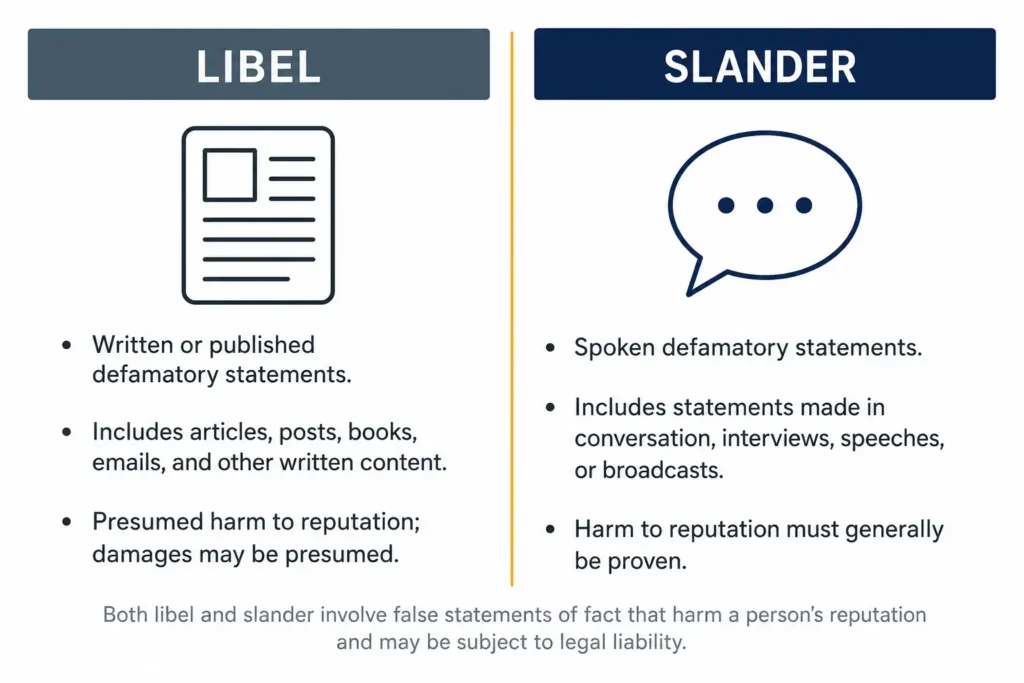
Slander is spoken defamation. A client calling your mutual industry contacts to report you as unreliable or dishonest. A client appearing in a Facebook video to describe work you allegedly never delivered. Harder to capture, but still legally actionable when you can establish it happened.
The line that trips most freelancers up: a negative opinion about your work is not defamation. A client writing that your turnaround was too slow, that your communication fell short, or that they would not hire you again is expressing a subjective view about their experience. Courts protect that speech under the First Amendment. Always have.
But a client stating that you stole their deposit when the bank records contradict that claim, or that you delivered nothing when signed delivery receipts exist, or that you threatened them when no such thing occurred: those are factual claims. Provably false factual claims. That is exactly where a freelancer sue client for defamation case becomes viable.
How to Prove Defamation as a Freelancer: The 4 Legal Elements
Four elements. All of them required. Miss any one and the case weakens dramatically, which is why understanding each one before spending a dollar on an attorney matters.
Element 1: The Statement Must Be Objectively False
To sue a client for false statements successfully, those statements must be demonstrably false as objective fact. Not unfair. Not exaggerated. Actually wrong in a way a court can evaluate against evidence.
Truth is a complete defense in defamation law. If the client can establish their statement was accurate in any meaningful way, the legal claim ends there regardless of the harm the statement caused. This is why your project documentation needs to exist before any dispute arises: delivery receipts, payment records, signed approvals, communication threads. All of it.
Element 2: It Must Have Been Published to a Third Party
A defamatory statement has to reach at least one person besides you and the client. A public Google review satisfies this immediately. An email sent to your mutual professional contacts satisfies it. A post in an industry Facebook group satisfies it. A private message sent only to you is an unpleasant exchange, not defamation.
Element 3: You Must Document Reputational or Financial Harm
Knowing how to prove defamation as a freelancer almost always comes down to this specific documentation chain. You need to connect the false statement to real, documented damage.
If a prospective client went quiet around the time the false review appeared, preserve those email conversations with timestamps. If your monthly inquiry volume dropped measurably, note it with specific dates. If an existing client mentioned the review and expressed concern, write down exactly what they said and when they said it. The tighter that chain of connection, the harder the case is to dismiss.
Element 4: The Client Must Have Been at Least Negligent
Because freelancers are private figures under defamation law, not public figures, the standard for fault is relatively accessible. You do not need to prove the client deliberately set out to destroy your professional standing. You only need to establish that a reasonable person would have known the statement was false before publishing it. That is the negligence standard.
Public figures face an entirely different bar called actual malice, where they must prove the defendant knew the statement was false or acted with reckless disregard for the truth. As an independent contractor and private figure, you are not subject to that elevated standard. Negligence is what you need to demonstrate.
Defamation Per Se: When False Accusations Don’t Require Proof of Financial Loss
Most freelancers have never heard of defamation per se. That gap in knowledge is a problem because it is often the strongest legal argument available when a client makes specific false accusations about your professional conduct.
Here is what it means: certain categories of false statements are considered so inherently damaging that courts presume harm automatically, without requiring you to calculate a specific dollar loss. You do not need to trace exactly which client walked away because of the false claim.
For freelancers and independent contractors, the most directly relevant category is false statements that injure someone in their trade, profession, or business. A client falsely accusing you of professional fraud, theft, criminal conduct, or specific gross incompetence falls squarely into this territory. Statements like “they stole my money” or “they committed fraud against me” made publicly against a freelancer have been treated as presumed defamatory by courts when they lack any factual basis.
A defamation per se false accusation claim matters practically because proving financial harm in a defamation case is one of the harder evidentiary challenges. You have to connect a specific false statement to a specific documented dollar loss, and that connection is not always clean. Defamation per se bypasses that requirement entirely for the most damaging categories of false statements, which is why identifying whether your situation qualifies is one of the first questions worth raising with a defamation attorney.
Step-by-Step: What to Do When a Client Defames You Before Filing Any Lawsuit
Freelancer legal options against a client spreading false statements run from free platform reporting all the way to a full defamation lawsuit, and the lawsuit is always the last step in that sequence, not the first. Most resolutions happen well before anyone files anything in court.
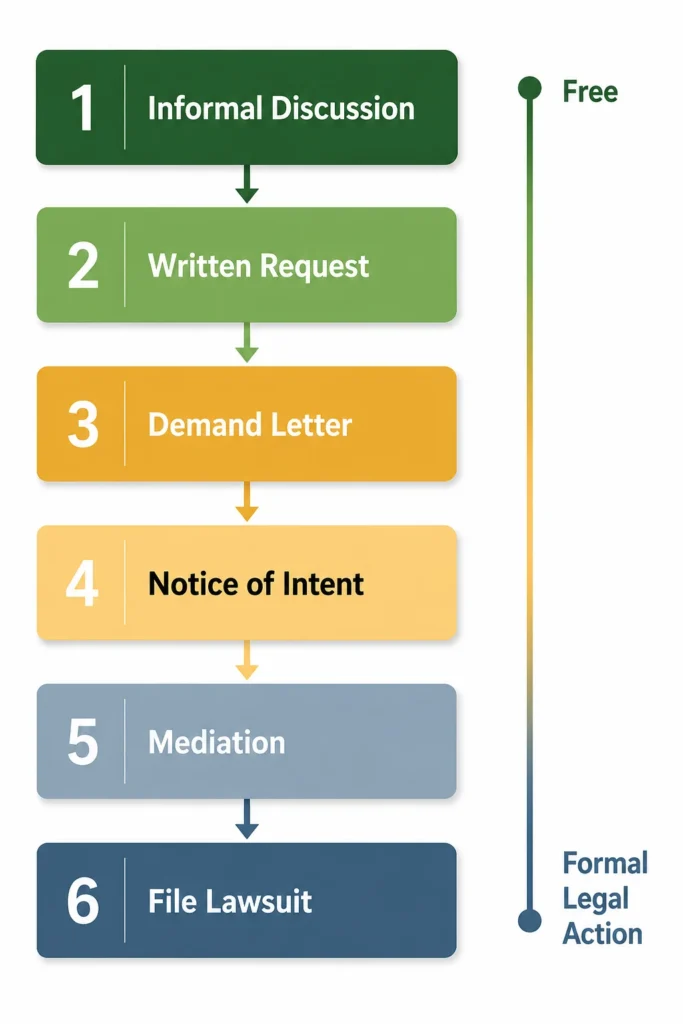
Step 1: Document Everything Immediately
Capture the review or post with the full URL and timestamp visible. Save every email. Archive social media posts before they can be taken down, edited, or deleted, including stories that expire in 24 hours. Pull together every piece of communication between you and the client that contradicts the false claim.
Evidence that exists right now may not exist tomorrow. Clients delete posts. Reviews get edited without a visible change log. Platforms archive old content. Screenshots with timestamps are the foundation for everything that follows. Tools that help: GoFullPage is a browser extension that captures complete web pages. The Wayback Machine at archive.org sometimes preserves content that has already been removed from its original source.
Step 2: Quantify Your Losses Specifically
This step is consistently skipped by freelancers who later regret it. Before you talk to any attorney, build your loss documentation. Log every client who went quiet around the time the false statement appeared. Note every inquiry that stopped. Record every existing client who mentioned the content. Attach specific dates to all of it.
This transforms a general feeling of reputational harm into the kind of documented financial loss that supports a real defamation claim. An attorney cannot meaningfully assess your case without it.
Step 3: Report It to the Platform First
Before spending anything on legal fees, use the platform’s own reporting process.
Google Reviews: If a client wrote a fake review targeting your freelance work, report it directly in Google Maps as fake or spam. Clearly fabricated reviews with no legitimate client connection do get removed after investigation, though the timeline varies.
Yelp: The Content Guidelines reporting process handles false or fraudulent reviews. It takes time, but it costs nothing.
Upwork and Fiverr: Upwork’s Resolution Center and Fiverr’s Customer Support both have specific processes for defamatory review removal against freelancers. Present your project documentation, completed deliverables, payment records, client communication, directly to the platform.
LinkedIn: Report false professional accusations through the standard reporting system available on each post or profile.
Defamatory review removal for freelancers through platform reporting requires no attorney and costs nothing. It should be your first move before any legal step.
Step 4: Send a Cease and Desist Letter for Defamation
This is the first actual legal step, and it costs a fraction of what a full lawsuit does. A cease and desist letter for defamation is a formal written demand from a licensed attorney telling the client to stop the behavior, retract the false statement, and warning of legal consequences for non-compliance.
A single cease and desist letter from a defamation attorney currently runs $500 to $1,500. Many clients who receive a formal demand from a licensed attorney remove the content within days because they do not want the cost or visibility of actual litigation any more than you do. Some attorneys attach a settlement agreement to the letter, meaning if the client signs it, the matter is resolved without any court filing.
Step 5: Consider Concurrent Claims Alongside Defamation
If the false statement is connected to a payment dispute, your attorney may identify claims worth pursuing alongside the defamation case. If the client is publicly claiming your work was fraudulent while simultaneously refusing to pay your invoice, that conduct may support a breach of contract claim. If they are publicly benefiting from your creative work while withholding payment, that opens an unjust enrichment argument. These alternative claims are sometimes stronger, cheaper to prove, or more likely to produce a settlement than defamation alone.
Step 6: Consult a Defamation Attorney Before Filing
If the cease and desist does not produce results and you are considering a lawsuit, talk to a defamation attorney before filing anything. Not because you need permission, but because there is a specific legal trap in defamation litigation that can transform you from the plaintiff into the party writing a much larger check.
Anti-SLAPP Law and Freelancer Protection: Why Suing Can Backfire
About 30 states have enacted anti-SLAPP statutes. SLAPP stands for Strategic Lawsuit Against Public Participation. These laws exist to protect free speech by allowing defendants to move quickly to dismiss lawsuits they believe are designed to silence legitimate criticism rather than address genuinely false statements of fact.
Anti-SLAPP law freelancer protection cuts both ways. If a client files an anti-SLAPP motion against your defamation lawsuit and wins, you pay their attorney fees. In California, those fee awards commonly run from $50,000 to $200,000. As of 2026, California’s version under Code of Civil Procedure 425.16 is considered among the strongest anti-SLAPP statutes in the country.
The anti-SLAPP motion works by arguing that the client’s review or statement was protected speech on a matter of public concern. If the court agrees even partially, the case gets dismissed and the financial consequence lands on you.
A strong case with documented false statements, published as fact rather than opinion, and connected to provable financial harm is unlikely to lose an anti-SLAPP motion. The risk concentrates in cases where the line between opinion and false fact is genuinely ambiguous.
When exploring freelancer client dispute legal options in states with strong anti-SLAPP laws like California, Texas, Nevada, Washington, and Oregon, the anti-SLAPP risk calculation needs to be part of your very first attorney conversation.
One additional legal mechanism worth knowing: if the defamatory review was posted anonymously or under a fake name, courts can compel platforms to reveal the reviewer’s identity through a discovery subpoena during the litigation process. This allows you to unmask anonymous reviewers before deciding whether a full lawsuit makes sense.
What a Freelancer Defamation Lawsuit Against a Client Actually Costs
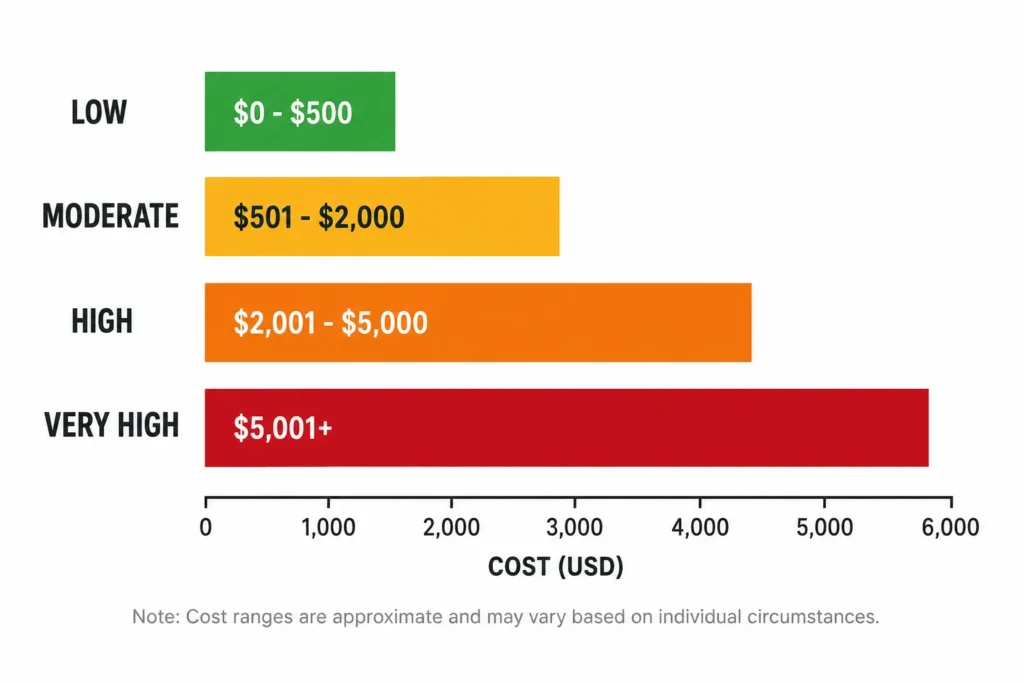
The numbers. No buildup.
A full freelancer defamation lawsuit that reaches trial runs $15,000 to $300,000 in total legal fees. Most cases settle before trial, landing in the $30,000 to $100,000 range in total legal spend. Cases that resolve quickly, often right after a cease and desist letter, can come in well under $10,000.
Starting retainers at defamation law firms typically run $5,000 to $10,000 upfront, with hourly billing from there. A defamation lawsuit over freelance work at Minc Law, one of the more visible dedicated practices, requires an $8,500 deposit with an average total case cost of $15,000 to $25,000 for a standard matter.
Contingency arrangements, where the attorney takes 25 to 40 percent of what you recover and charges nothing upfront if you lose, are rare in defamation cases. Financial recoveries in defamation litigation are hard to predict, which makes these cases less attractive for attorneys who work on contingency.
What You Can Actually Recover
If you win a defamation case against a client, the damages available include compensatory damages covering your actual documented financial losses, the clients who cancelled, the contracts that fell through, the provable income you lost directly because of the false statement. Punitive damages in egregious cases, particularly where the client refused to remove content even after receiving a formal cease and desist letter. The 2025 Florida case that produced a $500,000 punitive award was specifically triggered by the reviewer’s refusal to comply even after formal legal notice. And presumed damages under a defamation per se claim, where courts award damages without requiring you to calculate a specific dollar loss.
The Small Claims Court Option
For lower-value defamation disputes, small claims court for freelancer defamation cases is a legitimate option when documented harm falls under your state’s small claims limit. That ceiling ranges from $2,500 in some states to $25,000 in others. No attorney required. Filing fees under $200 in most jurisdictions.
For most freelancers, suing a client for a bad review only makes financial sense when the documented losses significantly exceed the litigation costs. If the dispute is a $2,000 project and the documented income impact is minimal compared to what litigation will cost, that calculation does not change regardless of how legitimate the underlying grievance is.
Real Scenarios Where Defamation Cases Were Won
Courts have awarded significant damages in cases built on exactly the kind of evidence a freelancer can gather. In 2024, a Texas business owner received a $750,000 jury award after a competitor created fake accounts to post fabricated negative reviews that cost the business 40 percent of its revenue. The case turned specifically on IP address evidence linking all the fake accounts directly to the competitor’s network. Without that technical evidence connecting the accounts to a single source, the case looked very different.
A 2025 Florida case produced $840,000 in combined compensatory and punitive damages after a former patient posted false malpractice claims across multiple social media platforms. The punitive component was awarded specifically because the reviewer refused to remove the posts even after receiving a formal cease and desist letter. Courts treat that refusal as evidence of malice.
Neither case was built on the plaintiff’s sense of injustice or the obvious unfairness of what happened to them. Both were won on documented false statements, traceable evidence, and quantified financial harm.
For a case of client defaming a freelancer, with bank records, signed contracts, delivery receipts, and email chains directly contradicting what the client posted publicly, the evidentiary foundation is already sitting in your inbox. The question is whether you build a case from it before the statute of limitations closes.
Platforms and the Section 230 Reality Check
You cannot sue Google, Yelp, Upwork, or Fiverr for hosting a false review against a freelancer. That answer is settled law.
Section 230 of the Communications Decency Act gives online platforms broad Section 230 platform immunity from liability for content their users generate. The platform did not write the false review. The client did. The platform is a distribution channel, not the publisher, and courts have upheld that distinction consistently since the law took effect in 1996.
What this means practically: the platform is your ally in the removal process and irrelevant as a defendant in a lawsuit. Use their reporting tools aggressively. Document every removal request and every platform response. But the cease and desist letter and any lawsuit that follows: all of it is directed at the client who wrote the false statement.
The narrow exception worth knowing: if a platform is notified of defamatory content through a proper legal removal process and still refuses to act, some courts have examined whether that refusal creates any liability exposure. This is unsettled law and highly jurisdiction-specific, but worth raising with your attorney if platform removal attempts have repeatedly failed despite documented notification.
Common Mistakes Freelancers Make When Facing Client Defamation
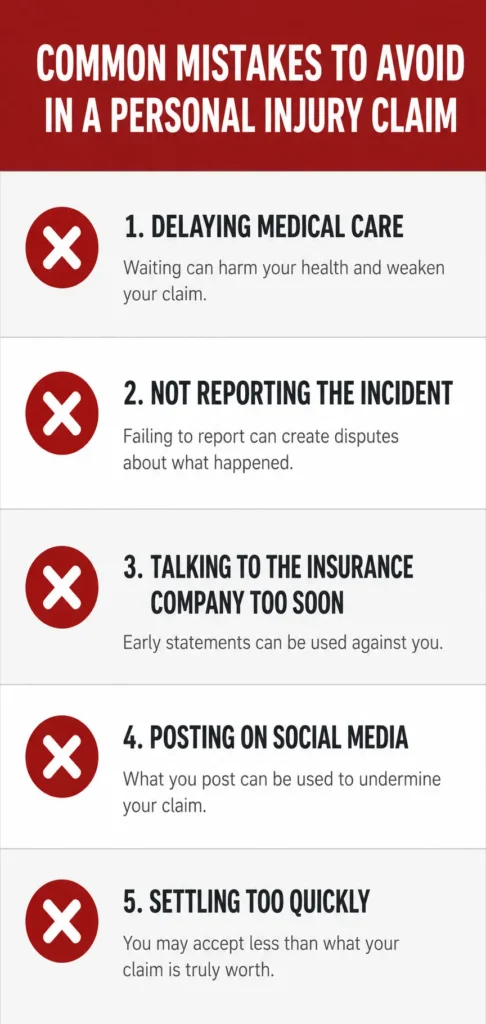
Responding publicly before speaking to anyone with legal knowledge. The moment you post an emotional public response to a defamatory review, you hand the client material they can use and you may accidentally waive certain legal positions without realizing it. Say nothing publicly. Wait.
Waiting past the statute of limitations for defamation. Most states give you one year from the date of publication. Not the date you discovered it. Not the date you decided to take it seriously. The date it went live. Fourteen months after a clearly defamatory review goes public is fourteen months too late in most jurisdictions.
Treating every harsh review as a client spreading lies about a freelancer. Defamation requires a provably false statement of fact, not a subjective negative review. A client who genuinely had a difficult experience and expresses it negatively is exercising protected speech. Cases built on unfair characterizations rather than false factual claims do not survive long, and they carry anti-SLAPP risk.
Sending aggressive personal emails before retaining an attorney. An emotional email threatening legal action without counsel can be read as harassment, can be used against you in any subsequent litigation, and can accidentally compromise certain legal positions. A formal cease and desist letter from a licensed defamation attorney carries legal weight that a personal email simply cannot replicate.
Not quantifying losses before meeting with an attorney. Walking into a consultation without documented numbers wastes your consultation time and makes it impossible for the attorney to assess whether litigation makes financial sense. Before you call anyone, build the loss log: client names, dates, dollar amounts, email threads connecting the loss to the false statement.
Alternatives to Suing a Client for Defamation That Actually Work
Litigation is the most expensive, most time-consuming, and most emotionally draining option available. Most situations involving false client reviews resolve without anyone filing a lawsuit. Here are the options worth exhausting first.
Reputation management for freelancers is the most consistently underused practical strategy. Platforms like Birdeye, NiceJob, and Podium help you systematically collect legitimate positive reviews from satisfied clients, which pushes defamatory content further down in search results over time. This approach does not remove the false review. But it dilutes its visibility and its SEO impact on your business.
Platform dispute resolution through Upwork’s Resolution Center and Fiverr’s Customer Support both have documented processes for fraudulent or false client feedback. Presenting your project evidence directly to the platform, completed deliverables, client-approved work, payment records, communication threads, often produces faster removal than any legal step.
Freelancer mediation vs lawsuit is a comparison worth running before writing any checks to an attorney. A professional mediator facilitates a structured conversation that can produce a written agreement including content removal, often for a few hundred dollars and a few hours. Mediation works best when the client has an underlying grievance, even if their public response to it crossed a legal line.
For a freelancer trying to protect their reputation online without litigation, the formal attorney demand letter at $500 to $1,500 sits between mediation and a full lawsuit and produces results more often than people expect. Because it does one thing nothing else in this list does: it makes the client understand you are serious and that they face documented legal exposure.
The Statute of Limitations for Defamation: How Long You Actually Have
The statute of limitations defamation clock starts the day the false statement went public. Not the day you discovered it. Not the day you decided to act. The day of publication.
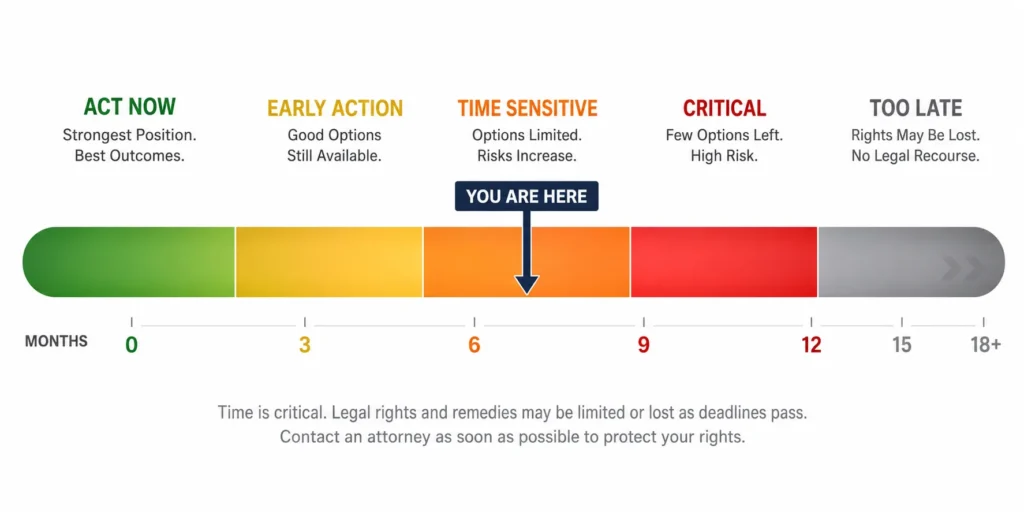
In most US states, that window is one year. California’s one-year limit is codified under Code of Civil Procedure 340(c), running from the date of first publication. Some states allow two years. A few extend further, but one year is the standard, and it passes faster than people expect when the first few months go by hoping the situation resolves itself.
Specifically: if a client posted a false review of your freelance work 10 months ago and you have been sitting on it, you have roughly 60 days remaining in most states to consult an attorney, build your documentation, and decide whether to file. Wait another three months and the decision has been made for you by the calendar.
Document now. Consult now. Even if a lawsuit is not the right move for your situation, understanding your options before that window closes keeps you in control of that decision.
Final Thoughts: What Actually Resolved the Situation
She sent a cease and desist letter drafted by a defamation attorney. Eight hundred dollars. The review came down four days later, without a single court filing, without a deposition, without any of the machinery of litigation.
What made it work was not the letter itself. It was the documentation she had organized when the attorney asked for it. Emails. Bank records. The signed scope of work. Every piece of it timestamped and ready.
Freelancers do have real legal rights when clients make false statements about them publicly. Those rights require evidence to enforce, cost money to exercise when litigation is the path, and expire under the statute of limitations if you wait too long.
Document every project from day one. Keep every approval in writing. When a client relationship starts turning hostile, start preserving evidence before anything gets deleted. You will rarely need any of it. But the one time you do, you will know immediately whether you have a case or whether you are starting from zero.
Frequently Asked Questions: Can a Freelancer Sue a Client for Defamation?
Q: Can a freelancer sue a client for defamation?
Yes. A freelancer can sue a client for defamation if the client made a false statement of fact, published it to at least one third party, and the statement caused measurable reputational or financial harm. As a private figure, the freelancer only needs to prove the client was negligent in making the false claim. Deliberate intent to harm is not required.
Q: What counts as defamation against a freelancer?
A false statement of fact that is published to others and causes documented harm. A client writing that your work was overpriced or disappointing is expressing a subjective opinion and is legally protected. A client writing that you stole their payment, committed fraud, or engaged in criminal conduct when those claims are provably false is making a defamatory statement of fact.
Q: Can I sue a client for a fake review on Google, Upwork, or Fiverr?
Yes, the client who wrote the false review can be sued for defamation. The platform hosting the review cannot, due to Section 230 platform immunity under the Communications Decency Act. Your legal claim is against the person who wrote the false statement.
Q: What evidence do I need to sue a client for defamation?
Screenshots of the false statement with the date and URL visible, documentation showing the statement is objectively false such as contracts, delivery records, payment receipts, and communication threads, evidence of financial or reputational harm including lost client communications and inquiry volume changes, and records showing the client was negligent or reckless in making the claim.
Q: How much does a freelancer defamation lawsuit cost?
A cease and desist letter runs $500 to $1,500 and often resolves the situation without litigation. A full defamation lawsuit that reaches trial typically costs $15,000 to $300,000 in total legal fees. Most cases that reach the filing stage settle in the $30,000 to $100,000 range. Starting retainers at dedicated defamation law firms run $5,000 to $10,000 upfront.
Q: Is a negative client review automatically defamation?
No. A review expressing dissatisfaction, criticism, or a poor experience is protected speech under the First Amendment. Defamation requires a false statement of fact presented as though it is true. The legal issue arises when a client states something demonstrably untrue as fact and that false claim causes documented harm.
Q: What is the statute of limitations for a freelancer defamation claim?
In most US states, one year from the date of publication. California’s one-year limit runs from the date the statement first went public. Some states allow two years. The clock starts when the statement is published, not when you discover it.
Q: Can I send a cease and desist letter before filing a defamation lawsuit?
Yes, and a cease and desist letter for defamation is strongly recommended as the first legal step. It formally demands retraction and warns of legal consequences. Many clients comply and remove the content, resolving the situation without any lawsuit being filed.
If you’re looking for more real world insights and practical tips to level up your freelancing journey, make sure to check out our website. We regularly share simple, actionable content to help you land better clients, protect your time, and confidently grow your freelance career.
Disclaimer: This article is for informational purposes only and does not constitute legal advice. Laws vary by state and jurisdiction. This content covers US law primarily. Freelancers outside the US should consult legal counsel familiar with defamation law in their jurisdiction. Consult a licensed defamation attorney for guidance specific to your situation. This article was last reviewed for factual accuracy in May 2026.