

If you have ever typed “how to make money writing online” into a search bar at midnight, you already know the feeling. The idea of getting paid to write sounds almost too good to be true, especially when your inbox is full of content mill ads promising $5 per article.
Here is the reality: freelance writing is one of the most legitimate, scalable, and accessible side hustles available in 2026. But the version that actually pays well looks nothing like what most beginner guides describe.
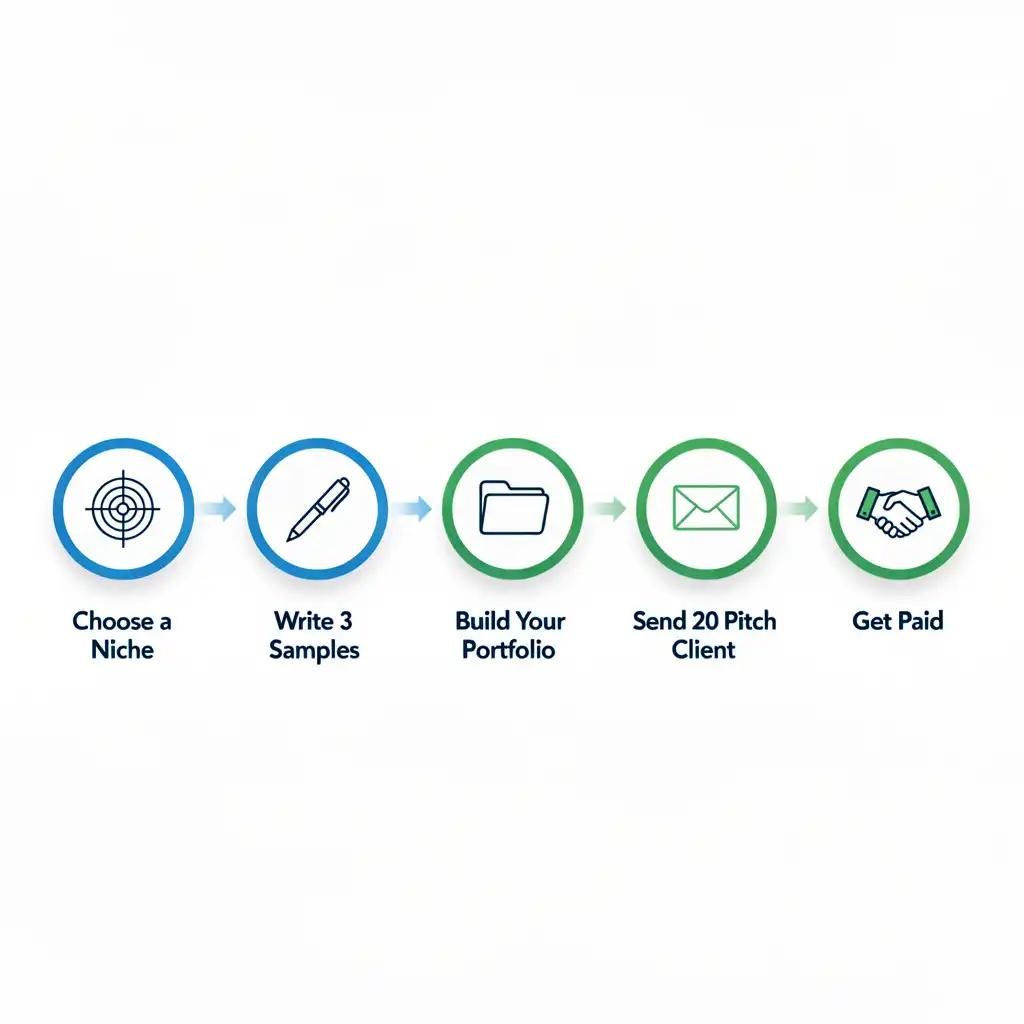
This guide about “Freelance Writer Side Hustle” cuts through the noise. You will learn which niches pay the most, which platforms are worth your time, how to land your first client without a single published clip, and exactly what it takes to hit $1,000 per month working part time.
Freelance writing is one of the most accessible side hustles available in 2026, requiring no upfront investment and offering realistic earnings between $500 and $3,000 per month depending on niche, platform, and weekly hours committed. The fastest path to paid work is choosing one high-demand writing category such as email copywriting, SaaS blog content, or financial writing, and pitching directly to small businesses or joining platforms like Contently, Clearvoice, or Upwork before building a standalone portfolio.
What Is a Freelance Writing Side Hustle? (And Is It Still Worth It in 2026?)
A freelance writing side hustle is paid, project-based writing work performed alongside a full-time job, typically involving blog posts, email copy, or marketing content for B2B clients, with earnings ranging from $300 to $3,000+ monthly depending on niche specialization and client type.
Freelance writing as a side hustle means you are taking on writing projects for paying clients outside of your regular employment. You are not blogging for fun and hoping for ad revenue. You are delivering a specific, measurable product, whether that is a 1,500-word SEO article, a five-email welcome sequence, or a 3,000-word white paper, and getting paid per project or on retainer.
The “side hustle” framing matters because it shapes how you structure your time, price your services, and manage client expectations. You are not available at 10am on a Tuesday. You have a day job. The clients worth working with understand and respect that.
How Freelance Writing Differs From a Full-Time Writing Career
Full-time writers, whether staff writers at a publication, in-house content strategists, or agency copywriters, trade consistent employment, benefits, and a predictable salary for reduced autonomy. They write what they are assigned, on schedules they do not control.
Freelance writers working on the side operate differently. You choose your clients, set your rates, own your schedule, and take only the work that fits your availability. The trade-off is income variability and the need for self-generated client acquisition, but the upside is that a single well-chosen retainer client can generate more per-hour income than many full-time writing positions.
The other key difference is specialization. Full-time writers often develop broad skills across content types. Successful freelance writers, especially those who earn on the side, tend to specialize in one niche. Depth beats breadth when you are trying to justify premium rates to a client who could hire anyone.
Who Actually Makes Money Writing on the Side (Real Income Data From 2023 to 2026)
The data on freelance writing income is noisy because it gets conflated with content mill work, blogging for ad revenue, and academic writing. When you isolate B2B content freelancers working directly with companies or through platforms like Contently and Clearvoice, the picture looks significantly stronger.
According to the Editorial Freelancers Association’s most recent rate survey, intermediate freelance writers specializing in technical or business content earn between $0.25 and $0.75 per word. A single 2,000-word article at $0.30 per word generates $600. Two of those per month, working perhaps 15 hours total, gets you $1,200 before you have pitched a single retainer.
The writers who do not make money from freelancing typically fall into one of three categories: they accepted content mill rates and burned out, they stayed generalists too long and could not justify premium pricing, or they built portfolios without a strategy and pitched to the wrong clients.
Time Commitment vs. Earning Potential: Realistic Expectations for Part-Time Writers
The relationship between hours worked and income earned in freelance writing is not linear, which is both the best and most misunderstood thing about it.
In month one, you might spend 15 hours per week and earn $300. By month six, the same 15 hours could generate $2,000 or more, because your rates are higher, you write faster in your niche, and repeat clients require no acquisition time.
Realistic part-time expectations:
- 10 hours per week: $500 to $1,500 monthly by month 6
- 15 hours per week: $1,200 to $2,500 monthly by month 6
- 20 hours per week: $2,000 to $4,000 monthly by year 1 if niche is strong
The ceiling is real but it is higher than most people expect from a side project.
Is Freelance Writing Still in Demand in 2026?
Yes. B2B content marketing budgets increased 23% year-over-year in 2025 according to the Content Marketing Institute, with particular demand spikes in SaaS documentation, email sequences, case studies, and SEO-optimized blog content, all outsourced primarily to freelance writers rather than in-house staff.
Every few years, a new technology triggers the same question: is freelance writing dead? The answer in 2026, as in every previous year this question has been asked, is no. The medium changes. The demand does not.
Why Content Marketing Budgets Keep Growing Despite AI Tools
AI writing tools were supposed to eliminate the need for human writers. What actually happened is more nuanced and considerably more interesting for anyone considering a writing side hustle.
AI tools reduced the cost of low-quality, undifferentiated content. They did not replace the strategic thinking, industry-specific expertise, narrative structure, and brand voice calibration that B2B buyers respond to. Companies that leaned fully into AI-generated content discovered, often painfully through Google traffic drops, that undifferentiated text does not convert or rank.
The result is a bifurcated market. Content mills and low-rate platforms are being disrupted by AI. Premium freelance writing, particularly in technical, financial, healthcare, and B2B SaaS verticals, is experiencing higher-than-ever demand because the bar for quality has risen and the writers who can clear it are valuable.
The Writing Niches AI Cannot Replace (And Where Human Writers Still Command Premium Rates)
Several writing categories remain almost entirely human-driven in 2026:
Original research and data journalism: Surveys, proprietary data analysis, and primary interviews require human judgment that AI cannot generate.
Executive thought leadership: A CEO’s ghostwritten LinkedIn article or keynote script needs to sound like one specific human being. AI produces generic voices.
Case studies and testimonials: These require interviews with real customers, synthesis of specific business outcomes, and narrative structure tuned to a specific buying journey.
Regulated content in healthcare and finance: Compliance requirements, liability exposure, and the need for credentialed expertise make AI-generated content in these verticals legally risky and often factually unreliable.
Conversion copywriting: High-stakes sales pages, email sequences, and landing pages are tested against revenue outcomes. Clients pay for results, not words, which rewards experienced human copywriters who understand buyer psychology.
Market Saturation Reality Check: Reddit vs. LinkedIn Freelancer Communities
If you read writing-focused subreddits, you might conclude the market is collapsing. If you look at LinkedIn job boards and the client posts on Contently and Clearvoice, you see a different story.
The discrepancy exists because Reddit over-represents beginners working in saturated, low-rate categories, while LinkedIn represents the working professional market where budgets are real and clients are serious. The market is not saturated. The entry-level content mill category is saturated. Those are not the same thing.
Highest-Paying Freelance Writing Niches in 2026
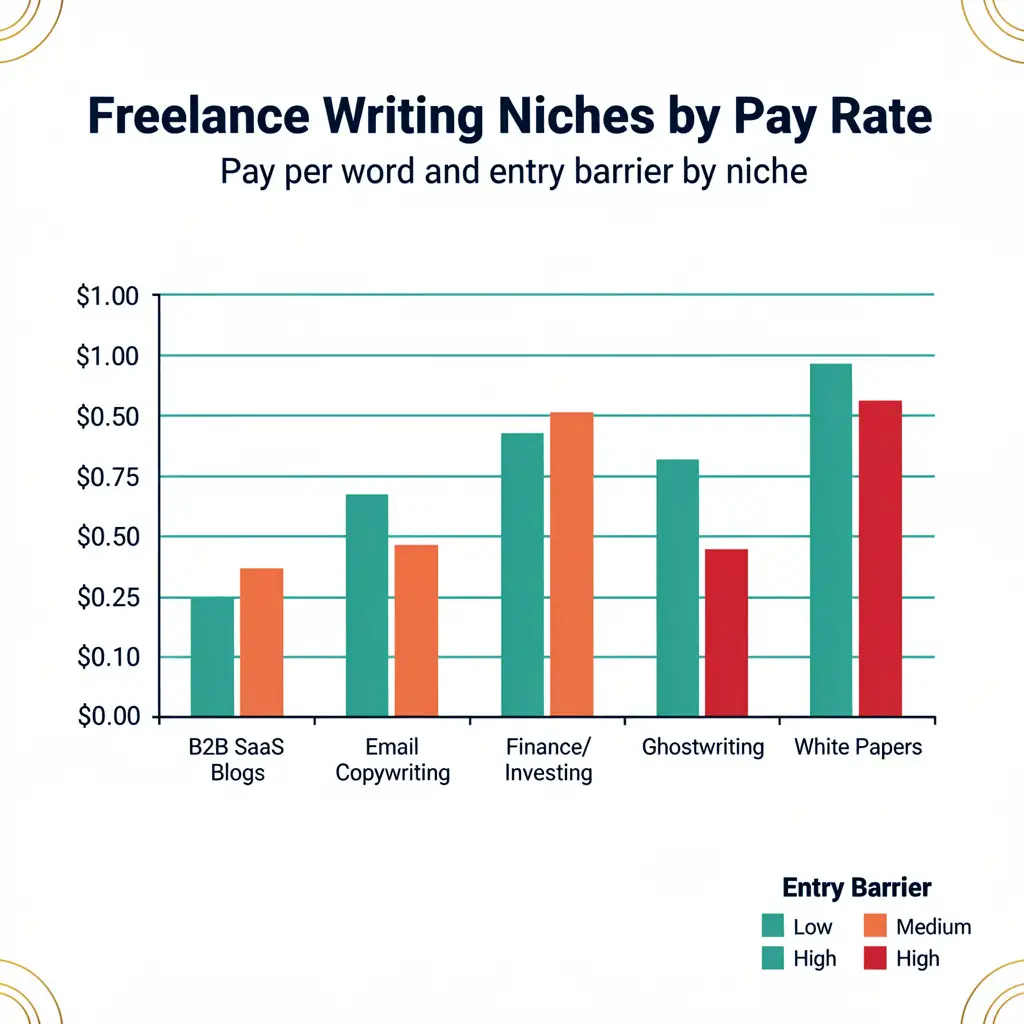
Choosing a niche is the single most consequential decision you will make as a freelance writer. The difference between a generalist blogger earning $0.05 per word and a SaaS content writer earning $0.35 per word is not talent. It is positioning.
Here are the niches that pay the most in 2026, along with what it takes to break in.
B2B SaaS and Tech Blog Writing ($0.15 to $0.50+ Per Word)
Software companies need a steady stream of educational blog content to drive organic traffic, support SEO efforts, and move prospects through their funnel. A single SaaS company might publish 8 to 16 articles per month, and most of this content is outsourced to freelancers.
What makes SaaS writing pay well is the combination of technical knowledge and the ability to explain complex concepts clearly. You do not need to be a developer, but you need to understand software products, B2B buying cycles, and SEO fundamentals well enough to write content that ranks and converts.
Entry barrier: Medium. A background in tech, marketing, or SaaS-adjacent fields accelerates entry. Writers without technical backgrounds can break in by covering SaaS topics adjacent to their expertise, such as HR tech if they have an HR background, or marketing tech if they have a marketing background.
Email Copywriting and Automated Sequences ($300 to $2,000+ Per Project)
Email copywriting is the highest-leverage writing niche for part-time freelancers because the deliverables are short, the pay is high, and results are measurable. A five-email welcome sequence might take 15 hours to write and command $500 at beginner rates or $2,000 at intermediate rates.
Unlike blog content, email copy is judged by open rates, click-through rates, and, ultimately, revenue. Writers who can demonstrate results with data become extraordinarily valuable to e-commerce and SaaS companies.
Entry barrier: Medium to high. The fundamentals of persuasive copywriting are learnable, but clients hiring email copywriters expect a demonstrated understanding of buyer psychology and conversion principles. Courses from practitioners like Jay Schwedelson or resources from the American Writers and Artists Institute provide solid grounding.
Personal Finance and Investing Content ($0.20 to $0.75 Per Word)
Personal finance is one of the most consistently high-paying freelance writing niches because the audience is large, the stakes are high, and Google’s E-E-A-T (Experience, Expertise, Authoritativeness, Trustworthiness) guidelines mean publishers need credible, demonstrably knowledgeable writers.
Writers with backgrounds in accounting, financial planning, banking, or even personal investing experience have a significant advantage. Certifications like CFP or CFA are not required but increase credibility and rate justification substantially.
Entry barrier: High for premium outlets. Bankrate, NerdWallet, and similar major personal finance publishers have formal reviewer processes. Smaller fintech companies, robo-advisors, and financial newsletters offer more accessible entry points.
Healthcare and Medical Writing (Requires Expertise; $0.25 to $1.00 Per Word)
Medical writing encompasses a wide range of deliverables: patient education materials, clinical blog content, pharmaceutical marketing, and regulatory documentation. Pay is consistently high because accuracy is legally and ethically critical and errors carry real consequences.
Writers with clinical backgrounds, including nurses, pharmacists, physicians, physical therapists, and medical researchers, command the highest rates. Non-clinicians can enter through patient advocacy content and wellness writing, though rates are lower.
Entry barrier: High. The American Medical Writers Association (AMWA) offers certifications that signal credibility to prospective clients.
Ghostwriting for Executives and Founders ($75 to $200+ Per Hour)
Executive ghostwriting involves writing LinkedIn articles, speeches, book chapters, newsletter content, and thought leadership pieces that are published under someone else’s name. It is one of the most discreet and consistently lucrative freelance writing niches.
The work requires strong interviewing skills, the ability to convincingly capture someone else’s voice, and comfort with non-disclosure agreements. The relationship is long-term by nature, meaning a single ghostwriting client can generate reliable monthly retainer income for years.
Entry barrier: High. Portfolio work for this niche is difficult to show publicly because it is inherently confidential. Writers typically break in through referrals, LinkedIn relationships with founders, or through platforms like Reedsy.
White Papers and Case Studies ($1,500 to $5,000+ Per Deliverable)
White papers are long-form, research-backed documents that B2B companies use to educate prospects and generate leads. Case studies document specific customer success stories with measurable outcomes. Both are high-stakes, high-complexity deliverables that require interviewing skills, research capabilities, and structured, long-form writing.
The rates reflect the complexity. A 3,000-word white paper with original research, expert interviews, and graphic-ready formatting might take 20 to 30 hours to produce, but at $3,000 that is $100 to $150 per hour, well above most freelance writing categories.
Entry barrier: Medium-high. White paper and case study clients expect a track record. Breaking in typically involves offering a reduced rate for a first project with a strategic client who will provide a strong testimonial, then raising rates for subsequent projects.
Niches to Avoid If You Are Starting Out (Content Mills and Low-Pay Traps)
Several categories consistently pay rates that make a sustainable side hustle impossible:
General listicle blogging for content agencies: Rates of $0.03 to $0.08 per word are common. At $0.05 per word, a 1,000-word article pays $50. That is not a side hustle. That is unpaid practice.
Textbroker, iWriter, and similar platforms: These platforms position themselves as starting points but rarely lead to rate increases or client relationships. The volume required to earn meaningful income at these rates is incompatible with full-time employment.
Fiverr writing gigs at the lowest tiers: Fiverr is not inherently bad, but the race-to-the-bottom pricing dynamic in writing categories makes it difficult to earn above $15 per hour without significant platform authority built over months of low-pay work.
Niche Comparison Table
| Writing Niche | Pay Per Word | Monthly Potential (10 hrs/wk) | Entry Barrier | Best Platform |
|---|---|---|---|---|
| B2B SaaS Blogs | $0.20 to $0.50 | $800 to $2,000 | Medium | Contently, Direct Outreach |
| Email Copy | Project ($500 to $2,000) | $2,000 to $4,000 | Medium-High | Upwork, LinkedIn |
| Finance/Investing | $0.25 to $0.75 | $1,000 to $3,000 | High (credentials help) | ProBlogger, Direct |
| Healthcare/Medical | $0.30 to $1.00 | $1,200 to $4,000 | High (RN/MD preferred) | Skyword, Contently |
| Ghostwriting | $75 to $200/hr | $1,200 to $3,200 | High | Reedsy, LinkedIn |
| General Blogging | $0.05 to $0.15 | $200 to $600 | Low | Fiverr, Content Mills |
Best Platforms to Find Freelance Writing Work as a Side Hustler
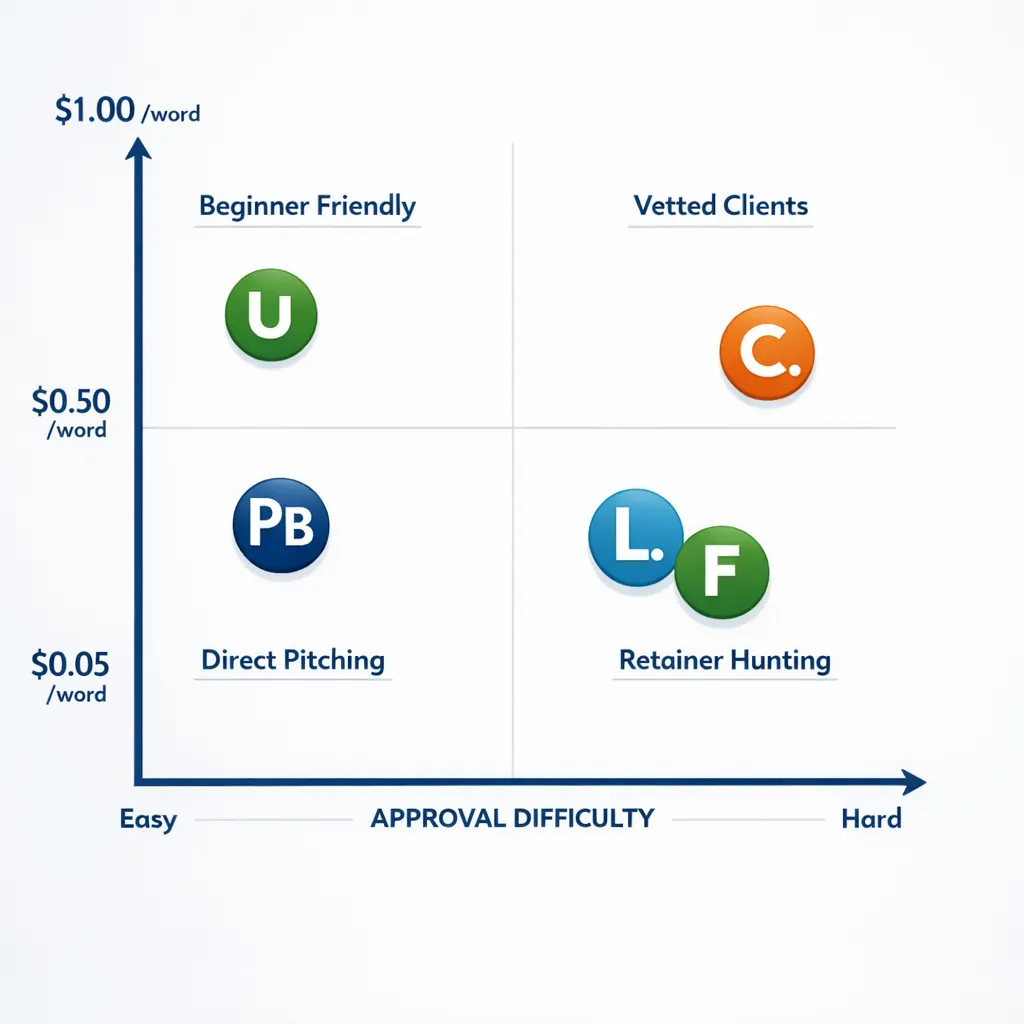
The most reliable platforms for beginner-to-intermediate freelance writers in 2026 are Upwork for volume, Contently and Clearvoice for vetted high-paying clients, ProBlogger Job Board for direct arrangements, and LinkedIn cold outreach for retainer relationships. Avoid Fiverr and content mills paying under $0.10 per word.
Not all platforms are created equal and the platform you choose in month one will shape your rates, client expectations, and long-term positioning. Here is what you actually need to know about each one.
Upwork: How to Win Your First Contract Without Reviews
Upwork has a well-earned reputation for low entry-level rates and intense competition. It also has a less-discussed reality: skilled writers who position themselves correctly in specialized categories regularly win well-paying contracts, even without reviews.
The key is hyper-specific positioning. “Freelance writer” is a losing profile headline on Upwork. “B2B SaaS Blog Writer for HR Tech and Productivity Tools” is not. Specific niches face far less competition and attract clients who have already decided to pay for expertise rather than shop on price.
To win your first contract on Upwork without reviews:
First, choose proposal targets strategically. Look for jobs posted within the last 24 hours with fewer than 10 applicants. Avoid jobs with “50+ proposals” labels entirely.
Second, open with immediate relevance. Your first sentence should demonstrate you understand their specific problem, not introduce yourself.
Third, include a free micro-insight in your proposal. One specific content angle or strategic observation that shows you have already thought about their project signals professional quality instantly.
Fourth, set your rate at the high end of beginner range, not the bottom. Low rates attract difficult clients, not more clients.
Contently and Clearvoice: Portfolio-Gated Platforms Explained
Contently and Clearvoice operate differently from traditional job boards. Both are talent marketplace platforms where brands post projects and vetted freelancers are matched to them. The barrier to entry is a portfolio review, which means they are not appropriate for your very first week but become valuable quickly.
Contently requires you to build a portfolio on their platform. Once approved, you gain access to enterprise-level brands, with rates typically starting at $0.25 per word and often exceeding $0.50 for specialized technical content.
Clearvoice uses a similar model with a stronger emphasis on SEO-focused content for SaaS and technology companies. Approval requires demonstrable writing quality and ideally some published work.
Both platforms handle invoicing, contracts, and payment processing, significantly reducing administrative friction for side hustlers.
ProBlogger Job Board and BloggingPro: Direct Client Pitching
ProBlogger’s job board is one of the oldest and most consistently reliable sources of direct freelance writing opportunities. Unlike Upwork or Fiverr, jobs on ProBlogger are posted by clients looking for a specific type of writer, and you apply directly without a platform intermediary taking a commission.
Pay ranges vary widely, from $0.10 to $0.50 per word depending on the publication and project type, but the absence of platform fees means your effective rate is meaningfully higher than equivalent Upwork work.
BloggingPro serves a similar function. Both boards update regularly and attract small-to-medium content brands, online publications, and direct-to-consumer companies rather than enterprise brands, making them more accessible to writers building their first client roster.
LinkedIn Cold Outreach: The Underrated Channel Most Beginners Skip
LinkedIn is the most underused client-acquisition channel for freelance writers, particularly in the side-hustle market. While most beginner guides point new writers toward job boards and platforms, the highest-value clients, those who pay retainer rates and provide consistent long-term work, are typically found through direct outreach rather than competitive platform bidding.
The LinkedIn outreach process for freelance writers involves:
Identifying content directors, marketing managers, or founders at companies whose content strategy is clearly active but whose blog or email output has visible quality gaps or publishing inconsistencies.
Sending a connection request with a specific, non-generic message that references something specific about their content or company.
Following up after connection with a brief value-first message that presents a specific content idea or identifies a missed opportunity in their current strategy.
This approach takes more effort per prospect than submitting a platform proposal but has a dramatically higher conversion rate to meaningful client relationships. A single LinkedIn-sourced retainer client is typically worth more annually than 20 individual Upwork projects.
Reedsy for Ghostwriting and Long-Form Projects
Reedsy is a curated marketplace connecting freelance writers and editors with authors and publishers. It is particularly well-suited for ghostwriters, developmental editors, and long-form content specialists.
The platform is selective, meaning approval is not guaranteed, but approved writers benefit from a client base that has already self-selected for quality and is prepared to pay professional rates. Ghostwriting projects on Reedsy commonly range from $3,000 to $20,000+ depending on project length and complexity.
Content Mills to Avoid (Textbroker, The Content Authority, Verblio)
These platforms pay rates that make them structurally incompatible with building a sustainable side hustle. The business model requires volume to generate revenue, which means the rates are designed to keep you writing as much as possible for the least sustainable pay.
More importantly, content mill experience does not translate into portfolio pieces that impress premium clients. The work is typically anonymous, undifferentiated, and built to a template that teaches neither craft nor business writing. If you want to start fast, use Upwork at carefully chosen rate floors. Do not start at content mills.
Should You Use Fiverr as a Freelance Writer? (Honest Pros and Cons)
Fiverr is not a complete waste of time for freelance writers, but it is appropriate for a narrow specific use case: generating your very first paid testimonials on a tight timeline, then exiting.
The platform’s gig-based structure and race-to-the-bottom pricing dynamic make it nearly impossible to earn above $20 to $25 per hour without significant platform tenure and a high number of reviews. More problematically, clients who find writers on Fiverr have been conditioned to expect extremely low prices, making rate increases difficult.
Use Fiverr for 60 days maximum at the start, exclusively to gather your first three to five reviews from real clients. Then redirect all acquisition energy to Upwork, LinkedIn, and direct outreach.
Platform Comparison Table
| Platform | Approval Difficulty | Average Pay Range | Best For | Fee Structure |
|---|---|---|---|---|
| Upwork | Low | $0.05 to $0.30/word | Volume, beginners | 10 to 20% commission |
| Contently | High (portfolio req.) | $0.25 to $0.75/word | Experienced, B2B | Managed placements |
| Clearvoice | Medium-High | $0.20 to $0.60/word | SaaS, tech niches | Managed placements |
| ProBlogger Jobs | N/A (job board) | $0.10 to $0.50/word | Direct clients | Free to apply |
| LinkedIn Outreach | N/A | $0.20 to $1.00/word | Retainers, ghostwriting | No fees |
| Fiverr | Low | $5 to $50/project | Micro-gigs only | 20% commission |
How to Start a Freelance Writing Side Hustle With No Experience
The most common mistake beginners make is treating “no experience” as a barrier rather than a starting condition. Every professional freelance writer once had no experience. The question is not whether you qualify today. It is what you do in the next 30 days.
For a comprehensive overview of the steps involved in becoming a freelance professional, this guide to becoming a freelancer covers 10 proven steps to getting paid and applies directly to the writing side hustle context.

Can You Actually Start Freelance Writing With No Experience? (Reality Check)
Yes, with one important qualification: no professional experience does not mean no demonstrable skill. Clients hiring freelance writers for real budgets are paying for results, not credentials. Your job in the early stage is to produce writing samples that demonstrate you can deliver what they need, regardless of whether those samples came from paid work.
The fastest path from zero experience to first paid project is:
- Pick one niche
- Write three strong samples in that niche
- Pitch those samples to appropriate clients
That sequence takes 2 to 4 weeks of focused effort. Writers who spend those weeks researching platforms, perfecting their websites, and reading about freelancing without producing samples are delaying the only activity that actually generates income.
Step 1: Pick One Niche and One Content Type (Why Generalists Fail)
The instinct to stay general feels safe. It seems like more options mean more opportunities. The opposite is true in freelance writing.
“I write blog posts, social media copy, email sequences, white papers, and product descriptions” is a sentence that tells a client nothing useful about whether you can do what they specifically need. “I write SEO-optimized blog content for B2B fintech companies” tells a fintech content manager immediately whether you are a fit.
Specialization allows you to:
- Charge higher rates because expertise is demonstrable
- Write faster because you are working within familiar territory
- Build a portfolio that speaks directly to your ideal client
- Get referrals because clients know who to refer you to
Choose your niche by intersecting three factors: an industry you know something about, a content type you can produce confidently, and a market that has budget. The overlap between those three is your starting niche.
Step 2: Build a 3-Piece Portfolio Using Free Publication Credits or Spec Work
You need exactly three strong writing samples before you start pitching. Not ten. Not one. Three pieces give a prospective client enough to evaluate your style, structural thinking, and subject matter knowledge without overwhelming them or signaling that you are padding a thin portfolio.
Three legitimate ways to build a portfolio from zero:
Spec work: Write samples targeting the exact type of client you want to pitch. If you want to write for SaaS companies, write a sample blog post for a fictional or real SaaS product. Make it genuinely good.
Guest posts: Medium, LinkedIn Articles, and industry-specific publications all accept unsolicited submissions. Published pieces, even on free platforms, are more persuasive than spec work because they demonstrate a third party was willing to publish you.
Offer one free piece strategically: Find one company whose content is clearly underserving their audience and offer a single free piece in exchange for a byline and testimonial. This is not spec work. It is a strategic investment in a portfolio asset with a named client attached.
Step 3: Set Your Rates Using Market Benchmarks, Not Guesswork
Underpricing is the most common and most damaging mistake new freelance writers make. It feels logical to start cheap to attract clients, but low rates signal low quality and attract clients who will make your working life difficult.
Beginner rate benchmarks in 2026:
- Blog posts (500 words): $50 to $75
- Blog posts (1,000 words): $100 to $150
- Email sequences (5 emails): $200 to $400
- Case studies (1,500 words): $300 to $500
- White papers (3,000+ words): $800 to $1,500
These are beginner floor rates. If your niche is finance, healthcare, or technical SaaS and you have relevant background knowledge, you can justify the intermediate column from day one.
Use a freelance hourly rate calculator to anchor your rates to your income goals rather than guessing based on what you think sounds reasonable.
Step 4: Write Your First 10 Pitches Using a Proven Template
Most freelance writers send bad pitches. They lead with their background, describe their services in general terms, and end with a vague invitation to connect. Clients receive dozens of these. None are memorable.
A pitch that gets replies has four components:
The specific opener: Reference a specific aspect of the client’s content, business, or industry challenge. One sentence that proves you have looked at their work.
The value statement: Articulate what you can help them achieve, not just what you do. “I help B2B SaaS companies reduce churn through educational blog content” is more compelling than “I am a freelance content writer.”
The evidence: One specific, relevant sample or result. Not your entire portfolio. One link.
The clear ask: A specific, low-commitment call to action. “Would a 15-minute call this week be useful?” Not “Please let me know if you are interested.”
Send 10 pitches in your first two weeks. Expect 1 to 3 replies. Expect that from those replies, you may close one project. That is not failure. That is the math of cold outreach at the beginner stage.
Step 5: Land Your First Client Within 30 Days (Realistic Timeline and Rejection Math)
The 30-day first client timeline is achievable if you treat pitching as a numbers game rather than an audition. Here is what realistic looks like:
- Week 1: Build portfolio samples and finalize niche
- Week 2: Research and identify 20 target clients, send 10 pitches
- Week 3: Follow up on pitches, send 10 more, apply to 5 ProBlogger listings
- Week 4: First response follow-through, deliver spec or discovery call
You will be rejected. Often. The writers who build sustainable freelance income are not more talented than those who quit. They simply sent more pitches and treated rejection as data rather than verdict.
What Skills Do Freelance Writers Actually Need? (Required vs. Nice-to-Have)
Required:
- Clear, readable prose without excessive jargon or unnecessary complexity
- Basic SEO understanding (keyword use, header structure, internal linking)
- Ability to follow a brief and deliver on time
- Professional communication via email
- Research skills for unfamiliar topics
Nice-to-have:
- WordPress familiarity
- Grammarly or Hemingway editor proficiency
- Basic understanding of content marketing funnels
- Experience with project management tools like Trello or Asana
Not required:
- A journalism or English degree
- Years of published work
- A professional website (in month one)
How to Get Your First Freelance Writing Client (Breaking In Without Connections)
Getting your first paying client is the hardest part of the freelance writing side hustle. Not because it requires extraordinary skill, but because it requires consistent action in the face of uncertainty.
Cold Email Outreach That Actually Gets Replies (Template Included)
Cold email is the highest-converting client acquisition channel for freelance writers who are willing to do the research. Unlike platform proposals where you compete against dozens of simultaneous applicants, cold email reaches a prospect who has not yet entered an evaluation process.
Cold email template:
Subject: One content idea for [Company Name]
Hi [First Name],
I noticed [specific observation about their content: a topic gap, a stale section, an underperforming format] and thought you might find this angle useful: [one specific content idea with a working headline and two-sentence rationale].
I am a freelance writer specializing in [niche] and have helped companies like [client type] with [specific outcome]. Here is a recent sample: [link].
Would it be worth a 15-minute call this week to see if there is a fit?
[Your name]
This email is short, specific, and actionable. It leads with value rather than credentials. It asks for a small commitment rather than a contract. The response rate for well-researched cold emails structured this way is typically 5-15%, meaning 10 emails should generate at least 1 meaningful conversation.
How to Find High-Paying Freelance Writing Clients on LinkedIn
LinkedIn is where content decision-makers, the people who actually control writing budgets, spend their professional time. The client acquisition process on LinkedIn looks like this:
First, identify your target by role: Content Marketing Manager, Director of Content, VP of Marketing, or Founder at companies in your niche.
Second, engage genuinely with their content before reaching out. Leave substantive comments on two to three posts. This creates name recognition before your outreach arrives.
Third, send a connection request with a personalized note. Avoid templates that say “I’d love to connect.” Say something specific about their work or company instead.
Fourth, after connecting, send a value-first message that presents a specific insight or idea, not a services pitch. Ask a question at the end that invites dialogue.
The LinkedIn approach takes longer than cold email but produces warmer relationships and significantly higher close rates for retainer work.
Networking in Facebook Groups and Reddit Communities (Where Clients Actually Hang Out)
Clients do not announce they are looking for writers on Reddit. What they do is post questions in entrepreneur and small business communities that signal content needs you can address.
Useful communities to monitor:
- r/Entrepreneur: founders discussing content and marketing challenges
- r/smallbusiness: business owners asking about marketing strategies
- r/SaaS: SaaS founders discussing growth and content
- Facebook Groups for specific industries in your niche
The strategy is not to advertise. It is to help genuinely and establish yourself as someone who understands the subject. When a member eventually asks “does anyone know a good writer for X,” the people who have been consistently helpful are the ones who get mentioned.
Using Upwork Strategically for Your First 3 Clients Only
Upwork is a tool, not a career. Use it to get three paying clients and three reviews, then redirect your acquisition energy elsewhere. The platform’s commission structure (10-20%) and volume-based competition dynamics make it a poor long-term client source, but it is genuinely useful for quickly establishing a track record.
When using Upwork strategically:
Focus on fixed-price projects rather than hourly, because they allow you to demonstrate value without being compared directly on hourly rate.
Write proposals that are specific to each posting. Generic proposals are rejected immediately. Specific proposals that reference the client’s actual content goals get interviews.
Increase your rate by 15-25% after each successful project. Upwork clients who liked your work will rebook at higher rates rather than restart the search process.
Guest Posting as Client Acquisition (Not Just SEO)
Most writers who guest post think about it as an SEO strategy. The more important function for a side hustle writer is client acquisition through demonstrated authority.
A guest post on a well-regarded industry publication signals to prospective clients that you write at a quality level a reputable editor approved. It is third-party validation that your portfolio alone cannot provide.
Target publications that your ideal clients actually read. A guest post in a SaaS-focused publication read by content directors is worth ten times a guest post on a general marketing blog, even if the general blog has higher traffic.
Can I Make $1,000 a Month With Freelance Writing? (Realistic Income Breakdown)
Yes. Earning $1,000 per month as a freelance writer is achievable within 3 to 4 months by securing two $500/month retainer clients or completing 10 to 15 blog posts at $75 to $100 each, working approximately 10 to 15 hours per week at intermediate skill level.
The $1,000 milestone is the first meaningful threshold in freelance writing income, not because the number is magical but because it proves the model works, validates your niche and rates, and gives you momentum to scale.
Month 1 to 3 Earnings: What Beginners Actually Make
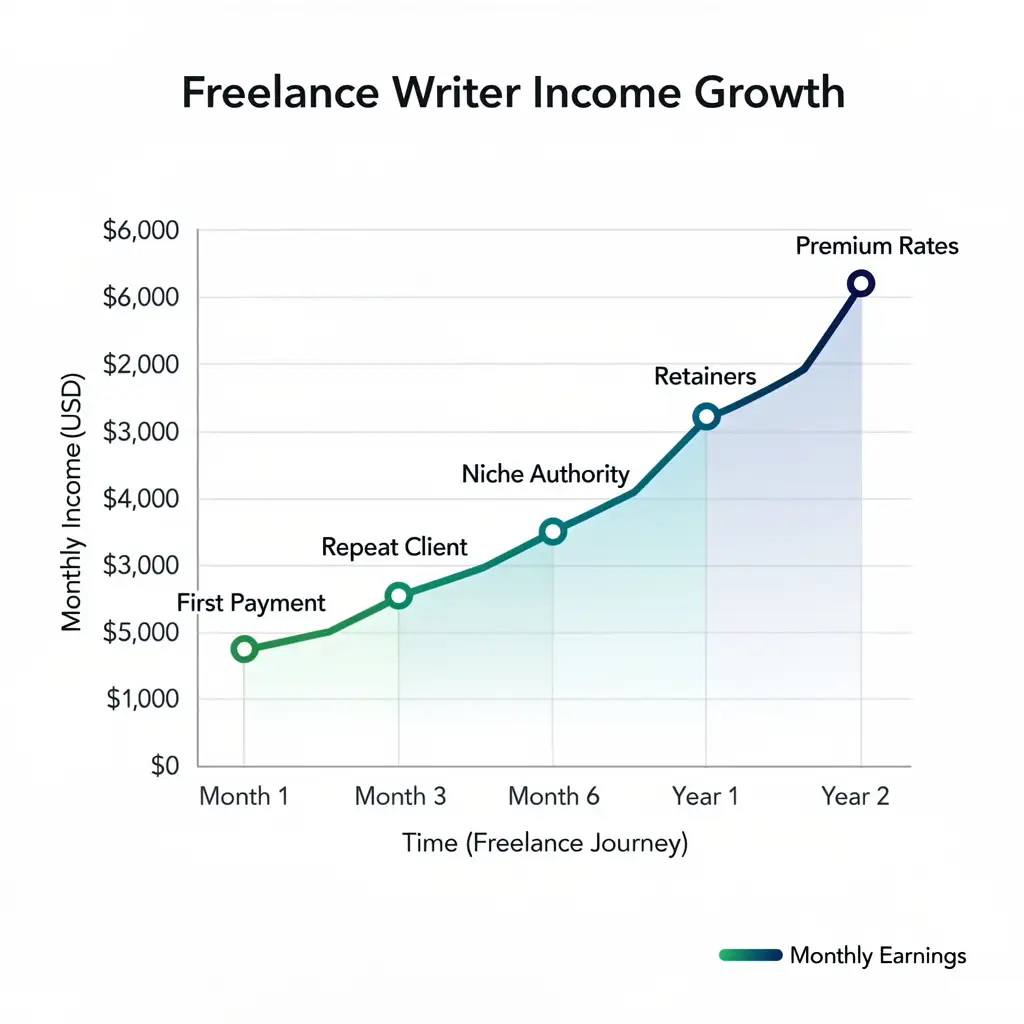
Months one through three are portfolio and pipeline building months. Most writers earn between $200 and $800 during this phase, depending on how aggressively they pitch and how quickly they close their first clients.
The writers who make $800 in month one are typically those who came in with relevant professional background knowledge that commands higher rates from day one, or who already have a network of professional contacts they can pitch immediately.
The writers who make $200 in month one are more typical: they spent time building samples, learning the pitch process, and working through first-project delivery for a lower-than-ideal rate.
Neither outcome should be the measure of long-term potential. The trajectory matters far more than the starting point.
Month 4 to 12 Earnings: After You Have Repeat Clients and Testimonials
By month four, writers who have been consistent in their pitching and delivery are typically generating $800 to $2,000 per month. The key inflection point is the first repeat client, because repeat work eliminates acquisition time and effectively raises your hourly rate without raising your stated rate.
Retainer arrangements, where a client pays a fixed monthly fee for a set deliverable volume, are the milestone that transforms the math entirely. Two $500/month retainers generate $1,000 per month from 8 to 10 hours of work, leaving the remaining week hours available for project-based clients or expansion pitching.
Year 2 and Beyond: When the Side Hustle Can Replace a Full-Time Salary
Writers who maintain niche focus, raise rates consistently, and develop two to three anchor retainer clients frequently reach $3,000 to $5,000 per month in their second year. At $4,000 per month, the income argument for keeping a full-time job weakens considerably, particularly if the day job salary is in the $40,000-$60,000 range.
The decision to transition from side hustle to full-time freelancing is ultimately a risk tolerance and lifestyle calculation rather than a purely financial one. Writers who make the transition successfully typically have three months of living expenses in reserve and at least two retainer clients in place before they give notice.
Can You Make $5,000 a Month With Copywriting? (High-Income Niche Reality)
Yes, and $5,000 is a realistic year-two target for experienced copywriters in high-demand niches. The path to $5,000 per month from copywriting specifically involves:
Moving from per-word or per-project pricing to value-based pricing for high-stakes deliverables, where you charge based on the revenue impact of a sales page or email sequence rather than the hours involved.
Specializing in one high-converting format, such as email sequences or sales pages, and becoming demonstrably excellent at it.
Building a client referral network, because copywriters who deliver results are referred constantly within industries.
Can You Make $10,000 a Month as a Freelance Writer? (What It Actually Takes)
$10,000 per month is achievable but requires a combination of elite-level skill, niche authority, and a business model that does not scale linearly with hours. Writers at this income level typically combine:
- Retainer clients at $1,500 to $3,000 per month each
- High-ticket project work (white papers, sales pages, launch copy) priced at $3,000 to $10,000 per project
- Revenue-sharing or performance bonuses on conversion-focused copy
Getting there from zero takes 2 to 4 years of consistent work, rate increases, and client relationship building. It is not a year-one expectation, but it is a legitimate long-term target.
Earnings Timeline Table
| Experience Level | Hours Per Week | Realistic Monthly Income | Income Ceiling | Key Milestone |
|---|---|---|---|---|
| Month 1 (Total Beginner) | 10 to 15 | $200 to $500 | $800 | First paid piece |
| Month 3 (Learning Curve) | 10 to 15 | $500 to $1,200 | $1,500 | Repeat client secured |
| Month 6 (Portfolio Built) | 12 to 18 | $1,200 to $2,500 | $3,500 | Niche authority established |
| Year 2+ (Experienced) | 15 to 25 | $2,500 to $6,000 | $10,000+ | Retainers + premium rates |
How Much Should I Charge for Freelance Writing? (Rate-Setting Strategy)
Pricing is where more freelance writing careers stall than at any other stage. Underpricing devalues your work and attracts low-quality clients. Overpricing without supporting evidence loses opportunities. The goal is to price at the high end of what your portfolio and niche can justify, then raise rates as evidence accumulates.
You can also use a freelance hourly rate calculator to back-calculate from your income goals rather than guessing where to start.
Per-Word vs. Per-Project vs. Hourly Rates (Which Model to Use When)
Per-word rates work well for blog content and articles where length is the primary variable and research time is relatively consistent. They are easy to quote and easy for clients to understand.
Per-project rates are better for deliverables with variable complexity, including email sequences, case studies, and white papers where the same word count might require wildly different research and revision investments.
Hourly rates are appropriate for consulting, ongoing editorial work, and revision-heavy projects where scope is genuinely unclear. They protect you from scope creep but can feel unpredictable to clients.
Most experienced freelance writers use a mix: per-project for most deliverables, hourly for consulting or research-intensive work, and retainers for anchor clients who need consistent volume.
How Much Should I Charge for 500 Words of Writing? (Beginner Benchmark)
For 500 words of niche-relevant, SEO-informed blog content at the beginner level, the appropriate rate in 2026 is $50 to $75. At the intermediate level, $100 to $200. At the expert level, $250 to $500.
If a client is pushing you toward $25 or $30 for 500 words, walk away. That rate, after factoring in research, drafting, revision, and communication time, is below minimum wage and signals a client who does not value quality.
Freelance Writing Rates by Content Type (Blog Post, Email, Case Study, White Paper)
Rate Benchmark Table
| Content Type | Beginner Rate | Intermediate Rate | Expert Rate | Typical Turnaround |
|---|---|---|---|---|
| 500-word blog post | $50 to $75 | $100 to $200 | $250 to $500 | 2 to 5 days |
| 1,000-word article | $100 to $150 | $200 to $400 | $500 to $1,000 | 3 to 7 days |
| Email sequence (5 emails) | $200 to $400 | $500 to $1,200 | $1,500 to $3,000 | 5 to 10 days |
| Case study (1,500 words) | $300 to $500 | $750 to $1,500 | $2,000 to $4,000 | 7 to 14 days |
| White paper (3,000+ words) | $800 to $1,500 | $2,000 to $4,000 | $5,000 to $10,000 | 14 to 30 days |
How to Price Your Freelance Writing Services Without Undervaluing Your Work
The root cause of underpricing is anchoring on how long something takes rather than what value it delivers. A 1,000-word article that takes you 3 hours to write is not worth 3 times your desired hourly rate. It is worth what the client receives from having that article: traffic, leads, brand credibility, and customer education.
When you shift your mental framework from “this took me X hours” to “this delivers Y value,” your pricing calibration changes significantly. That is the mindset that separates writers earning $50 per article from those earning $500.
When to Raise Your Rates Without Losing Clients
Raise your rates when:
- You have more inbound requests than capacity can accommodate
- Your portfolio has materially strengthened since you last priced a client
- You have been at the same rate for six months or more
- A niche credential, certificate, or notable client has increased your authority
Raise rates with current clients by giving 30 to 60 days advance notice, framing the increase as reflective of the value the relationship has generated, and offering a modest loyalty discount compared to your new general rate. Most long-term clients absorb moderate rate increases without canceling, particularly if your work has been consistently strong.
How Long Does It Take to Make Money Freelance Writing? (Timeline Expectations)
Most beginner freelance writers earn their first payment within 30 to 60 days of active pitching, with consistent $1,000+ monthly income typically achieved by month 4 to 6 if working 10 to 15 hours per week and focusing on one specialized niche rather than accepting any available work.
Week 1 to 4: Portfolio Building and First Pitches
The first month is almost entirely investment. You are writing samples, researching your niche, identifying target clients, and sending pitches. You may receive a response in week two. More likely, your first meaningful response will come in week three or four.
Do not judge the month by whether you have been paid. Judge it by whether you have built three strong samples and sent at least 20 targeted pitches. If those two conditions are met, the income follows.
Week 5 to 8: First Paid Project and Payment Collection
Your first paid project will likely come from Upwork, a ProBlogger listing, or a cold pitch response. It will probably pay less than you want. Do it anyway, deliver beyond expectations, and request a specific written testimonial upon completion.
Payment collection for your first project: request 50% upfront via invoice before starting work. This protects you against non-payment and filters out low-commitment clients. Use invoicing software designed for independent contractors to handle this professionally from day one.
If you ever face non-payment issues, this guide to collecting unpaid invoices as a freelancer outlines your options clearly.
Month 3 to 6: Building Repeat Client Relationships
The most important milestone in the first six months is not a specific income number. It is a repeat client. The first time a client comes back without you pitching them, the business model has proven itself.
Repeat clients also enable a critical conversation: retainer pricing. If a client is going to need two blog posts per month indefinitely, offer a monthly retainer at a small discount to the project rate in exchange for priority scheduling and payment consistency. Most clients prefer the predictability.
Month 7 to 12: Scaling Income and Raising Rates
By month seven, writers with one or two retainer clients and a pipeline of project work should be consistently earning $1,200 to $2,500 per month working part time. The scaling levers at this point are:
- Raising rates for new clients (leaving existing retainer clients at grandfathered rates temporarily)
- Adding a third anchor client
- Moving up to more complex, higher-value content types
What Do Clients Actually Want From Freelance Writers? (Market Demand Reality)
Understanding what clients actually value versus what beginner writers assume they value is one of the fastest ways to improve your pitch success rate and client retention.
SEO Knowledge Is Now Non-Negotiable for Blog Writers
A client hiring for blog content in 2026 assumes baseline SEO competency. They should not need to explain what a meta description is, what keyword density means, or why header structure matters. Writers who demonstrate SEO knowledge in their pitches and samples, not just mention they “understand SEO,” convert at significantly higher rates.
The minimum SEO knowledge needed for content writing includes: keyword research basics, proper header structure (H1-H3), internal linking, meta descriptions, and title tag optimization. Free resources from Moz, Semrush Academy, and HubSpot cover everything needed to reach this competency level in 2 to 4 hours of focused study.
Fast Turnaround Beats Perfect Grammar for Most Clients
Most content clients are working to editorial calendars with publication dates. A 1,500-word blog post that is 95% polished and arrives on deadline is more valuable than a 100% polished post that arrives three days late.
This does not mean quality is unimportant. It means that reliability is the rarest and most valued professional quality in the freelance writing market. Writers who consistently deliver on time, communicate proactively when delays are possible, and never ghost a client are retained and referred. Writers who produce excellent work but miss deadlines regularly are replaced.
Subject Matter Expertise vs. Writing Talent (What Wins High-Paying Gigs)
The highest-paying freelance writing gigs reward expertise more than writing talent. A registered nurse who writes clearly but not brilliantly can command $0.50+ per word for medical content. A gifted prose stylist with no subject matter expertise will struggle to break $0.15 per word in the same niche.
This is why the niche selection decision matters so much. Writers who leverage existing professional knowledge, whether from a career in finance, healthcare, technology, or education, can immediately position themselves at premium rates. Writers starting without domain expertise should choose a niche adjacent to their experience and invest 60 to 90 days in becoming genuinely knowledgeable in that area before heavy pitching.
Communication Skills That Separate Professionals From Amateurs
Clients tell stories about freelancers who disappeared mid-project, missed revisions without notice, or required extensive follow-up to complete basic tasks. The bar for professional communication in freelance writing is lower than it should be, which means meeting it immediately creates a competitive advantage.
Professional communication habits that clients remember:
- Acknowledging receipt of a brief within 24 hours
- Proactively flagging scope or timeline questions before they become problems
- Delivering work with a brief summary of structural decisions made
- Responding to revision requests within 48 hours without requiring prompting
These behaviors cost no additional time. They generate disproportionate client loyalty.
How to Build a Portfolio as a Beginner Freelance Writer (Without Paid Experience)
A portfolio without paid experience is not a disadvantage. It is a starting condition. The question is how to build samples that persuade clients as effectively as published clips would.
Write 3 Spec Pieces in Your Target Niche (How to Choose Topics)
Spec pieces are samples written for hypothetical or real clients that demonstrate exactly what you would produce for a paying project. They are not blog posts about writing. They are the actual content type you want to be paid to produce.
To choose topics for spec pieces:
Research the top three content gaps or recurring questions in your target niche using tools like AnswerThePublic, People Also Ask boxes, and Reddit threads in relevant communities. Then write one spec piece targeting each of those gaps, exactly as you would for a paying client, including proper keyword use, header structure, and calls to action.
The result is a portfolio of three pieces that are immediately relevant to the type of client you are pitching.
Guest Post on Medium, LinkedIn, or Industry Blogs for Byline Credits
Published work carries more weight than spec work because editorial approval is a signal of quality. The fastest way to get published without a prior track record is through platforms that publish writer-submitted content without a formal application process.
Medium accepts articles without editorial gatekeeping. LinkedIn Articles allows you to publish directly to your professional profile. Both provide published, linkable, dated content you can include in your portfolio within days, not weeks.
Industry blogs with guest post programs are more valuable still because they signal that a third-party publication in your niche found your work credible. A guest post on a recognized SaaS marketing blog is worth more to a SaaS content director than a Medium article, even if the Medium article has more views.
Offer Free Work to One Strategic Client (When It Makes Sense)
Offering free work is often advised against, and in most contexts that advice is correct. Low-rate or free work should not be a standard entry strategy because it anchors client expectations and devalues the market.
However, offering one free piece to one carefully chosen strategic client is a different calculation entirely. If that client is a company whose name on your portfolio immediately signals credibility to your entire target market, the investment is worth it. The free piece should come with explicit conditions: a published byline in your name and a written testimonial upon delivery.
Do this once, for the right client, in the first 60 days. Do not do it habitually.
Create Sample Work Using Real Company Case Studies
Instead of writing for fictional clients, identify a real company in your niche whose content has a clear, demonstrable gap and write a sample piece as if you were their hired writer. Do not publish it. Include it in your portfolio with a note explaining it is a spec piece written to demonstrate your approach to their content strategy.
Clients find this type of sample more persuasive than purely fictional examples because it demonstrates strategic thinking about real business challenges, not just abstract writing ability.
How to Present Unpublished Work in Your Portfolio
Label spec work clearly as “Sample: [Topic] (Spec piece demonstrating [niche] writing style and approach).” Transparency about sample status is better than leaving clients to wonder why a piece is not linked to a published URL.
A portfolio with three clearly labeled, high-quality spec pieces outperforms a portfolio with five mediocre published clips every time. Quality and relevance matter more than publication status.
Tools Every Freelance Writer Side Hustler Needs
You do not need an elaborate tool stack to start freelance writing. Most of the tools that matter are free or low-cost. Here is what to use at each stage.
Free Tools That Are Good Enough to Start (Google Docs, Hemingway, Grammarly Free)
Google Docs: The industry standard for draft delivery and client collaboration. Real-time commenting, easy sharing, and version history make it superior to emailing Word documents.
Hemingway Editor (free web version): Paste your draft and it highlights overly complex sentences, passive voice overuse, and readability issues. Using it on every draft before delivery will noticeably improve the quality of your work.
Grammarly Free: Catches the grammar and spelling errors that undermine client confidence in your professionalism. Not a substitute for developmental editing but essential for professional polish.
Google Search and AnswerThePublic: Free research tools that identify the questions your target audience is asking, which is the foundation of content strategy for SEO writing.
Paid Tools Worth the Investment Once You Earn $500/Month (Grammarly Premium, Surfer SEO)
Grammarly Premium ($12 to $15/month): Adds style, tone, and clarity suggestions beyond basic grammar checking. Worth it once you are writing for clients who care about voice consistency.
Surfer SEO ($69+/month): An on-page SEO optimization tool that tells you exactly how to structure and optimize a piece of content for a target keyword. Used widely in SaaS content writing and provides a meaningful quality signal to clients who care about organic traffic.
Hemingway Editor desktop ($19.99 one-time): Adds offline access and direct export to WordPress, useful once you are publishing content directly to client CMS platforms.
Invoicing and Getting Paid: Best Software for Independent Contractors
Professional invoicing from day one signals that you run a legitimate business rather than a side project. Free tools like Wave and PayPal work at the start. Purpose-built invoicing software for freelancers adds features like automatic payment reminders, recurring invoices for retainer clients, and tax-ready reporting that become valuable quickly.
Always include payment terms on every invoice: net 14 or net 30, with a 1.5% monthly late fee for overdue balances. Include this in every freelance writing contract and every invoice.
Time Tracking and Productivity Tools for Part-Time Freelancers
Toggl Track (free tier): Simple time tracking that helps you understand your actual hourly effective rate across different projects and client types. This data becomes essential when deciding which clients to keep and which to replace with higher-paying work.
Trello or Notion (free tier): Project management for tracking deadlines, client communication status, and deliverable stages. Particularly useful once you have more than two simultaneous client relationships.
Taxes and Legal Basics for Freelance Writers in the United States
Freelance writers in the U.S. are classified as independent contractors and must pay self-employment tax of 15.3% on net earnings in addition to regular income tax, file quarterly estimated taxes if earning over $1,000 annually, and report income on IRS Schedule C. No LLC is legally required to start.
The tax side of freelance writing is straightforward once you understand the basic structure. Ignoring it creates problems that compound over time. Addressing it early takes less effort than most people expect.
Do You Need to Register an LLC as a Freelance Writer?
No. Starting a freelance writing business does not require an LLC. As a sole proprietor, you report income and expenses on Schedule C of your federal tax return, and all income flows through to your personal return.
An LLC becomes worth considering when your annual freelance income exceeds $30,000 to $40,000 and you want liability protection or the option to elect S-Corp taxation, which can reduce self-employment tax exposure. At the side hustle stage, the administrative complexity of maintaining an LLC rarely justifies the marginal benefit.
Consult a tax professional before making entity election decisions. A single hour with a CPA familiar with freelance business structures is worth more than hours of online research.
Self-Employment Tax Explained Simply (15.3%: What It Means for Your Income)
When you work as an employee, your employer pays half of your Social Security and Medicare taxes (7.65%) and you pay the other half through payroll deduction. As a self-employed freelancer, you pay both halves: 15.3% on net self-employment income.
This does not mean 15.3% of everything you earn. It means 15.3% of your net profit after deducting legitimate business expenses. If you earn $2,000 in a month and deduct $300 in business expenses, you pay 15.3% on $1,700.
The good news: you can deduct half of your self-employment tax from your adjusted gross income, which reduces your overall income tax burden somewhat.
For a comprehensive breakdown of what you owe and when, this freelancer tax guide for beginners explains the full picture clearly.
Quarterly Estimated Taxes: Deadlines and How to Calculate Them
The IRS expects self-employed individuals earning more than $1,000 annually in freelance income to make quarterly estimated tax payments. The 2026 deadlines are:
- Q1 (January through March income): April 15
- Q2 (April through May income): June 16
- Q3 (June through August income): September 15
- Q4 (September through December income): January 15, 2027
Failure to make quarterly payments triggers an underpayment penalty at tax time, which adds to your tax bill without providing any corresponding benefit.
A simple calculation approach: set aside 25 to 30% of every payment received in a dedicated savings account. When quarterly payment time arrives, calculate what you owe using IRS Form 1040-ES and pay from that account. The remainder after payment is your profit.
Deductible Business Expenses for Freelance Writers (What You Can Write Off)
Legitimate deductible expenses for freelance writers include:
- Software subscriptions (Grammarly, Surfer SEO, Hemingway, project management tools)
- Home office deduction (dedicated workspace, proportional to total home square footage)
- Professional development (writing courses, industry conferences, books related to your niche)
- Equipment (computer, monitor, headset used for work calls)
- Internet service (proportional business-use percentage)
- Health insurance premiums (if self-employed and not covered by a spouse’s plan)
A full breakdown of what you can legally deduct is available in this self-employment tax deductions guide for freelancers.
Do I Need a Separate Bank Account for My Freelance Writing Business?
Technically no. Practically yes, and immediately.
Mixing freelance income with personal funds makes expense tracking inaccurate, tax preparation unnecessarily complicated, and income reporting error-prone. A dedicated business checking account can be opened in 20 minutes or less at most banks or credit unions and costs nothing.
The clear financial separation also makes it easier to monitor the profitability of your freelance writing activity month by month, which informs decisions about client selection, rate increases, and expansion timing.
How to Turn Writing Into a Profitable Side Hustle (While Working Full-Time)
Working a day job while building a freelance writing practice is entirely normal. The vast majority of successful freelance writers start this way. The logistics require planning but not heroic sacrifice.
Time Management Strategies for Freelance Writers With Day Jobs
The most effective approach is time-blocking, not squeezing writing into random moments. Identify a consistent 2-hour block each weekday, whether early morning, lunch, or evenings, and treat it as a client commitment.
Two hours per weekday add up to 10 hours per week, enough to produce 2 to 4 client deliverables monthly at typical content lengths. That output, billed at intermediate rates, generates $800 to $2,000 per month.
Batch similar tasks together. Do all research in one session, all drafting in another, all client communication in a third. Context-switching between research, writing, and email management is the single largest productivity drain for part-time writers.
How Many Hours Per Week to Make $1,000 From Freelance Writing?
At beginner rates ($75 to $100 per blog post), reaching $1,000 per month requires delivering 10 to 14 pieces monthly, which at typical writing speeds of 1,000 to 1,500 words per hour requires approximately 14 to 20 hours of total work including research, drafting, revision, and communication.
At intermediate rates ($200 to $400 per piece), the same $1,000 monthly target requires only 3 to 5 deliverables, dropping the weekly time requirement to 6 to 10 hours.
This is why rate increases are not just about earning more per piece. They are about maintaining the same or higher income with fewer hours, which is essential sustainability math for a side hustle.
Setting Client Expectations When You Are Not Available 9 to 5
Most B2B writing clients are accustomed to working with remote freelancers across time zones. The expectation of 9-to-5 availability is less common than it was five years ago. However, transparency about your working hours prevents miscommunication.
When onboarding a new client, specify: “I work on client projects in the evenings and weekends, and I’m typically responsive to email within 24 hours on business days.” This sets clear expectations without framing your side hustle as a limitation.
For deadline commitments, always add one buffer day to the minimum time you actually need. Delivering early builds goodwill. Delivering exactly on deadline is neutral. Delivering late, even once, erodes trust.
Should You Tell Your Employer About Your Freelance Writing Side Hustle?
Review your employment contract before taking any freelance work. Many employment agreements include non-compete clauses, intellectual property assignment clauses, or moonlighting restrictions that could create conflict.
Specific scenarios that create risk:
- Writing content that competes directly with your employer’s products or services
- Using employer equipment for client work
- Working during business hours on client projects
Writers who work in an unrelated field from their writing niche, for example, a nurse who freelances as a healthcare writer, typically face minimal employment conflict. Writers who work in marketing or content by day and freelance in the same category at night should review their agreements carefully.
When in doubt, disclose in general terms without specifics. Most employers do not prohibit unrelated side work.
How to Scale Your Freelance Writing Income (Beyond Hourly Rates)
The fundamental limitation of freelance writing is that it trades time for money. The writers who escape that ceiling do so by restructuring how they price and deliver their work.
Building Retainer Relationships for Predictable Monthly Income
Retainers are the most important business structure for a freelance writing side hustle. Instead of hunting for new projects each month, you have a committed client paying a fixed fee for a set volume of work.
A typical content retainer might look like: $800 per month for four 1,000-word blog posts, delivered the first through fourth week of each month.
The client benefits from guaranteed capacity and predictable costs. You benefit from a guaranteed income and an eliminated acquisition time. Retainers also allow you to plan your schedule accurately, since you know exactly what you are delivering and when.
Offer retainer pricing to any client who has booked you twice. The conversion rate from repeat project to retainer is high if you frame it correctly: “Since we seem to have a good working relationship, I’d love to offer you a monthly retainer that locks in my availability and provides a slight discount compared to project-by-project pricing.”
Productizing Your Services (Packages Instead of Custom Quotes)
Custom quotes require negotiation, which takes time and often leads to lower rates. Productized service packages set fixed prices for fixed deliverables, eliminating negotiation and allowing clients to self-select based on their needs.
Example of a productized content package:
Monthly Blog Package: 4 SEO-optimized blog posts (800 to 1,200 words each), keyword research included, one revision round per post. $1,200/month.
This package requires no custom proposal. A client either wants it or they do not. Writers with productized offerings convert interested prospects faster and spend less time in the proposal and negotiation stages.
Raising Your Rates Every 6 Months Without Losing Clients
Rate increases are less likely to lose clients than most writers fear, particularly for clients who are genuinely satisfied with your work. A 15 to 20% rate increase with 30 to 60 days notice and a brief explanation is accepted more often than rejected in established client relationships.
The clients most likely to leave over rate increases are the ones paying you the least. Losing them often improves the economics of your practice rather than harming them.
When to Transition From Side Hustle to Full-Time Freelancing
The decision criteria for going full time:
- Consistent monthly income of at least 80% of your current salary for at least three consecutive months
- Two to three retainer clients providing baseline income stability
- Three months of living expenses in cash savings
- At least one pipeline of potential new clients active
Writers who make the transition before meeting these criteria often return to employment within 6 to 12 months due to stress from income volatility. Writers who wait until these conditions are met have significantly higher success rates.
Hiring Subcontractors to Scale Beyond Your Own Hours
Some freelance writers reach a point where client demand exceeds their individual capacity. Rather than turning away work, they hire subcontractors to handle overflow, effectively transitioning from freelance writer to content agency principal.
This model requires careful management of quality control, subcontractor relationships, and markup economics, but it breaks the direct time-for-money ceiling entirely. A writer billing clients at $0.30 per word and paying subcontractors at $0.12 per word while managing quality and client relationships generates income without linear time investment.
Can You Make Passive Income From Writing? (Realistic Options)
The concept of passive income from writing is real but substantially more effortful than most representations suggest. None of the genuine passive income paths from writing are truly passive in the startup phase.
Self-Publishing on Amazon Kindle Direct Publishing (KDP)
Amazon KDP allows writers to self-publish ebooks and paperbacks with no upfront cost. Royalties range from 35% to 70% depending on price point and distribution settings.
The realistic expectation: a nonfiction ebook in a targeted niche with a specific, practical solution can generate $200 to $2,000 per month if positioned correctly and marketed actively. The “passive” part comes after significant upfront investment in research, writing, editing, cover design, and initial marketing.
Writers who publish one ebook and wait for passive income are disappointed. Writers who publish consistently, build a catalog, and treat KDP as a product business generate meaningful recurring revenue.
Writing Journals, Planners, and Low-Content Books
Low-content books such as planners, journals, habit trackers, and activity books require minimal writing but specific design thinking. They can be uploaded to Amazon KDP and generate small but consistent royalties from organic search traffic.
The income per title is modest, typically $30 to $200 per month for a well-optimized title. The model works by volume: writers who publish 50 to 100 titles build a cumulative passive income stream that can generate $1,000 to $3,000 per month with minimal ongoing maintenance.
Medium Partner Program and Substack Subscriptions
Medium pays writers through a Partner Program based on member reading time. Top Medium writers earn $1,000 to $5,000+ per month from engaged audiences. Most writers earn less than $100 per month.
Substack allows writers to build paid newsletter subscriptions. A Substack with 500 paying subscribers at $8/month generates $4,000 per month before Substack’s 10% fee. Building a paid newsletter to 500 subscribers typically takes 12 to 24 months of consistent publishing and audience development.
Both platforms offer legitimate income potential but require sustained effort in content creation and audience building. Neither is passive in the short term.
Affiliate Marketing Through a Writing Blog
Writers who blog about writing tools, writing courses, and freelancing resources can earn affiliate commissions from referrals. Affiliate programs from Grammarly, Jasper, Surfer SEO, and writing course platforms pay meaningful commissions.
This model works best for writers who already have an audience, either from an established blog, a newsletter, or a significant social media presence. Starting from scratch, a writing-focused affiliate blog can take 18 to 36 months to generate meaningful income.
Creating and Selling Digital Writing Templates
Writing templates including pitch templates, content brief templates, proposal templates, and editorial calendar frameworks can be sold on platforms like Gumroad, Etsy digital downloads, or a personal website.
A well-designed pitch template selling for $25 that generates 50 sales per month produces $1,250 in monthly revenue with no ongoing production requirements after initial creation. Building the audience to generate those sales is the work.
Why “Passive Income” From Writing Is Rarely Truly Passive
Every passive income stream from writing requires an active investment phase that is often longer and more demanding than expected. The writers who succeed with passive income models treat the investment phase as seriously as they would a client-facing business, with consistent production schedules, strategic marketing, and realistic multi-year timelines.
Passive income from writing is more accurately described as recurring income from prior active effort. That reframing helps set realistic expectations for what the side hustle stage actually looks like.
Alternative Writing Side Hustles Beyond Client Work
Not every writer wants to produce blog posts and email sequences. The skills developed through freelance writing transfer to a range of alternative income streams.
Resume and Cover Letter Writing Services
Professional resume writers charge $100 to $500+ per resume depending on career level and industry. Cover letters add $50 to $150 each. Executive-level resume writers and those specializing in federal resumes or LinkedIn profile optimization command the highest rates.
This niche has consistent demand because job seekers exist in every economic climate and premium resume writing generates measurable ROI for clients in terms of interview rates.
Grant Writing for Nonprofits and Government Contracts
Grant writers help nonprofits and government entities secure funding by researching and writing grant applications. Most grant writers work on project fees ($500 to $5,000 per grant application) or retainer with nonprofit clients.
The niche requires patience for slow-moving application processes and comfort with bureaucratic language, but it offers consistent work and meaningful social impact alongside the income.
Scriptwriting for YouTube Creators and Podcasts
The creator economy runs on scripted content. YouTube channels with more than 50,000 subscribers frequently outsource scripting to freelance writers at $100 to $500+ per script depending on length and complexity.
Finding these clients requires researching YouTube in your area of expertise and directly reaching out to creators whose content could be improved with better scripting. Many creators are open to this conversation, particularly those experiencing growth pressure.
Social Media Content Writing for Brands
Social media content writing encompasses captions, thread scripts, LinkedIn posts, and content calendars. Rates are lower than long-form writing ($15 to $50 per post at the beginner stage), but volume can be high and monthly retainers for social content are common.
The challenge is that social media writing is often undervalued by clients who believe they could write it themselves. Positioning around strategy and audience growth metrics, rather than just content production, justifies higher rates.
Product Description Writing for E-Commerce Sellers
E-commerce sellers on Amazon, Shopify, and Etsy need compelling product descriptions that rank in search and convert browsers to buyers. Rates range from $25 to $100+ per product description.
Writers who understand basic Amazon SEO (A9 algorithm fundamentals, backend keyword optimization) command significantly higher rates from Amazon sellers than those who write purely for human readers.
Technical Writing and Software Documentation
Technical writing, which encompasses user manuals, API documentation, help center articles, and software onboarding guides, is one of the most consistently well-paid writing categories.
Technical writers with software or engineering backgrounds earn $80 to $150+ per hour for contract documentation work. Non-technical writers can enter through help center and user guide work, where the technical complexity is lower and the pay is still meaningful ($40 to $80 per hour in many cases).
Editing and Proofreading as Complementary Income
Writers with strong editorial instincts can supplement their writing income by offering editing and proofreading services. Many clients who hire writers also need editors for content produced by their internal teams.
Editing rates: $0.02 to $0.05 per word for proofreading, $0.05 to $0.12 per word for copyediting, $0.10 to $0.25 per word for substantive/developmental editing.
This is rarely a standalone income stream but works well as a complementary service offered to existing clients.
Freelance Writing Side Hustle: Is It Worth Your Time? (Honest ROI Analysis)
The return on investment for a freelance writing side hustle depends on your existing skills, chosen niche, and willingness to treat it as a real business rather than a casual hobby.
Freelance Writing vs. Other Side Hustles (Income Comparison)
| Side Hustle | Average Hourly Rate (Year 1) | Startup Cost | Scalability | Income Ceiling |
|---|---|---|---|---|
| Freelance Writing (niche) | $25 to $75 | $0 | High | $10,000+/month |
| Delivery Driving (Uber Eats, DoorDash) | $12 to $20 | Low (vehicle) | Low | $3,000/month |
| Tutoring | $20 to $60 | Low | Medium | $4,000/month |
| Selling on Etsy | $8 to $25 (variable) | Medium | Medium | $5,000+/month |
| Virtual Assistant | $15 to $35 | Low | Medium | $5,000/month |
| Graphic Design | $25 to $75 | Medium (software) | High | $10,000+/month |
Freelance writing compares favorably to most gig-economy alternatives on both hourly-rate potential and income ceiling, with the added advantage of zero startup cost.
Upfront Time Investment vs. Long-Term Earnings Potential
The upfront time investment in freelance writing is real. The first 90 days require significant output relative to income received. Writers who compare their month-one hourly effective rate to what they could earn driving for DoorDash will sometimes conclude writing is not worth it.
That comparison misses the trajectory. Writing income compounds in a way that gig economy income does not. A DoorDash driver’s effective hourly rate in year three is approximately the same as in month one. A specialized freelance writer’s effective hourly rate in year three is typically three to five times higher than in month one, with no corresponding increase in hours required.
Burnout Risk When Combining Freelance Writing With Full-Time Work
The primary sustainability risk for full-time-employed freelance writers is cognitive load. Writing is mental work. A day of demanding cognitive labor at your day job leaves less creative capacity for client writing than most people anticipate.
Signs of impending burnout in part-time freelance writers:
- Dreading sitting down to write (when it previously felt energizing)
- Producing first drafts that require substantially more revision than usual
- Snapping at clients over minor revision requests
- Missing self-imposed deadlines for the first time
Managing burnout risk requires scheduled recovery time. Even high-output freelance writers need at least one full day per week with no client work.
Who Should NOT Start a Freelance Writing Side Hustle
Freelance writing is not the right side hustle for everyone. You should likely pursue a different path if:
You genuinely dislike writing. It sounds obvious, but many people start freelance writing because the income sounds appealing without adequately accounting for how much of it is actually writing.
Your day job requires creative cognitive output at a very high intensity. If you are a lawyer drafting briefs, a product manager writing specifications, or a teacher grading writing all day, adding client writing to your evenings may not be restorative.
You need immediate high income and cannot tolerate a 60 to 90 day runway before consistent earning. Freelance writing has a ramp-up period. Side hustles with faster income (gig delivery, task-based work) may be better suited if immediacy is the priority.
You work in an industry with broad non-compete or intellectual property agreement coverage that would restrict writing in your area of expertise.
Trending FAQs About Freelance Writing as a Side Hustle
How to start freelance writing with no experience?
Start by choosing one niche based on your existing professional knowledge or genuine interest. Write three strong samples targeting the exact type of content your ideal client needs. Then pitch directly to 10-20 targeted clients per week using personalized cold emails or Upwork proposals, and apply to ProBlogger listings. Most writers receive their first paid project within 30 to 60 days of consistent pitching.
What type of freelance writing pays the most?
White papers and case studies pay the highest per-project rates ($1,500 to $5,000+ per deliverable). Email copywriting offers the best combination of high pay and short deliverable length ($300 to $2,000 for a five-email sequence). Healthcare, finance, and B2B SaaS blog writing pay the best per-word rates ($0.25 to $1.00) for writers with relevant expertise. The highest-earning writers typically combine premium-niche positioning with retainer client arrangements.
Is freelance writing still in demand?
Yes. B2B content marketing budgets grew 23% year-over-year in 2025, according to the Content Marketing Institute, with the strongest demand in SaaS documentation, email sequences, case studies, and SEO blog content. AI tools have disrupted low-quality, undifferentiated content production but increased demand for specialized, authoritative writing in regulated and technically complex categories.
How long does it take to make money freelance writing?
Most writers earn their first payment within 30 to 60 days of consistent pitching. Reaching $1,000 per month reliably takes 3 to 6 months working 10 to 15 hours per week, depending on niche, rate setting, and client acquisition activity. Writers who choose high-demand niches and pitch consistently reach the $1,000 milestone faster than those who stay general and wait for inbound opportunities.
Can you make passive income from writing?
Yes, through Amazon KDP self-publishing, Medium Partner Program, paid Substack newsletters, affiliate marketing through a writing-focused blog, and digital product sales. However, none of these are truly passive in the initial phase. Each requires significant upfront content creation and audience-building effort before generating meaningful recurring income. Realistic passive income timelines from writing are 12 to 36 months of consistent work before substantial returns.
Should I use Fiverr, Upwork, or other platforms?
Use Upwork to land your first 3 paying clients and reviews, then transition to direct outreach via LinkedIn and cold email for higher-paying work. Contently and Clearvoice offer the best-paying managed clients once your portfolio is established. Avoid Fiverr except as a very short-term reputation-building exercise. Skip content mills entirely. ProBlogger Job Board is a reliable source of direct client connections at every experience level.
How to get your first freelance writing client
Send 10 targeted cold emails leading with a specific content idea for the recipient’s business. Apply to 5 listings on ProBlogger’s job board. Create an Upwork profile with hyper-specific niche positioning and submit 10 tailored proposals. Connect with content directors on LinkedIn and engage with their content before sending an outreach message. Expect to generate 1 to 2 meaningful conversations from these initial 30+ outreach actions and close your first project from those conversations.
Is it possible to do freelance writing part-time?
Yes, and most freelance writers start this way. A consistent 10 to 15 hours per week is enough to generate $1,000 to $2,500 monthly within six months in the right niche. The main adjustments for part-time writers involve setting clear availability expectations with clients, time-blocking writing sessions rather than fitting work into random gaps, and building retainer arrangements that provide scheduling predictability.
What’s the average freelance writer income per month?
Averages are misleading in freelance writing because income varies enormously by niche, experience, and hours committed. Content mill writers earn $100 to $300 monthly. Generalist bloggers earn $300 to $800. Niche-specialized writers with 6+ months of experience earn $1,200 to $3,000 working part time. Full-time specialized writers earn $3,000 to $8,000+ monthly. The niche you choose and the rates you set matter far more than hours alone.
Can you make money writing for magazines and publications?
Yes, but consumer magazine rates have declined significantly. Most print magazines pay $0.05 to $0.50 per word, with top-tier publications like The Atlantic, The New Yorker, and major business magazines paying $1.00 to $3.00+ per word but accepting very few freelance submissions. Trade publications and B2B industry journals typically pay $0.10 to $0.30 per word. Magazine writing is better positioned as a portfolio-building and credential-establishing activity than as a primary income source for most side hustle writers.
How to find writing clients on LinkedIn and direct outreach
Search LinkedIn for Content Marketing Managers, Directors of Content, and Founders at companies in your niche. Engage genuinely with their content over two to three weeks before sending connection requests. Connect with a personalized message referencing something specific about their work. After connecting, send a brief value-first message presenting one specific content idea or strategic observation. Follow up once if no response after 7 days. Convert interested connections to a 15-minute discovery call before pitching services.
Do I need a degree to start a freelance writing side hustle?
No degree is required or typically requested by freelance writing clients. Clients evaluate writers on portfolio quality, subject matter knowledge, communication professionalism, and ability to deliver on brief. A relevant professional background in your chosen niche is more valuable than a writing or journalism degree. Writers without degrees regularly out-earn degreed writers in technical and B2B niches because domain expertise commands higher rates than credentials.
Can you make $5,000 a month with copywriting?
Yes. Experienced email copywriters, sales page writers, and B2B content strategists routinely earn $5,000 to $10,000+ per month. Reaching $5,000 from copywriting typically requires 18 to 24 months of focused work, meaningful portfolio results that demonstrate conversion impact, and value-based pricing that reflects ROI rather than hourly time. Specialization in one high-stakes format such as launch copy, email sequences, or sales pages is the most reliable path to the $5,000 milestone.
Can you make money writing on Medium or Substack?
Yes, both platforms offer genuine income potential. Medium Partner Program pays based on member reading time, with top writers earning $1,000 to $5,000+ per month and most earning under $100. Substack supports paid newsletter subscriptions, with the economics entirely determined by subscriber count and the monthly price. A newsletter with 500 paying subscribers at $8/month generates roughly $3,600 per month after Substack fees. Building either platform to meaningful income levels takes consistent publishing over 12 to 24 months.