
Us bank business accounts changed my financial life in a way I never expected. I am not exaggerating even slightly. Before I opened a dedicated business account through U.S. Bank, operated by U.S. Bancorp, my finances were a complete disaster. Every Monday morning I would open my personal banking app, stare at one single account filled with client payments, grocery charges, Netflix subscriptions, and random Amazon purchases, and I would feel this immediate wave of cold panic move through my chest. I could not tell if I was profitable. I could not tell what I owed in taxes. I could not tell anything at all.
That panic is real. And if you are a freelancer reading this right now, I am willing to bet you have felt exactly that same feeling.
The good news? There is a very clean, very practical fix.
Opening a dedicated us bank business account for your freelance work creates an immediate, sharp separation between your personal financial life and your professional one. It is one of the best decisions I ever made, and it took less time to set up than I expected. This complete guide covers everything you actually need to know in 2026. The account tiers. The fees. The exact documents you need. The tricks to waive monthly fees. And the honest truth about where U.S. Bank excels and where it falls short.
I pull no punches here.
Why Us Bank Business Accounts Are Not Just for Big Companies
Us bank business accounts serve freelancers, solo operators, and single-person LLCs just as effectively as they serve established companies with dozens of employees.
I used to think the phrase “business account” meant something formal and corporate. I pictured a man in a gray suit sitting across from a bank manager inside a glass office. I pictured stacks of financial reports and complicated approval processes. That picture is completely wrong.
When I finally walked into my local U.S. Bank branch back in 2022, the process was shockingly simple. The banker asked me a few questions, looked at my documents, and had me set up with a functioning business checking account in about 45 minutes. She told me that the majority of their business account customers are exactly like me. Solo freelancers. Independent contractors. Small shop owners. Single-person LLCs.
You do not need a massive revenue stream. You do not need a legal team. You just need to treat your work like the real business it actually is.
And here is something important that a lot of freelancers miss completely.
The Internal Revenue Service does not care whether you feel like a real business. If you earn money from independent work, you are legally operating a business. The way you manage those earnings directly affects how much stress you experience every April when estimated tax payments come due or when you file your annual return.
Mixing personal and business money creates what accountants call a “commingled funds” situation. According to the U.S. Small Business Administration, commingled funds are one of the top reasons small business owners face IRS audits and are one of the primary causes of failed financial record-keeping during tax season. Learn more about proper business financial structure at the official SBA website.
So whether you are a freelance writer, a graphic designer, a consultant, a photographer, or anyone who receives payment for a service, a dedicated us bank business account is not optional. It is a foundation.
The freelance economy is enormous in 2026. According to research from Statista, the number of independent workers in the United States has grown consistently since 2020, with tens of millions of Americans now generating income outside of traditional employment. The financial infrastructure these workers use matters significantly. And the right banking setup is the first piece of that infrastructure.
Here is a specific thing I noticed when I moved my freelance income into a dedicated business account. My invoices looked more professional immediately. Clients could make payments directly to a business entity rather than a personal name. And when I sat down to do my quarterly tax estimates, everything I needed was already organized inside one clean account. No sorting. No guessing. No panic.
That alone was worth every cent of any fee.
US Bank Business Checking Account: Every Tier Explained for 2026
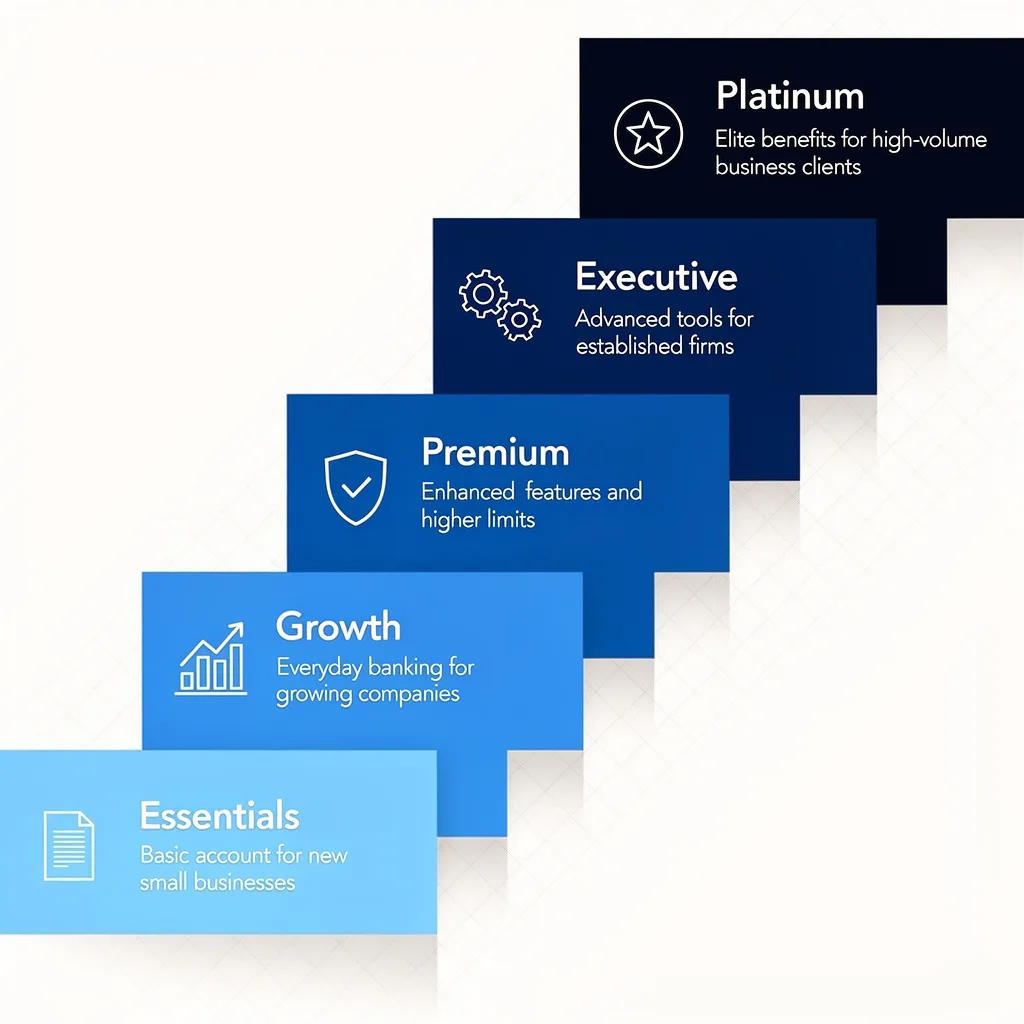
The US Bank business checking account lineup in 2026 offers five distinct tiers designed to match businesses at different stages of growth and transaction volume.
This is where most people get confused. They land on the U.S. Bank website and see a wall of account options and feel immediately overwhelmed. I am going to break this down in the simplest possible way.
Think of the account tiers as a staircase. At the bottom step, you have the entry-level option built for freelancers and brand new businesses. At the top, you have enterprise-level accounts with unlimited transactions and dedicated banking support. Your job is to figure out which step you are standing on right now.
US Bank Business Essentials: The Freelancer’s Starting Point
The US Bank Business Essentials account launched officially in April 2025, and it represented a real shift in how the bank approaches small business customers. This is not a stripped-down, bare-bones account that makes you feel like a second-class customer. It is an all-in-one solution that includes business checking features, the ability to accept card payments, and basic tools to manage your cash flow.
Here are the core details you need to know for 2026.
There is no monthly maintenance fee as long as you meet qualifying transaction requirements. The account comes with a U.S. Bank Visa debit card for business purchases. You get access to the full online banking dashboard and the mobile banking app. And crucially for freelancers who take payments from clients, the account integrates card payment acceptance capabilities with zero-cost same-day funding.
That last feature matters more than most people realize. When a client pays your invoice and the money settles in your account the same day at no additional cost, your cash flow management becomes significantly easier. You are not waiting two or three business days for funds to clear while bills are due.
For most solo freelancers in 2026, the Business Essentials account is the answer.
US Bank Silver Business Checking: The Step Up
The US Bank Silver Business Checking package sits one step above Business Essentials. It is designed for businesses that are growing their transaction volume but are not yet handling the kind of cash movement that warrants a premium tier.
The Silver package typically carries a monthly maintenance fee that can be waived by maintaining a minimum average collected balance. I will cover exactly how that waiver works in a dedicated section later in this article. The Silver account includes a set number of free transactions per month, with fees charged per item beyond that threshold.
If you are a freelancer who also runs a side retail operation, handles a moderate volume of ACH transfers for your business, or pays several employees through the account, the Silver tier starts making sense.
US Bank Gold Business Checking: For Growing Operations
The US Bank Gold Business Checking package steps up the transaction allowance considerably. It is built for businesses that have moved past the early startup phase and are now managing meaningful cash flow every single month.
The Gold account includes a higher number of free transactions per month compared to Silver, better cash deposit allowances, and access to additional treasury management tools within the online banking portal. The monthly maintenance fee for Gold is higher than Silver, but it can also be waived through balance maintenance.
For the average freelancer, the Gold account is probably more account than you need in 2026 unless your client roster has grown substantially or you have added team members.
US Bank Platinum Business Checking: The Power User Account
The US Bank Platinum Business Checking package is the top of the standard commercial checking lineup. It includes a high volume of free monthly transactions, larger cash deposit limits, and full access to U.S. Bank’s treasury management solutions. The Platinum account is built for businesses that have serious operational banking needs.
Monthly maintenance fees on Platinum are the highest in the lineup, though they can be waived through either average daily balance requirements or through maintaining a relationship balance that spans multiple U.S. Bank products.
Most freelancers will not need Platinum. But if you have scaled your operation to the point where you are regularly processing high volumes of payments, managing payroll for a small team, and moving substantial funds through wire transfers, it is worth a conversation with a business banker.
The Nonprofit Checking Account: A Special Mention
U.S. Bank also offers a Nonprofit Checking Account specifically designed for registered nonprofit organizations. If your freelance work is structured through a 501(c)(3) entity or you work with nonprofit clients who need a dedicated banking understanding, this account type exists. Fees and requirements differ from standard commercial accounts and are worth discussing directly with a branch representative.
US Bank Business Savings Account: Building Your Tax and Emergency Buffer
The US Bank business savings account lets freelancers separate and grow reserve funds for taxes, slow months, and emergency operating expenses, with FDIC insured deposits starting at a $25 minimum opening deposit.
Here is my honest confession.
The first two years I freelanced, I paid my taxes in a state of absolute dread every single quarter. I would look at what I owed, realize I had not set enough aside, and scramble to cover the difference. It was embarrassing. It was stressful. And it was completely preventable.
The U.S. Bank business savings account is not a glamorous product. It does not offer jaw-dropping interest rates. But that is not actually what it is for when you are a freelancer. The savings account serves as a behavioral separation tool. It creates a physical and psychological barrier between your operating funds and your reserve funds.
When money goes into that savings account, the rule I follow is simple. It does not come back out unless it is going directly to a tax payment or covering a genuine emergency that threatens my ability to operate.
The FDIC insurance on business savings accounts at U.S. Bank covers deposits up to $250,000, which is the standard protection provided through the Federal Deposit Insurance Corporation. For freelancers, this means your reserve funds are federally protected even if something happened to the bank itself. That is a meaningful layer of security for money you are counting on to cover your tax obligations.
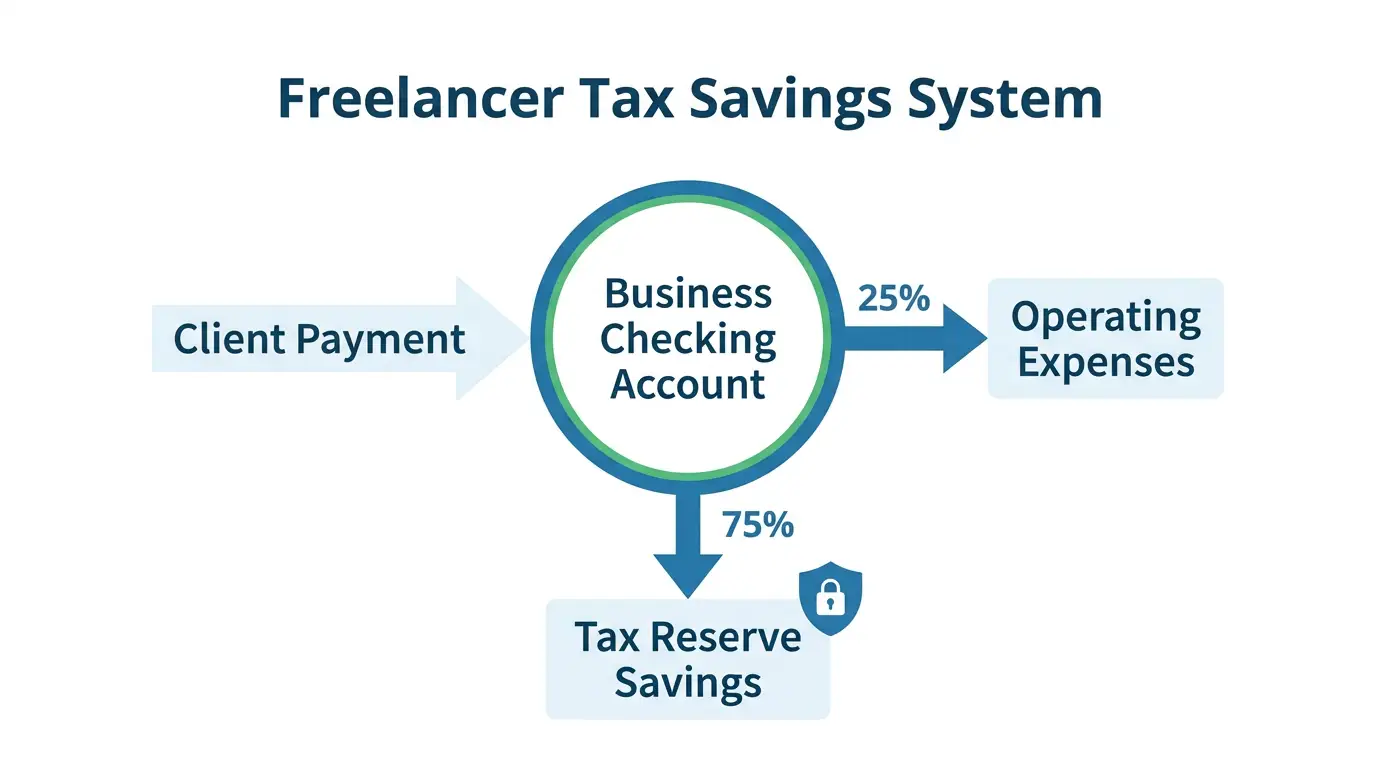
The automation feature inside U.S. Bank’s online banking portal allows you to set up recurring transfers from your business checking account to your business savings account. I have mine set to transfer a fixed percentage of any incoming deposit automatically within 24 hours of receipt. I honestly never think about it anymore. The buffer builds itself while I focus on client work.
A practical number to start with: Most tax professionals recommend that self-employed individuals in the United States set aside between 25 and 30 percent of every payment received for federal and state tax obligations. If you are in a higher income bracket, that number can climb closer to 35 percent. Using your business savings account as the automatic holding tank for that percentage transforms tax season from a crisis into a routine payment.
The minimum opening deposit for the business savings account is just $25. That is an accessible entry point for anyone, regardless of where they are in their freelance journey.
US Bank Business Account Fees: The Full, Honest Breakdown
US bank business account fees in 2026 range from $0 per month for qualifying Business Essentials customers up to approximately $30 per month for Platinum tier accounts, with several legitimate waiver options available.
I want to be real with you here.
Fee structures at large banks are intentionally complicated. Not in a malicious way, necessarily, but in a way that benefits the bank if you do not read the fine print carefully. I spent a significant amount of time digging through U.S. Bank’s actual fee schedules, and I am going to translate the important parts into plain language.
US Bank Business Account Monthly Fee: Tier by Tier
The monthly maintenance fee varies by account type. The Business Essentials account can be maintained with no monthly fee when you meet qualifying transaction requirements. The Silver Business Checking package carries a monthly fee that can typically be waived by maintaining a specific average daily balance. The Gold package fee is higher and has a correspondingly higher balance waiver threshold. The Platinum package carries the highest monthly fee with the highest waiver requirements.
The key point: Every tier has a waiver path. You should never pay a monthly maintenance fee unless you have actively chosen not to meet the waiver conditions.
US Bank Business Account Transaction Limits and Per-Item Fees
This is the area where business bank accounts most often catch people off guard.
Every checking account tier includes a set number of free transactions per month. Once you exceed that number, the bank charges a fee per transaction item. The per-item fee is typically a small dollar amount, but it adds up quickly if you are running a high-volume operation through an account tier that was not designed for that volume.
For freelancers who primarily receive a handful of client payments per month and use the account to pay a small number of business expenses, the transaction limits in the Business Essentials and Silver tiers are more than sufficient. You will not hit the ceiling.
But if you start processing dozens of transactions per week, it is worth doing a quick monthly transaction count and comparing it against the free transaction allowance in your current tier.
US Bank Business Account Wire Transfer Fees
Wire transfers carry their own separate fee schedule at U.S. Bank.
Domestic outgoing wire transfers typically cost between $20 and $30 per transaction. Incoming domestic wire transfers usually carry a smaller fee. International outgoing wire transfers involve the SWIFT Code network and typically cost more than domestic wires, with fees that can vary based on the destination currency and the receiving bank’s own charges.
If international wire transfers are a regular part of your freelance work, meaning you are paying international vendors or receiving payments from international clients, it is worth calculating the monthly cost of those wires and factoring that into your account tier decision.
Cash Deposit Fees
Most freelancers do not deal with physical cash regularly. But if you do, U.S. Bank charges fees for cash deposits above a certain monthly threshold. The specific threshold depends on your account tier. Business Essentials has a lower free cash deposit limit compared to the Platinum tier. If you regularly deposit cash from in-person client payments or retail sales, pay attention to this line item.
Overdraft Protection Service
U.S. Bank offers overdraft protection as an optional service on business checking accounts. You can link a backup account or a line of credit to cover transactions that would otherwise overdraft your balance. There are fees associated with this service depending on how it is triggered and which backup source you use.
My personal recommendation: do not rely on overdraft protection as a regular cash flow management tool. Use it as a true emergency backstop and focus instead on maintaining a buffer in your checking account that keeps you well above zero at all times.
US Bank Small Business Banking: Is the Ecosystem Worth It?
US Bank small business banking in 2026 extends far beyond checking accounts, offering an integrated ecosystem that includes credit cards, merchant services, business loans, payroll tools, and a highly rated mobile banking app.
This is the part that actually surprised me when I got deeper into my relationship with U.S. Bank.
I opened a basic business checking account expecting nothing more than a place to receive payments and pay expenses. What I found was a fairly comprehensive small business banking platform that I could grow into as my freelance operation expanded.
The US Bank Business Debit Card
The business Visa debit card that comes with your checking account is more than just a payment card. It gives you a clean, professional way to pay for business expenses that creates an automatic, organized digital record inside your account statement. Every software subscription, every business-related supply purchase, every professional membership fee shows up in your business account history without any manual sorting.
That organized expense history becomes incredibly valuable at tax time. Your accountant or your tax software can import a clean transaction history from a dedicated business account. No commingled personal charges to sort through.
US Bank Business Account Online Access and Mobile Banking
The online banking portal for U.S. Bank business customers is genuinely well-designed in 2026. It gives you a 360 degree view of all connected accounts, including checking, savings, and credit products. You can initiate ACH transfers, pay bills, manage payroll integrations, set up automatic savings transfers, and download statements directly.
The mobile banking app carries high ratings across both major app stores in 2026. It supports mobile check deposit, which is particularly useful for freelancers who still receive occasional paper checks from clients. The app also supports Zelle for business, which in 2026 has become a standard payment method for small business-to-business transactions and client payments.
A note on multi-user business banking access: The U.S. Bank Shared Access feature allows business owners to grant specific levels of access to the account to other people, such as a bookkeeper or an accountant, without sharing full account control. This feature becomes useful as your freelance operation grows and you bring in support roles.
US Bank Merchant Services Business Integration
If your freelance work involves accepting in-person card payments, U.S. Bank’s merchant services integration through the Business Essentials account is genuinely competitive in 2026. The zero-cost same-day funding feature means client card payments settle to your business account the same day the transaction is processed.
This eliminates a common pain point for freelancers who invoice clients and wait for payment to clear. Same-day funding improves cash flow management significantly for anyone who operates on a tight monthly budget.
US Bank Business Account Credit Card Options
U.S. Bank offers several business credit cards that integrate cleanly with your business checking account. The ability to manage both your credit card activity and your checking account within a single banking dashboard simplifies expense tracking and statement reconciliation.
Some U.S. Bank business credit cards offer cash back rewards on specific business spending categories, which can meaningfully reduce net operating costs over the course of a year. Whether a business credit card makes sense for your freelance operation depends on your spending patterns and your ability to pay the balance in full each month.
US Bank Business Account Fraud Protection
Fraud protection on business accounts is a topic that does not get enough attention in most banking guides.
U.S. Bank implements BSA and AML compliance standards across all business accounts, which are regulatory requirements under federal banking law. Beyond those baseline protections, the bank offers proactive fraud monitoring, real-time transaction alerts through the mobile app, and the ability to set custom transaction controls on your business debit card.
In 2026, with digital banking fraud at historically high levels according to Federal Reserve reports on payment system security, these fraud tools are not a nice-to-have feature. They are a necessity.
US Bank Business Account Requirements: What You Actually Need to Gather
US Bank business account requirements in 2026 vary based on your business structure, but most sole proprietors and single-member LLC owners can open an account with just a few standard documents.
This is the section that causes the most unnecessary anxiety among freelancers.
People read “business account requirements” and immediately picture a stack of notarized legal documents, certified financial statements, and months of business history. That picture is completely disconnected from reality, at least for most freelancers.
Let me walk you through the actual requirements based on business structure.
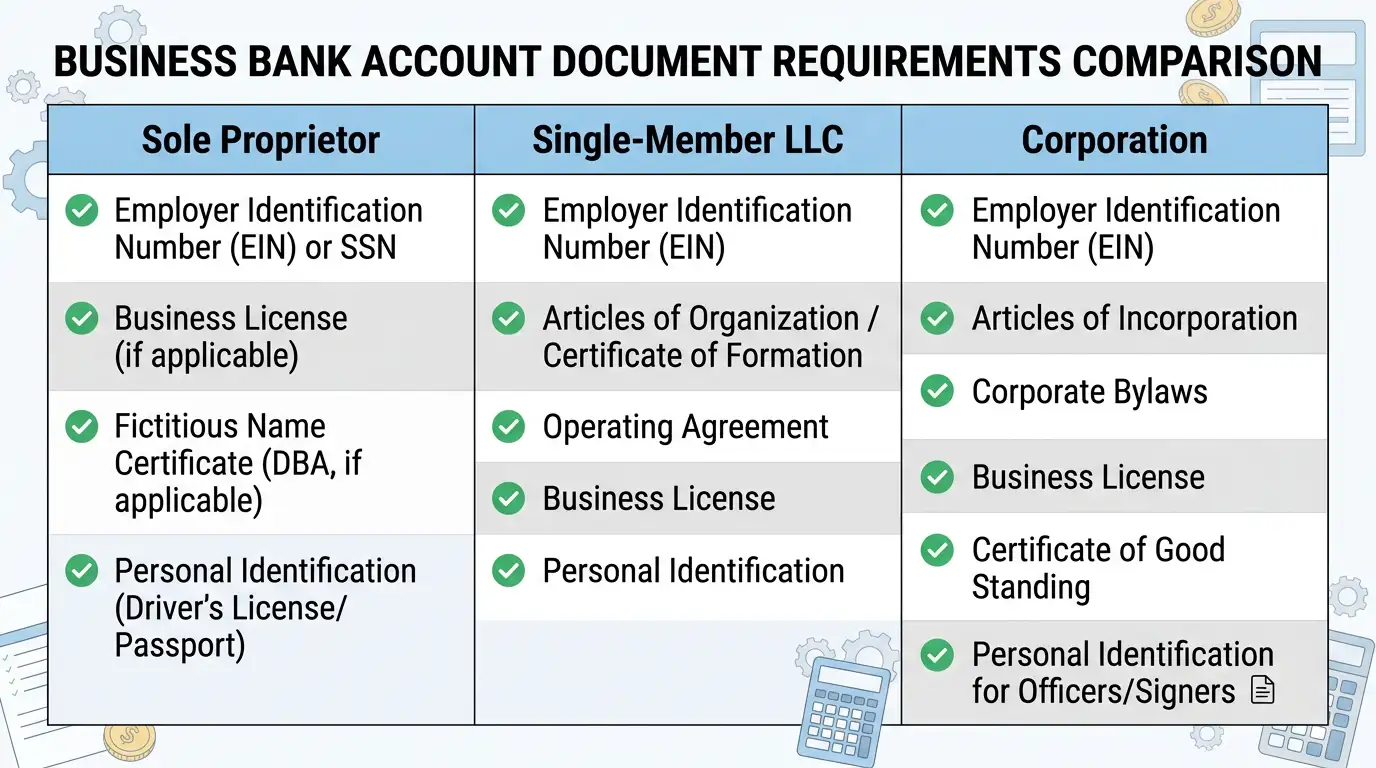
Documents for Sole Proprietors
If you freelance under your own legal name without forming a separate business entity, you are operating as a sole proprietor.
The U.S. Bank business account requirements checklist for sole proprietors is short.
You need a government-issued photo ID. Your driver’s license or passport works perfectly. You need your Social Security Number or, if you have applied for one, your Employer Identification Number. You may need a Doing Business As certificate if you operate under a business name that differs from your personal legal name. Some branches also request a utility bill or document showing your business address, though this varies by location and account type.
That is essentially the complete list for a sole proprietor. No business tax returns. No financial statements. No proof of revenue.
Documents for LLCs
Single-member LLCs are the most common formal business structure among freelancers in the United States.
For an LLC, U.S. Bank requires your government-issued photo ID, your Employer Identification Number (your EIN, which you obtain from the IRS at no cost through their online application system), your Articles of Organization or Certificate of Formation filed with your state, and your Operating Agreement if your LLC has one.
Getting your EIN is a simple process. You apply directly through the IRS website, answer a short questionnaire, and receive your EIN instantly online. The entire process takes about 10 minutes.
Keep all of your LLC formation documents in one organized folder, either physical or digital. You will reference these documents repeatedly throughout the life of your business, not just for banking purposes.
Documents for Corporations
If you have formed a formal corporation (C-Corp or S-Corp) for your freelance operation, the documentation requirements are more extensive. U.S. Bank will want to see your Articles of Incorporation, a corporate resolution authorizing the opening of the account, a list of authorized signers, and your EIN.
For most independent freelancers, a corporation structure is overkill. But if you have formed one for specific legal or tax reasons, your attorney or accountant who helped you structure the entity will have all of these documents readily accessible.
Can You Open a US Bank Business Account Online?
Yes. U.S. Bank allows online business account applications for many account types and business structures in 2026. The Business Essentials account, in particular, is designed for digital onboarding.
The online application process walks you through document submission, identity verification, and initial funding. For most sole proprietors and single-member LLCs, the online path is completely viable.
That said, some business structures and certain situations still require an in-person branch visit. If you have a more complex ownership structure, if you are opening an account under a corporation with multiple authorized signers, or if there are questions during the identity verification process, a branch visit will be necessary.
A specific thing to note from real user forums: A thread on Reddit’s r/smallbusiness from 2026 pointed out that several users experienced delays in the online verification process when their business address did not match what appeared in official state records. Double-check that the address you use on your application matches your registered business address exactly before you submit.
US Bank Business Account Review 2026: Real Talk From Real Users
The US bank business account review landscape in 2026 shows genuinely strong ratings for digital features and account variety, with honest criticism focused on fee complexity and occasional customer service inconsistencies.
I believe in reading what actual users say, not just what marketing materials publish. So I spent time on Reddit, myFICO Forums, Facebook business groups, and Quora pulling together the real experiences that freelancers and small business owners share publicly.
Here is what I found.
What Users Consistently Praise
The mobile banking app receives strong, consistent positive feedback. Multiple users on myFICO Forums specifically noted the clean interface and the reliability of mobile deposits. One user from a September 2020 thread mentioned switching from an online-only bank specifically because U.S. Bank offered the ability to get physical paper checks alongside digital banking functionality. That combination of traditional and digital features matters to many small business owners.
The Business Essentials account launched in April 2025 has generated notably positive early reception in small business communities. The integrated payment acceptance feature and the zero-cost same-day funding are mentioned repeatedly as differentiators compared to what other large banks offer at the entry-level tier.
The branch network is a meaningful advantage. U.S. Bank operates branches across a wide geographic footprint, which matters to freelancers who occasionally need in-person banking services, access to a notary, or face-to-face problem resolution.
What Users Consistently Criticize
I want to be very direct about this.
A Facebook group post from a notary business owner advised very strongly against opening a U.S. Bank business account, citing specific problems with the account management process and customer service responsiveness. That post generated over 40 comments, many of which reflected similar frustrations with the bank’s handling of account issues.
A December 2025 Reddit thread with 48 responses, titled with a warning directed at people considering U.S. Bank business accounts, pointed to concerns about account freezes, verification holds on deposits, and difficulty reaching knowledgeable customer service representatives by phone.
These are real complaints and they deserve honest acknowledgment.
U.S. Bank is a large institution, ranked 7th largest bank in the United States as of 2025 according to the Financial Stability Board’s designation of systemically important financial institutions. At that scale, customer service consistency across thousands of branches and millions of accounts is a genuine operational challenge. Some customers have excellent experiences. Some have terrible ones.
The complaints about account freezes and verification holds are worth noting specifically. U.S. Bank, like all federally regulated banks, must comply with Know Your Customer (KYC) regulations and Bank Secrecy Act requirements. Unusual account activity, especially in new accounts, can trigger automated verification holds that feel frustrating and arbitrary from the customer’s perspective but are legally required from the bank’s perspective.
The takeaway from user feedback: U.S. Bank works extremely well for straightforward freelance banking with a predictable, consistent transaction pattern. It works less well for accounts that experience irregular deposit patterns, large sudden transactions, or complex ownership structures.
Community Banks: The Alternative Frequently Mentioned
In multiple Reddit discussions about the best US bank for a small business, the top-voted answer repeatedly recommended finding a local community bank rather than a large national institution. The reasoning given was that community banks offer more personalized relationship banking and are often more flexible in resolving issues quickly because you can speak directly with decision-makers rather than call center representatives.
This is fair and worth considering. But community banks often lack the digital banking infrastructure, the app quality, and the geographic flexibility that large banks provide. The right choice depends on what you value most.
Best US Bank for Business Accounts: How U.S. Bank Compares to Chase
The best US bank for business accounts in 2026 depends entirely on your transaction volume, preferred banking style, and which fee structure aligns best with your monthly business activity.
This comparison gets asked constantly in freelancer communities. US Bank vs Chase for small business. Which one wins?
The honest answer is: it depends. But let me give you a meaningful breakdown.
US Bank Business Account vs Chase: The Core Comparison
Chase Business Complete Banking is Chase’s primary entry-level business checking account. It is a direct competitor to U.S. Bank Business Essentials.
Monthly fee structure: Both accounts have monthly maintenance fees that can be waived through qualifying activity. The specific waiver methods differ, and the monthly fee amounts are comparable.
Transaction allowances: Both accounts include a set number of free monthly transactions with per-item fees beyond that limit. The specific numbers vary and should be verified on each bank’s current fee schedule, as both banks update these periodically.
Digital features: Chase’s mobile app is widely regarded as one of the strongest in the banking industry. U.S. Bank’s mobile app in 2026 is competitive but historically has received slightly lower ratings than Chase in app store reviews, though the gap has narrowed significantly as U.S. Bank has invested heavily in its digital platform.
Branch access: Chase operates a significantly larger branch network nationally than U.S. Bank. If you live in a state where U.S. Bank has limited presence, Chase may be the more convenient physical banking option.
Business credit products: Both banks offer business credit cards and lending products. Chase has the Ink business card family, which carries strong rewards programs. U.S. Bank has its own business card lineup. Your existing personal credit relationship with either bank may influence which business products you qualify for more easily.
The verdict for freelancers: If you are already a Chase personal banking customer, the integrated Chase ecosystem makes the transition to Chase business banking very smooth. If you are already a U.S. Bank personal customer, the same logic applies in reverse. Neither bank has a decisive, universal advantage for entry-level freelance banking. The accounts are genuinely similar in the 2026 product environment.
Where U.S. Bank has a specific edge is in the integrated payment acceptance feature of Business Essentials and the same-day funding arrangement, which as of the writing of this guide in mid-2026, provides a more streamlined card payment acceptance solution at the entry level than Chase’s comparable offering.
US Bank Business Account Interest Rates: What You Can Realistically Earn
US bank business account interest rates in 2026 apply primarily to business savings accounts and money market accounts, with Annual Percentage Yield rates that reflect the broader interest rate environment set by the Federal Reserve.
I want to set realistic expectations here because a lot of freelancers ask about earning interest on their business accounts as though it is going to be a meaningful income source.
The business checking accounts, including Business Essentials, Silver, Gold, and Platinum, are not interest-bearing accounts in the traditional sense. They are transactional accounts designed for cash flow management, not wealth accumulation.
Your business savings account does earn interest. The Annual Percentage Yield on U.S. Bank business savings accounts fluctuates based on the federal funds rate environment. In 2026, the interest rate landscape reflects the Federal Reserve’s monetary policy decisions from the preceding years. The rates are better than the near-zero environment of 2020 and 2021, but they are not dramatically high.
For a freelancer using the business savings account primarily as a tax buffer, the interest earned is a pleasant bonus but should not be the primary reason you keep money there. The organizational benefit of having a separate savings bucket far outweighs whatever interest you earn on a few thousand dollars sitting in reserve.
Business money market accounts offered by U.S. Bank typically carry higher interest rates than standard savings accounts and may have higher minimum balance requirements. If you have built a substantial reserve fund, a money market account may be worth exploring as a step between a savings account and more complex investment vehicles.
Business certificates of deposit (CDs) represent a locked-in option where you commit funds for a specific term in exchange for a guaranteed, typically higher, interest rate. For emergency fund money that you are confident you will not need to access for a defined period, a business CD can earn more than a savings account.
How to Open a US Bank Business Account: Step by Step in 2026
You can open a US bank business account online or in person in 2026, with most sole proprietors completing the online application in under 30 minutes when they have their documents ready.
This is the section where I give you the exact, linear process so there are no surprises.
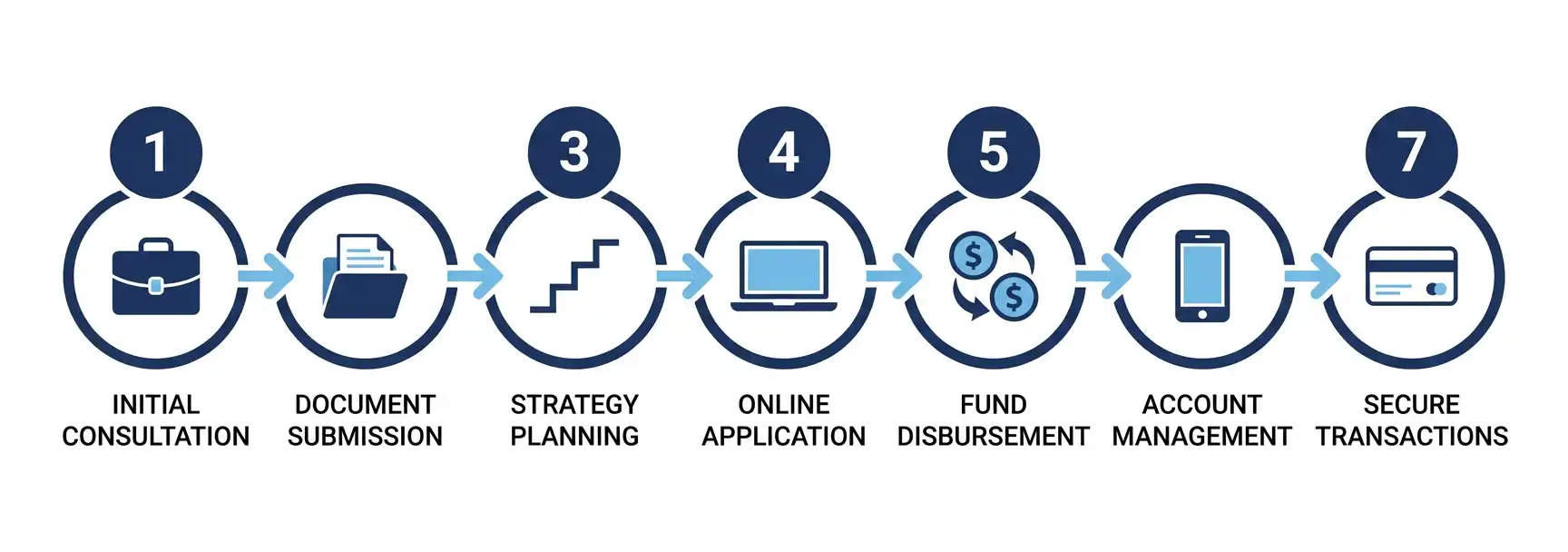
Step 1: Determine your business structure.
Before you do anything else, know whether you are opening the account as a sole proprietor, a single-member LLC, a multi-member LLC, or a corporation. Your structure determines exactly which documents you need.
Step 2: Gather your documents.
For sole proprietors: government-issued photo ID, Social Security Number or EIN, DBA certificate if applicable.
For LLCs: government-issued photo ID, EIN, Articles of Organization, Operating Agreement.
For corporations: government-issued photo ID, EIN, Articles of Incorporation, corporate resolution, list of authorized signers.
Step 3: Choose your account tier.
For the vast majority of freelancers starting out in 2026, the Business Essentials account is the right answer. Do not over-engineer this decision. You can always upgrade your tier later as your business grows.
Step 4: Start the online application at usbank.com or visit a branch.
If you are applying online, navigate to the business banking section and select the account type you want. The online application will prompt you to upload your documents and complete identity verification.
Step 5: Fund your account with an initial deposit.
You will need to transfer funds to open the account. The minimum initial deposit required varies by account type. Business Essentials has a low minimum that makes it accessible for freelancers at any income stage.
Step 6: Set up online banking access.
Once your account is open, enroll in online banking through the usbank.com portal. Download the mobile app. Set up your automatic savings transfer to your business savings account. Configure your transaction alerts.
Step 7: Order your business debit card and set up payment acceptance if needed.
Your Visa business debit card arrives within several business days of account opening. If you need to accept card payments from clients, set up the merchant services integration through the Business Essentials platform.
How long does the whole process take?
Online applications for Business Essentials accounts are often approved within one to two business days. In-branch applications are often completed the same day. The physical debit card typically arrives within five to seven business days.
US Bank Business Account Minimum Balance: How to Never Pay a Fee Again
The US bank business account minimum balance requirement varies by tier, but every tier offers at least one waiver path that lets you avoid the monthly maintenance fee entirely.
Monthly fees are the thing freelancers fear most about business banking. And the fear is understandable. When you have a slow month with lower than usual client income, the last thing you want is a bank taking an additional $15 or $25 out of your account as a penalty for not being wealthy enough.
The good news is that U.S. Bank designs its fee waiver structures with exactly this concern in mind.
How to Waive the US Bank Business Account Monthly Fee: Each Method Explained
Method 1: Maintain an average daily balance above the required threshold.
Each account tier has a specific average daily balance requirement that, when maintained throughout the statement cycle, results in the monthly maintenance fee being waived completely. The specific dollar amounts differ by tier and should be confirmed directly with U.S. Bank at the time of account opening since these can be updated.
For freelancers with relatively stable income, this method works well. Keep a buffer in your checking account that sits above the waiver threshold at all times.
Method 2: Meet qualifying transaction requirements (Business Essentials specific).
The Business Essentials account is specifically structured so that meeting certain qualifying transaction thresholds waives the fee. The exact qualifying transaction criteria are detailed in the account’s terms and conditions and should be reviewed carefully when you open the account.
Method 3: Maintain a combined balance across multiple U.S. Bank products.
Some account tiers allow the waiver to be triggered by maintaining a minimum combined balance across all eligible U.S. Bank business products, including checking, savings, money market accounts, and certain credit products. This means if your checking account balance occasionally dips below the solo threshold, your savings account balance can make up the difference in the combined calculation.
The Slow Month Strategy
Here is what I actually do during slow freelance months.
I maintain a permanent, non-negotiable “buffer” in my business checking account that I mentally designate as untouchable operating capital. This buffer sits above the minimum balance waiver threshold for my account tier at all times, even in months when client income is lower than usual.
The buffer came from setting aside a portion of earnings during strong months specifically for this purpose. It took a few months of discipline to build it, but once it was there, I stopped thinking about monthly maintenance fees entirely.
If a slow month means my incoming client payments are lower, I simply spend less on business expenses during that month. The buffer protects my waiver status while I wait for the next wave of client work.
One practical tip: Set up a low balance alert in your U.S. Bank mobile app that notifies you when your checking account balance drops below a custom threshold you set. I set mine at twice the minimum balance waiver amount so I get the notification while I still have plenty of time to transfer funds from savings if needed before the statement cycle closes.
US Bank Small Business Banking vs The Competition: The Full 2026 Truth
US bank small business banking sits in a competitive middle ground in 2026, offering stronger physical infrastructure than online-only banks while providing more modern digital tools than many regional institutions.
I have personally tested or researched the core competitors to U.S. Bank business accounts in significant depth. What I am about to share is not a paid promotion for any institution. It is my honest read of where U.S. Bank wins, where it loses, and which type of freelancer is best served by each option.
This matters because the “best business bank” question is one of the most asked questions in every freelance and small business community online in 2026. And the answer is genuinely different depending on who is asking.
US Bank Business Account vs Chase: Going Deeper
I touched on this comparison earlier. Now I want to get specific about the details that actually move the needle for freelancers.
Cash deposit handling: If you regularly deposit physical cash, U.S. Bank has a notable advantage in markets where it operates. Its branch and ATM network in the Midwest and Mountain West regions of the United States is particularly strong. Chase has broader national coverage but is lighter in certain central and western states where U.S. Bank is dominant.
Bonus offers: Both banks regularly run promotional offers for new business checking account customers in 2026. U.S. Bank has advertised bonuses of up to $1,200 for qualifying new business checking account openings, which represents one of the stronger introductory offers among large national banks. Chase runs comparable promotions for its business checking products. If you are opening a new account, always check the current promotional offer before applying. The timing of your application can put meaningful cash back into your business from day one.
Relationship banking depth: One specific advantage that shows up in longer-term banking relationships with U.S. Bank is the connection between your business checking account and your eligibility for business lending products. U.S. Bank has a notable business lending operation and is an active SBA loan provider. If business financing is something you anticipate needing as your freelance operation grows, establishing a banking relationship early through a business checking account can position you more favorably when you eventually apply for a business line of credit or term loan.
US Bank Business Account vs Bank of America: The Digital Question
Bank of America’s business banking platform, particularly its Business Advantage product lineup, is a serious competitor to U.S. Bank in the 2026 environment.
Bank of America has invested heavily in its digital banking infrastructure and offers one of the most feature-rich business online banking experiences available from a large national bank. Its cash flow monitoring tools, accounts payable integrations, and bookkeeping software connections are genuinely strong.
Where U.S. Bank competes favorably against Bank of America for freelancers is in its entry-level account structure. The Business Essentials integrated payment acceptance at zero monthly cost is a differentiator that Bank of America’s entry-level business accounts do not replicate as cleanly.
Bank of America tends to have stronger appeal for slightly larger small businesses that need robust integrations with accounting software like QuickBooks or Xero. For solo freelancers who need simple, clean separation of business and personal funds with reliable digital access, U.S. Bank Business Essentials is a genuinely competitive and often lower-cost option.
US Bank Business Account vs Wells Fargo: The Trust Factor
This comparison requires honest context.
Wells Fargo’s business banking products are feature-rich and competitively priced. But Wells Fargo carries significant reputational history from its well-documented account scandal years that still affects how some small business owners perceive the institution. That perception, fair or unfair in the current moment, is a real factor in how freelancers choose their banking partner.
U.S. Bank does not carry that specific brand baggage and in general carries a stronger reputation for straightforward, transparent business banking practices based on third-party banking review aggregators and user feedback patterns I reviewed across multiple forums.
Functionally, Wells Fargo’s Initiate Business Checking account is comparable to U.S. Bank Business Essentials in terms of target customer and basic feature set. The decision between the two often comes down to which institution you already have a personal banking relationship with and which branch is more conveniently located for your needs.
US Bank Business Account vs Online-Only Banks: The 2026 Reality Check
This is the comparison that generates the most heated discussion in freelancer communities in 2026. And it deserves a genuinely balanced treatment.
Online business banks like Bluevine, Mercury, Relay, and Novo have built aggressively customer-friendly products specifically targeting freelancers and startup operators. They generally offer:
No monthly maintenance fees with no minimum balance requirements. Higher interest rates on checking balances compared to traditional banks. Faster digital account opening, sometimes within minutes. Modern, well-designed app interfaces built specifically for the digital-native business owner.
These are real advantages. And for many freelancers, particularly those who work entirely digitally, never need physical cash deposits, and want to minimize fees absolutely, an online-only business bank is genuinely the better choice in 2026.
But here is what online-only banks cannot give you:
Physical branch access for cash deposits, notary services, or face-to-face dispute resolution. The regulatory depth and institutional stability that comes with a nationally chartered bank subject to full Federal Reserve and FDIC oversight at the scale of U.S. Bancorp. The lending relationship ecosystem that can eventually support SBA loans, business lines of credit, and commercial banking products. The physical debit card infrastructure that works reliably across every ATM and payment terminal without the occasional acceptance issues that affect some newer fintech debit products.
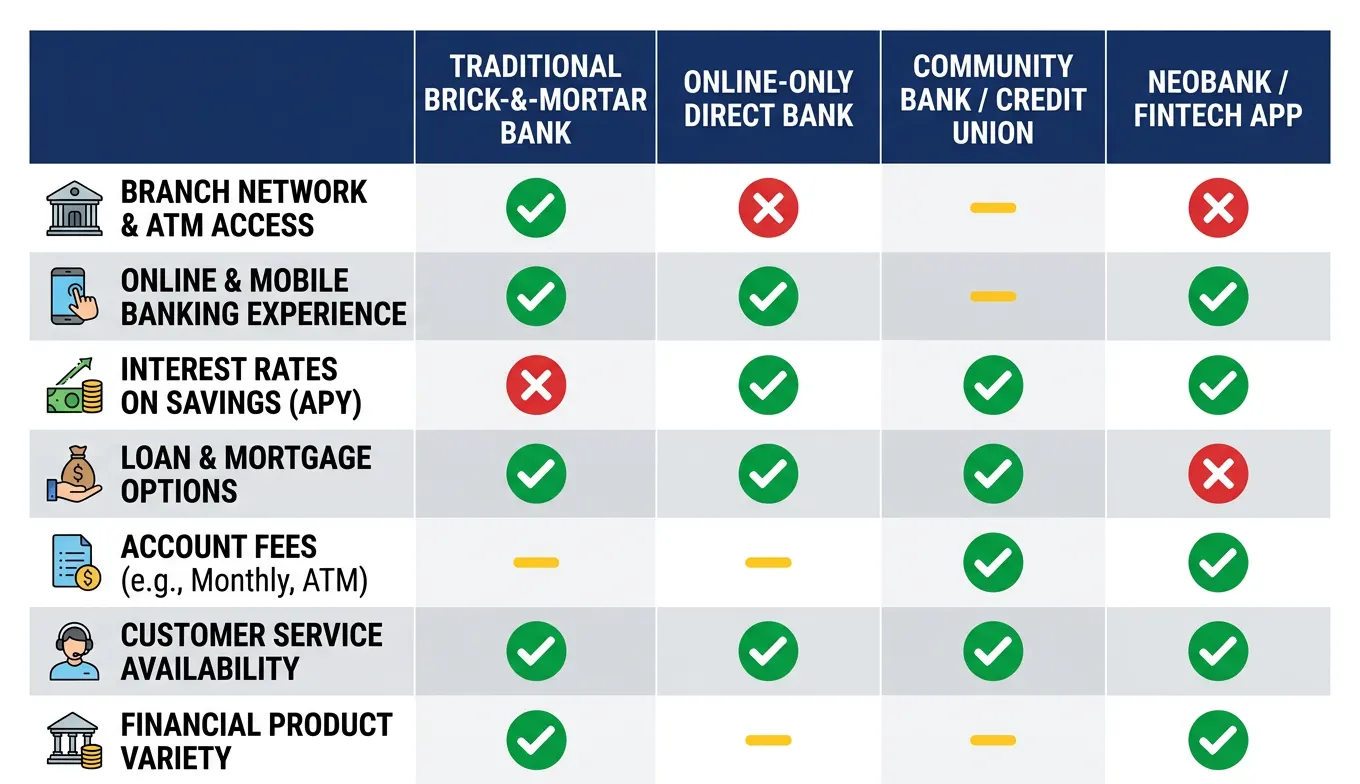
My honest take: If you are a fully digital freelancer who invoices clients electronically, receives payments digitally, and never deals with physical cash, an online-only business bank deserves serious consideration in your decision. Mercury, in particular, has built a product that is genuinely excellent for this profile.
If you operate in a more mixed environment, occasionally deposit cash, value physical branch access, or anticipate needing business lending products within the next few years, U.S. Bank’s ecosystem provides a depth of infrastructure that online-only banks simply cannot match yet.
The decision is not about which type of bank is objectively better. It is about which type of bank fits your specific operational reality.
The Honest Limitations of US Bank Business Accounts in 2026
I promised at the beginning of this guide that I would pull no punches. So before I get to the FAQ section, I want to explicitly name the areas where U.S. Bank business accounts fall short compared to the competition.
Limitation 1: Interest rates on savings are not market-leading.
If maximizing the Annual Percentage Yield on your business reserve funds is your primary goal, U.S. Bank’s business savings rates are not going to be at the top of the comparison charts. Online-only banks and some credit unions consistently offer higher APY on savings balances. If you want to earn the absolute most interest on your tax buffer, you will need to look beyond U.S. Bank for that specific function.
Limitation 2: Customer service consistency is a legitimate concern.
The forum data I reviewed is clear on this. Some U.S. Bank business customers have excellent, seamless experiences. Others have encountered frustrating delays in resolving account issues, difficulty reaching knowledgeable representatives, and slow processing of disputes. This inconsistency is a real risk, particularly for new account holders who experience a verification hold or an account access issue early in their banking relationship.
Limitation 3: Fee structure complexity.
U.S. Bank’s business account fee schedule is not the simplest in the industry to understand. Transaction limits, per-item fees, cash deposit thresholds, wire transfer charges, and monthly maintenance fee waiver conditions create a layered fee environment that requires careful reading. If you do not read the terms carefully before opening your account, you can find yourself paying fees you did not anticipate.
Limitation 4: Online account opening limitations for complex structures.
If your business has a more complex legal structure, meaning multiple LLC members, a corporate structure with multiple authorized signers, or non-standard ownership arrangements, the online application path may not work for you. You will need to visit a branch and the process may take longer than the streamlined online experience suggests.
Limitation 5: Geographic coverage gaps.
While U.S. Bank has a meaningful branch network, it is not as nationally uniform as Chase or Bank of America. In certain states, particularly in the Southeast and parts of the Northeast, U.S. Bank branch access is limited. If you live in an area with sparse U.S. Bank presence and you value in-person banking, this matters.
Naming these limitations is not a reason to avoid U.S. Bank. It is information you need to make an honest, well-informed decision about where to put your business money.
Building Your Complete Freelance Banking System Around US Bank Business Accounts in 2026
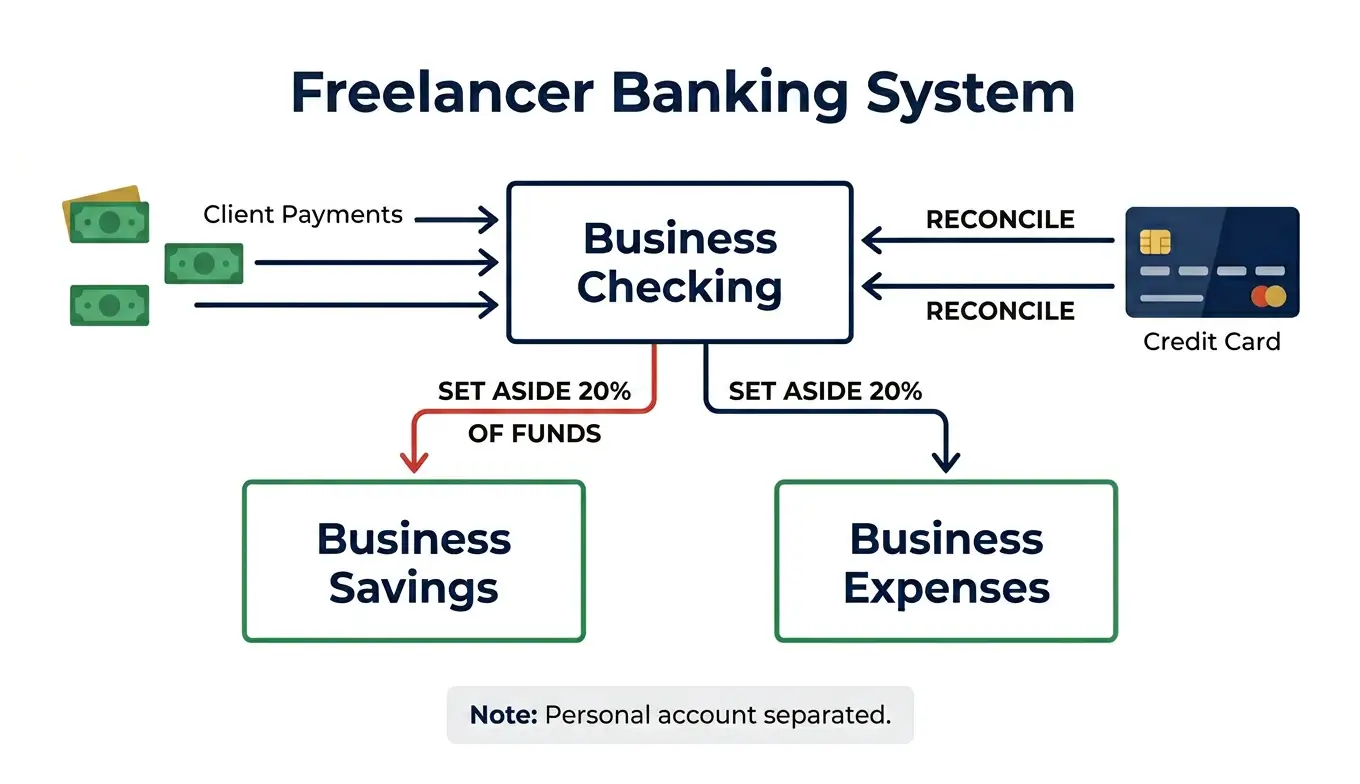
The most effective freelance financial system in 2026 uses us bank business accounts as the operational foundation, pairing a business checking account for daily cash flow with a business savings account for tax reserves and emergency capital.
I want to give you the specific system I use. Not a theoretical framework. The actual structure.
Account 1: US Bank Business Essentials Checking
This is my operational hub. Every single client payment comes into this account. Every business expense goes out of this account. Nothing else. No personal transactions. No personal bill payments. No grocery purchases. This account is for business activity only, and that discipline is non-negotiable.
Account 2: US Bank Business Savings
Every time a client payment arrives in my checking account, an automatic transfer moves 28 percent of that payment into my business savings account within 24 hours. I chose 28 percent because my tax liability as a self-employed individual in my income bracket, accounting for both federal self-employment tax and state income tax, consistently lands around 26 to 27 percent of net income. The extra 1 to 2 percent builds a small cushion against any calculation errors.
I treat this savings account as completely inaccessible for anything except tax payments and genuine operational emergencies. Period.
Account 3: A separate high-yield personal savings account (not U.S. Bank)
I keep my personal emergency fund at an online-only institution that currently offers a higher APY than U.S. Bank business savings. This is personal money. It has nothing to do with my business accounts. But I mention it because a complete financial system for a freelancer includes both business and personal layers, and optimizing each layer separately for its specific purpose makes financial sense.
The one credit card I use:
I have a U.S. Bank business credit card linked to my business banking dashboard. I use it for every recurring business software subscription and every business-related purchase where the credit card is accepted. I pay the full balance every single statement cycle. This gives me an additional layer of purchase protection, builds my business credit profile, and creates a second organized expense record that supplements my checking account history.
The accounting integration:
My business checking account connects directly to my accounting software through the bank’s data export feature. Every Monday morning I spend about 15 minutes reviewing the previous week’s transactions in the accounting software dashboard. The entire process of categorizing income and expenses for a week of business activity takes less time than making a pot of coffee.
That 15 minute weekly habit is what tax season looks like for me now. Not a multi-day scramble through a year of commingled transactions. Fifteen minutes per week.
This is what a well-organized banking system actually looks like in practice. And it starts with the simple decision to open a dedicated business account and keep it strictly separate from your personal finances.
Trending FAQs: Every Question Freelancers Ask About US Bank Business Accounts
What documents do I need to open a US Bank business account?
The specific documents depend on your business structure. Sole proprietors need a government-issued photo ID and their Social Security Number or EIN, plus a DBA certificate if operating under a business name. Single-member LLC owners need a photo ID, EIN, Articles of Organization, and an Operating Agreement if one exists. Corporations require additional documentation including Articles of Incorporation and a corporate resolution. Gathering these before you start the application makes the process smooth and fast.
How much does US Bank charge for a business account?
Monthly maintenance fees for US bank business accounts range from $0 for qualifying Business Essentials customers to approximately $30 per month for Platinum tier accounts. Every tier offers at least one method to waive the monthly fee, including maintaining a minimum average daily balance or meeting specific transaction thresholds. Beyond the monthly fee, per-item transaction fees apply once you exceed your free monthly transaction allowance, and wire transfers carry separate fees ranging from approximately $20 to $30 for domestic outgoing wires.
Can I open a US Bank business account online?
Yes. U.S. Bank allows online business account applications for many account types and business structures in 2026. The Business Essentials account is specifically designed to support digital onboarding. Most sole proprietors and single-member LLCs can complete the application entirely online with document uploads and digital identity verification. Some complex business structures still require an in-person branch visit. The online application typically takes under 30 minutes when documents are ready, and approval often comes within one to two business days.
What is the minimum balance for US Bank business checking?
The minimum balance requirements vary by account tier. Each tier has a specific average daily balance threshold that, when maintained throughout the statement period, results in the monthly maintenance fee being waived. The Business Essentials account offers fee waiver through qualifying transactions rather than strictly through a balance threshold, making it more accessible for freelancers whose account balances fluctuate month to month. Always confirm the current specific dollar amounts directly with U.S. Bank at account opening, as these figures can be updated periodically.
Does US Bank offer free business checking in 2026?
The Business Essentials account can effectively be a no-fee checking account when you meet qualifying transaction requirements. This makes it functionally free for freelancers who maintain active account usage. The Silver, Gold, and Platinum accounts all carry monthly maintenance fees that can be waived through balance maintenance, but the base fee exists and will be charged if waiver conditions are not met. True completely-free business checking with no conditions at all is more commonly found at online-only business banks.
How long does it take to open a US Bank business account?
Online applications for Business Essentials accounts are typically reviewed and approved within one to two business days. In-branch applications for standard account types can often be completed and approved the same day. After approval, your business debit card arrives by mail within five to seven business days. Online banking access is usually activated the same day your account is approved, so you can begin transacting digitally before your physical card arrives.
Is US Bank good for small businesses?
U.S. Bank is a strong choice for small businesses that value a combination of physical branch access, a well-developed digital banking platform, integrated payment acceptance, and a lending ecosystem they may grow into over time. It is a particularly good fit for freelancers and solo operators in markets where U.S. Bank has strong geographic presence. It is a less ideal fit for fully digital operators who prioritize maximum interest rates on savings and want zero-fee banking with absolutely no minimum balance considerations. The 7th largest bank in the United States by asset size, U.S. Bancorp brings substantial institutional stability to the relationship.
What are the benefits of a US Bank business account?
The core benefits include FDIC insured deposit protection up to $250,000, a well-rated mobile banking app with mobile deposit and Zelle integration, a business Visa debit card for organized expense tracking, integrated card payment acceptance with same-day funding through Business Essentials, access to business savings and money market accounts within the same banking relationship, fraud monitoring and BSA and AML compliant security protocols, multi-user access through the Shared Access feature, and a pathway into U.S. Bank’s broader business lending ecosystem including SBA loans and business lines of credit.
Can a sole proprietor open a US Bank business account?
Yes, absolutely. Sole proprietors are among the most common U.S. Bank business account customers. The account opening requirements for sole proprietors are minimal: a government-issued photo ID, your Social Security Number or EIN, and a DBA certificate if you operate under a business name different from your legal name. You do not need a formal LLC or corporation to open a business account. Operating as a sole proprietor is a recognized business structure that qualifies for all standard business account tiers.
What is the difference between a US Bank business account and a personal account?
Business accounts are legally structured for commercial activity, include features like multi-user access, merchant services integration, higher transaction volumes, and business-specific tools like payroll management access and cash flow monitoring. Personal accounts are designed for individual consumer use with consumer-level protections and features. Mixing business income with a personal account creates legal, tax, and record-keeping complications. The IRS and the SBA both recommend maintaining strictly separate accounts for business activity, regardless of business size or structure.
How do I waive the US Bank business account monthly fee?
The most straightforward method is maintaining an average daily balance above the required threshold for your specific account tier throughout the statement cycle. For Business Essentials accounts, meeting qualifying transaction requirements triggers the waiver. For Silver, Gold, and Platinum tiers, maintaining either a standalone minimum balance or a qualifying combined balance across multiple U.S. Bank business products will waive the fee. Always ask your U.S. Bank representative to confirm the exact waiver conditions for your specific account at the time of opening, and set up a low balance alert in the mobile app to protect yourself during slow income months.
Does a US Bank business account earn interest?
Standard business checking accounts at U.S. Bank, including Business Essentials, Silver, Gold, and Platinum, do not earn interest in the traditional savings sense. They are transactional accounts designed for cash flow management. The business savings account earns interest at an Annual Percentage Yield that reflects the current interest rate environment. Business money market accounts earn higher interest rates than standard savings accounts and have higher balance requirements. Business certificates of deposit offer fixed, guaranteed rates for a defined term. If earning interest on your business reserve funds is a priority, discuss the savings and money market options with a U.S. Bank business banker.
What is the best US Bank business account for an LLC in 2026?
For most single-member LLC freelancers and solo operators in 2026, the Business Essentials account is the best starting point. It offers no monthly fee when qualifying transaction requirements are met, includes integrated card payment acceptance, provides full access to online banking and the mobile app, and comes with a business Visa debit card. As your LLC grows and your monthly transaction volume increases, stepping up to the Silver or Gold tier becomes appropriate. Multi-member LLCs with higher operational complexity may want to start directly at the Gold or Platinum tier, depending on their expected transaction volume.
How many transactions are allowed per month on a US Bank business account?
The free monthly transaction allowance varies by account tier. Business Essentials includes a set number of free transactions, Silver includes more, Gold includes a higher number still, and Platinum includes the highest free transaction allowance in the standard lineup. Transactions beyond the free allowance incur a per-item fee. The specific numbers should be confirmed directly with U.S. Bank at account opening as they can be updated periodically. For most freelancers with a modest number of monthly client payments and business expense payments, the Business Essentials allowance is more than sufficient.
Can I open a US Bank business account without being physically present?
For most standard business structures, the online application process for U.S. Bank business accounts in 2026 allows you to complete the application without visiting a branch. However, U.S. Bank, like all federally regulated banks in the United States, must comply with Know Your Customer requirements under the Bank Secrecy Act. These regulations require verifying your identity and your business’s legitimacy. For foreign nationals or non-residents attempting to open a U.S. Bank business account without an in-person presence, the requirements are significantly more stringent. A Quora thread on this topic from 2025 noted that KYC compliance makes completely remote account opening for non-resident LLC owners extremely difficult, and most cases ultimately require physical presence at some stage of the process.
What is the US Bank Business Essentials account and is it right for me?
The U.S. Bank Business Essentials account launched in April 2025 as an all-in-one solution combining business checking with integrated card payment acceptance and zero-cost same-day funding. It is designed specifically for small businesses, solo operators, and freelancers who want a single account that handles both receiving client payments and managing operating expenses without requiring multiple separate merchant service arrangements. If you are a freelancer who invoices clients and occasionally accepts card payments, Business Essentials simplifies your payment ecosystem considerably and represents the best entry-level U.S. Bank business account option available in 2026.
How do I set up automatic tax savings with my US Bank business account?
The U.S. Bank online banking portal allows you to set up recurring automatic transfers between your business checking account and your business savings account. Log into your online banking dashboard, navigate to the transfers section, and set up a recurring transfer for a fixed percentage of your typical deposit amount to move from checking to savings on a regular schedule. Many self-employed individuals and freelancers set this up as a weekly transfer of a set dollar amount that approximates 25 to 30 percent of their average weekly earnings. Once configured, the system executes the transfer automatically without any manual action required, which removes the psychological friction of manually saving for taxes.
Is US Bank FDIC insured for business accounts?
Yes. U.S. Bank, operating as U.S. Bank National Association under the parent company U.S. Bancorp, is a member of the Federal Deposit Insurance Corporation. Business deposit accounts at U.S. Bank are insured up to $250,000 per depositor per ownership category. This means your business checking and savings account balances are federally protected up to that limit in the event of bank failure. For the vast majority of freelancers and small business owners, the $250,000 coverage limit is well above their typical business account balance, making the FDIC protection comprehensive and fully effective.
Does US Bank business account support Zelle?
Yes. U.S. Bank business accounts support Zelle in 2026. Zelle has become a widely used payment method for small business transactions, particularly for service-based businesses and freelancers who work with clients who prefer to pay through their own bank’s Zelle integration rather than through credit card or ACH transfer. The Zelle for business functionality is accessible through the U.S. Bank mobile app and online banking portal. Payments received through Zelle are typically available in your account within minutes, which makes it one of the fastest settlement options for client payments currently available.
What happens if my US Bank business account balance drops below the minimum?
If your average daily balance falls below the minimum threshold required to waive the monthly maintenance fee during a statement cycle, U.S. Bank will charge the monthly maintenance fee for that cycle. You will not lose access to your account or face additional penalties simply for dropping below the balance threshold. The fee is a maintenance charge, not a punitive overdraft fee. To avoid this, set up low balance alerts in the mobile app so you are notified well before the statement cycle closes if your balance is approaching the threshold, giving you time to transfer funds from savings if necessary.
Your Next Step: Making the Decision Today
Everything you need to know to make a confident, informed decision about us bank business accounts is now in front of you.
You know the account tiers and which one fits your freelance operation. You know the exact documents you need to gather. You know the strategies to waive monthly fees permanently. You know the honest limitations alongside the genuine strengths. You know how U.S. Bank stacks up against Chase, Bank of America, Wells Fargo, and online-only alternatives. And you know exactly how to build a two-account system that makes tax season feel like a routine administrative task rather than an annual financial crisis.
The only thing left is the decision itself.
If you are still depositing client payments into your personal checking account alongside your grocery charges and your streaming subscriptions, today is the day to fix that. Not next week. Not after your next big client payment lands. Today.
Open the U.S. Bank website. Start the Business Essentials application. Gather your documents. And build the financial foundation your freelance work actually deserves.
For additional guidance on protecting your business finances online and understanding your rights as a small business owner, the Federal Trade Commission’s business resources at ftc.gov/business-guidance provide reliable, government-backed information that every independent worker should be familiar with.
Your freelance business is real. Your money deserves a real home.
Disclaimer: Fee structures, interest rates, account features, and promotional offers mentioned in this article reflect publicly available information as of mid-2026. Banking products and their terms are subject to change. Always verify current terms directly with U.S. Bank before opening an account. This article is for informational purposes only and does not constitute financial advice.