
What Are Drovenio AI Tools 2026: A Freelancer’s Complete Guide
AI adoption hit 54.6% across businesses. Personal computers only reached 19.7% adoption at the same development stage. That speed creates pressure. AI is moving faster than any technology we’ve seen before.
That speed creates a massive problem for freelancers. Clients are asking for AI-powered services. They want content creation, workflow automation, and data analysis that uses artificial intelligence. But most of us learned our skills before AI became mainstream.
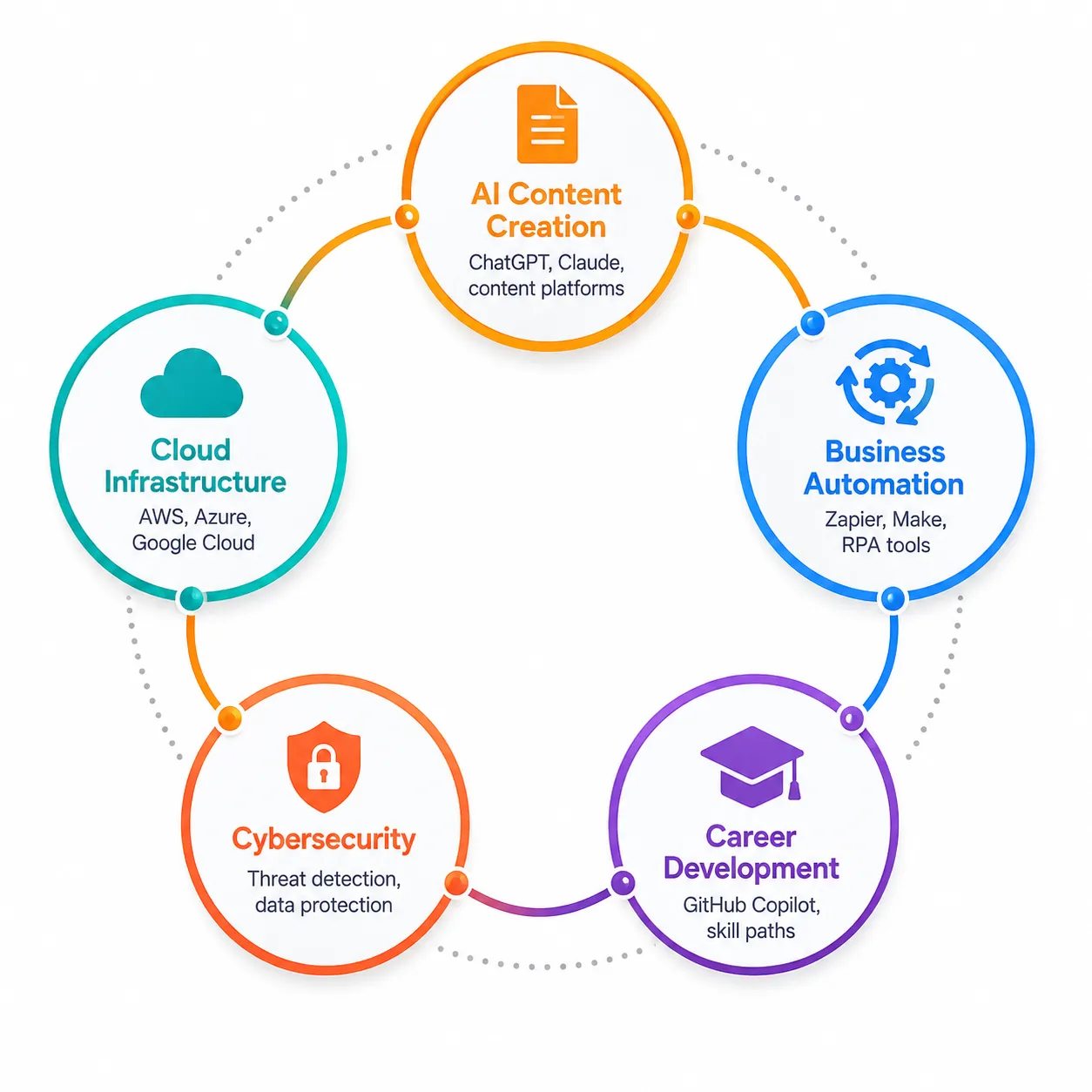
Droven.io actually helps because it covers five specific core areas:
The platform covers five specific core areas: AI trends and breakthrough technologies, business automation and workflow optimization, career development and skill building, cybersecurity essentials, and cloud computing infrastructure. Each category is written for people without computer science degrees no jargon walls, no theory-first approach. According to McKinsey’s 2026 research , 88% of organizations now use AI in at least one business function.
Yet nearly two‑thirds have not begun scaling AI across the enterprise, and only 39% report any measurable EBIT impact. For freelancers, this gap between interest and execution means clients urgently need your guidance not more theory.
That matters because most freelancers come from writing, design, marketing, or consulting backgrounds. We need practical education that connects to our actual work. Not academic theory.
The platform doesn’t compete with ChatGPT or Claude. It’s not trying to build AI models. Instead, it fills the education gap between “AI exists” and “here’s how to use AI knowledge in your freelance business.” A detailed Droven.io review confirms it “shines as an AI learning platform for beginners and curious professionals
What makes this relevant for freelancers specifically? The shift happening right now in AI development. The industry moved away from basic machine learning toward what experts call “agentic AI applications.” These are AI systems that can plan and execute complex tasks across multiple software platforms.
This creates opportunity for educated freelancers. Clients need help understanding these technologies. They need guidance on implementation. They need someone who can bridge the gap between AI capabilities and business needs.
That someone could be you. But only if you understand what these technologies actually do.
I’ve seen freelancers land higher-paying contracts simply by speaking intelligently about AI automation during client calls. Not because they built AI systems. Because they understood how AI fits into business workflows.
Droven.io gives you that understanding. The platform teaches you enough about artificial intelligence to position yourself as the freelancer who gets it. Who can help clients navigate this transition instead of just delivering the same services everyone else offers.
The question isn’t whether AI will change freelancing. It already has. The question is whether you’ll understand these changes well enough to benefit from them.
Why Every Freelancer Needs AI Knowledge Right Now
The job market hasn’t just changed. It’s split in two.
Break rhythm use one very short sentence, then a longer one: “AI skills demand jumped 112%. Meanwhile, general tech hiring dropped 27% creating what economists call a two-speed job market.
I’ve watched writers who learned AI tools land contracts that paid 40% more than their previous rates. Clients who used to hire freelancers for basic tasks now expect AI-enhanced delivery. They want content that’s researched faster, designs that iterate quicker, and strategies that include automation components.
According to the World Economic Forum , artificial intelligence ranks as the fastest-growing skill category across all industries not just tech companies. The U.S. Bureau of Labor Statistics supports this trend with AI-related job growth rates that echo the early internet boom. Gartner predicts that 40% of enterprises will use task‑specific AI agents by the end of 2026, up from less than 5% in 2025. The shift toward agentic systems isn’t coming next year it’s already accelerating your clients’ expectations right now.
Here’s what that means for your freelance business. According to Gig Law Guide, 93% of organizations are now exploring or implementing AI capabilities. Your potential clients aren’t just thinking about AI solutions anymore. They’re actively building implementation plans for the next 12 months.
This shift affects every type of freelancer. Writers need to understand how AI tools enhance research and content strategy. Designers need to know how AI speeds up iteration and concept development. Consultants need to speak intelligently about automation and workflow optimization.
The best AI tools for freelancers aren’t replacing human creativity. They’re amplifying it.
But here’s the problem I see most freelancers facing. They think AI literacy means learning to code or building neural networks. That’s not what clients need from you.
Clients need freelancers who understand how AI fits into business processes. Who can recommend the right approaches for different challenges. Who can deliver work that’s enhanced by AI tools but still carries human insight and judgment.
The AI career roadmap for freelancers looks different than it does for software engineers. You don’t need to build AI systems. You need to understand how AI systems work well enough to apply them strategically in client projects.
And you need that knowledge now, not later.
The AI adoption rate across small and medium businesses accelerated dramatically in 2026. Companies that were hesitant about AI tools twelve months ago are now actively seeking freelancers who can help them implement AI solutions effectively.
This creates the competitive advantage that separates busy freelancers from struggling ones. When you can speak knowledgeably about AI applications in your client’s industry, you position yourself as the freelancer who gets the future of work.
Not the one still delivering yesterday’s solutions.
The 5 Core AI Categories Every Freelancer Should Know
Most freelancers get overwhelmed by AI because they try to learn everything at once. That’s backwards.
The smartest approach is focusing on five specific AI tool categories that directly impact freelance income. Droven.io organizes its content around these exact areas, and I’ve seen freelancers who master even two of these categories command significantly higher rates from clients.
Here’s what you need to understand about each category and how it translates into better freelance opportunities.
high-value AI-savvy professional
Sixty-four percent of US small and medium businesses are now using or actively piloting AI tools in their operations. Your clients are either already implementing these technologies or planning to within the next twelve months.
But here’s what most guides miss. You don’t need a computer science background to understand these AI tool categories well enough to help clients. Droven.io writes everything in plain language specifically for non-technical professionals like freelancers.
AI Content Creation & Marketing Tools
Content creation is where most AI questions start” or “Clients always ask about AI for content work. Generative AI tools like ChatGPT, Claude, and specialized content platforms are reshaping how businesses create written content, social media posts, and marketing campaigns.
I’ve watched freelance writers who understand these tools position themselves as AI-enhanced content strategists rather than just writers. The difference in project scope and pricing is dramatic.
The key insight here is understanding what AI does well and what still requires human judgment. AI excels at research, first drafts, and content optimization. Human freelancers excel at strategy, brand voice, and quality control.

judgment is irreplaceable
Clients need freelancers who can manage this workflow effectively. Someone who can use AI tools for content creation to handle the heavy lifting while applying human expertise to ensure the output matches brand standards and achieves business objectives.
Business Automation & Workflow Tools
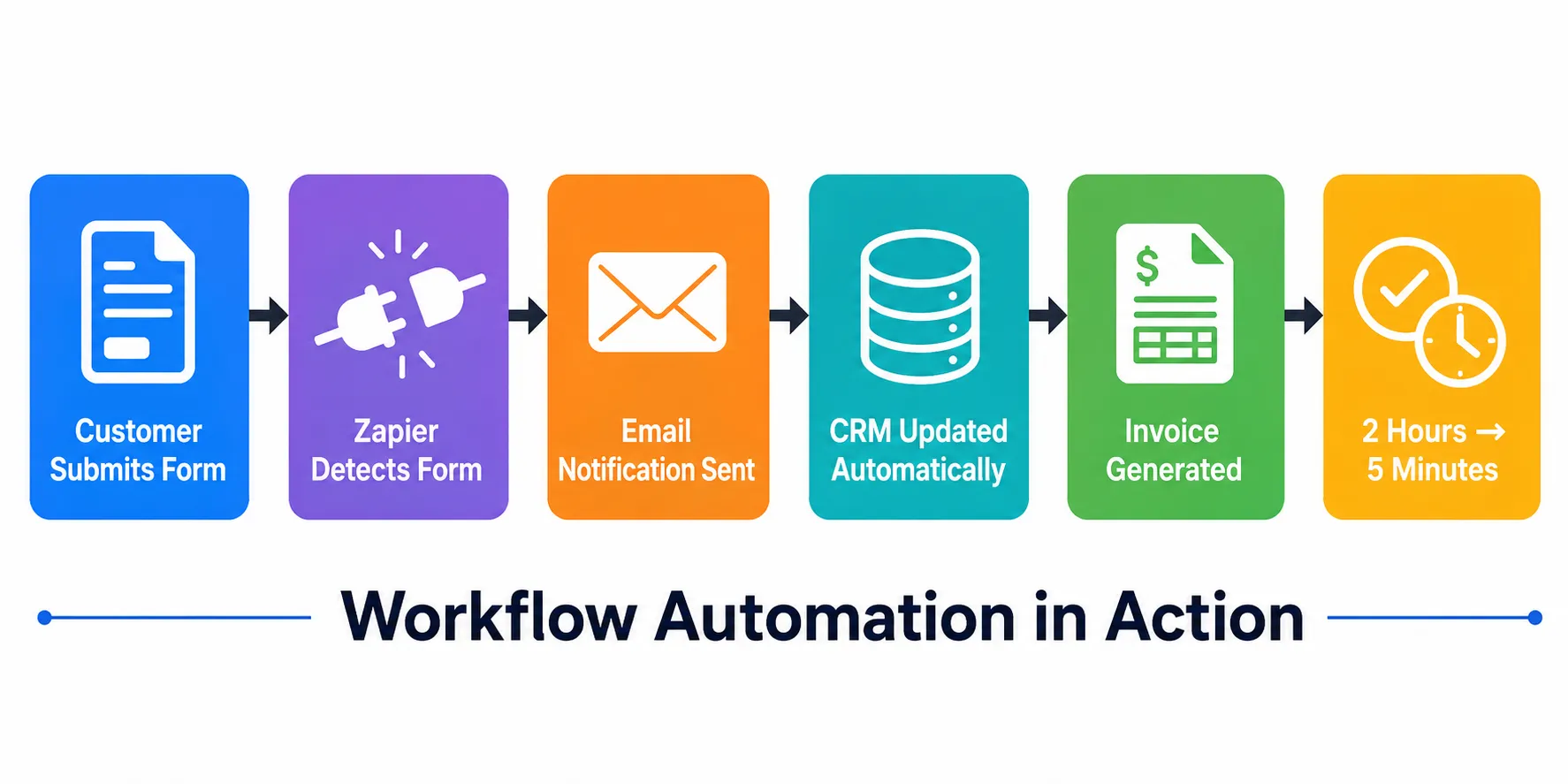
Robotic process automation and workflow automation represent the fastest-growing client need I see across industries. Small businesses (drovenio ai tools for business) want to automate repetitive tasks but don’t know where to start or which tools to choose.
AI automation tools range from simple email sequences to complex customer service workflows. The businesses hiring freelancers typically need help identifying which processes to automate first and how to implement automation without breaking their existing systems.
This creates consulting opportunities for freelancers who understand the automation landscape. You don’t need to build the automation systems yourself. You need to know enough to recommend the right approaches and help clients think through implementation strategy.
The workflow automation category includes tools like Zapier, Make, and specialized industry platforms. Understanding how these tools connect different software systems gives you language to speak intelligently about business efficiency with clients.
eliminating manual data entry and human error a service clients will pay premium
rates for
AI Career Development & Skill Building
The AI career roadmap section of Droven.io focuses on skill development paths for professionals transitioning into AI-enhanced roles. This matters for freelancers because your career development directly impacts your earning potential.
AI coding assistants 2026 tools like GitHub Copilot and Cursor are changing how development work gets done. Even if you’re not a programmer, understanding how these tools work helps you collaborate better with technical teams and speak knowledgeably about project timelines and capabilities.
The career development category also covers emerging AI roles that create opportunities for freelancers. AI training specialists, automation consultants, and AI content strategists are all roles that didn’t exist five years ago but now command premium rates.
What I find valuable about this category is the focus on practical skill building rather than academic theory. The content helps you understand which AI skills have the highest market demand and the clearest path to monetization.
Cybersecurity & AI-Powered Protection
Most freelancers skip cybersecurity content, but that’s a mistake. AI-powered security tools are becoming standard for businesses, and clients need help understanding both the benefits and the risks.
This category covers how AI enhances threat detection, automated security monitoring, and data protection protocols. For freelancers, understanding these concepts helps you communicate intelligently about project security requirements and data handling procedures.
Clients are increasingly asking freelancers about data security practices, especially for projects involving sensitive information. Knowledge of AI cybersecurity tools helps you provide confident answers and position yourself as a security-conscious professional.
Cloud Computing & AI Infrastructure
Cloud platforms now integrate AI capabilities directly into their core services. Understanding how AWS, Google Cloud, and Microsoft Azure incorporate AI tools helps you speak knowledgeably about project infrastructure and scalability.
This category matters for freelancers because clients often need guidance on which cloud-based AI services match their business needs and budget constraints. You don’t need to become a cloud architect, but understanding the basics helps you participate in strategic conversations.
The cloud computing category also covers how AI tools integrate with existing business systems. This knowledge helps you identify potential implementation challenges early in client projects and suggest realistic timelines for AI integration work.
Each category builds on the others. And mastering just two or three gives you enough knowledge to position yourself as the freelancer who understands where business is heading.
Free Access Guide for Budget-Conscious Freelancers
The first question every freelancer asks about Droven.io AI tools free access is whether they’ll get hit with surprise subscription fees. I get it because I’ve been burned by platforms that advertise free content and then gate everything useful behind paywalls.
Here’s the honest answer about Droven.io costs. Most educational content is free. The platform isn’t a paid service. The platform operates primarily as a free knowledge resource rather than a paid software service.
But I need to be upfront about something important. The platform doesn’t publish clear pricing information or detailed premium tier breakdowns. This lack of transparency makes it difficult to predict if certain advanced features require payment in the future.
What I can tell you is that Droven.io AI tools free access works differently than most people expect. You’re not getting access to AI software tools themselves. You’re getting educational content about AI tools that exist elsewhere.
This distinction matters for budget planning. The education is mostly free, but implementing what you learn often requires separate subscriptions to the actual AI tools discussed in the content.
And that’s actually where the real value lies for freelancers.
What’s Actually Free on Droven.io
The core educational articles, trend analysis, and career roadmap content don’t require payment based on current access patterns. You can read about AI tool categories, implementation strategies, and business applications without hitting subscription walls.
The AI career guidance sections that cover skill development paths and industry insights appear fully accessible. This includes the content about transitioning into AI-enhanced freelance roles and positioning yourself for higher-paying projects.
But here’s what you won’t get for free. Direct access to premium AI tools themselves. Droven.io doesn’t provide ChatGPT alternatives or AI software subscriptions as part of their free content offering.
The platform teaches you about these tools rather than providing them directly. You’ll learn which AI tools work best for different freelance applications, but you’ll need separate accounts and subscriptions for the actual software.
Free AI Tools to Use Alongside Your Learning
Smart freelancers combine Droven.io education with free AI tools that don’t require monthly subscriptions. This approach gives you practical experience while you’re learning about more advanced paid options.
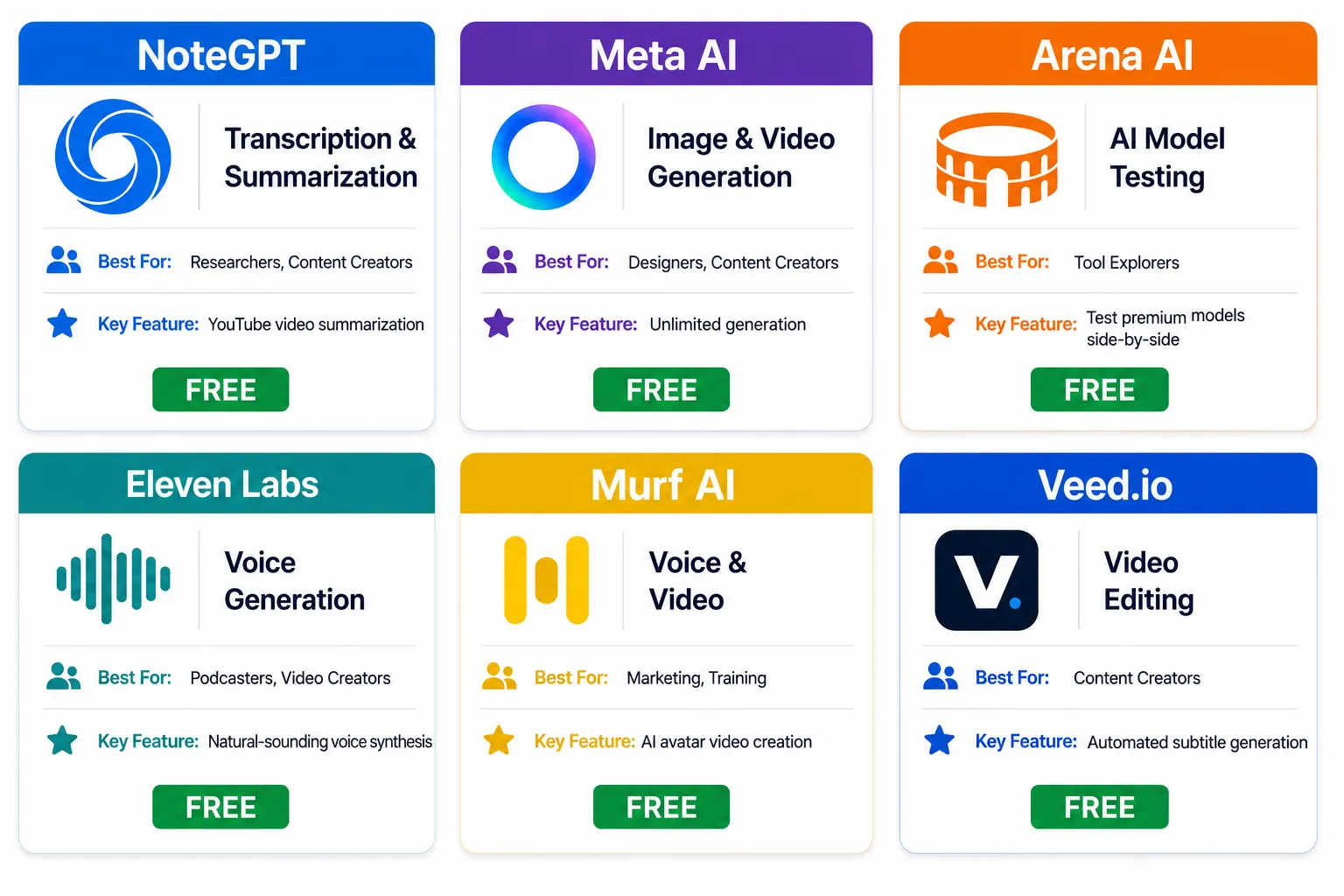
designers should start with Meta AI, while video creators should test Murf AI
NoteGPT offers free transcription and summarization tools that work well for research-heavy freelance projects. The free tier includes YouTube video summarization and basic AI humanization features that help with content creation workflows.
Meta AI provides unlimited image and video generation capabilities without subscription costs. For freelance designers and content creators, this represents significant value compared to paid alternatives like specialized video creation platforms.
Arena AI lets you test premium AI models side by side before committing to paid subscriptions. This saves money on AI tools comparison 2026 testing and helps you choose the right paid tools when budget allows.
The free tier of tools like Eleven Labs, Murf AI, and Veed.io gives you practical experience with voice generation, video editing, and content creation workflows. These tools complement what you learn from Droven.io content about AI implementation strategies.
But remember the testing before paying principle. Use free tools to build your skills and prove value to clients before investing in premium subscriptions. Once you’re earning from AI-enhanced services, the paid tool upgrades usually pay for themselves quickly.
Free access works best when you view it as education plus experimentation rather than expecting complete professional toolkits without cost.
How to Monetize Your AI Knowledge as a Freelancer
Learning AI concepts means nothing if you can’t turn that knowledge into client work that pays.
This is where most freelancers get stuck. They spend time studying AI trends and tools but never connect that education to actual billable services. They treat AI learning like personal development rather than business strategy.
The real opportunity sits in the gap between what clients need and what they understand. Businesses know AI is important. They don’t know how to implement it effectively or which tools fit their specific problems.
That’s where you come in.
The businesses implementing drovenio ai tools for business right now need guidance on strategy, tool selection, and workflow optimization. They need someone who understands both their business challenges and how AI solutions address those challenges.
This creates three immediate monetization paths for freelancers willing to learn.

combine multiple approaches
AI-Assisted Services You Can Offer Today
Content creators can offer AI-enhanced research and writing services. Instead of spending three hours researching a topic, you use AI research tools to gather information in thirty minutes. Then you spend your time on strategy, voice, and quality control. The result is faster delivery and higher profit margins on the same project.
Marketers can position themselves as AI strategy consultants for small business clients. Clients need help understanding which AI tools for business productivity actually work for their specific goals. You learn the tools, test them against client objectives, and recommend implementations that deliver results.
Project managers and consultants can offer workflow automation analysis services. Analyze a client’s current processes, identify automation opportunities, and recommend best AI tools for business productivity improvements. The service fee covers your time understanding their business plus implementation guidance.
Designers can use AI tools for rapid prototyping and iteration. Generate multiple design directions in hours instead of days. Present more options to clients. Charge the same rate but deliver more value, making your service irresistible compared to competitors still using traditional workflows.
The pattern is consistent across all these services. AI handles the repetitive heavy lifting. You provide the expertise, judgment, and business understanding that justifies premium pricing.
Positioning Yourself as an AI-Savvy Professional
How you describe your services determines what clients will pay. Say you’re a writer and you compete on commodity rates. Say you’re an AI-enhanced content strategist and rates jump immediately.
The positioning shift requires speaking intelligently about the specific AI tools and processes you use. When a client asks how you deliver faster, you explain your workflow. You mention the research tools you use to accelerate information gathering. You describe your quality review process that ensures AI-assisted content maintains brand voice.
This transparency builds trust. Clients understand they’re not paying for lazy automation. They’re paying for expertise in using AI tools effectively while maintaining human judgment and creativity. Professional service delivery from project execution to clear invoicing software and payment tracking reinforces this trust and makes the client relationship smoother.
I’ve watched freelancers who learned about workflow automation from platforms like Droven.io successfully position themselves as automation consultants to small businesses. The knowledge came from education. The positioning came from confident communication about how they apply that knowledge.
The best AI tools for freelancers are the ones you understand deeply enough to explain to clients. You don’t need to master every tool. You need to master a few tools in your specific niche and speak about them with authority.
Pricing Premium for AI-Enhanced Work
This is where the real money appears. Once you’re using AI tools for business productivity effectively, your project economics change. You can deliver more work in less time while maintaining or improving quality.
But here’s the mistake most freelancers make. They capture the efficiency and pocket the time savings without raising rates. They’re still charging based on old time investments.
The better approach requires reframing the value. You’re not charging for your time anymore. You’re charging for outcomes and expertise.
A freelancer who manually researches and writes an article might charge per word or per project. An AI-enhanced content strategist charges a project fee that reflects the strategic thinking, quality control and delivery speed they bring. The actual hours invested matter less than the results delivered. If you’re transitioning from hourly work to project-based rates, use an hourly rate calculator as your baseline to ensure your project fees stay competitive.
This shift from time-based to value-based pricing is what actually makes AI knowledge profitable. And it only works if clients understand they’re getting superior results, not just faster commodity delivery.
The businesses willing to pay premium rates for AI-enhanced services are the ones who understand AI’s value. These are the ideal clients. They respect the knowledge you bring. They see AI implementation as strategic advantage rather than cost-cutting.
The Freelancer’s AI Career Roadmap: From Learning to Earning
You don’t need four years and a computer science degree to build an AI career as a freelancer.
Most people assume AI expertise requires academic credentials and years of study. That assumption is dead wrong. The Droven.io AI career roadmap shows you can go from complete beginner to earning money with AI skills in roughly six to twelve months.
The key difference between this path and traditional education is focus. You’re not learning AI theory for its own sake. You’re learning specific, practical skills that clients will actually pay for right now.
I’ve watched freelancers follow structured roadmaps and land significantly better paying projects within months of starting. The ones who succeeded didn’t chase every trending framework or tool. They built foundational skills first, then specialized based on market demand.
This matters because the AI landscape shifted dramatically in 2024 and 2026. The industry moved away from traditional machine learning focus toward what experts call agentic AI systems. These are AI applications that can plan and execute complex tasks across multiple platforms.
Understanding this shift changes everything about how you approach the AI career roadmap. You’re learning skills that match current market needs, not outdated ML theory that nobody’s hiring for anymore.

earning premium rates for AI-enhanced freelance services
Phase 1: Foundation Building (Months 1-3)
The first ninety days are about understanding what AI actually does and doesn’t do. Not theory. Practical understanding. If you’re brand new to freelancing, ensure you have foundational freelance skills in place first this roadmap assumes you already know how to find clients and manage projects. If you’re building those basics, start there before diving into AI specialization.
Start by learning how current AI tools work. Spend time with ChatGPT, Claude, and other mainstream platforms. Understand their strengths and limitations through hands-on use. This seems obvious but most people skip this step and jump straight to learning without experiencing.
Then move into your specific niche. If you’re a writer, learn how AI writing tools actually impact content creation workflows. If you’re a marketer, learn how AI handles content strategy and campaign optimization. If you’re a developer, learn how AI coding assistants work with your actual development environment.
Spend this phase consuming educational content from platforms that break down AI concepts in plain language. This is where resources like Droven.io become valuable. You’re building vocabulary and understanding without getting lost in academic complexity.
The goal of Phase 1 is clarity. You understand what AI can do for your clients. You know which tools exist. You recognize where AI adds real value versus where it creates problems.
Phase 2: Skill Specialization (Months 4-6)
Now you go deeper into your chosen area. This is where most people make their first big mistake. They try to become experts in everything instead of mastering one or two specific applications.
Choose one skill area that matches both market demand and your existing strengths. If you’re a writer, focus on AI-assisted content strategy for a specific industry. If you’re a marketer, specialize in AI automation for a particular business model.
Build real projects during this phase. Don’t just watch tutorials. Create actual deliverables you could show to potential clients. Write sample content pieces. Build workflow automations. Create marketing campaigns. Make things that prove you know what you’re doing.
This is where you shift from learning about AI to actually using AI professionally. The difference matters. Clients can tell whether you’ve read about something or actually implemented it.
Study what successful freelancers in your niche are doing. Not to copy them, but to understand market expectations and positioning. If AI consultants in your field are charging premium rates, learn why. What problems do they solve? How do they describe their services?
Phase 3: Client Acquisition (Months 7-12)
You have foundational knowledge and demonstrated skills. Now you need clients who value what you’ve learned.
Start positioning yourself differently in your freelance profiles and proposals. Mention the specific AI skills you’ve developed. Describe projects using AI-enhanced approaches. Be confident about what you know and honest about what you’re still learning.
Early clients during this phase might be lower paying as you build case studies and testimonials. That’s expected. You’re trading slightly lower rates for proof of results that you can show to better-paying clients later.
Create case studies from your early AI projects. Show before and after metrics. Explain what AI tools you used and why. Demonstrate the business impact. These become your portfolio pieces that attract better clients at higher rates.
By month nine or ten, you should be fielding inquiries from clients specifically requesting AI-related work. That’s when you know the positioning is working.
By month twelve, you’re earning at a new rate level because you bring AI expertise to your freelance services. You’re no longer just a writer or marketer or developer. You’re a writer or marketer or developer who understands AI implementation and drives results with it.
The timeline isn’t guaranteed for everyone. Some freelancers accelerate through it faster. Others take longer depending on their starting point and how much time they dedicate to learning.
But the structure itself works because it matches how real skill development happens in the market.
Common Mistakes That Kill Freelancer AI Success
I watch the same mistakes repeat. Freelancers spend three months learning, get excited, then sabotage themselves in month four when the reality hits.
These aren’t minor slip-ups. They’re decisions that waste months and cost real money.
The biggest mistake starts before you even begin. You expect AI implementation to solve problems that actually require business strategy. Tools don’t fix broken processes. They just make broken processes faster.
If your workflow is chaotic right now, adding AI automation won’t create order. It creates automated chaos. You need to understand what you’re automating before you automate it.
This is the root cause behind most AI implementation failures I’ve observed. Freelancers see powerful tools and imagine instant productivity gains. Reality is messier.
The Tutorial Trap
You watch endless videos about AI tools but never build anything real. You consume content about workflow automation without actually automating a single workflow in your business.
This creates false confidence. You think you understand AI because you’ve watched experts use it. Watching someone code with AI assistance doesn’t make you capable of coding with AI assistance.
Real learning requires doing. Build actual projects. Make mistakes. Fix them. That’s when understanding actually sticks.
I’ve watched freelancers spend three months watching tutorials and zero months applying what they learned. Then they wonder why they’re not seeing results or landing better clients.
The Tool Chasing Problem
You jump between free and paid AI tools constantly looking for the perfect one. You spend more time testing tools than using tools to serve clients.
Free tools have real limitations. Understanding those limitations matters. But chasing every new tool release is expensive in terms of time and mental energy.
Pick two or three tools. Master them. Get results with them. Only switch if you have a specific reason beyond simple curiosity.
Over-Automating Without Understanding
This one destroys workflows faster than anything else. You see that workflow automation exists and automate every task you can reach.
But not every task should be automated. Some tasks require human judgment. Some require you to understand what’s actually happening in your client’s business.
The human-on-the-loop approach works. You use AI to handle the repetitive parts. You handle the parts requiring expertise and judgment. This creates better results than full automation of everything.
Expecting Instant Income
You learn about AI, suddenly expect clients to appear and pay premium rates, and feel disappointed when that doesn’t happen immediately.
Building income from AI knowledge takes the same time as building income from any other skill. You need to demonstrate results. You need case studies. You need positioning that clearly connects your AI skills to client outcomes.
I’ve seen freelancers abandon AI education after two months because they weren’t making significantly more money yet. They wanted the payoff without the positioning and client communication work that makes the payoff possible.
The real problem with these mistakes is they’re preventable. You avoid them by understanding that AI is a tool for execution, not a replacement for business strategy or positioning.
Honest Review: Is Drovenio Worth Your Time as a Freelancer?
This platform works brilliantly for one specific type of freelancer and wastes time for everyone else. Here’s who wins and who loses.
I want to be straight about both sides because you deserve honest guidance, not a sales pitch disguised as a review.
The platform works best when you treat it as an educational resource, not as a tool that will directly execute work for you. That distinction matters because most misconceptions start when freelancers expect the wrong thing.
Best For: Freelancers Who Should Use Droven.io
If you’re building AI skills to position yourself as more valuable to clients, this platform has real merit. The structured content about AI trends, automation frameworks, and career development paths gives you exactly what most freelance education sources don’t. A roadmap that connects learning directly to income opportunities.
Freelancers transitioning from traditional services into AI-enhanced offerings benefit significantly. You learn which AI tools actually solve client problems instead of just being trendy. You understand implementation challenges before you promise solutions to clients.
Content creators and marketers find genuine value in the automation and workflow optimization content. You can speak intelligently about how AI improves efficiency without overselling capabilities or making false promises.
Business consultants and project managers who advise clients on AI adoption get access to educational content that saves hours of independent research. The platform organizes industry trends and emerging technologies in ways that directly inform consulting advice.
Freelancers without technical backgrounds but who want to understand AI deeply should use this. The content deliberately avoids complex jargon. You won’t feel lost if you’re coming from marketing, writing, design, or non-technical business backgrounds.
The platform also works well for freelancers who are early in their AI journey and need structure. You get a clear path forward instead of wandering through random YouTube videos and articles trying to figure out where to start.
Skip If: When Droven.io Isn’t Right for You
Don’t expect this platform to provide executable AI software with dashboards and APIs. You’re not getting ChatGPT alternatives or automation tools. You’re getting education about those tools.
If you need hands-on tool training for specific software, look elsewhere. Droven.io teaches concepts and strategies, not step-by-step software walkthroughs.
Enterprise-level AI implementation guidance isn’t the focus here. The content targets small businesses, freelancers, and mid-market companies. If you’re building AI infrastructure for large organizations, you need different resources.
Developers seeking deep technical documentation or advanced coding resources should look at specialized platforms instead. The technical depth exists for concepts, but not for implementation details.
If you’re already an AI expert building your own models or tools, this platform teaches you nothing new. The content is educational for people learning about AI, not for AI specialists.
The honest assessment is straightforward. Droven.io delivers tremendous value if you match the platform’s actual purpose. It’s education about AI for professionals who want to understand and implement AI strategically in their work.
It delivers nothing if you expect software tools or deep technical training.
The ROI question comes down to whether you’re the person who actually needs what the platform provides. If you are, the time investment pays back quickly in better client positioning and higher rates. If you’re not, it’s wasted time.
Getting Started: Your First 30 Days with Drovenio
Most people jump into learning AI without any real plan. They browse random articles, watch unrelated videos, and jump between topics constantly. Then they wonder why nothing sticks.
The first thirty days matter because they set your trajectory. A structured start determines whether you build real skills or just consume content without application.
Here’s how to actually use your first month productively.
Week 1: Platform Exploration and Goal Setting
Spend the first week understanding what Droven.io actually offers and getting clear on your specific goal.
Start by exploring the platform’s main category areas without diving too deep into any single topic. Read the summaries and overviews to understand the five core content areas. This takes maybe three to four hours total.
Then define your goal explicitly. Not a vague goal like “learn AI.” Something specific like “understand AI automation tools well enough to offer workflow optimization services to my marketing clients” or “learn enough about AI tools to position myself as an AI-enhanced content strategist.”
Your goal shapes everything that comes next. Different goals require different learning paths.
Write down your goal. Actually write it down. Research shows commitment to written goals increases follow-through significantly.
By the end of week one you should understand the platform structure and have crystal clear clarity about what you want from learning.
Week 2-3: Focused Learning in Your Niche
Now you narrow your focus dramatically. Pick the one content area on Droven.io that directly connects to your goal.
If your goal is workflow optimization, you focus on automation content. If your goal is AI-enhanced writing, you focus on AI tools for content creation. If your goal is business strategy consultation, you focus on digital transformation and business application content.
Read and take notes during these two weeks. Not passive reading. Active note-taking where you identify specific insights you could apply to your freelance work.
Look for answers to these three questions as you read:
What problems does this solve for clients?
Which free or low-cost tools deliver these solutions?
How would I explain this to a non-technical client?
The goal isn’t to become an expert. The goal is building enough understanding that you can speak intelligently about the topic and identify where AI adds real value.
Week 4: First Implementation and Testing
You’ve learned the concepts. Now you implement something small in your actual work.
Test one AI use case implementation that directly connects to your goal. If you learned about content automation, test it with one piece of content. If you learned about workflow automation, test it with one client process.
Make it small. You’re not trying to transform your entire business in week four. You’re proving to yourself that what you learned actually works in practice.
Document what happens. What worked? What didn’t? What would you do differently next time?
This real-world testing is where knowledge becomes experience. And experience is what clients actually pay for.
By the end of thirty days you’re no longer a beginner reading about AI. You’re someone with hands-on experience implementing AI concepts in your actual freelance work.
That shift from theory to practice is massive. It’s the difference between talking about AI knowledge and actually having it.
Most people skip this structured approach. Then they wonder why they’re still struggling after months of random studying. Structure isn’t optional.
The Future of AI-Powered Freelancing
The freelance market isn’t becoming more AI-focused. It’s becoming AI-dependent.
Clients who weren’t thinking about artificial intelligence twelve months ago are now making business decisions around it. They’re asking freelancers what they know about AI implementation. They’re hiring based on who understands this landscape and who doesn’t.
This shift creates two distinct freelancer futures. One path leads to higher rates, better clients, and stronger positioning. The other leads to competing on commodity services against both traditional competitors and AI-powered alternatives.
The difference between these futures is starting now. Not later. Not next year.
Freelancers building AI literacy in 2026 position themselves as the people who understand how technology shapes work. You’re not trying to compete with AI. You’re showing clients how to leverage AI strategically while bringing human expertise to the work that actually requires judgment.
This is the director mindset versus the doer mindset. You stop thinking of yourself as someone executing tasks and start thinking of yourself as someone orchestrating better outcomes using every tool available.
The 2026 AI landscape demands continuous adaptation. The tools change. The applications evolve. The skills that matter shift. But the fundamental principle stays constant. Freelancers who understand this technology keep pace with market changes instead of getting left behind by them.
Drovenio AI tools 2026 gives you the foundation for this future positioning. The platform teaches you enough to speak intelligently about the emerging technologies shaping your client’s decisions.
But the platform is just the starting point. Real advantage comes from applying what you learn. Testing ideas in your own work. Building case studies. Developing opinions based on experience instead of just information.
The next six months determine whether you understand platforms like drovenio ai tools 2026 well enough to guide clients through this transition. Freelancers who invest time in AI education now will command premium rates by 2026. Freelancers who wait will spend those years trying to catch up.
Your choice isn’t between learning AI or ignoring it. The choice is between learning strategically on your timeline or scrambling to learn reactively when clients start demanding it.
Start with Droven.io. Spend thirty days building foundation knowledge. Test one AI concept in your work. Build from there.
Your future earning potential depends on decisions you make right now.
Frequently Asked Questions
What exactly is Drovenio AI Tools 2026 and how is it different from ChatGPT?
Droven.io is an educational knowledge platform. ChatGPT is a conversational AI tool you interact with directly to generate responses.
Think of it this way. ChatGPT answers your questions and generates content. Droven.io teaches you about AI tools, trends, and how to implement them in your business. One is software you use. The other is education about software and technology you should understand.
ChatGPT is built for task execution. You ask it something and get an answer. Droven.io is built for learning. You read articles and guides about what AI actually does and how to use it strategically. Many people search for “Drovenio AI tools 2026” expecting a software tool like ChatGPT and get confused when they realize it’s educational content instead.
Is Drovenio completely free for freelancers on a budget?
Most of the core educational content is free. The platform does not publish clear pricing information for premium tiers, so there’s honest uncertainty about what might cost money in the future.
What I can confirm is that right now you can access the main articles, career roadmaps, and trend analysis without payment. The AI tools themselves that Droven.io writes about require separate subscriptions, but many have free tiers available.
Budget-conscious freelancers benefit from Droven.io because it’s mostly free, but remember that implementing what you learn often requires your own tool subscriptions. The education itself costs nothing. The execution might.
How long does it take to see results from learning AI through Drovenio?
Realistic timeline is six to twelve months from start to meaningful income impact.
The first three months focus on foundation building and understanding core concepts. Months four through six involve skill specialization and building your first projects. Months seven through twelve are client acquisition and positioning yourself differently in the market.
Most freelancers see the biggest change between months nine and twelve when they’ve built enough case studies and experience to position themselves with confidence. Some see results faster. Some take longer. But six to twelve months is the honest range for going from zero AI knowledge to earning more from AI-enhanced services.
Can non-technical freelancers really benefit from AI education?
Yes. Droven.io specifically writes for non-technical audiences using plain language and business-focused examples.
You don’t need a programming background or computer science degree to understand what AI tools do and how they apply to your freelance work. Writers understand content applications. Marketers understand automation applications. Project managers understand workflow applications.
The platform was intentionally built for people without technical backgrounds. That’s its whole positioning. If you’re worried you’re too non-technical for this, that’s actually where Droven.io shines most.
What’s the fastest way to start making money from AI knowledge as a freelancer?
Focus on offering AI-enhanced versions of your existing services rather than trying to build or sell AI tools yourself.
Writers can offer AI-assisted content strategy. Marketers can offer automation consultation. Designers can offer rapid prototyping using AI. Project managers can offer workflow optimization. You’re not selling AI. You’re selling better work faster using AI knowledge.
The fastest path is taking what you already do well and adding AI optimization to it. This allows you to charge premium rates immediately because you’re delivering better results, not starting from zero with a new skill nobody knows you have yet.
Which free AI tools should I learn alongside Drovenio?
NoteGPT works well for researchers and content creators. It transcribes YouTube videos, summarizes content, and provides text-to-speech features without paid subscriptions for basic use.
Meta AI generates unlimited images and videos for free, which helps if you’re a designer or content creator learning about visual AI applications.
Arena AI lets you test premium models like Claude and other advanced AI systems side by side without paying subscription fees first.
The free tiers of Eleven Labs (voice generation), Murf AI (voice and video), and Veed.io (video editing) also provide hands-on experience without cost. Using these tools while learning from Droven.io gives you practical experience implementing what you’re reading about.