

An SEO freelancer is an independent contractor who provides search engine optimization services, including keyword research, on-page optimization, link building, and technical audits, on a project or retainer basis without the overhead of an agency. Businesses typically hire SEO freelancers when they need targeted expertise at a lower cost than a full-service agency, with average rates in the United States ranging from $50 to $150 per hour, depending on experience and specialization.
I’ve been navigating the freelance economy for years, and I can tell you this: hiring an SEO freelancer is one of the most confusing decisions a business owner will ever make. You’re essentially paying someone to manipulate invisible algorithms that change constantly, and you have no idea if they’re actually doing anything until months later. The stakes are high. Hire the wrong person, and you waste money. Hire the right one and your organic traffic doubles in six months.
Most business owners approach this backward. They search for “cheap SEO expert” on Upwork, hire the first person who promises page-one rankings, and then wonder why their site got penalized three months later. I’ve watched this happen dozens of times, and it’s almost always because they skipped the vetting process entirely.
The SEO freelancer market in 2026 is flooded with people who took a weekend course and now call themselves experts. Real expertise takes years to build. I learned this the hard way when I hired my first SEO freelancer back in 2019 for a side project. He charged $30 per hour, promised the moon, and delivered exactly nothing except a bunch of spammy backlinks that tanked my domain authority.
What you need is a framework, a system for evaluating who’s real and who’s running a scam.
What Is an SEO Freelancer? (And What They Actually Do)
An SEO freelancer is a self-employed professional who optimizes websites to rank higher in search engine results pages, working independently rather than as part of an agency team.
The term gets thrown around so casually that most people don’t actually understand what it means. An SEO freelancer is not a web designer. They’re not a social media manager. They don’t write blog posts unless content creation is explicitly part of the scope of work you agreed on.
What they do is technical. They analyze your site’s structure, identify why Google isn’t ranking your pages, fix the problems, and build authority signals so search engines trust your domain more than your competitors. This involves tools like Google Search Console, Ahrefs, and Semrush, all of which cost hundreds of dollars per month in subscription fees alone.
Core Services an SEO Freelancer Provides
Most SEO freelancers specialize in one or more of these core areas, and you need to know which one you’re hiring for before you sign anything.
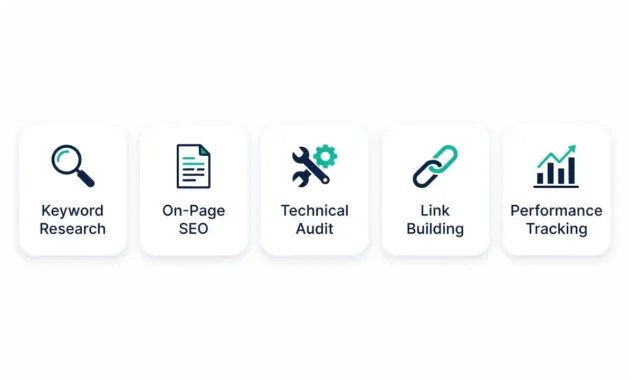
Keyword research is the foundation. A freelancer will identify which search terms your potential customers are actually typing into Google, then map those keywords to pages on your site. This isn’t guessing. It’s data analysis using tools that show exact monthly search volume and competition levels.
Page optimization means rewriting your title tags, meta descriptions, header structures, and internal links to match what Google’s algorithm expects. I’ve seen pages jump from position 47 to position 8 just from fixing a poorly written H1 tag and adding schema markup.
Technical SEO audits involve crawling your entire website to identify broken links, duplicate content, slow-loading pages, and mobile usability issues. If your site has 10,000 pages and half of them aren’t indexed due to a robots.txt misconfiguration, this is what catches them.
Link building is the most misunderstood service. A legitimate freelancer builds backlinks by earning them through outreach, guest posting on authoritative sites, and creating content that naturally attracts links. A scammer buys bulk links from private blog networks that will get your site penalized within 90 days.
Performance tracking and reporting means the freelancer sends you monthly updates showing changes in keyword rankings, organic traffic growth, and which pages are driving conversions. If a freelancer doesn’t offer this, walk away immediately.
What an SEO Freelancer Does NOT Do (Setting Real Expectations)
This is where most client relationships fall apart. You hire someone for SEO and then expect them to redesign your entire website, manage your Google Ads campaigns, and run your email marketing. That’s not SEO. That’s digital marketing, and it’s a completely different skill set.
An SEO freelancer cannot guarantee first-page rankings. Anyone who does is lying. Google’s algorithm considers over 200 ranking factors, and no single person controls enough of them to make guarantees.
They will not deliver results in 30 days. SEO takes 6 to 12 months. If someone promises you’ll rank number one for “SEO freelancer” in a month, they’re either using black hat tactics that will destroy your site long term, or they’re planning to take your money and disappear.
They cannot fix a fundamentally broken business model. If your product is terrible and your website reflects that, no amount of SEO will save you. I once worked with a client who sold overpriced dropshipping products, with one-star reviews plastered across the internet. No SEO freelancer on earth could have helped that business rank because Google prioritizes user experience signals, and users hated the site.
SEO Freelancer vs. SEO Agency: Which One Should You Hire?
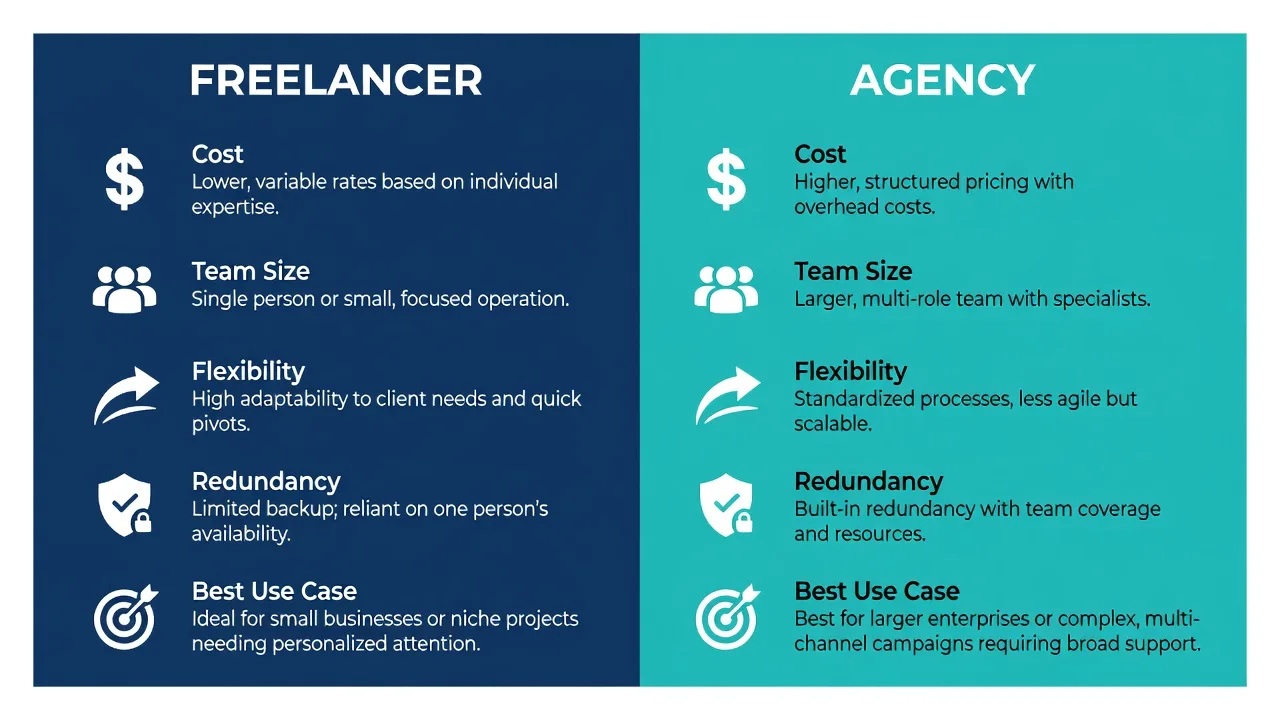
An SEO freelancer works independently and typically costs 40 to 60 percent less than an agency. In contrast,e an SEO agency provides team resources, redundancy, and broader service offerings but at a significantly higher monthly retainer.
The decision comes down to three factors: budget, complexity, and risk tolerance.
If your monthly SEO budget is under $2,000, you’re hiring a freelancer. Agencies won’t even take your call at that price point. Freelancers operate with lower overhead, no account managers to pay, and no fancy office rent eating into margins. You get direct access to the person doing the work, which means faster communication and fewer misunderstandings.
If your site has 50,000 pages, operates in 12 countries, and requires enterprise-level technical SEO, you need an agency. A single freelancer cannot scale to that level of complexity without dropping the ball somewhere along the way.
Risk tolerance matters because if your freelancer gets sick, goes on vacation, or takes on too many clients, your project stalls. Agencies have team redundancy. If one person leaves, someone else picks up the work. Freelancers are a single point of failure, and I’ve seen projects die because the freelancer ghosted after three months.
The quality ceiling is higher with freelancers. The best SEO professionals in the world work independently because they can charge premium rates without splitting revenue with an agency. But the quality floor is also lower because literally anyone can call themselves an SEO freelancer with zero credentials.
I choose freelancers for focused projects that require deep expertise in a single area. I choose agencies when I need consistent execution across multiple channels and can’t afford downtime.
SEO Freelancer Rates and Pricing in 2026
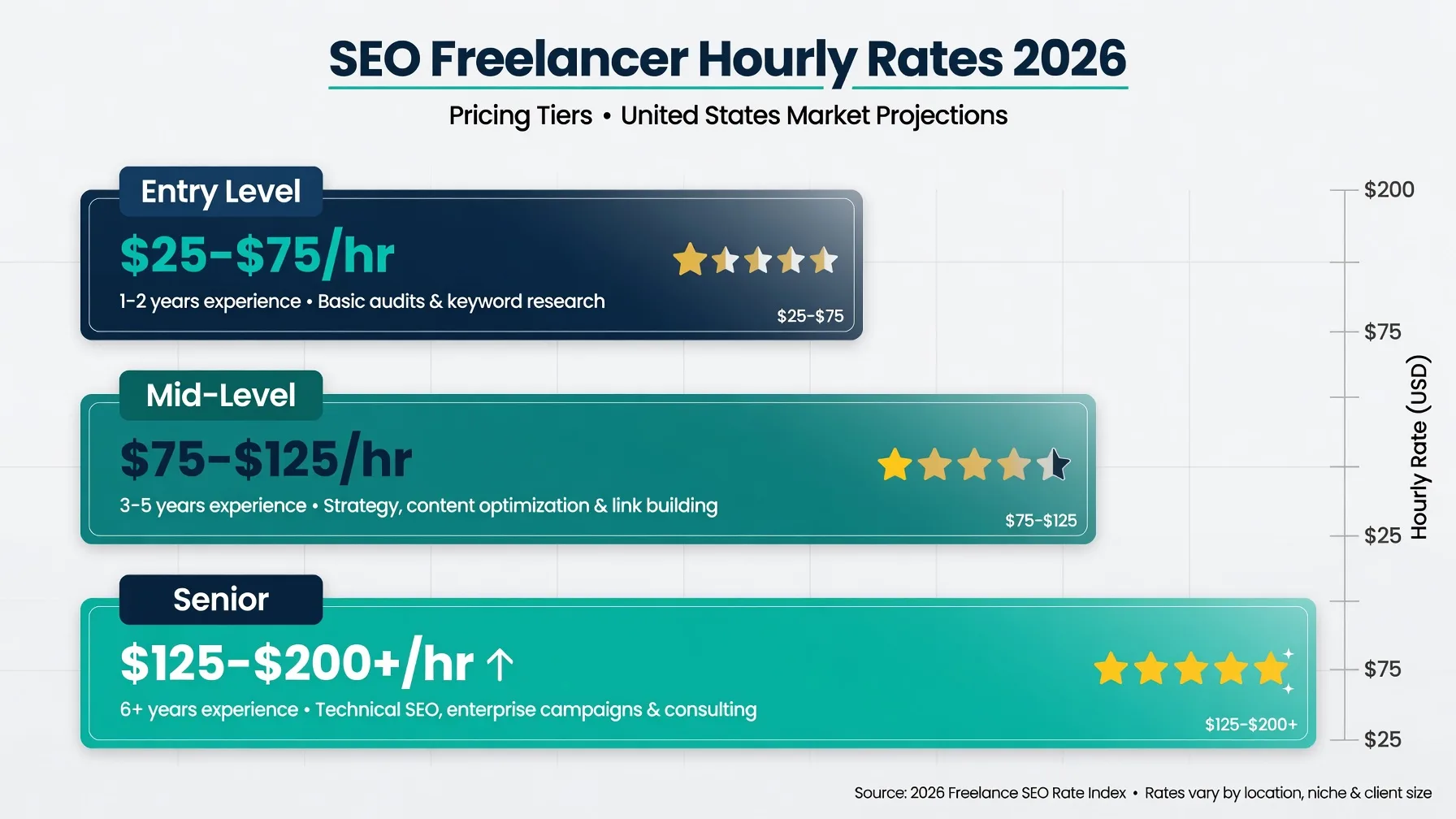
SEO freelancers in the United States charge between $50 and $150 per hour on average, with entry-level freelancers at $25 to $75 per hour, mid-level specialists at $75 to $125 per hour, and senior consultants at $125 to $200 or more per hour.
Pricing is all over the map, and that’s intentional. The SEO industry has no licensing requirements, no standardized certifications that actually matter, and no barrier to entry. This creates massive price variation based on experience, location, and specialization.
I’ve hired freelancers at every price tier, and I can tell you the correlation between cost and quality is real but not linear. A $200-per-hour freelancer is not always four times better than a $50-per-hour freelancer. Sometimes you’re paying for brand reputation, and overhead they’ve built into their rates.
Hourly Rate Benchmarks by Experience Level
Entry-level SEO freelancers charge $25 to $75 per hour. These are people with less than 2 years of hands-on experience, often working on their first few freelance gigs while building a portfolio. They know the basics of keyword research and on-page optimization, but lack the pattern recognition that comes from managing dozens of campaigns.
I hired someone in this range once for a local business client. She did solid work on the technical audit, but completely missed a critical canonicalization issue that was tanking our rankings. It took me three weeks to figure out what went wrong. You get what you pay for.
Mid-level SEO specialists charge $75 to $125 per hour. They have three to seven years of experience, a proven portfolio, and can handle most standard SEO projects without supervision. This is the sweet spot for small- to mid-sized businesses that need consistent results without breaking the bank.
Senior SEO consultants charge $125 to $200 per hour or more. These are specialists with 8+ years of experience, often with expertise in a specific niche such as e-commerce SEO, local SEO for multi-location businesses, or enterprise technical SEO. They’ve managed million-dollar budgets and can diagnose complex algorithmic penalty issues in hours rather than weeks.
If you’re paying over $200 per hour, you’re either hiring someone with a national reputation or you’re getting ripped off. Do your homework.
Project-Based Pricing: What Does a Full SEO Audit Cost?
Most freelancers offer project-based pricing for defined deliverables, and this is often a better deal than hourly if you know exactly what you need.
A comprehensive technical SEO audit for a small business website with 50-200 pages costs between $500 and $2,000. This includes a full site crawl using tools like Screaming Frog, a Core Web Vitals analysis, schema markup review, mobile usability testing, and a prioritized fix list.
Keyword research and content strategy for a new site launch runs $800 to $3,000, depending on the number of target keywords and the depth of competitor analysis. I paid $1,200 for this service last year for a niche blog, and the freelancer delivered a 40-page spreadsheet with search intent mapping and content cluster recommendations that I still use today.
A local SEO setup package, including Google Business Profile optimization, local citation building, and review management, costs $1,000-$3,500. This is a one-time setup that most local businesses desperately need but never invest in.
Monthly link-building campaigns range from $500 to $5,000, depending on how many high-quality backlinks the freelancer can realistically acquire. Anyone charging less than $500 is buying links in bulk, and anyone charging more than $5,000 better be getting their links from sites with a Domain Authority of over 70.
Monthly Retainer Models: When They Make Sense for Your Business
A monthly SEO retainer means you pay a fixed fee every month in exchange for a defined scope of ongoing work. This is the most common pricing model for established businesses that need consistent optimization and reporting.
Retainers for small businesses with a local focus range from $500 to $1,500 per month. This typically covers monthly reporting, minor on-page tweaks, local citation monitoring, and review response management. It’s maintenance-level SEO, not aggressive growth.
Retainers for mid-sized businesses with national reach run $1,500 to $5,000 per month. You’re getting keyword tracking, content optimization, technical fixes, monthly link acquisition, and detailed performance reports. This is where you start seeing measurable ROI if the freelancer knows what they’re doing.
Retainers for e-commerce or enterprise clients go from $5,000 to $15,000 or more per month. At this level,l you’re getting dedicated attention, advanced technical work, competitive intelligence, and often multiple team members if the freelancer has built a small operation.
I run a $ 2,500-per-month retainer with one of my long-term clients. I spend about 20 hours per month on their account, which breaks down to $125 per hour. They get priority response time, monthly strategy calls, and I proactively fix issues before they become problems. It’s a win for both sides: predictable revenue lets me plan my schedule, and they get consistent results without worrying about project scoping each month.
Red Flag Pricing: When an SEO Quote Is Too Low (or Suspiciously High)
If someone quotes you $200 per month for full-service SEO, run. There is no mathematical way to deliver quality SEO work at that price unless they’re outsourcing to offshore teams using automated tools and spammy tactics.
I’ve seen these offers on Fiverr and Upwork. They promise 100 backlinks per month, guaranteed page-one rankings, and full-site optimization for less than the cost of a decent dinner. What you actually get is a bunch of low-quality directory submissions, blog comment spam, and maybe some plagiarized content that Google will penalize you for.
On the flip side, if someone quotes you $10,000 per month for a 20-page local business website, they’re either massively inflating their value or they’re an agency trying to upsell you services you don’t need.
Fair pricing reflects the time investment required to do the work correctly. A solid keyword research project takes 8 to 12 hours. A technical audit takes 10 to 15 hours. Link building outreach takes 5 to 8 hours per quality link acquired. Do the math based on their hourly rate, and it should align with the project quote.
Suppose it doesn’t, ask for a detailed breakdown. Any legitimate freelancer will explain exactly what you’re paying for.
How to Find a Qualified SEO Freelancer
Finding someone who actually knows what they’re doing is harder than it should be. The platforms are flooded with people gaming the system with fake reviews, stolen portfolio work, and SEO buzzwords they don’t understand.
I’ve hired over a dozen SEO freelancers across different platforms over the past six years. Some were incredible. Most were mediocre. A few were outright frauds who took the deposit and ghosted.
The key is knowing where to look and what questions to ask before you hand over any money.
Best Platforms to Hire SEO Freelancers (Upwork, Fiverr, Toptal Compared)
Upwork is the largest freelance marketplace and has the widest selection of SEO professionals. You can filter by hourly rate, location, and past client reviews. The quality range is extreme. I’ve hired 15-per-hour freelancers who couldn’t write a meta description and 120-per-hour specialists who tripled organic traffic in four months.
The vetting process on Upwork is entirely in your hands. The platform does nothing to verify expertise. Anyone can claim they’re an SEO expert, upload a generic portfolio, and start bidding on jobs. Check their work history carefully. If they have 200 five-star reviews but every job was under $100, they’re farming fake feedback.
Fiverr works for sm, one-off tasks like a basic site audit or a keyword research report, but I would never hire someone from Fiverr for ongoing SEO work. The platform prioritizes speed over quality, and most sellers are optimizing for volume rather than results. I paid $50 for a technical audit once and got a generic PDF template with my URL copied and pasted into it. Waste of money.
Toptal positions itself as a premium network of freelancers, backed by a rigorous vetting process. They claim to accept only the top 3 percent of applicants. In my experience, Toptal freelancers are competent but overpriced. I paid $150 per hour for someone who delivered the same quality work I could have gotten on Upwork for $90 per hour.
LinkedIn is underrated for finding SEO freelancers. Search for people with “SEO consultant” or “freelance SEO specialist” in their headline, check their profile for case studies and recommendations, and reach out directly. You skip the platform fees and often get better rates because they’re not paying 20 percent to Upwork.
Referrals from other business owners are the gold standard. If someone you trust hired an SEO freelancer and saw real results, that’s worth more than any online review system.
How to Evaluate a Freelancer’s Portfolio and Case Studies
A legitimate portfolio shows specific results, backed by data. I want to see Google Analytics screenshots, Search Console graphs, and before-and-after keyword ranking reports. If all I see are vague statements like “increased traffic” with no numbers, I assume they’re hiding poor results.
Case studies should include the problem, the strategy, the execution, and the measurable outcome. I once reviewed a portfolio where every case study said “achieved first page rankings” but never specified for which keywords. Ranking first for “best plumber in Smalltown USA population 500” is not impressive. Ranking first for “emergency plumber Los Angeles” is.
Ask for anonymized client data if they can’t share real client names due to NDAs. A professional freelancer will have this ready. They’ll show you redacted Analytics dashboards, keyword-tracking charts, and link-acquisition reports that prove they know what they’re doing.
Check if the portfolio work matches the services they’re offering you. If you’re hiring them for technical SEO but their entire portfolio is content writing and social media management, that’s a mismatch. Specialists outperform generalists in SEO every single time.
I hired someone once whose portfolio looked amazing until I reverse-image-searched one of the screenshots and found it on another freelancer’s website. Stolen portfolio work is more common than you think.
The 7 Question Vetting Interview You Must Conduct Before Hiring
I run every potential SEO freelancer through this exact script before I make a hiring decision. It immediately filters out 80 percent of applicants.
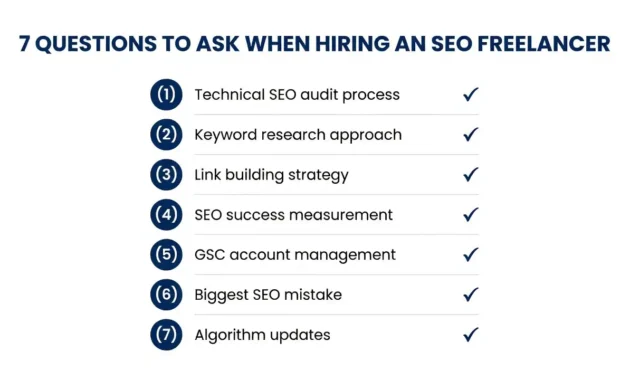
Question 1: Can you walk me through your technical SEO audit process?
A real answer includes tools like Screaming Frog or Sitebulb, mentions checking robots.txt files and XML sitemaps, discusses Core Web Vitals and page speed analysis, and explains how they prioritize fixes. A vague answer means they don’t actually do technical audits.
Question 2: How do you approach keyword research for a new client?
I’m looking for mentions of search intent analysis, competitor gap analysis, evaluation of search volume versus difficulty, and mapping keywords to specific pages. If they say “I use Google Keyword Planner,” they’re not serious.
Question 3: What’s your link-building strategy?
The right answer involves manual outreach, guest posting on relevant sites, creating linkable assets, and earning links through content quality. The wrong answer is “I have access to a private blog network” or “I can get you 500 backlinks for $200.”
Question 4: How do you measure SEO success?
I want to hear organic traffic growth, keyword ranking improvements, conversion rate from organic visitors, and specific KPIs tied to business goals. If they only talk about rankings, they’re missing the bigger picture.
Question 5: Can you show me a Google Search Console account you currently manage?
This separates people who actually work in GSC daily from people who have only read about it. Ask them to explain a recent issue they diagnosed using GSC data.
Question 6: What’s the biggest SEO mistake you’ve made, and how did you fix it?
Everyone makes mistakes. I want to know they can recognize when something went wrong, take accountability, and implement a solution. If they claim they’ve never made a mistake, they’re lying or inexperienced.
Question 7: How do you stay current with Google algorithm updates?
The SEO landscape changes constantly. I’m looking for answers like the following: Search Engine Journal, monitoring Google Search Central blog, participating in SEO communities, and testing strategies on their own sites. If they say “I just keep doing what works,” they’re going to get you penalized when the algorithm changes.
I hired a freelancer last year who nailed every single one of these questions. She’s been managing SEO for three of my projects ever since, and organic traffic has grown by an average of 140% across all three sites. The vetting process works.
How to Verify an SEO Freelancer’s Results Without Being an Expert
You don’t need to be an SEO expert to verify someone’s work. You need to know which data points matter and how to access them.
Request read-only access to a current client’s Google Search Console and Google Analytics accounts. Not screenshots. Actual dashboard access. If they refuse, that’s a red flag. A confident freelancer has nothing to hide.
Look at the Search Performance report in Google Search Console. Check if total clicks and impressions are trending upward over the past six months. Click into individual queries and see if the site is ranking for relevant commercial keywords, not just branded terms.
In Google Analytics, check the Acquisition overview and filter by organic search traffic. Look at session growth, bounce rate, and goal completions from organic visitors. If traffic is growing but the bounce rate is 90 percent, the traffic is low-quality, and the SEO strategy is failing.
Ask the freelancer to explain what they did to achieve the results. If they can clearly connect specific actions like fixing canonical tags or building backlinks from authoritative sites to measurable ranking improvements, that’s credible. If they say, “I optimized the site and traffic went up,” that’s too vague.
Run their own website through a free tool like Ahrefs Site Explorer or Ubersuggest. If they’re claiming to be an SEO expert but their own site has a Domain Rating of 5 and ranks for zero keywords, something is very wrong. I don’t care how good their excuses are. An SEO freelancer who can’t rank their own site is like a personal trainer who’s 100 pounds overweight.
One freelancer I interviewed had a personal blog ranking in the top three for “technical SEO audit checklist” and “ecommerce SEO strategy.” That told me everything I needed to know. I hired him on the spot.
What to Include in Your SEO Freelancer Contract
An SEO freelancer contract must include a detailed scope of work, specific deliverables with deadlines, payment terms, intellectual property ownership clauses, confidentiality provisions, and termination conditions, including kill fees for early contract terminations.
Most SEO projects fail because the contract was vague, the expectations were misaligned, or there was no legal protection when things went wrong. I’ve been on both sides of bad contracts, and I can tell you the cost of a poorly written agreement is always higher than the cost of getting it right up front.
You can find contract templates on GigLawGuide’s freelance contract essentials page, but you need to understand what each clause actually protects before you copy and paste.
Scope of Work Clause: Why It Protects Both You and the Freelancer
The scope of work defines exactly what the freelancer will do and what they will not do. This is the most important section of the entire contract because it prevents scope creep and sets boundaries.
A good scope of work for an SEO project specifies the number of pages to be optimized, the number of targeted keywords, the number of backlinks to be built per month, the reporting frequency, and any tools or platforms the freelancer will use.
I once hired a freelancer without a detailed scope of work. Three months in, I asked him to optimize 20 additional product pages, and he sent me an invoice for extra work. I was furious because I thought it was included. He was frustrated because I kept adding tasks that weren’t in the agreement. We were both right and both wrong. The contract failed us.
Now every contract I sign includes a line that says “Any work requested outside this defined scope will require a separate written agreement and additional compensation.” It’s saved me from at least 5 arguments over the past 2 years.
The scope of work also protects the freelancer from clients who expect unlimited revisions, 24/7 availability, and results that were never promised. I’ve seen clients demand that a freelancer rewrite every meta description on a 500-page site, even though the original agreement covered only a 50-page audit. Without a clear scope, the freelancer has no leverage to push back.
Deliverables, Deadlines, and Reporting Requirements
List every deliverable with a specific deadline. Not “monthly reports.” Instead, “a detailed SEO performance report delivered by the 5th of each month, including keyword ranking changes, organic traffic metrics, backlink acquisition summary, and recommended action items for the following month.”
I learned this lesson when a freelancer promised monthly reports but delivered them whenever he felt like it. Sometimes on the 10th. Sometimes on the 28th. It made planning impossible, and I had no contractual basis to demand consistency, since the agreement said “monthly.”
Specify the format of deliverables. If you want reports in Google Slides, PDF, or a live dashboard, write that into the contract. I prefer live dashboards using Google Data Studio because I can check progress anytime without waiting for a report. Some freelancers hate this because it creates transparency they’re not comfortable with. That’s exactly why I require it.
Deadlines need consequences. If the contract says the technical audit is due on March 15th and the freelancer delivers it on April 3rd with no communication, what happens? Does the payment get reduced? Does the contract terminate? If there’s no penalty for missing deadlines, the deadlines are meaningless.
I use a tiered penalty system. The first missed deadline is a warning. The second missed deadline reduces the payment by 10 percent. The third missed deadline triggers a termination clause. It sounds harsh, but I’ve never had a freelancer miss a third deadline because the system forces accountability.
Kill Fee and Early Termination Clauses for SEO Retainers
A kill fee is partial compensation paid to a freelancer when a client cancels a project before completion. This protects the freelancer from clients who hire them, consume weeks of their time, and then ghost without paying.
For SEO projects, I typically include a kill fee equal to 25 to 50 percent of the remaining contract value if I terminate within the first 90 days. After 90 days, I can terminate with 30 days’ written notice and no penalty beyond paying for work completed.
This structure gives me the flexibility to end a relationship that isn’t working while still fairly compensating the freelancer for the time they invested. I used this clause once when a freelancer’s work quality dropped dramatically after the first month. I gave 30 days’ notice, paid the kill fee, and moved on without a legal battle.
The contract should also specify what happens to work in progress if the contract ends early. If the freelancer is halfway through building 20 backlinks and you terminate, do you get the 10 links already acquired? Does the freelancer keep all research and strategy documents they created? Define this upfront.
I include a clause that says all completed deliverables transfer to me upon payment, and all work in progress transfers to me if I pay a prorated amount based on the percentage of completion. It’s fair, it’s clear, and it prevents disputes.
For more details on kill fees and how they work in freelance contracts, check out GigLawGuide’s complete kill fee guide.
Intellectual Property Ownership of SEO Deliverables
Who owns the keyword research spreadsheet? The technical audit report? The content strategy document? The backlinks that were built? If the contract doesn’t specify, you’ll argue about it later.
I require full ownership of all intellectual property upon final payment. That means every document, every asset, every piece of work created during the engagement becomes my property the moment I pay the final invoice.
Some freelancers push back on this because they want to reuse research or strategy frameworks across multiple clients. I don’t care. If I’m paying for custom work, I own it outright. If a freelancer wants to retain rights to reuse generic templates or methodologies, that needs to be explicitly carved out in the IP clause.
One freelancer tried to take back all the work he’d done when I ended the contract early. He claimed that because I hadn’t paid the full amount, the delivery remained his property. My contract said otherwise. I owned everything upon payment for completed work, and I’d already paid for the months he’d worked. He had no legal standing, but it was a headache I could have avoided with clearer language.
The IP clause should also address what happens if the freelancer uses third-party tools or licensed content during the project. If they pulled stock images or used a proprietary SEO tool that has licensing restrictions, you need to know that upfront.
For more guidance on intellectual property ownership in freelance work, visit GigLawGuide’s IP rights category.
How to Manage an SEO Freelancer and Measure ROI
Hiring the freelancer is the easy part. Managing them effectively and measuring whether you’re actually getting value is where most business owners fail.
I’ve managed SEO freelancers for six years across multiple projects, and I’ve learned that success comes down to clear communication, realistic expectations, and knowing which metrics actually matter.
Key Performance Indicators to Track in Months 1, 3, and 6
SEO is a long game, and the KPIs that matter in month one are completely different from the KPIs that matter in month six.
In month one, I’m not looking at rankings or traffic at all. It’s too early. Instead, I’m tracking the completion of deliverables. Did the freelancer finish the technical audit on time? Did they submit the keyword research report? Did they set up tracking correctly in Google Search Console and Analytics?
I also check if the technical fixes they recommended are actually being implemented. If they identified 47 broken links and, a month later, none of them are fixed, either they’re not doing the work, or I’m not giving them the access they need. Either way, it’s a problem.
By month three, I expect to see early movement in the rankings. I’m not expecting page one rankings yet, but I should see target keywords moving from position 60 to 30, and from 25 to 15. If there’s zero movement after three months, the strategy is wrong.
I’m also watching indexed pages in Google Search Console. If the freelancer fixed crawl errors and submitted an updated sitemap, I should see the number of indexed pages increase. If it’s staying flat or dropping, something is broken.
By month six, I’m measuring organic traffic growth and conversion rate from organic visitors. Traffic should be up by at least 20-30% compared to the six before the free start. If it’s not, I’m asking hard questions about what went wrong.
Conversion rate matters because ranking for irrelevant keywords that drive traffic but have zero sales is worthless. I had a freelancer once who tripled my traffic in five months, and I was thrilled until I realized 90 percent of it came from informational queries from people with no intent to buy. The strategy wasn’t aligned with business goals, and I should have caught that in month three.
How to Read an SEO Report (Even If You’re Not Technical)
Most SEO reports are deliberately confusing because freelancers want to look like they’re doing more work than they actually are. Here’s what actually matters.
The keyword ranking section should show your target keywords, their current position, and the change from last month. Ignore vanity metrics like your brand name ranking. Focus on commercial intent keywords like “hire SEO freelancer” or “SEO consultant for small business.”
The organic traffic section should show the total number of organic sessions, broken down by landing page. If one page is driving 80 percent of the traffic, you’re too dependent on a single ranking. A healthy SEO strategy spreads traffic across multiple pages.
The backlink report should list new backlinks acquired that month, the Domain Authority of the linking site, and whether the link is dofollow or nofollow. If the freelancer reports 50 new backlinks per month, nth but they’re all from DA 10 sites, those links are worthless.
The technical issues section should show what was broken, what got fixed, and what’s still pending. If the same issues keep appearing in the report month after month with no progress, the freelancer is either ignoring them or doesn’t know how to fix them.
I once hired a freelancer who sent beautiful reports with graphs, charts, and executive summaries. It looked incredibly professional. Three months in, I realized the data was wrong. He was pulling traffic numbers from the wrong date range and inflating the results to make himself look good. I only caught it because I started checking the raw data in Google Analytics myself.
Trust but verify. Across-check the numbers in the report against your own Google Analytics and Search Console dashboards.
When to Scale Up, Renew, or End the Engagement
If the freelancer is consistently hitting KPIs, delivering on time, and organic traffic is growing month over month, scale up. Increase the retainer, expand the scope to more pages or more keywords, or add additional services like content creation or conversion rate optimization.
I scaled up a $ 1,200-per-month retainer to $3,000 per month after six months because the results were undeniable. The freelancer had earned the trust, proven the ROI, and I wanted more of what was working.
If results are mixed or progress has stalled, renew for another three to six months, but renegotiate the scope. Maybe the initial keyword targets were too competitive, and you need to pivot to long-tail keywords. Maybe the link-building strategy isn’t working,g and you need to shift budget toward content.
If there’s no progress after six months, end the engagement. I don’t care how nice the freelancer is or how many excuses they have. Six months is enough time to see a measurable improvement. If it’s not happening, the strategy is wrong, or the execution is flawed, and you’re wasting money.
I ended a contract once after eight months because the freelancer kept blaming Google algorithm updates for the lack of results. Every month, it was a new excuse. Eventually, I realized he was just bad at his job, and I was enabling him by not pulling the trigger sooner.
Common SEO Freelancer Scams and Red Flags to Avoid
The SEO industry is full of scammers because results are hard to measure, timelines are long, and most clients don’t understand the work well enough to know when they’re being ripped off.
I’ve been scammed twice. I’ve dodged probably a dozen more scams by recognizing the red flags early.
Guaranteed First Page Rankings: Why This Is Always a Lie
If a freelancer guarantees first-page rankings, they are lying to you. There is no way to guarantee rankings because no one controls Google’s algorithm except Google.
What they’re actually doing is one of three things. They’re targeting extremely low competition keywords that no one searches for, they’re using black hat tactics that will get you penalized, or they’re planning to take your money and disappear before you realize the rankings never materialized.
I once interviewed a freelancer who guaranteed first-page rankings within 60 days for any keyword I wanted. I asked him how he could make that guarantee. He said, “I have special relationships with Google.” I hung up.
A legitimate freelancer will say something like “Based on your site’s current authority and the competition level of these keywords, I estimate we can achieve page one rankings for 40 to 60 percent of target keywords within six to nine months.” That’s honest. That’s realistic.
Anyone who promises certainty in an industry built on algorithmic uncertainty is either incompetent or dishonest.
Black Hat Tactics That Will Penalize Your Site
Black hat SEO refers to tactics that violate Google’s Webmaster Guidelines to manipulate rankings. These tactics work in the short term and destroy your site in the long term.
Buying backlinks in bulk from private blog networks is the most common black hat tactic. The freelancer charges you $500 and gets you 100 backlinks from sites that exist solely to sell links. Google detects this, flags your site, and your rankings crater overnight.
Keyword stuffing means cramming your target keyword into every sentence until the content is unreadable. Google’s algorithm has been penalizing this since 2011, but scammers still do it because clients who don’t know better think more keywords equals better rankings.
Cloaking is showing one version of a page to Google’s crawler and a different version to human visitors. This is an instant penalty if Google catches it, and Google almost always catches it.
I hired a freelancer in 2020 who built 200 backlinks in the first month. I was thrilled until I started getting manual action warnings in Google Search Console. He’d bought links from a spam network, Google penalized my site, and it took me nine months to recover after disavowing the links and filing a reconsideration request.
If a freelancer talks about “quick wins,” “shortcuts,” or “strategies agencies don’t want you to know about,” run. There are no shortcuts in SEO. There’s only doing the work correctly or getting penalized.
How to Spot Fake Reviews and Fabricated Case Studies
Fake reviews are epidemic on freelance platforms. Scammers create multiple accounts, hire themselves for $5 gigs, leave glowing five-star reviews, and build a fake reputation that tricks real clients into hiring them.
Check the reviewer’s profile. If every review they’ve ever left is five stars with generic praise like “great work” or “highly recommend,” it’s probably fake. Real clients leave specific feedback tied to the actual project.
Look at the freelancer’s job history. If they have 1five-startar reviews but the total earnings across all jobs are only $2,000, the reviews are fake. You can’t complete 100 legitimate SEO projects for an average of $20 each.
Reverse image search for any screenshots in their portfolio. I’ve caught multiple freelancers using screenshots of Analytics from other people’s case studies. It takes 30 seconds to check,k and it’s incredibly revealing.
Ask the freelancer for a client reference you can contact directly. A real freelancer with real results will have at least one client willing to vouch for them. A scammer will make excuses about NDAs or client privacy.
One freelancer sent me a case study showing a 4% percent traffic increase over six months. I reverse searched the screenshot and found the same image on a marketing agency’s website from 2018. He’d literally stolen someone else’s work and claimed it as his own. I reported him to the platform, and he was banned within a week.
Trending FAQs About SEO Freelancers
How much does an SEO freelancer charge per hour?
SEO freelancers in the United States typically charge between $50 and $150 per hour,r depending on experience and specialization. Entry-level freelancers charge $25 to $75 per hour, mid-level specialists charge $75 to $125 per hour, and senior SEO consultants often charge $125 to $200 or more per hour.
What is the difference between an SEO freelancer and an SEO agency?
An SEO freelancer is a single independent contractor who manages your SEO personally, typically at a lower cost than an agency. An SEO agency is a company with a team of specialists offering broader resources and team redundancy. Freelancers offer direct communication and flexibility,y while agencies provide backup support if one team member leaves.
How do I know if an SEO freelancer is legit?
Verify an SEO freelancer by requesting anonymized case studies with real traffic data from Google Search Console, checking their LinkedIn profile for consistent work history, asking for client references, reviewing their own website’s SEO performance, and confirming they avoid guaranteeing first page rankings. Run their personal site through Ahrefs or Ubersuggest to check if they can rank their own content.
What does an SEO freelancer do exactly?
An SEO freelancer provides services including keyword research to identify the search terms your customers use, on-page optimization of title tags and meta descriptions, technical SEO to identify site errors, content strategy and outreach to authoritative websites, and monthly performance reporting using Google Analytics and Search Console data. The specific services depend on the scope of work defined in your contract.
Is it worth hiring a freelance SEO consultant for a small business?
Yes, for most small businesses, a freelance SEO consultant offers a cost-effective way to build organic traffic without agency overhead. The key is defining a clear scope of work, agreeing on measurable KPIs such as ranking improvements and traffic growth, and starting with a project-based engagement before committing to a monthly retainer. Small businesses with a local focus can see significant ROI from local SEO optimization and Google Business Profile management.
Can I trust a freelancer with my website login credentials?
You can trust a freelancer with website access if you verify their identity, check references from past clients, and use security best practices like creating a separate admin account with limited permissions specifically for the freelancer. Never share your primary admin password. Use two-factor authentication on all accounts. Monitor their activity through audit logs. Revoke access immediately upon contract termination. Read more about freelance contract security essentials for additional protection steps.
How long does it take to see results from an SEO freelancer?
SEO results typically appear in three stages. Months one to three show technical improvements and initial keyword movement from lower positions toward page two. Months through to twelve show sustained traffic growth, improved conversion rates, and compounding returns as domain authority builds. Anyone promising results in 30 days is using tactics that will get you penalized.
What should I include in an SEO freelancer contract?
An SEO freelancer contract must include a detailed scope of work defining exactly which pages and keywords will be optimized, specific deliverables with deadlines such as monthly reports due by the 5th of each month, payment terms including deposit and milestone payments, intellectual property ownership clauses transferring all work to you upon payment, confidentiality provisions protecting your business data, and termination conditions including kill fees if you end the contract early. Download contract templates from GigLawGuide’s freelance contract page, or consult the complete kill-fee guide for termination clause examples.